
Sinagoga di Pitigliano
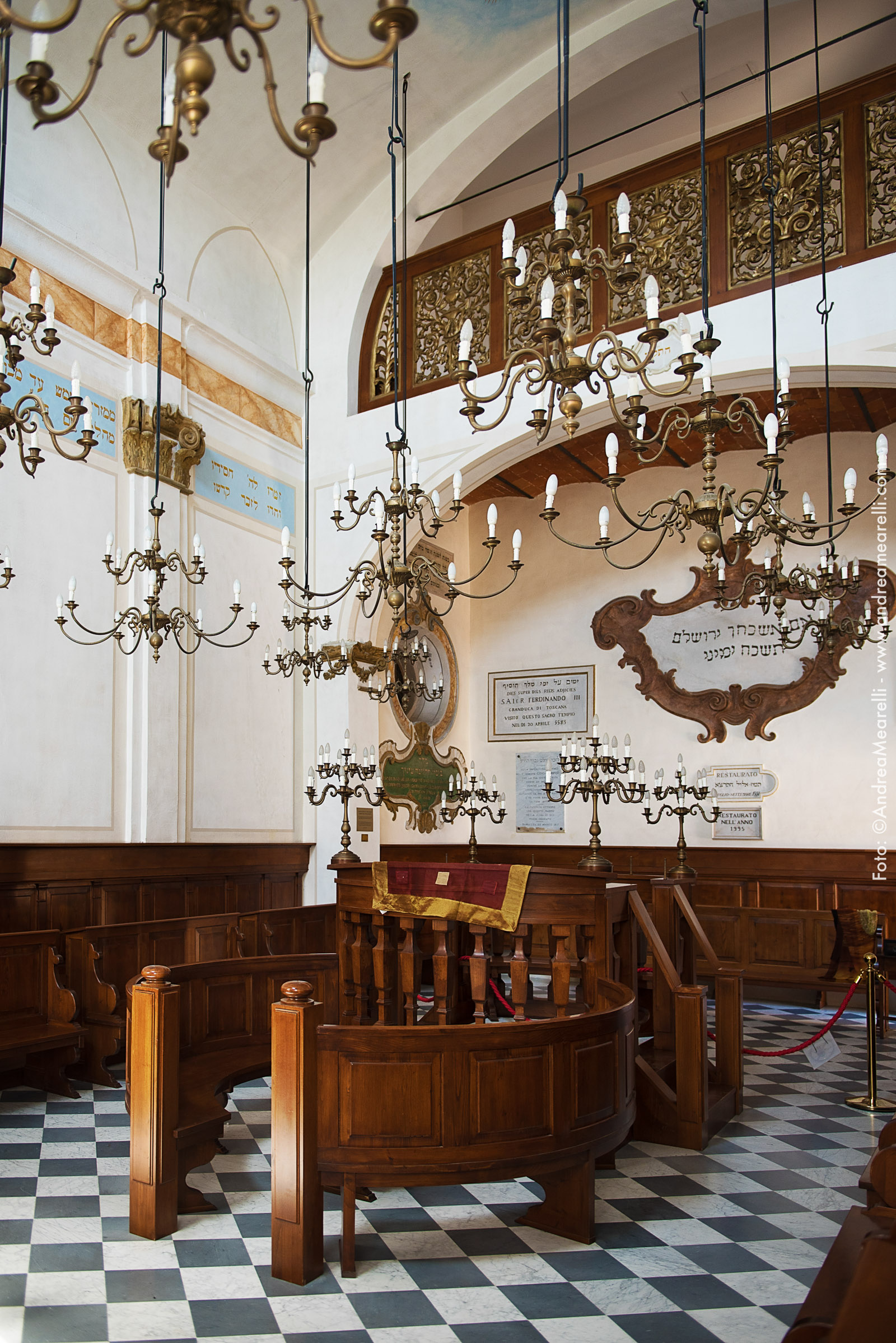
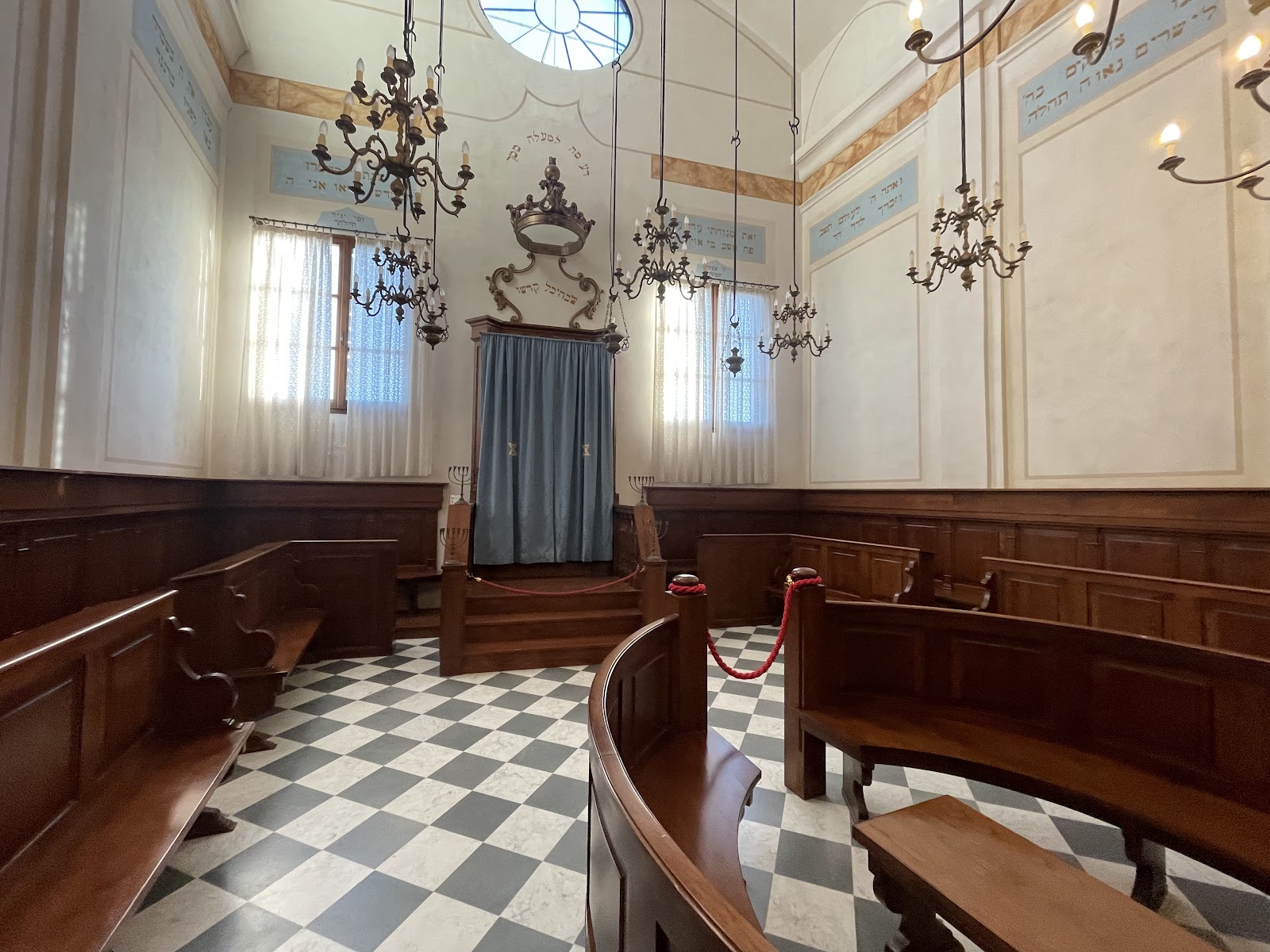
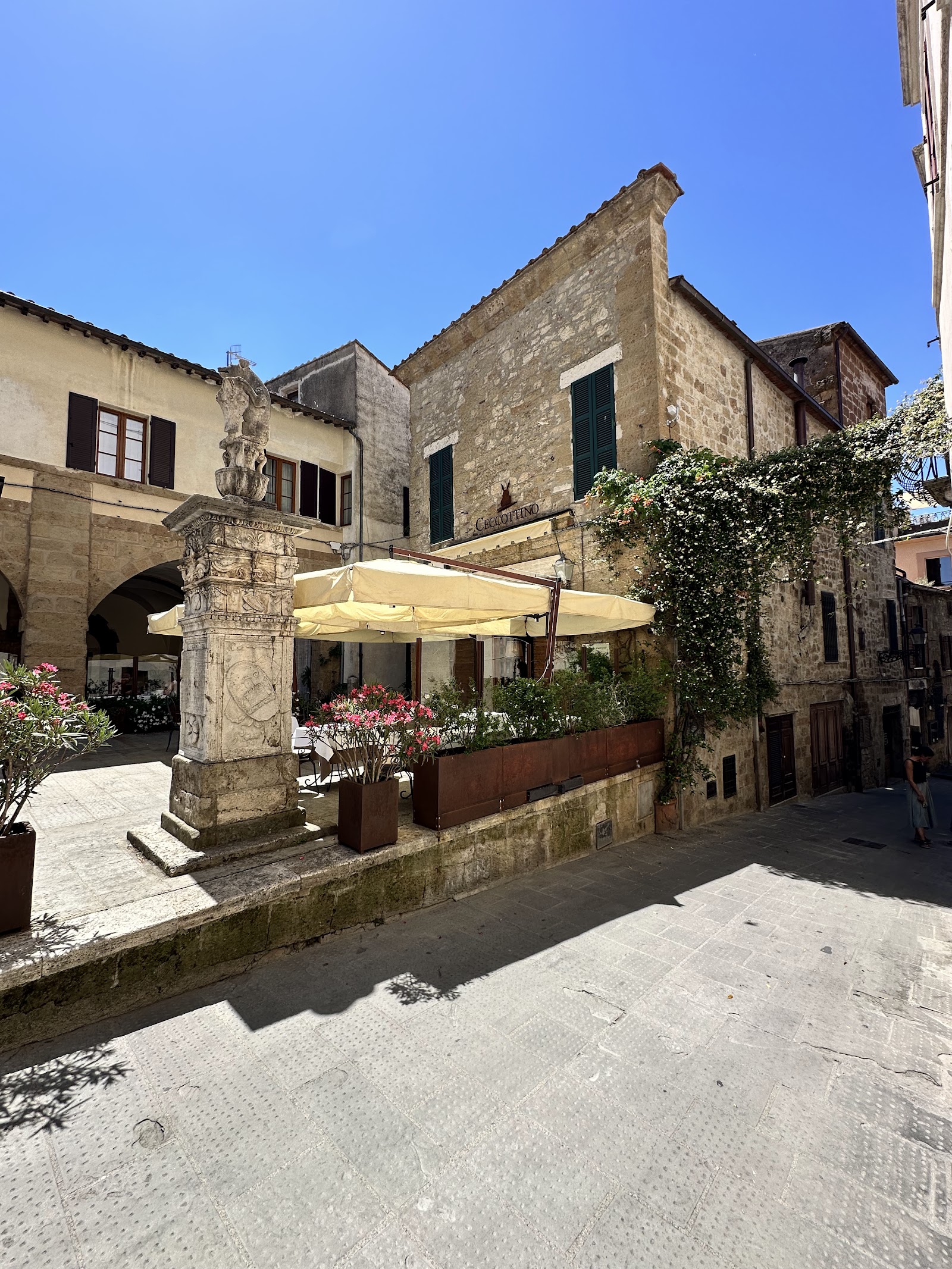
The entrance is easy to miss — a large arch off a narrow alley in Pitigliano's old ghetto, just below the Cathedral of Saints Peter and Paul. Step through it into a small courtyard, and you're standing in front of a synagogue that has been here, in one form or another, since 1598. The Aron holding the Torah is intact. The chandeliers hang where they always have. Only one wall of the women's gallery survived the partial collapse of the 1960s, but the building itself is whole again, restored by the municipality over nearly a decade and reopened in 1995.
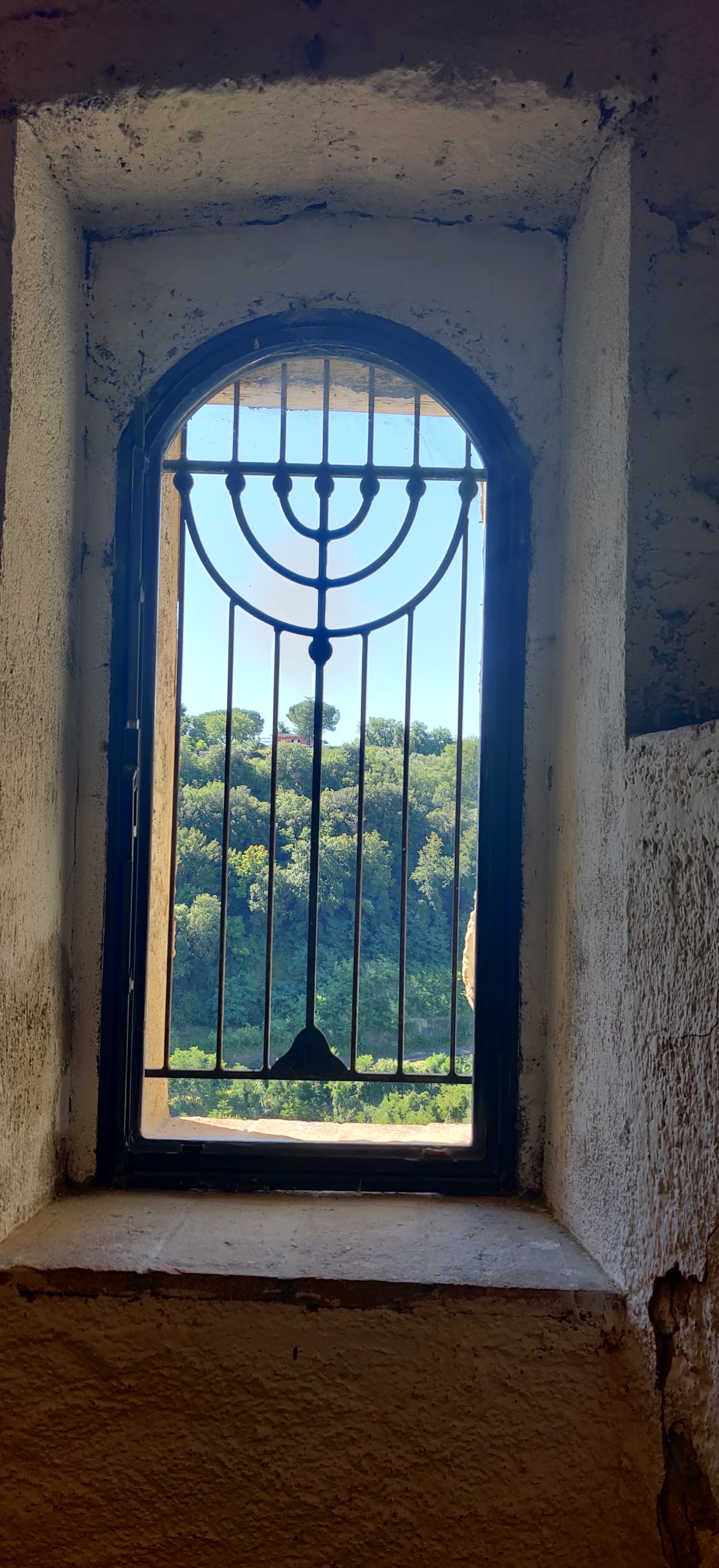
Below the synagogue, carved directly into the tufa rock on which Pitigliano sits, is a world that most visitors don't expect: a ritual bath, a kosher butcher, a dye works, a wine cellar, and an oven for baking Passover matzo that stayed in use until 1939.
💛 What travellers fall for
People who've been before tend to linger longest underground. The tufa-carved rooms are cool and close, and the matzo oven in particular stops you — it's so ordinary and so specific at once. If you can, book the guided tour rather than going alone; an hour with a guide changes what you see in the synagogue itself.
The story behind Sinagoga di Pitigliano
Jewish families began settling in Pitigliano in the mid-16th century under the protection of the Orsini lords. The synagogue was built in 1598, with a weaver named Leone di Sabato among those who contributed to its construction; a plaque inside credits Judah son of Shabtai with its founding. When the County of Pitigliano passed to the Grand Duchy of Tuscany in 1608, the Medici formalized the ghetto in 1622. By the mid-1800s the community numbered over 400 people in a town of roughly 2,200 — a proportion that drew Grand Duke Peter Leopold of Lorraine to visit in 1773, when he recorded around two hundred Jewish residents.
The decline came after Italian unification. By the 1930s only seventy community members remained. In 1940 the rabbi was ordered to leave, the temple closed, and Allied bombing in 1944 caused serious damage. The building opened once a year for Yom Kippur until 1960, then stood unsafe and vacant for three decades. Elena Servi, the last Jewish woman in the village, and her son Enrico founded the La Piccola Gerusalemme association in 1996; they run the Jewish Museum next door to this day.
Good to know
Open daily except Saturdays, Jewish holidays, and Christmas Day. Summer hours run to 18:00; winter closing is 16:30. Tickets are €6 full price, €5 reduced. The address is Vicolo Marghera — look for the arch just off Via Zuccarelli. Large groups should book ahead via lapiccolagerusalemme.it.
Where is Sinagoga di Pitigliano?
More tickets & tours for Sinagoga di Pitigliano
Book directly at the provider
What travellers say about Sinagoga di Pitigliano
The community of Pitigliano established at the 1550’s almost disappeared during the Holocaust and currently numbered only 3 people. The museum is run by an association under the Jewish community of Livorno. It is a beautiful museum that includes also all the Jewish life of the community. The Synagogue was renovated lately (1995) by the city. The city itself is located atop an impressive cliff and reconstructed after huge damage of WWII. Please see the reply of the community bellow with important information
Lovely museum, synagogue and shop describing the past Jewish presence in "Little Jerusalem" where 1/4 of the town was Jewish long ago. Great displays showing where matza was baked, and many other Jewish activities from long ago in this quaint old town. A real effort has been made to preserve this memorable area. Thank you for your efforts!
Superb visit of the synagogue and it's fantastic and impressive museum which tell the story which starts back to 1555 where the village of Pitigliano nicknamed "the small Jerusalem" was a place of refuge for the Jewish community, seeking to flee the city of Rome so as not to be subject to Catholic authority. For once, they fell well, since the inhabitants of the Tuscan region never supported the Pope and the Jews were very well received within the city of Pitigliano. Several years after the installation and integration of the Jewish community in the village, a first synagogue was built in 1598, accentuating this peaceful and healthy coexistence between Christians and Jews. Exiles arrived from many parts of Tuscany to the ancient town resting on a tufa ridge and though they were restricted to a ‘ghetto’, the community prospered. The town was considered a 'privileged place of refuge' for Jews exiled from the Rome in the period 1569-1593. Over the centuries the population’s safety and status rose and fell with the politics of the day – at one point comprising 20% of the city’s population. The community even published the 1st Italian Jewish newspaper and maintained a large library, a synagogue (built in 1598), a ritual bathhouse and a bakery for the preparation of the unleavened bread. Unfortunately, this cohabitation quickly ended when city governance was dominated by the Medici family. This new authority was attributed under the orders of the Pope, anti -Semitic, reserving a tragic spell for the Jewish community of Pitigliano. From the year 1600, all the Jews were transferred to a confined section of the village, with the obligation to distinguish themselves by wearing a red hat for men, and a red pin in the hair for women ! The ghetto as such was formed at the beginning of the 17th Century which the Medici dynasty took command of the city and restricted Jewish mobility. Yet still the community was well integrated and respected, collaborating in the economic, social and cultural fabric of the town. Prior to the 2nd World War, the community was numerous and active. Throughout the 19th Century when there was greater freedom of movement, many members of the community left Pitigliano for the more economically attractive cities of Rome, Florence, Lucca or Livorno. By 1938, however, after Nazi racial laws took effect only 60 members of the community remained, many escaping capture thanks to their neighbors, but forced to hide with farming families in the valley. A plaque in the Ghetto commemorates the 22 Jews born in Pitigliano who were killed in concentration camps. The town of Pitigliano sided strongly against deportation and in 2002 the Yad Vashem Institute in Jerusalem, the honor of the "Righteous Among the Nations" was conferred to some Pitigliano families for their attempt to save their fellow citizens. The Synagogue was built in 1598 and following a landslide rebuilt in 1995 by the town. At present only 1 member of the community is left, but visitors may visit the synagogue (restored in 1995), Culture center, Kosher butcher, ritual bathhouse, wine cellar, bakery, dye-works, all of which are dug into the native tufa stone, as well as the the fairly non-traditional Jewish cemetery tucked in a cypress grove below the town.
Wonderful historic synagogue showing the past of Jewish settlers in Pitigliano. The underground was extra cool.
I visited the synagogue last year and had an amazing tour. I advise everyone to visit it.
More of Pitigliano
Discover where to stay, what to do and the best deals for your trip.
Explore Pitigliano →More attractions in Pitigliano
All of Pitigliano →
Background adapted from Wikipedia (CC BY-SA) · map data © OpenStreetMap contributors · ratings & place photos via Google · other photos with per-image credit. Ticket links may earn us a commission at no extra cost to you.