
Riserva Naturale Saline di Marsala

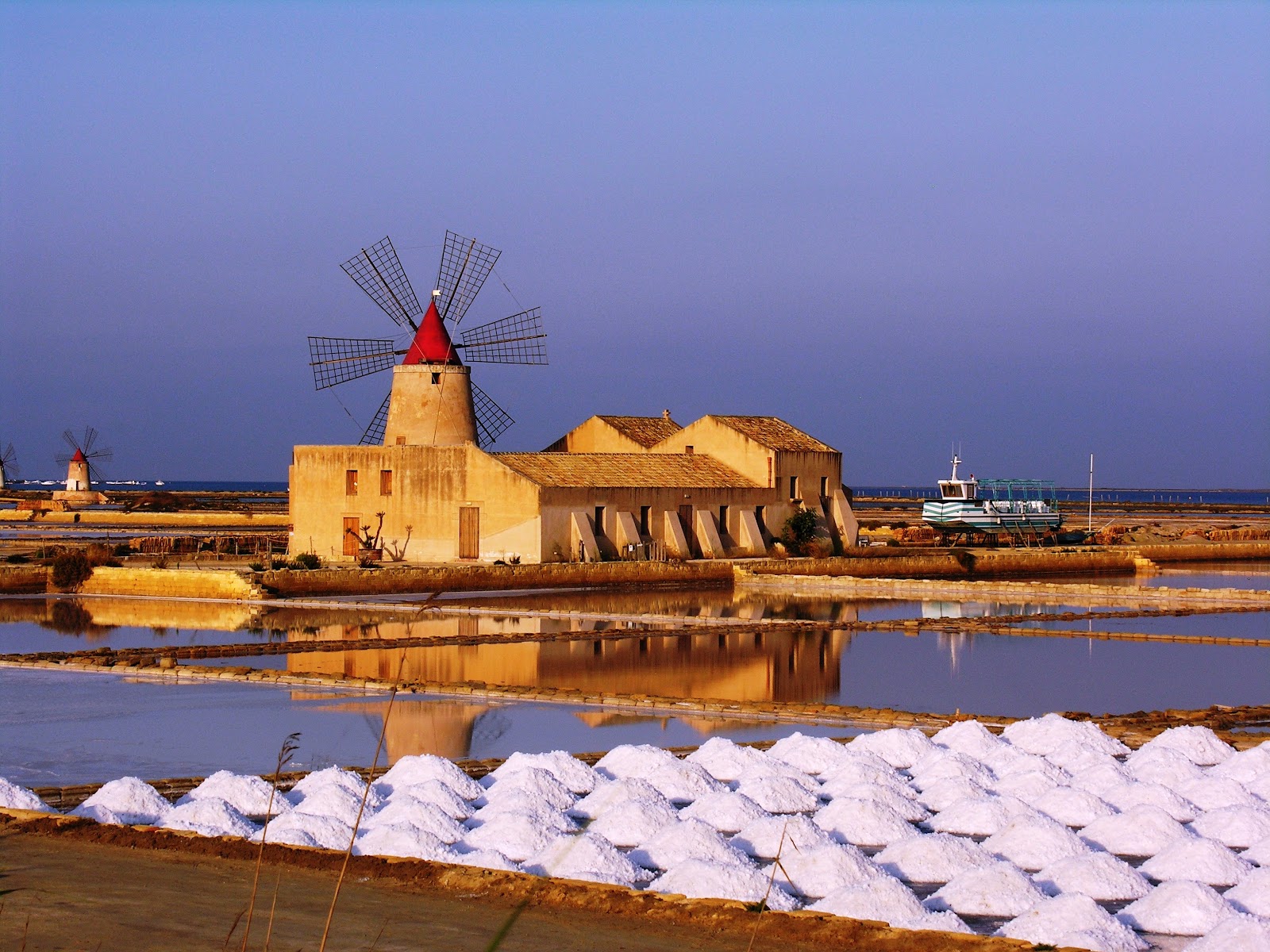
The first thing you notice is the colour — those flat, shallow ponds running pink and rust and white depending on the hour and the algae and the salt already crystallising at the edges. The Riserva Naturale Saline di Marsala stretches along the Stagnone coast north of the city, a working salt landscape that has been producing roughly 10,000 tons a year in living memory, its harvest cycle running from the first July rind through to September.
At the centre of it all stands the Mulino a Vento d'Infersa, a six-blade windmill restored to full function and opened to the public in 1996. Inside, a multimedia exhibition and a collection of historic salt-worker tools map out a trade that shaped this coastline for centuries.

💛 What travellers fall for
People who come back tend to time the return for late afternoon, when the light flattens and the ponds shift colour faster than you expect. The Mamma Caura bar — converted from 1930s salt-duty barracks, renovated again in 2021 — is where they end up, watching the sun drop behind the Egadi islands with a glass in hand.
The story behind Riserva Naturale Saline di Marsala
The salt pans along the Stagnone were authorised during the Spanish viceroyalty of Sicily, with the Ettore and Infersa pans formally sanctioned between 1492 and 1508. The earliest documented transfer of ownership appears in a deed dated May 25, 1562, drawn up by the notary Bartolomeo Passalacqua — it records half of a salt pan property, described in Latin as 'salinam unam… cum domo molendini', passing from one Hector de Grignano to Joannes Petrus de Manuelio. That windmill house is the direct ancestor of the structure you walk around today.
By the late 1700s, Voltaire was referencing these pans as ancient foundations. The wider Stagnone lagoon was designated a protected area in 1984, among the first in Sicily, and the reserve now anchors the concept of 'saliturismo' — salt tourism — that Isola Lunga helped pioneer.
Good to know
Drive the SP21 litoranea from Marsala or Trapani and park at the Saline Ettore e Infersa or the Imbarcadero Storico per Mozia. April through October is the window for the windmill and museum; Isola Lunga runs boat departures Wednesday to Monday from mid-June to mid-September. Budget at least two to three hours.
Summer visits (June through August) mean heat pushing past 30°C with almost no rain, so mornings are more comfortable for walking the ponds, though the late-afternoon light is worth the warmth. Spring and autumn bring milder temperatures in the high teens to mid-twenties, with October seeing the first real rainfall — still a reasonable time to visit before the windmill shifts to reservation-only winter hours.
Where is Riserva Naturale Saline di Marsala?
More tickets & tours for Riserva Naturale Saline di Marsala
Book directly at the provider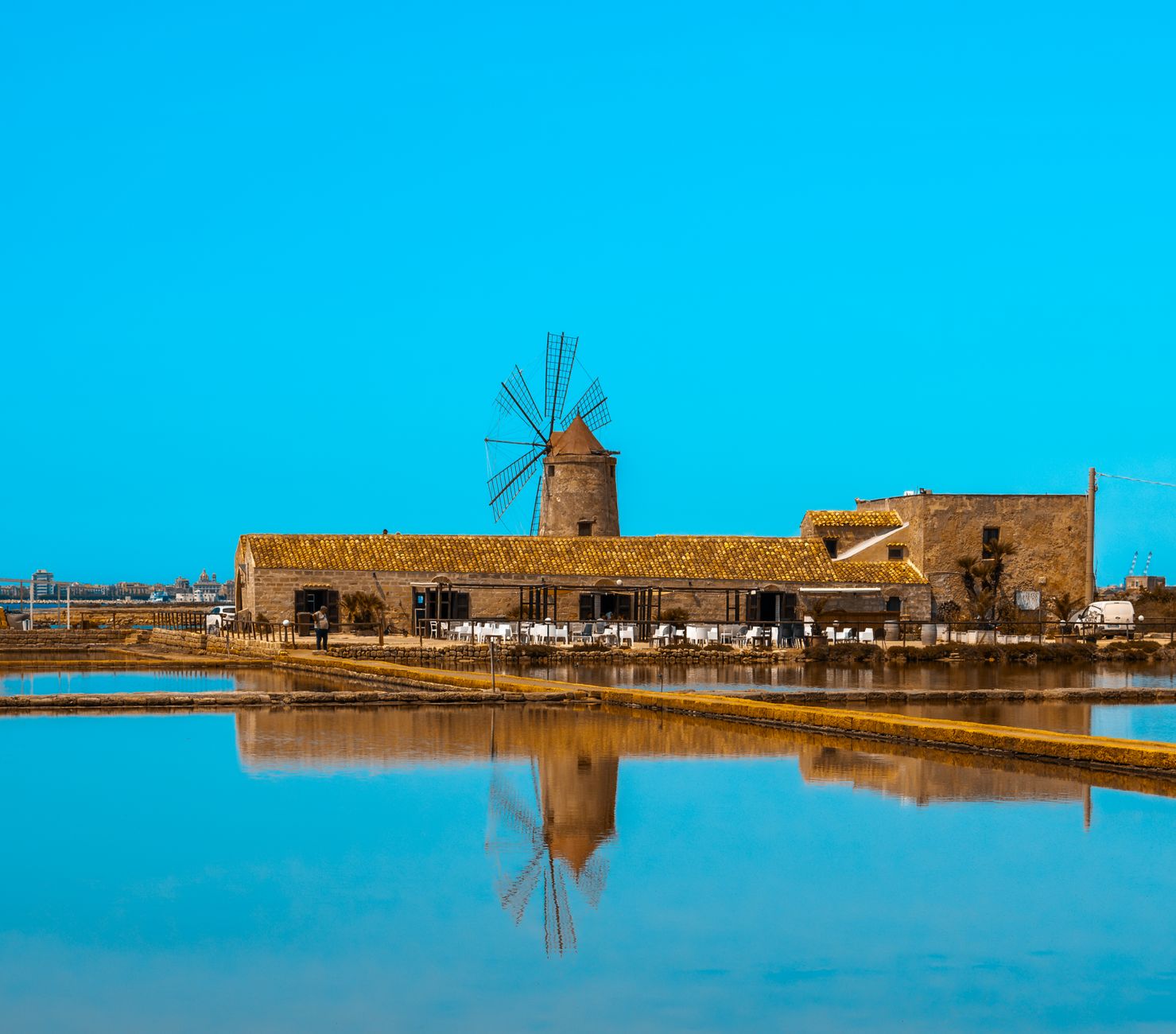
What travellers say about Riserva Naturale Saline di Marsala
A Peaceful, Picture-Perfect Stop in Marsala The Riserva Naturale offers a beautiful glimpse into the old way of making salt, with shimmering salt pans that are truly picture-perfect. It’s fascinating to see how the traditional process works as you wander the paths. We also took the boat tour around the island, not really worth it for the information or sights, but I always enjoy a boat ride, so it was still a pleasant little break. Overall, it’s absolutely worth a stop for a peaceful walk, unique scenery, and a touch of history.
I highly recommend the guided boat tour about the Phoenician site of Mozia.45 minutes around the isle with recorded guide plus extra info from the captain about the reserve and the other islands. Disembark on Mozia to see the ruines and Whitaker Museum rich of archeological finds. Stop forna granite a table the bar😁
Hi all, I live pretty near here so I have the privilege to be able to see beautiful sunsets every day! The salt evaporation ponds are also really beautiful, some have different colours! I also recommend a visit to Favignana, one of the islands. Visit Marsala ❤️
Fabulous spot for kite flying (human), and most definitely for sunset worshipping over the saltpans and windmills, especially in summer. The different hues created by the setting sun are something everyone must experience at least once in their lifetime. Incredibly beautiful. In the warmer months, one can also enjoy an aperitivo at one of the seafront venues whilst taking in the captivating and enchanting panoramas created by the setting sun.
Wonderful at sunset, despite the haze obscuring the colours of the sun. Will upload a photo later. I wish graffiti kids would leave information panels alone—they graffitied all over the UNESCO info board about the importance of the wetland and estuary, and all the birds you can see there. It was lovely seeing all the swallows living their best lives.
More of Marsala
Discover where to stay, what to do and the best deals for your trip.
Explore Marsala →More attractions in Marsala
All of Marsala →

Background adapted from Wikipedia (CC BY-SA) · map data © OpenStreetMap contributors · ratings & place photos via Google · other photos with per-image credit. Ticket links may earn us a commission at no extra cost to you.