
Porta San Pietro
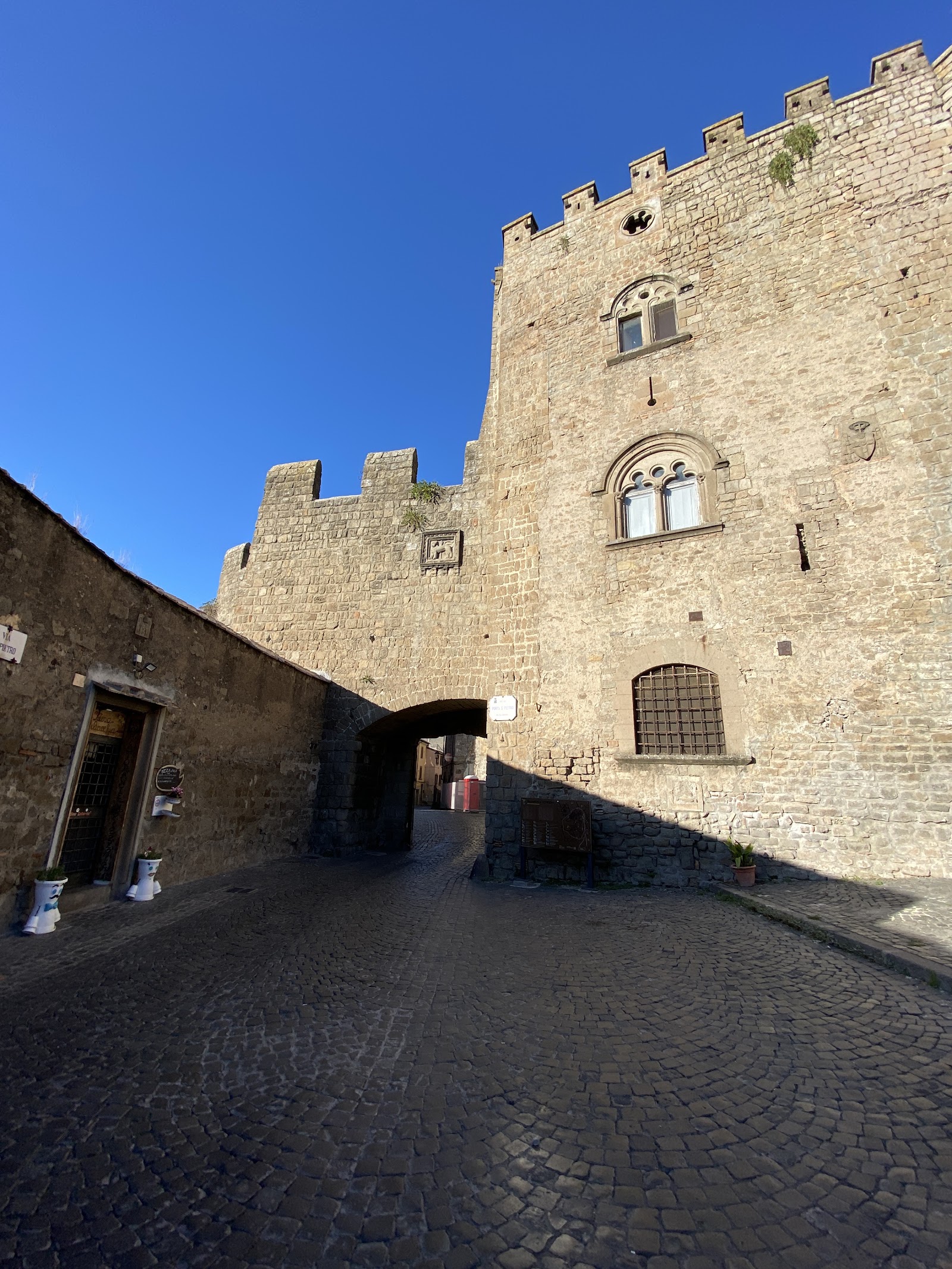
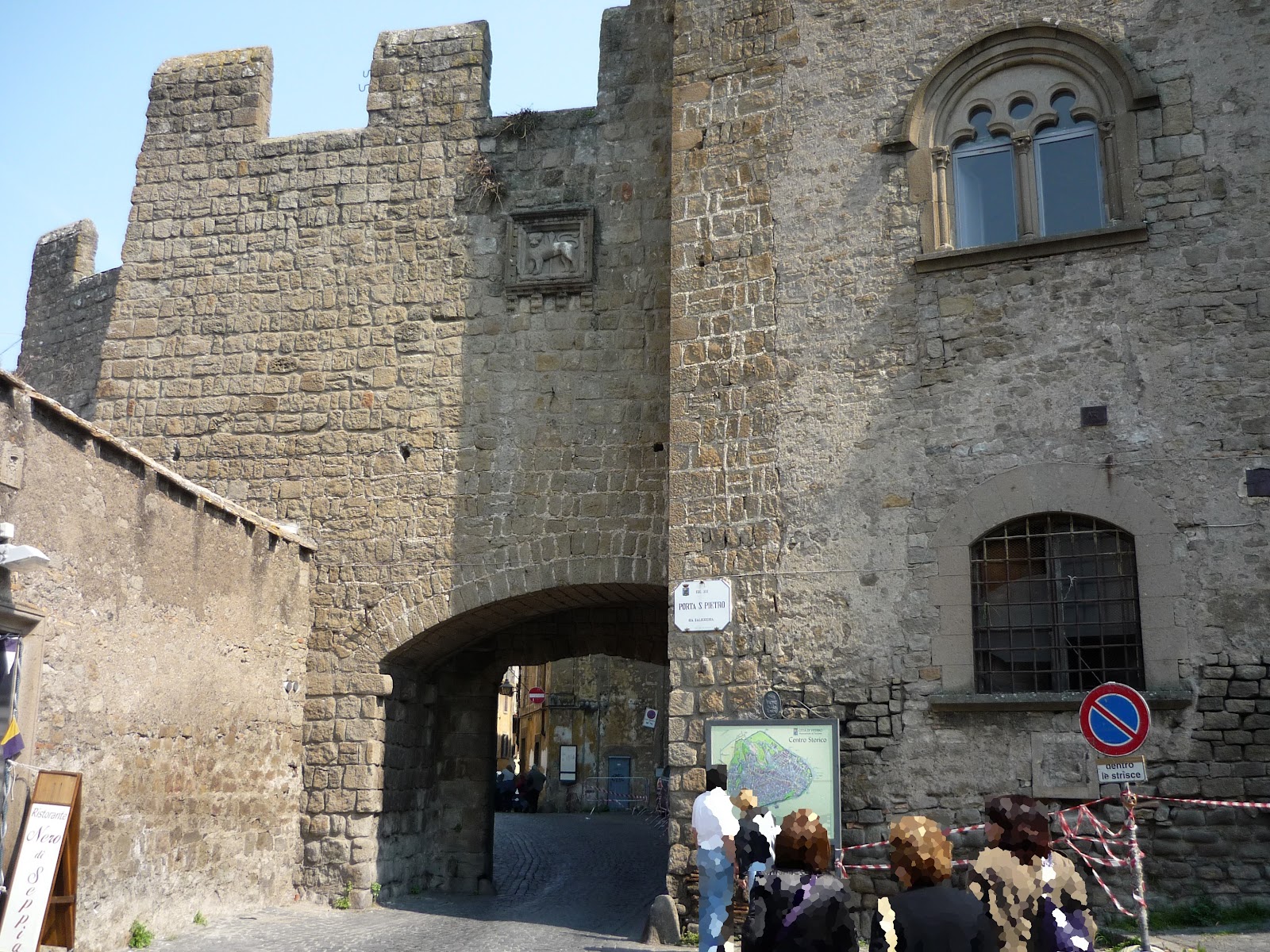
The first thing you notice is the lion and palm carved into the stone above the gate — Viterbo's coat of arms, worn smooth but still legible after centuries of weather and hands. Porta San Pietro stands at the edge of the medieval city walls on Via San Pietro, a working threshold rather than a monument, with heavy wooden doors that were still being closed at night not so long ago.
Beyond the gate, the cobblestones of San Pellegrino begin their quiet labyrinth. Outside it, a stone water trough sits where horses once drank. The Renaissance fountain on the corner carries the Piccolomini coat of arms — a different family's mark on the same street corner, layers of Viterbo history compressed into a few square metres.
💛 What travellers fall for
People who come back tend to linger at the fountain on the palace corner before passing through — the Palazzo Pamphil's bifore windows make a good frame for a photograph in morning light. If you take Via delle Caprarecce branching left off Via San Pietro, you'll drift into Pianoscarano, which sees fewer visitors than San Pellegrino and rewards the detour.
The story behind Porta San Pietro
The gate takes its name from a nearby church founded by Cardinal Raniero Capocci in 1240. It also carries an older nickname — Salicicchia — from its proximity to Castel di Salce. Porta San Pietro replaced an earlier gate called Porta Fiorita after the street level was lowered, making it too steep for carts and animals to manage.
Its history is one of repeated closures. Roman troop attacks shut it during the 12th century; it was walled up during a plague outbreak and only reopened in the early 18th century at the request of the monks of S. Pietro del Castagno. The fresco of the Madonna and Child that once decorated the arch — bearing a scroll reading 'civitatem protege tuam' — has since been moved to Viterbo's Museo Civico, leaving the carved coat of arms as the gate's sole original ornament.
Good to know
The gate is free to view at any time — no tickets, no queues. The nearest bus stop on Via Buon Pastore is four minutes on foot; Viterbo Porta Romana train station (FL3 and R lines) is about eight. Allow fifteen minutes here, more if you're walking into San Pellegrino. The gate interior is not publicly accessible.
Mid-April to mid-June and September into early October give you comfortable temperatures for walking the walls and the medieval quarters beyond the gate. July and August can push past 37°C, and the cobblestones radiate heat; if you visit in summer, come in the morning. Winter is mild but the tramontana wind cuts sharply, and temperatures can hover near freezing even on bright days.
Where is Porta San Pietro?
More tickets & tours for Porta San Pietro
Book directly at the provider
What travellers say about Porta San Pietro
One of the many doors into the city centre. The building just next to it it's in a state of disrepair.
Cool area
Ok
Good
The medieval gate that leads to the historic center of Viterbo. The historic center is very pretty, and even large enough to explore. Its views and narrow streets make it a charming place. Visited on a Sunday morning, many shops and bars were closed and there were few people around...
More of Viterbo
Discover where to stay, what to do and the best deals for your trip.
Explore Viterbo →More attractions in Viterbo
All of Viterbo →

Background adapted from Wikipedia (CC BY-SA) · map data © OpenStreetMap contributors · ratings & place photos via Google · other photos with per-image credit. Ticket links may earn us a commission at no extra cost to you.