
Rocca Albornoz
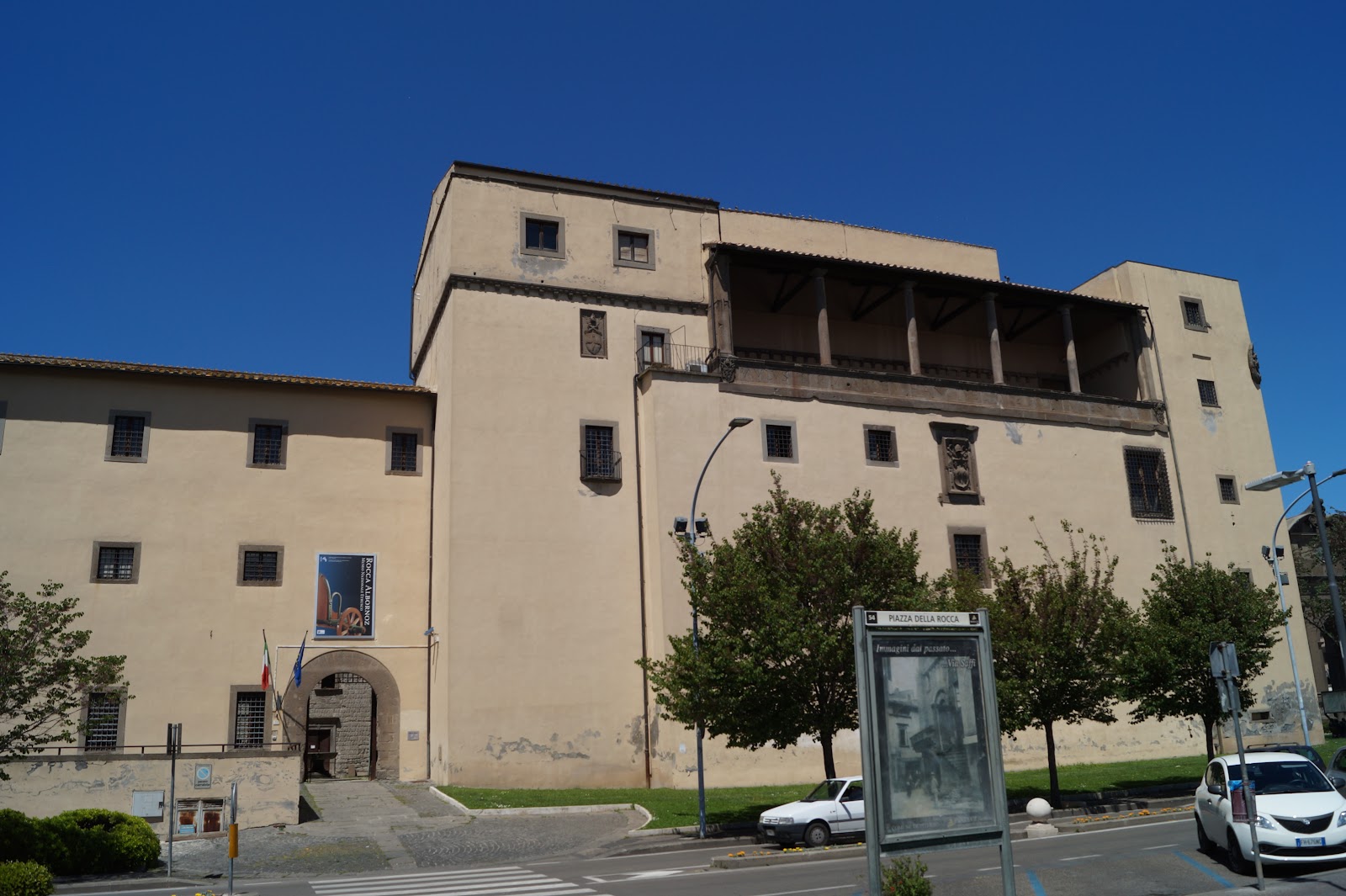
A yellowish fortress leaning into Viterbo's medieval walls, Rocca Albornoz announces itself before you've properly passed through Porta Fiorentina. Below it, in Piazza della Rocca, a peperino fountain designed by Vignola sits quietly in the open air — a good place to get your bearings before heading inside.
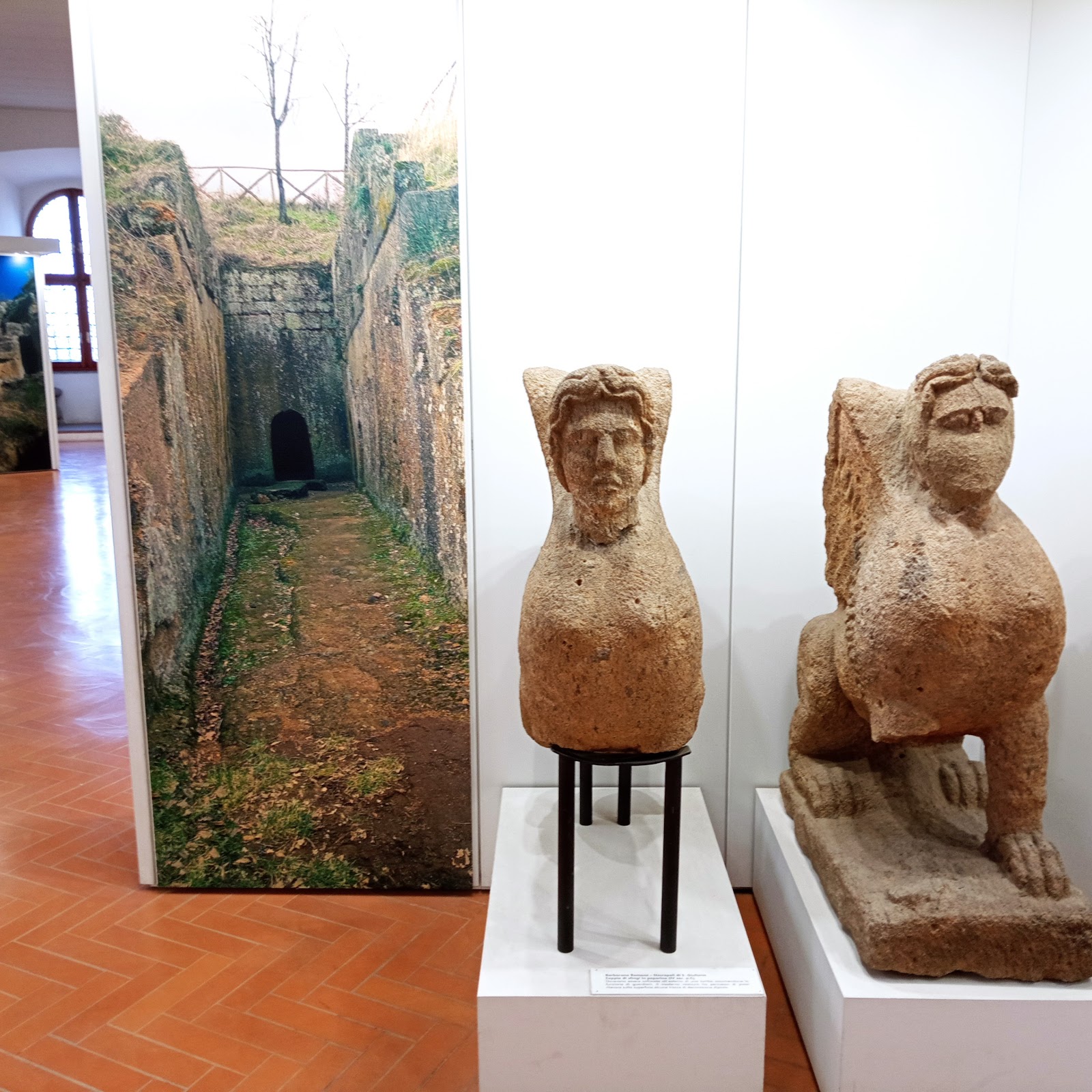
The building has two lives running in parallel: a medieval military stronghold on the outside, and on the inside, one of the more serious Etruscan archaeology collections in northern Lazio, including a sixth-century BC chariot tomb from Ischia di Castro and life-size reconstructions of Etruscan domestic spaces.
💛 What travellers fall for
People who come back tend to linger over the Etruscan funerary objects longer than they expected to, and many appreciate arriving right at 8:30 before tour groups filter in. The combined ticket with Villa Lante in nearby Bagnaia is worth picking up at the desk — it pays for itself.
The story behind Rocca Albornoz
On 10 March 1354, papal forces under Cardinal Gil Álvarez Carrillo de Albornoz defeated Giovanni di Vico, who had seized large swaths of papal territory across Lazio and Umbria. Albornoz — a Spanish cardinal serving as legate for Pope Clement VI — laid the first stone of this fortress himself, building it over the palace of Messer Campano near the church of San Faustino. Its purpose was unambiguous: to hold Viterbo in check.
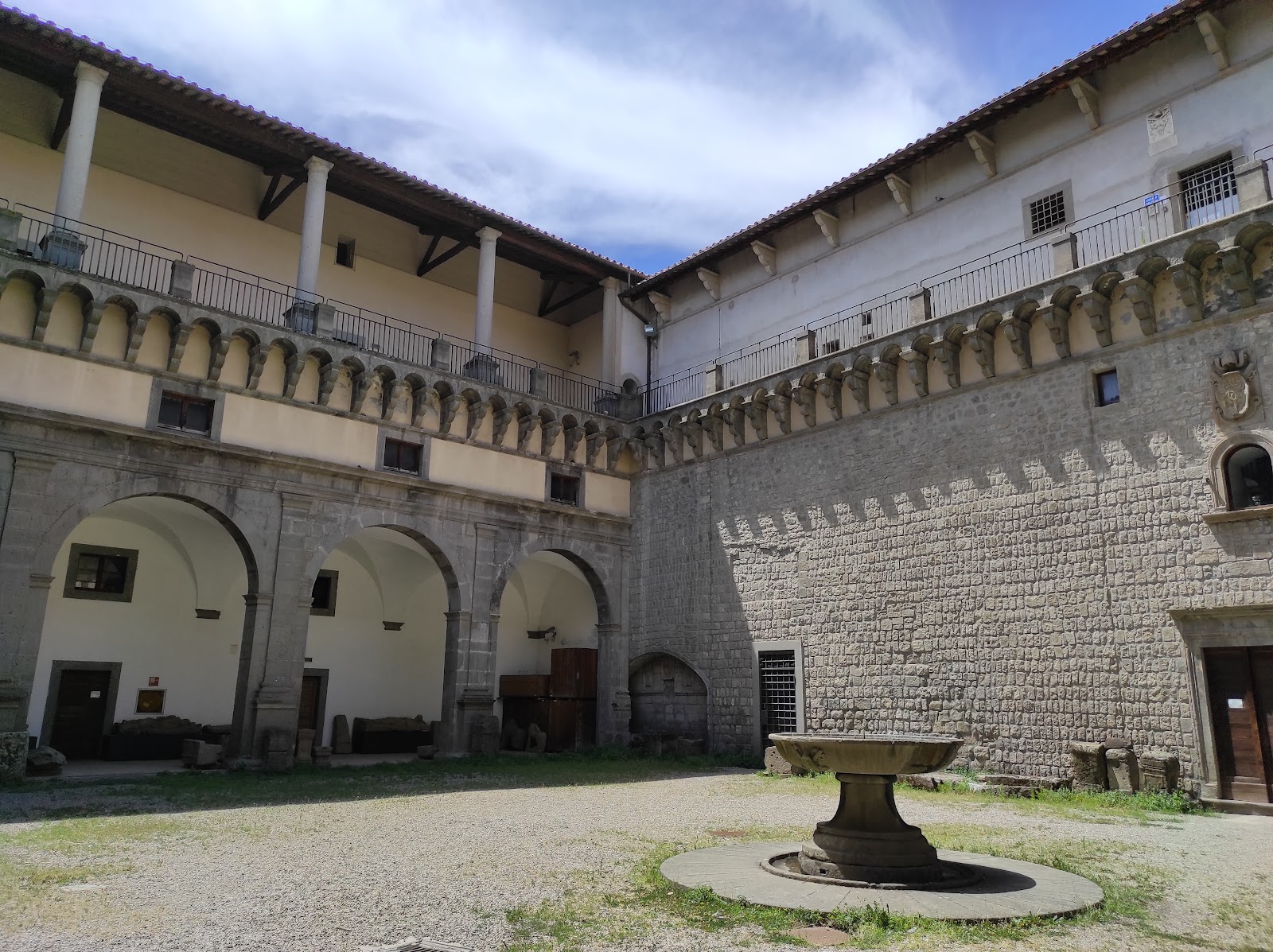
In 1367, Pope Urban V, returning to Rome from Avignon, became the first pope to reside here. A century and a half later, Julius II commissioned Bramante to add a courtyard and central fountain in 1506; Paul III later completed the project with a large external loggia. Allied bombing in the Second World War damaged the structure significantly. Restoration work between 1960 and 1979 gradually transformed it into a museum, which opened formally in 1986.
Good to know
Porta Fiorentina train station on the Rome–Viterbo line is a 550-metre walk away. The museum runs Tuesday through Sunday, 8:30–19:30, closed Mondays and public holidays. Admission is €6 full price, €3 reduced. The entire route is lift-accessible. A half-morning covers it comfortably.
Where is Rocca Albornoz?
More tickets & tours for Rocca Albornoz
Book directly at the provider
What travellers say about Rocca Albornoz
It's a nice regional museum. I really enjoyed it as a historian, but I'm sure most people will lose interest rather quickly.
During my visit to the beautiful city of Viterbo, I had the pleasure of exploring the National Etruscan Museum located within the impressive Albornoz Fortress. As I stepped inside the fortress, I was immediately struck by the incredible architecture and rich history that surrounded me. The fortress itself was a fascinating sight to behold, and I couldn't help but feel a sense of awe as I wandered through its winding passages and expansive courtyards. The fact that it was originally constructed in 1354 by Cardinal Gil Alvarez Carillo de Albornoz, who was the general vicar of the Church domains, only added to its historical significance and charm. As I made my way through the museum's stunning collection of Etruscan artifacts, I was impressed by the intricate detail and exquisite craftsmanship that went into each piece. From intricate gold jewelry and delicate pottery to impressive bronze sculptures and beautifully preserved frescoes, there was no shortage of breathtaking treasures to discover. One of the highlights of my visit was the opportunity to learn more about the Etruscan civilization and its fascinating history. Through the museum's informative exhibits and interactive displays, I gained a deeper appreciation for this ancient culture and the significant impact it had on the development of Italy and the Mediterranean world. Overall, my visit to the National Etruscan Museum was a truly unforgettable experience, and I would highly recommend it to anyone visiting Viterbo. The combination of stunning architecture, rich history, and remarkable artifacts make it a must-see destination for anyone interested in art, culture, and history.
Small but great! Loved seeing the Hercules like bowls and vases hahaha I only used half a morning to see everything and the outdoor parts are truly beautiful.
A very interesting archeological museum with a special section at the third floor. You can also get a beautiful view of Viterbo from its top balcony
Nice to see more details to fill in the blanks on many of the Etruscan sites we have visited. Staff was very friendly.
More of Viterbo
Discover where to stay, what to do and the best deals for your trip.
Explore Viterbo →More attractions in Viterbo
All of Viterbo →

Background adapted from Wikipedia (CC BY-SA) · map data © OpenStreetMap contributors · ratings & place photos via Google · other photos with per-image credit. Ticket links may earn us a commission at no extra cost to you.