
Museo Nazionale Etrusco di Rocca Albornoz

Inside the medieval fortress walls of the Rocca Albornoz, a chariot waits. The Tomb of the Biga — a burial from the late sixth century BC, belonging to a high-ranking Etruscan woman from Ischia di Castro — occupies its own room on the ground floor, and it stops most people in their tracks. This is the kind of museum that earns its space: focused, unhurried, and built around excavation results that took decades to accumulate.
The collection traces Etruscan life in the Viterbo territory through objects and reconstructions from San Giovenale and Acquarossa, where Swedish archaeologists dug from 1956 to 1965. Upstairs, a mosaic from the baths of Musarna carries an inscription in the Etruscan alphabet — one of those details that makes the ancient world feel startlingly close.

💛 What travellers fall for
People who come back tend to linger on the first floor longer than they expect — particularly around the Ferento theater finds, a cycle of Muses that reads differently once you know the site. The Musarna mosaic room is quieter than the chariot burial and rewards a slower look. Arrive mid-morning on a weekday and you'll often have whole rooms to yourself.
The story behind Museo Nazionale Etrusco di Rocca Albornoz
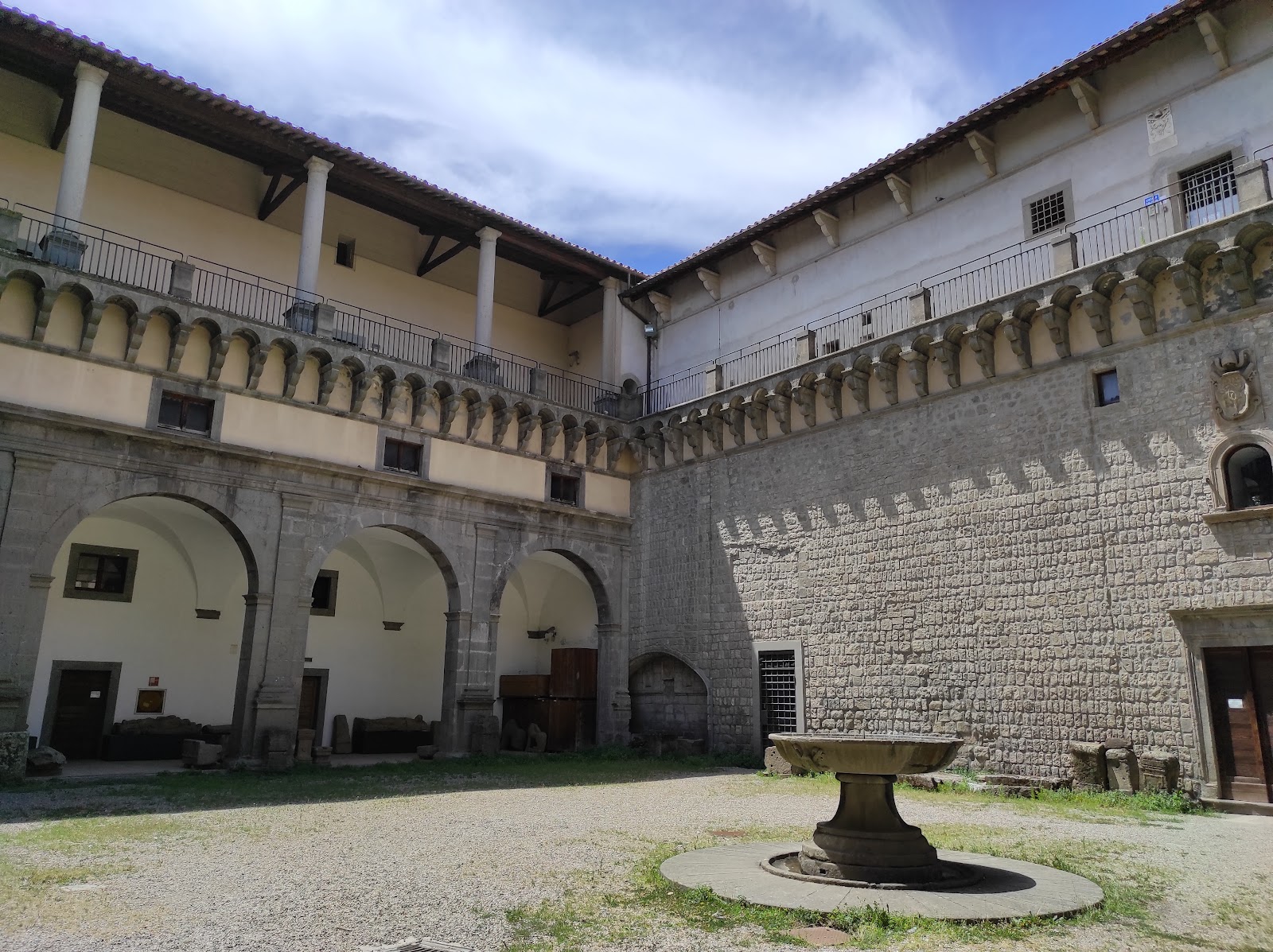
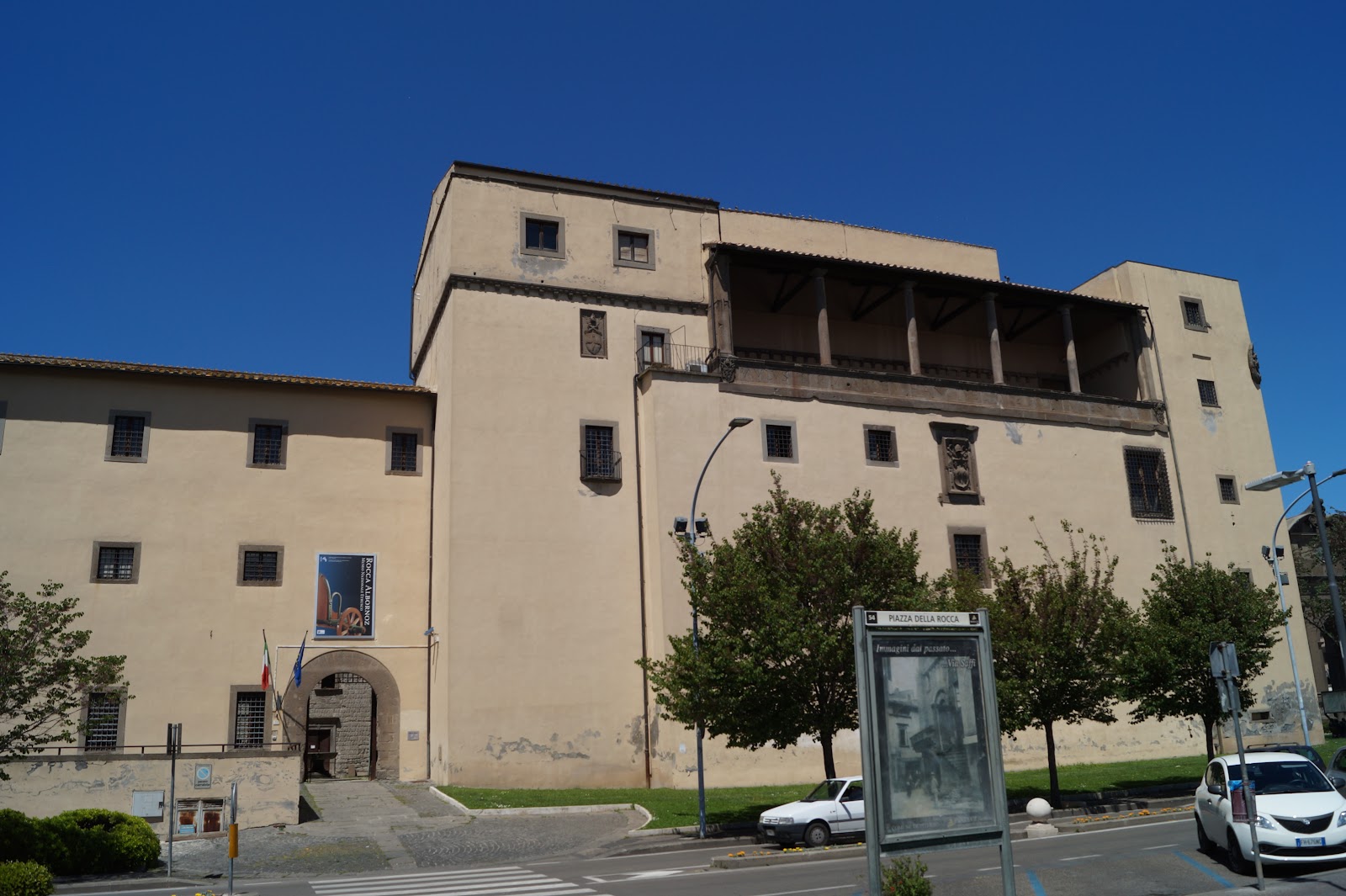
Cardinal Gil Alvarez Carrillo de Albornoz — Archbishop of Toledo and papal legate — built the Rocca as a fortified residence between 1354 and 1357. The structure anchored the city's western edge, resting directly on the old walls above what is now the piazza below.
Centuries later, Pope Julius II della Rovere brought Donato Bramante in to rework the courtyard and its central fountain. Pope Paul III Farnese added the long loggia facing the plaza. The fortress survived into the modern era, though Allied bombing in World War II forced a lengthy restoration that ran from 1960 to 1979. The Museo Nazionale Etrusco opened within it in 1986.
Good to know
The museum sits at Piazza della Rocca, about 550 m from the Porta Fiorentina train station on the Rome–Viterbo line. A half-morning covers everything comfortably. Admission is free on the first Sunday of each month and on April 25, June 2, and November 4. An annual pass (€15) is available via the Musei Italiani app.
Where is Museo Nazionale Etrusco di Rocca Albornoz?
More tickets & tours for Museo Nazionale Etrusco di Rocca Albornoz
Book directly at the provider
What travellers say about Museo Nazionale Etrusco di Rocca Albornoz
It's a nice regional museum. I really enjoyed it as a historian, but I'm sure most people will lose interest rather quickly.
During my visit to the beautiful city of Viterbo, I had the pleasure of exploring the National Etruscan Museum located within the impressive Albornoz Fortress. As I stepped inside the fortress, I was immediately struck by the incredible architecture and rich history that surrounded me. The fortress itself was a fascinating sight to behold, and I couldn't help but feel a sense of awe as I wandered through its winding passages and expansive courtyards. The fact that it was originally constructed in 1354 by Cardinal Gil Alvarez Carillo de Albornoz, who was the general vicar of the Church domains, only added to its historical significance and charm. As I made my way through the museum's stunning collection of Etruscan artifacts, I was impressed by the intricate detail and exquisite craftsmanship that went into each piece. From intricate gold jewelry and delicate pottery to impressive bronze sculptures and beautifully preserved frescoes, there was no shortage of breathtaking treasures to discover. One of the highlights of my visit was the opportunity to learn more about the Etruscan civilization and its fascinating history. Through the museum's informative exhibits and interactive displays, I gained a deeper appreciation for this ancient culture and the significant impact it had on the development of Italy and the Mediterranean world. Overall, my visit to the National Etruscan Museum was a truly unforgettable experience, and I would highly recommend it to anyone visiting Viterbo. The combination of stunning architecture, rich history, and remarkable artifacts make it a must-see destination for anyone interested in art, culture, and history.
Small but great! Loved seeing the Hercules like bowls and vases hahaha I only used half a morning to see everything and the outdoor parts are truly beautiful.
A very interesting archeological museum with a special section at the third floor. You can also get a beautiful view of Viterbo from its top balcony
Nice to see more details to fill in the blanks on many of the Etruscan sites we have visited. Staff was very friendly.
More of Viterbo
Discover where to stay, what to do and the best deals for your trip.
Explore Viterbo →More attractions in Viterbo
All of Viterbo →
Background adapted from Wikipedia (CC BY-SA) · map data © OpenStreetMap contributors · ratings & place photos via Google · other photos with per-image credit. Ticket links may earn us a commission at no extra cost to you.