
Porta Romana
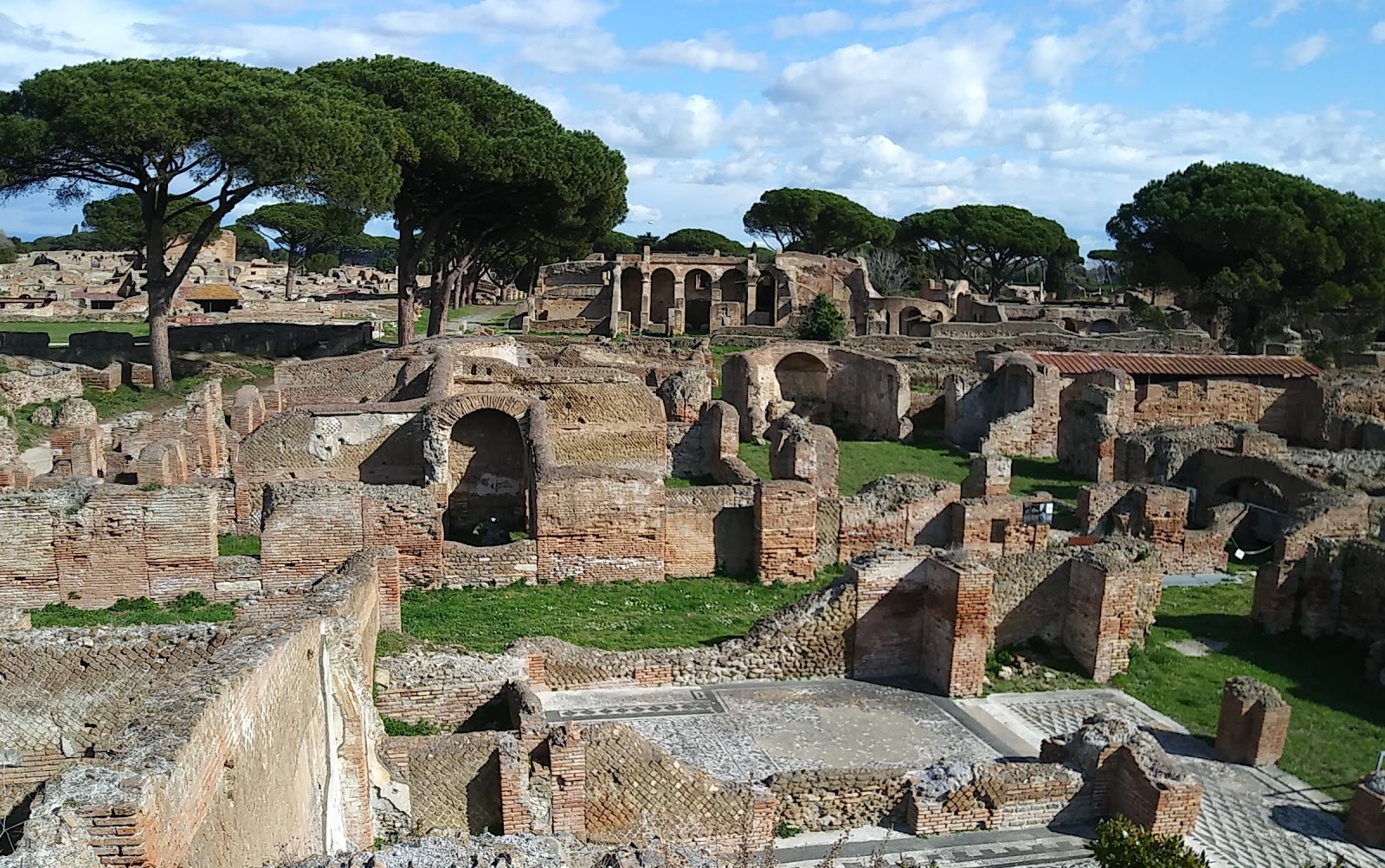
Every visit to Ostia Antica begins here, whether you realise it or not. Porta Romana stands at the eastern end of the ancient city, the point where the Via Ostiense arrived from Rome and deposited its travellers — merchants, soldiers, grain officials — into one of the empire's great port towns.
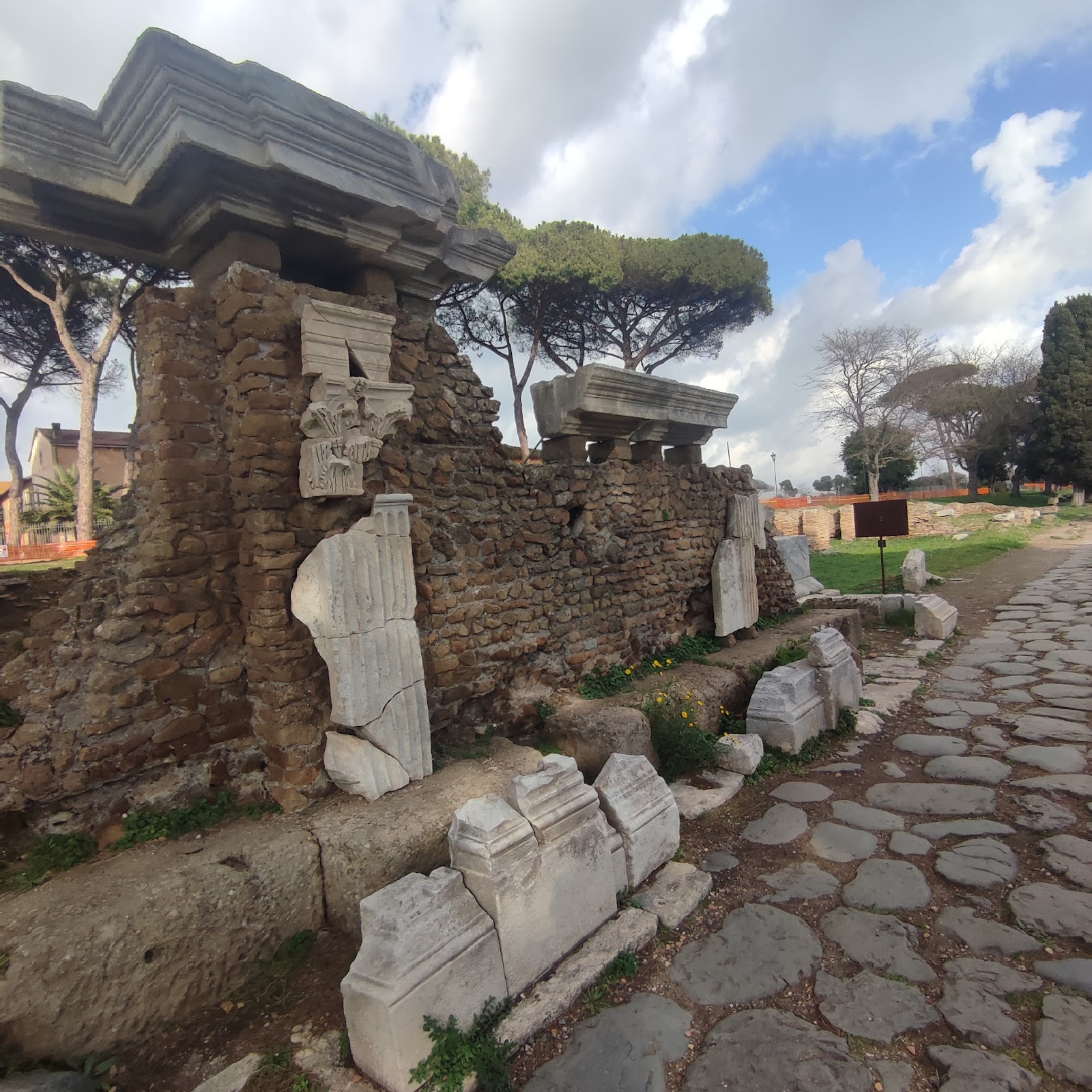
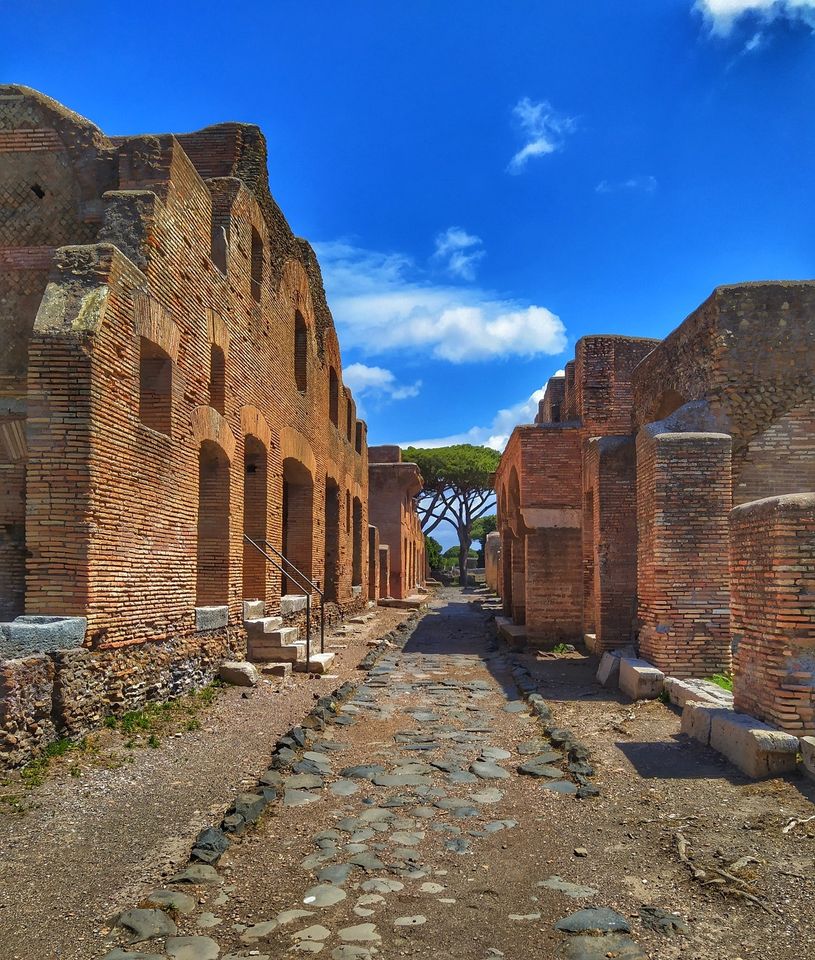
The gate you see now is largely a Domitian-era rebuild: tufa blocks faced with marble, grooves still visible where wooden doors once hung, and the memory of a winged Minerva presiding overhead. Before you even reach the Decumanus Maximus, you pass through a necropolis of some sixty tombs, the dead arranged, as was Roman custom, along the road outside the walls.
💛 What travellers fall for
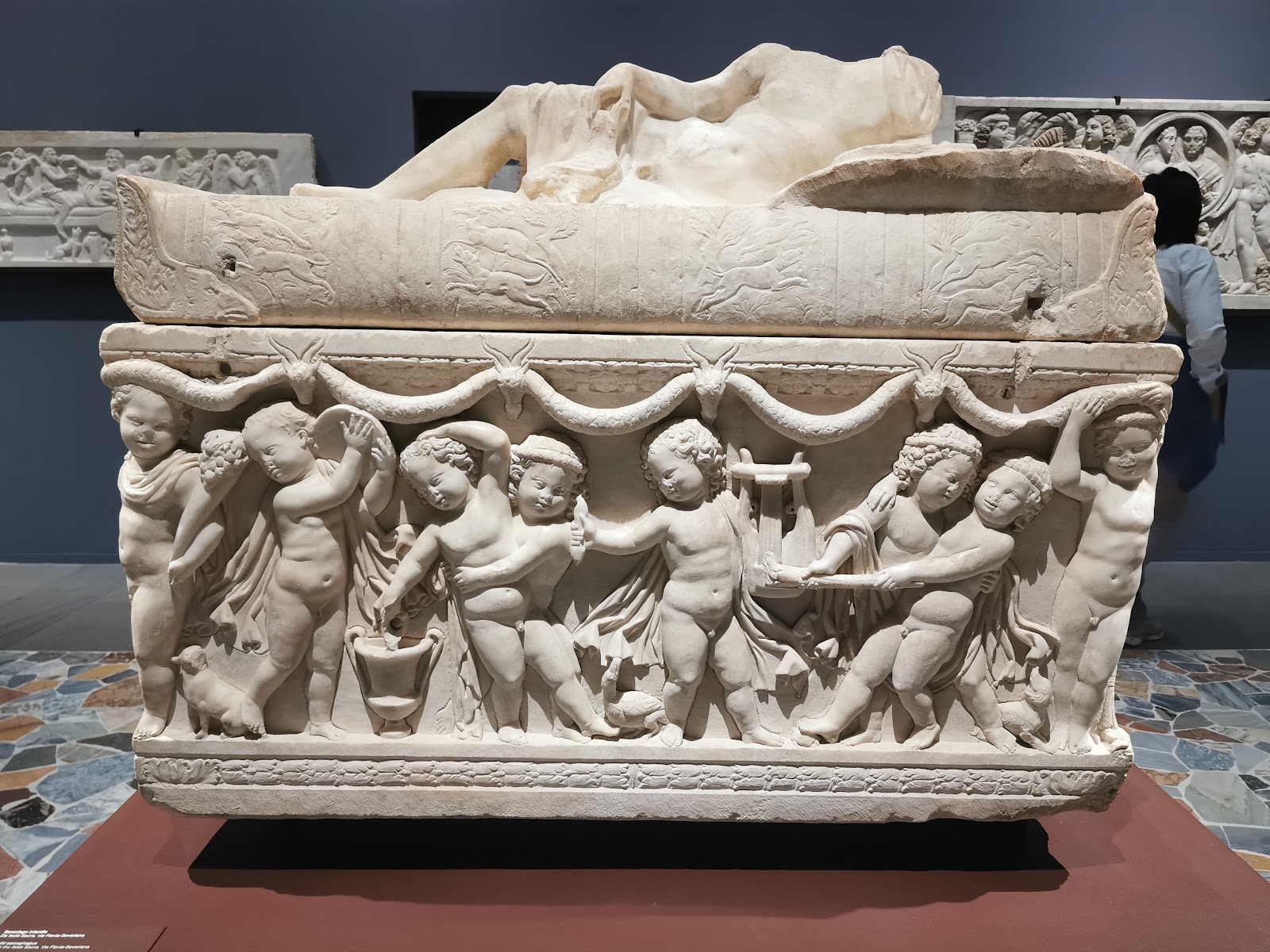
People who know the site well tend to slow down here rather than rushing through to the theatre or the forum. The sarcophagus fragments scattered along the roadside were placed there in the 1930s — deliberately, for atmosphere — and once you know that, you start noticing how much of what feels ancient here was also, quietly, curated.
The story behind Porta Romana
The city wall that contains Porta Romana was begun in 63 BC, during the consulship of Marcus Tullius Cicero, and completed by Publius Clodius Pulcher when he served as tribune of the plebs in 58 BC. The gate was the formal threshold of Ostia: the terminal point of the road from Rome, the first thing arriving travellers encountered.
Under Emperor Domitian (81–96 AD), the gate was rebuilt at a higher level, given marble decoration, and crowned with a statue of Minerva as winged Victory — an imperial flourish on a republican foundation. The gate was excavated in 1911, and in 1913 the architect Italo Gismondi produced a reconstruction drawing of how it would have looked.
Good to know
Take the Roma Lido commuter train from Piramide (Metro B) — about 35 minutes, and the park entrance is a short walk from the station. The site closes on Mondays. Entry is free on the first Sunday of each month. Bring water and a hat in summer; shade is scarce.
Spring and early autumn are the most comfortable seasons — temperatures sit between 21°C and 28°C, and the light is good for the stonework. August is workable but hot, peaking near 29°C with almost no shade along the road. November brings the heaviest rain, averaging around 163 mm over fifteen days, which can make the exposed site muddy underfoot.
Where is Porta Romana?
More tickets & tours for Porta Romana
Book directly at the provider
What travellers say about Porta Romana
An easy train trip from the centre of Rome. Not crowded at all, and plenty to see. You can get a feel for ancient life here, as you move through in your own time.
Part of the best 2nd-3rd century ancient roman ruins in Italy. Even though the site is much earlier 3rd-2nd C bc.
Amazing day trip - it’s a huge site with extensive ruins, mosaic floors, statues and columns. You are mostly quite free to explore in and around the ruins so you get a great feel for what was an impressive working port city - warehouses, temples, administration, residential developments and tombs.
Humble remains of a once grand gate to the Roman port of Ostia. A dedicatory inscription for the Porta Romana is located nearby at Piazzale della Vittoria a short distance on the left after crossing the gate.
Closed on Mondays. It’s all gated off and it looks like you have to pay to enter. Didn’t see this anywhere online. Came all the way from Rome…
More of Ostia Antica
Discover where to stay, what to do and the best deals for your trip.
Explore Ostia Antica →More attractions in Ostia Antica
All of Ostia Antica →

Background adapted from Wikipedia (CC BY-SA) · map data © OpenStreetMap contributors · ratings & place photos via Google · other photos with per-image credit. Ticket links may earn us a commission at no extra cost to you.