
Museo Ostiense
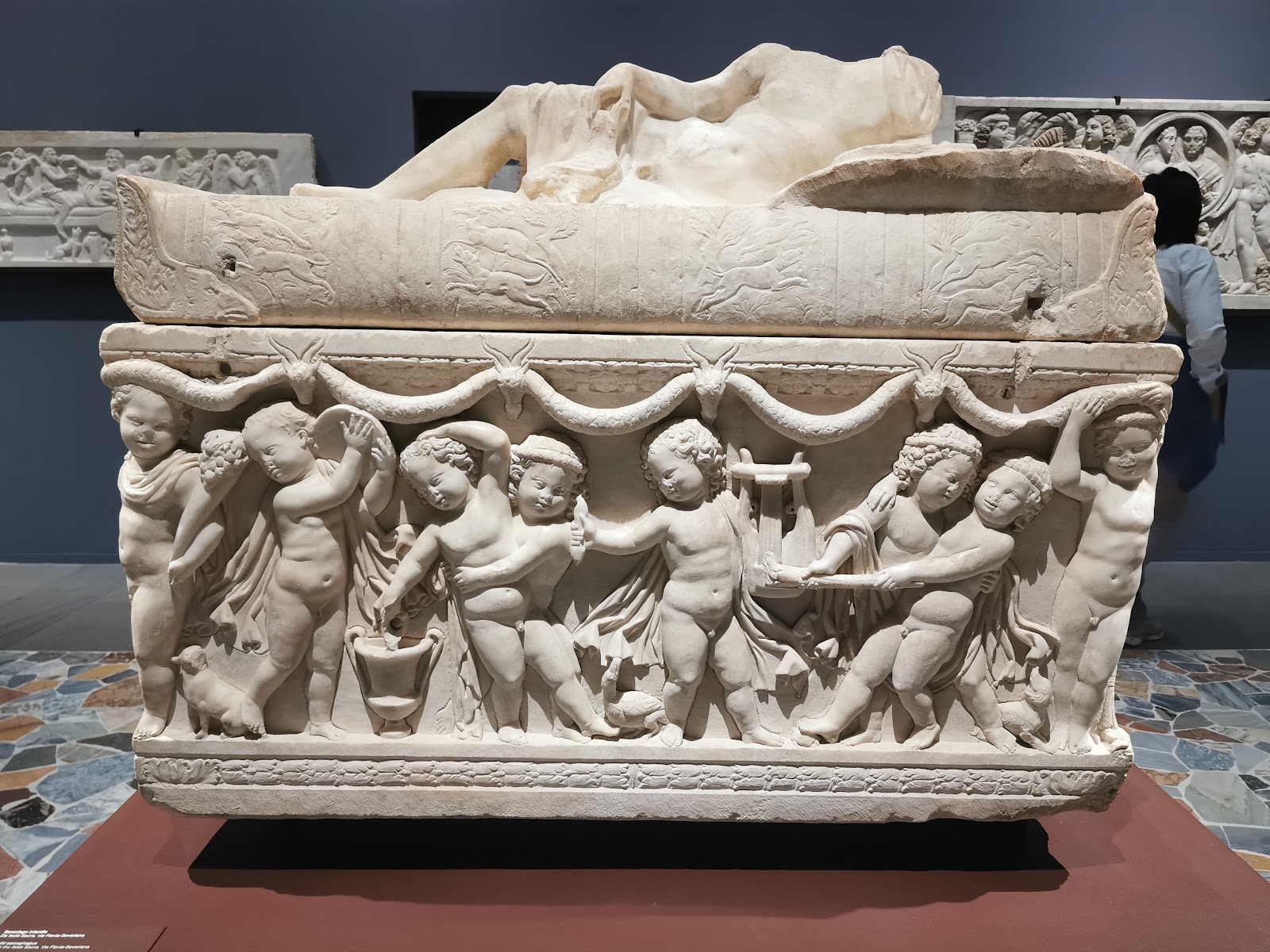
The Museo Ostiense sits inside a sixteenth-century building that once stored salt from the pontifical salt pans — the Casone del Sale — and that architectural backstory sets the tone for everything inside: practical Roman infrastructure repurposed into something lasting. Reopened in July 2024 after restoration, the museum now arranges its twelve rooms around seven themes, from the origins of Ostia through its necropolises, its cults, its daily domestic life.
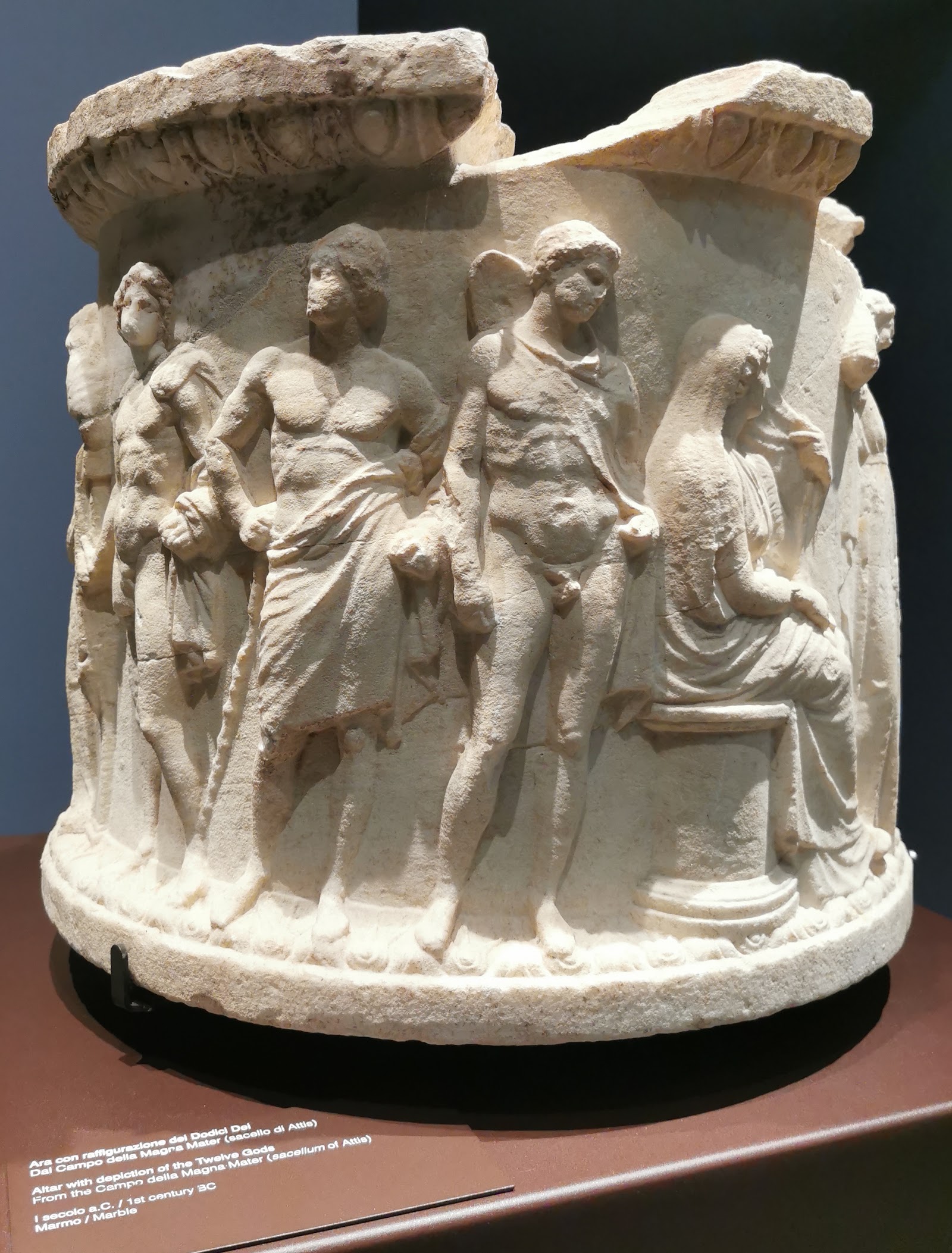
What slows you down here is the specificity. A winged Victory that once stood on the attic of Porta Romana. A funerary portrait of Giulia Procula. The Sarcophagus of the Muses, recovered by the Financial Police and only recently placed in room eleven. These aren't reconstructions — they're the things themselves, pulled from the ground a short walk away.
💛 What travellers fall for
People who've been through the wider archaeological site first tend to get more from the museum — seeing the Mithras Tauroctonus after visiting the Mithraeum of the Seven Spheres, or the Fasti Ostiensi fragments after standing in the Forum, makes the objects snap into place. The sound shower system is worth pausing for: the audio stays remarkably contained around you.
The story behind Museo Ostiense
The museum was founded in 1865, when archaeologist Pietro Ercole Visconti and Pope Pius IX converted a fifteenth-century storage building into a civic museum to house finds from the Ostia excavations. It began life in the Castle of Julius II before moving in 1934 to the Casone del Sale, the Renaissance salt warehouse that remains its home today.
The 2024 reopening after restoration introduced a new curatorial logic — seven macro-themes that move through Ostia's timeline from its republican origins to late antiquity — along with touchscreen displays and a directed-audio system that delivers video commentary without bleeding sound across the rooms.
Good to know
Take the Roma Lido commuter train from Porta San Paolo (about 30 minutes, €1.50) then walk ten minutes to the site. The museum is Tuesday to Sunday; note that the first Sunday of the month it closes even on free-admission days. Wear proper shoes — the broader archaeological area is uneven underfoot.
Where is Museo Ostiense?
More tickets & tours for Museo Ostiense
Book directly at the provider
What travellers say about Museo Ostiense
Located inside the Ostia archeological park, this museum is a must-see if you’ve already entered the archeological park. There’re many marbles of Greek style dated from around A.D. 200 that even rival the most polished and viral version of the modern counterparts. You basically can see how folks living in its ancient republic tamed the fear about sea and wild animals - in the theme of trials of automation through emblematization.
Freshly renovated in 2024. It's not terribly big, but definitely worth checking out if you have time. It helps to get the grasp of the whole story of the city.
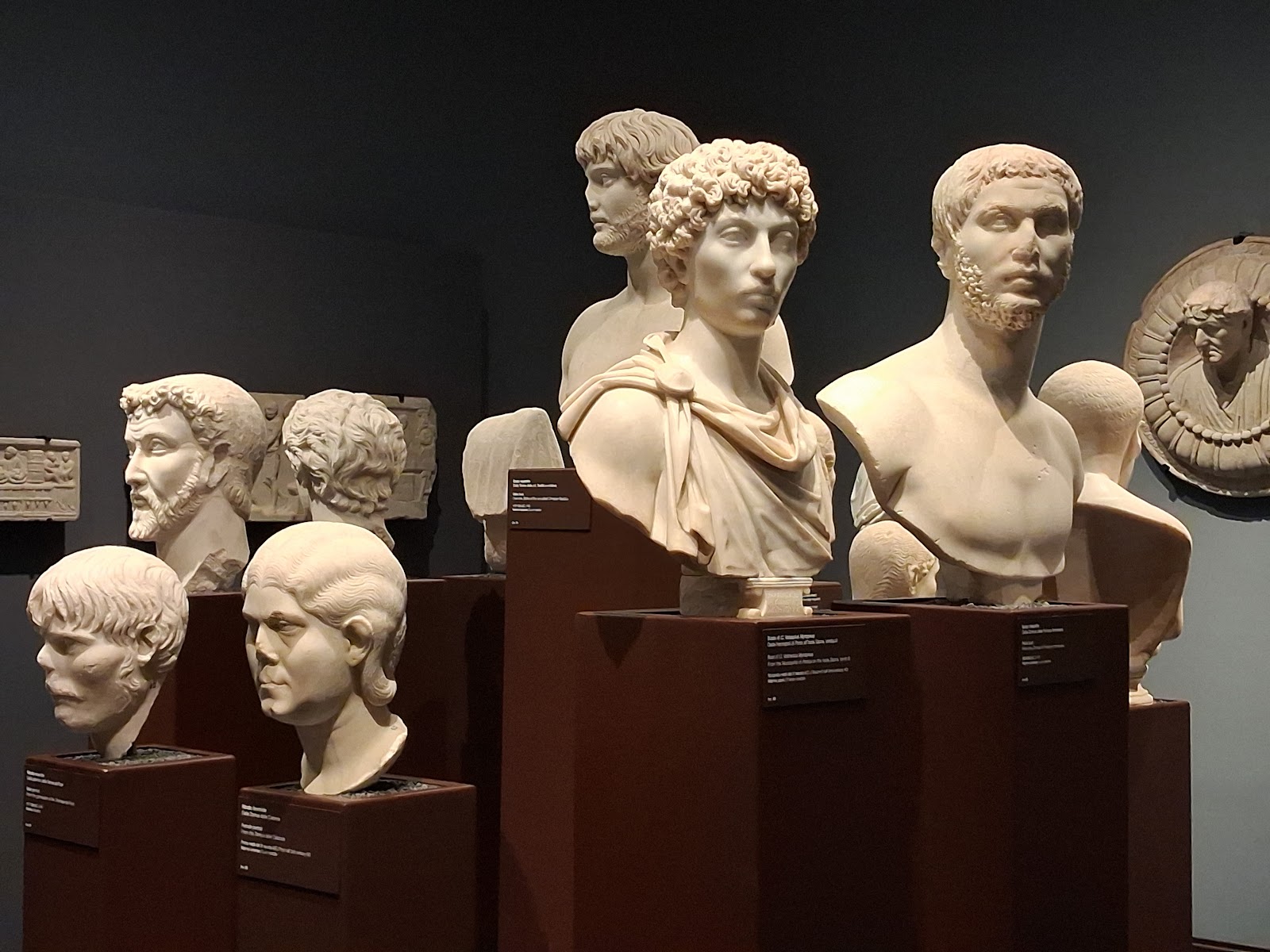
A tour of the Ostia Archaeological Park can be completed by admiring the artifacts on display in the Museum, located in the excavation area. The collection is housed in the Casone del Sale, a Renaissance building, and illustrates the history of the Roman city from its origins to the Imperial era. The necropolis, temples, and residential buildings have yielded terracotta statues and marble busts, including those of figures associated with the imperial court. Noteworthy are the frescoes and painted friezes that decorated the residences, attesting to the high artistic level achieved.
I'm adding this complex back to Maps with its first review because it's one of the finest Roman archaeology museums in existence. This is true for its layout, the richness, and the value of its exhibits. I waited a long time (it was closed for a long time for restoration and only recently reopened), but the wait was worth it. Twelve rooms for seven exhibitions, where, while it's true, only a selection of the artifacts are on display, the selection of pieces fully does justice to the beauty of virtually all the masterpieces on display. The building has already been given a new lease of life: the former Casone del Sale (of Renaissance origins and intended as a museum in the mid-1800s but inaugurated as such by Mussolini only in 1934) has been restored to its former splendor, and the interior is filled with light and perfectly arranged, guiding visitors through centuries and history. Among other things, it was designed with a cavity under the floor to protect it from the humidity that is prevalent in the area, making it perfect for this purpose. It's hard to contain your amazement at the beauty of the works that greet you upon entering, many of which should be relocated along the archaeological site's visitor route, where plaster copies are often found. Spectacular are the Winged Victory, the complex of Mithras slaying the bull (visit the corresponding underground Mithraeum), the sarcophagus lid with the priest, the statue of Trajan, and so much more beyond mention. Among the exhibits are the first written Hebrew text in the West (the archaeological area is home to Europe's oldest synagogue) and some murals. The only drawback: the stifling heat, especially in some rooms, could be improved to make it easier to stay and view the artworks and videos. A must-see, worth the trip and admission fee alone for such a wealth of history. Need some help? Leave a like and check out my other reviews of Ostia, Rome, and beyond.
A very beautiful modern museum. Statues, busts, sarcophagi, paintings and other discoveries are majestically displayed in very beautiful rooms.
More of Ostia Antica
Discover where to stay, what to do and the best deals for your trip.
Explore Ostia Antica →More attractions in Ostia Antica
All of Ostia Antica →


Background adapted from Wikipedia (CC BY-SA) · map data © OpenStreetMap contributors · ratings & place photos via Google · other photos with per-image credit. Ticket links may earn us a commission at no extra cost to you.