
Piazza del Plebiscito
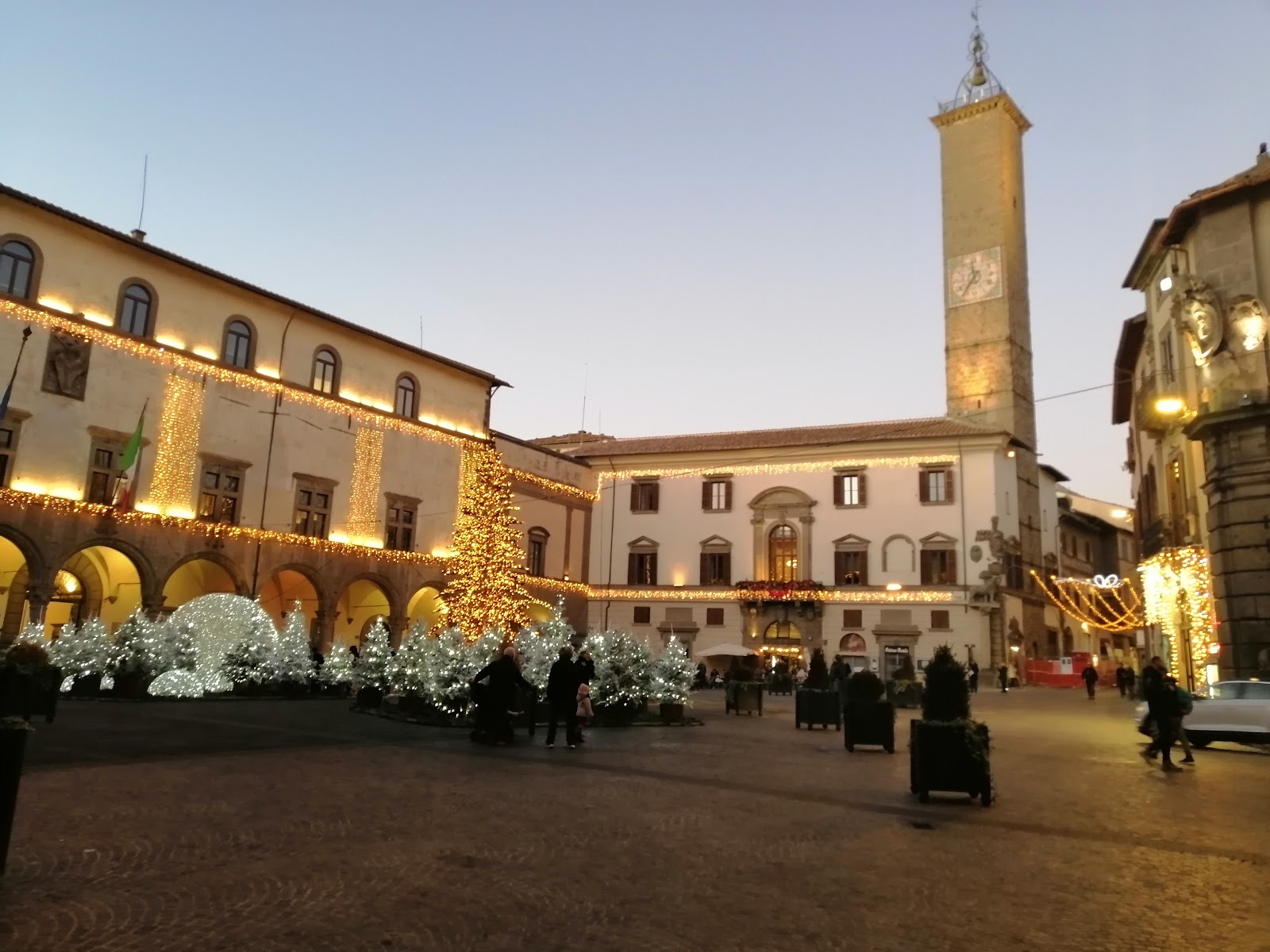
The clock tower rises 44 metres above the piazza's stone paving, its painted dial — the work of Domenico Costa in 1816 — catching the afternoon light in a way that makes you look twice. This is Viterbo's civic centre, the square where the town has been doing its public business since the 13th century, and it still feels that way: people cut across it on errands, pigeons congregate near the heraldic column with its lion and palm tree, and the nine-arched portico of the Palazzo dei Priori offers shade without ceremony.
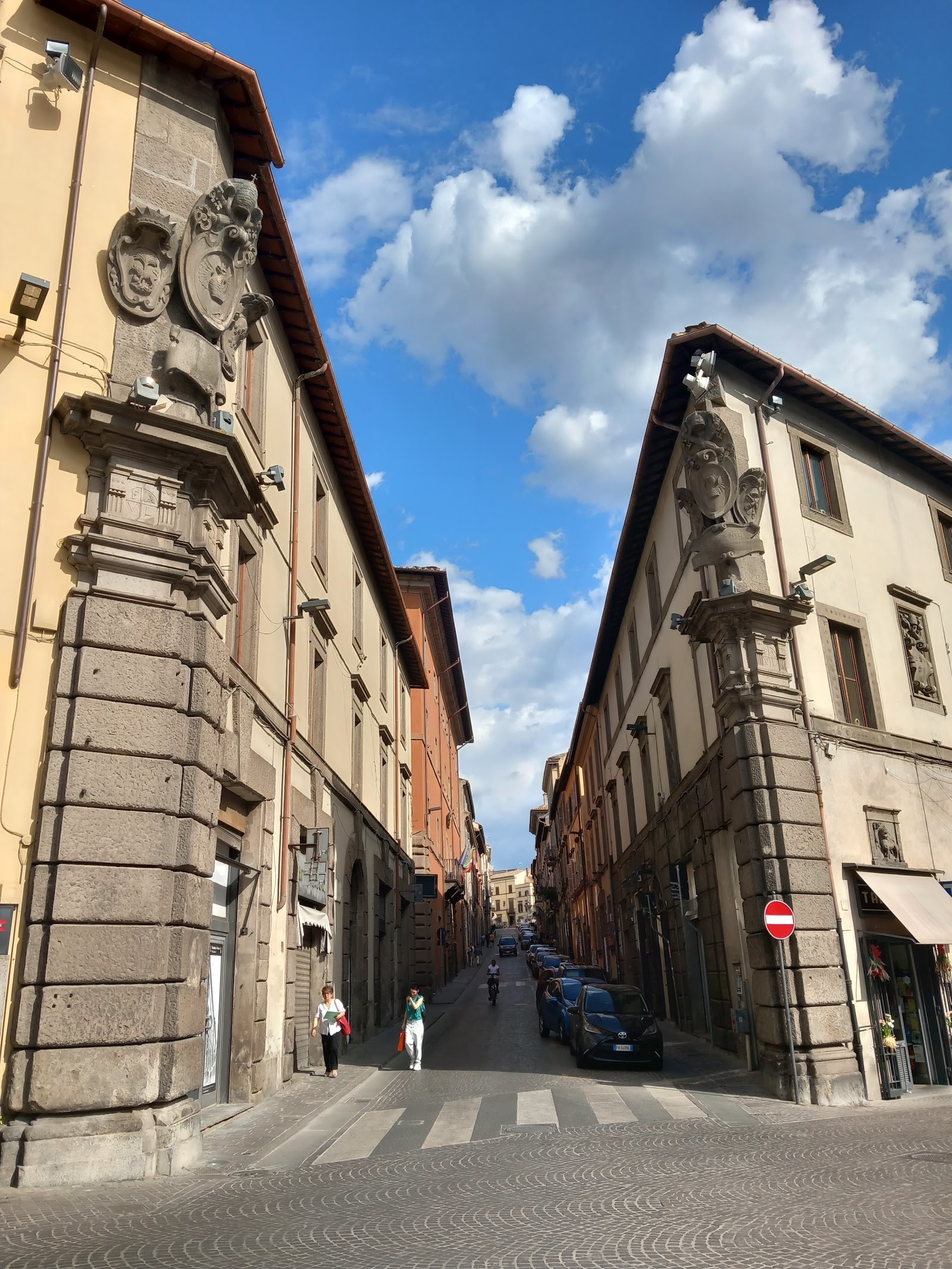
The palm tree is worth a pause. It's the symbol of ancient Ferento, a rival city Viterbo destroyed — absorbed into the coat of arms as a permanent reminder of the victory. Civic memory, carved in stone and set at eye level on the south corner of the square.
💛 What travellers fall for
Those who come back tend to slip into the Palazzo dei Priori courtyard first — it's free, unhurried, and the 1626 fountain with its two lions climbing a palm tree is easy to miss if you only walk the perimeter. The Sala Regia's Baldassarre Croce frescoes reward a slow look; the mythological scenes and Viterbese history share the same walls without obvious hierarchy.
The story behind Piazza del Plebiscito
The ground beneath the piazza was, before 1247, a simple meadow called Cavalluccalo, used as the cemetery of the Church of Sant'Angelo. That year, the building now known as the Palazzo della Prefettura went up, and the space began its transformation into a formal civic centre. The Palazzo del Podestà followed in 1264, and its clock tower — rebuilt to 44 metres in 1487, though a public clock had stood here since 1424 — anchored the square's skyline.
The Palazzo dei Priori, which now serves as the town hall, was started in 1460 and inaugurated fifty years later; it connects two earlier structures with a single arch. In the 16th century, Pope Paul III opened the closed western side of the piazza, cutting the street now called Via Cavour through to Porta Romana and linking the square to the rest of the city.
Good to know
Palazzo dei Priori is free and open daily, with extended afternoon hours on weekends. Viterbo is reachable by rail from Rome via the Porta Romana or Porta Fiorentina stations. The square itself has no entrance or closing time. Markets and seasonal events fill it at Christmas and in summer.
Summer brings hot, sunny days that make the portico's shade welcome; the stone holds warmth well into the evening. Winter is mild by northern standards, though the open square can feel exposed on windy days — early spring and September are the most comfortable times to linger.
Where is Piazza del Plebiscito?
More tickets & tours for Piazza del Plebiscito
Book directly at the provider
What travellers say about Piazza del Plebiscito
Big plaza in Viterbo, with streets for shopping, sightseeing and wandering, branching off in all directions. Great place to sit for a coffee and a snack!
What a fantastic city! Viterbo is a city in central Italy and was the seat of the popes in the 13th century. We had cocktails and spent an hour or so people watching in this amazing piazza (Piazza del Plebiscito) which also includes the Palazzo dei Priori, Prefettura di Viterbo, and Chiesa di Sant'Angelo in Spatha.
Great public space with beautiful old buildings and lots of amenities surrounding it
Very cold day, and not sure why the Christmas village was shut down, but still beautiful
It's really beautiful to see inside and behind the building is beautiful views of the main square, churches, quite lovely panoramas
More of Viterbo
Discover where to stay, what to do and the best deals for your trip.
Explore Viterbo →More attractions in Viterbo
All of Viterbo →

Background adapted from Wikipedia (CC BY-SA) · map data © OpenStreetMap contributors · ratings & place photos via Google · other photos with per-image credit. Ticket links may earn us a commission at no extra cost to you.