
Piazza del Duomo, Catania
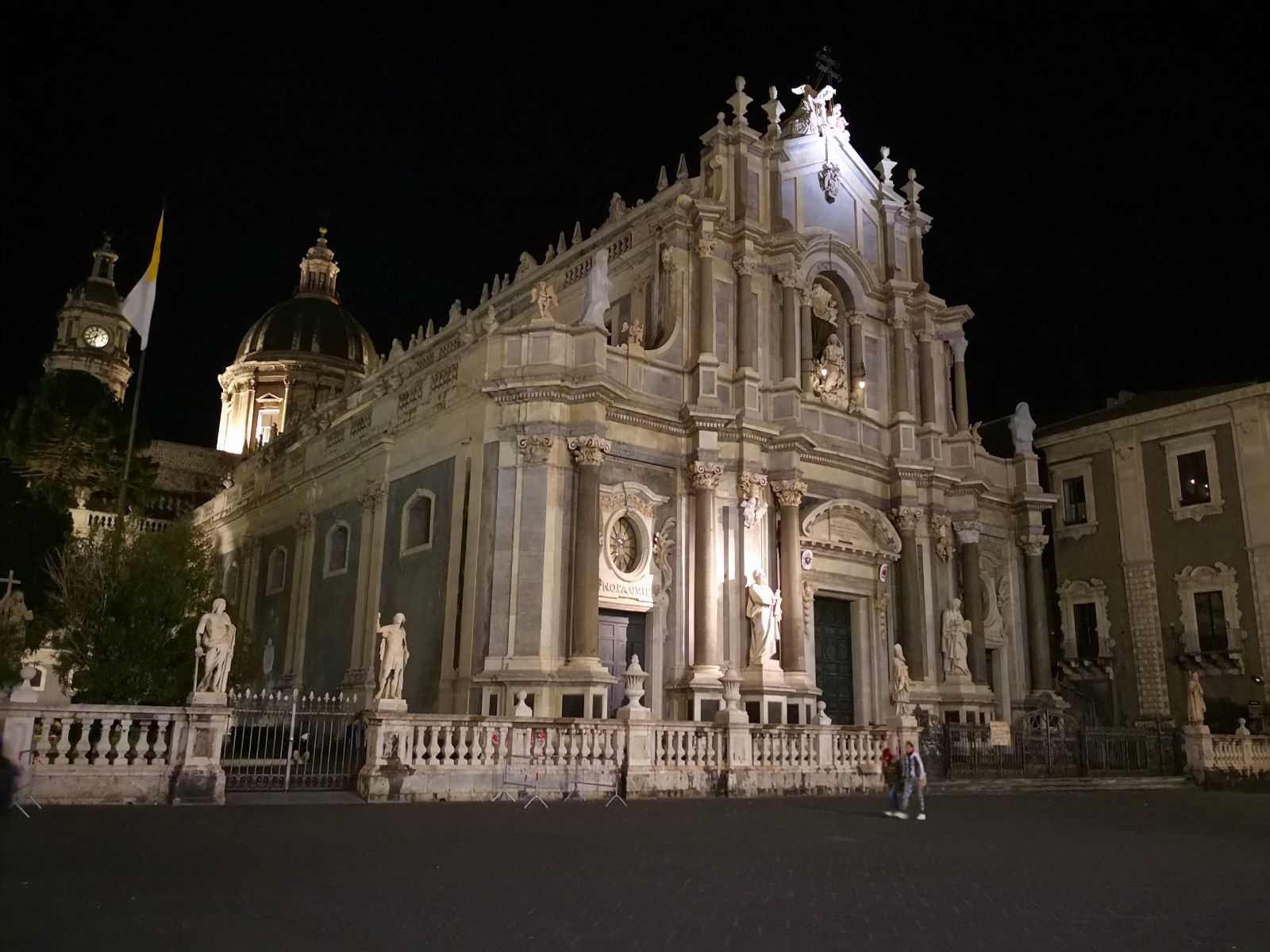
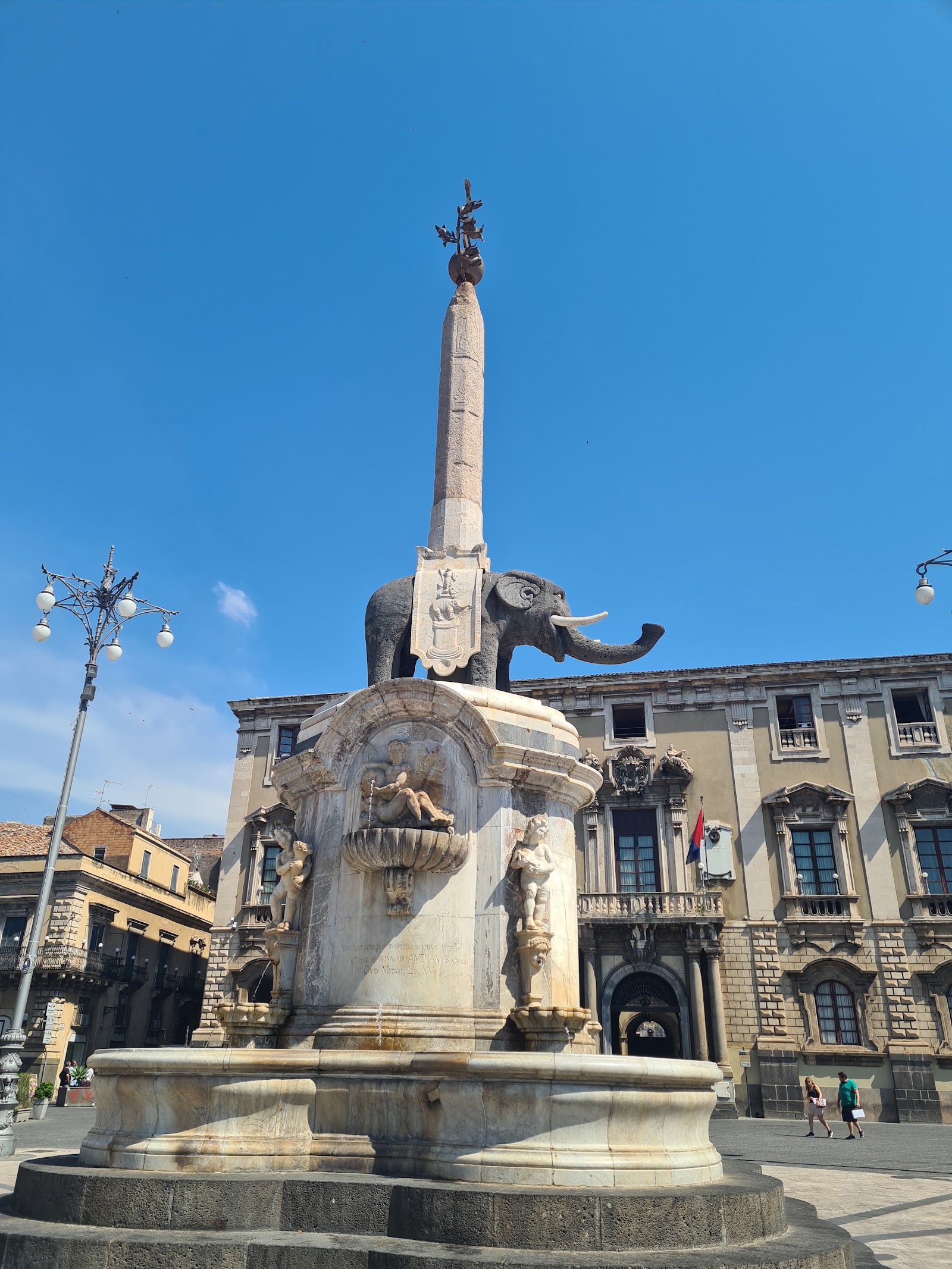
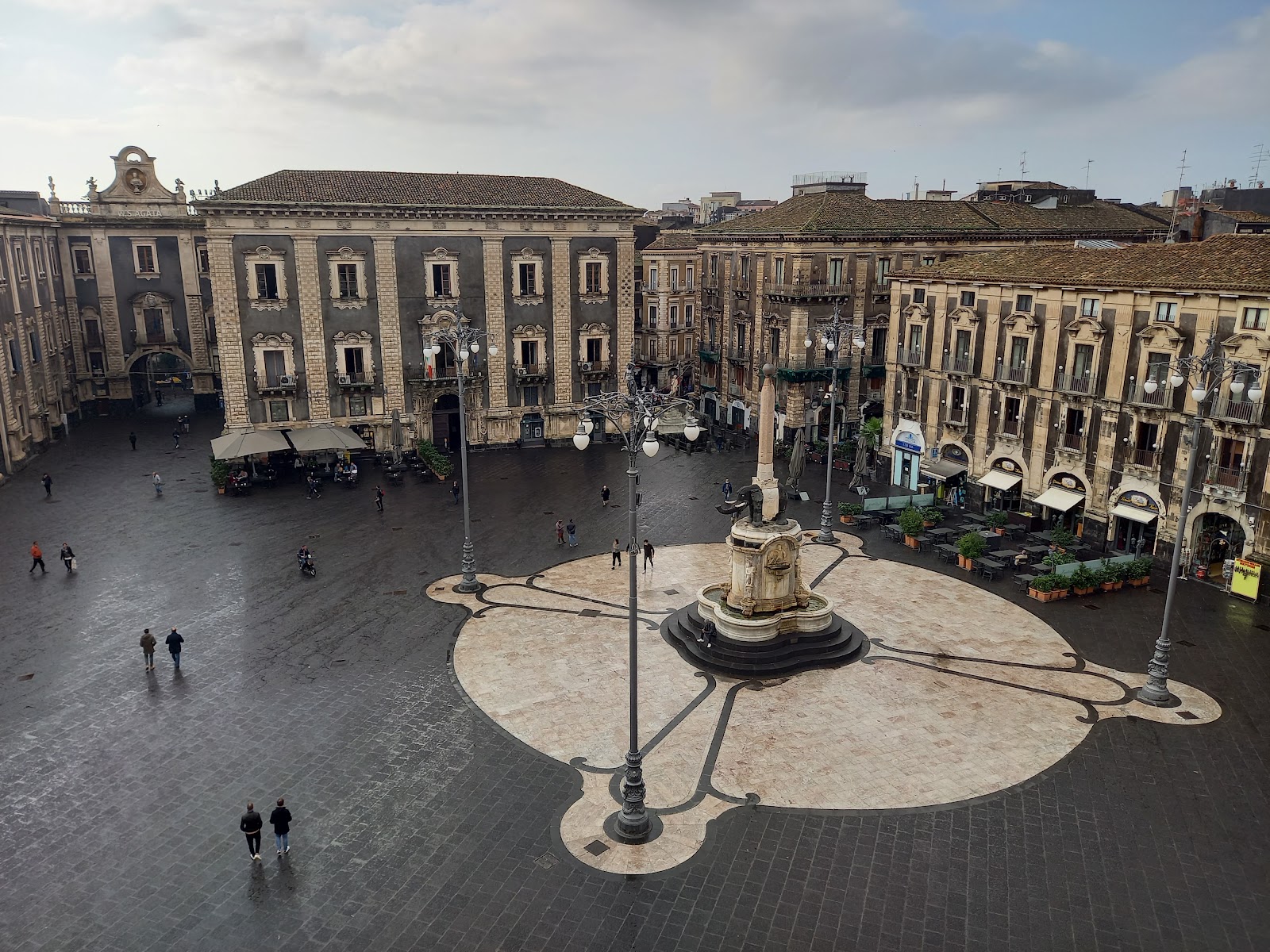
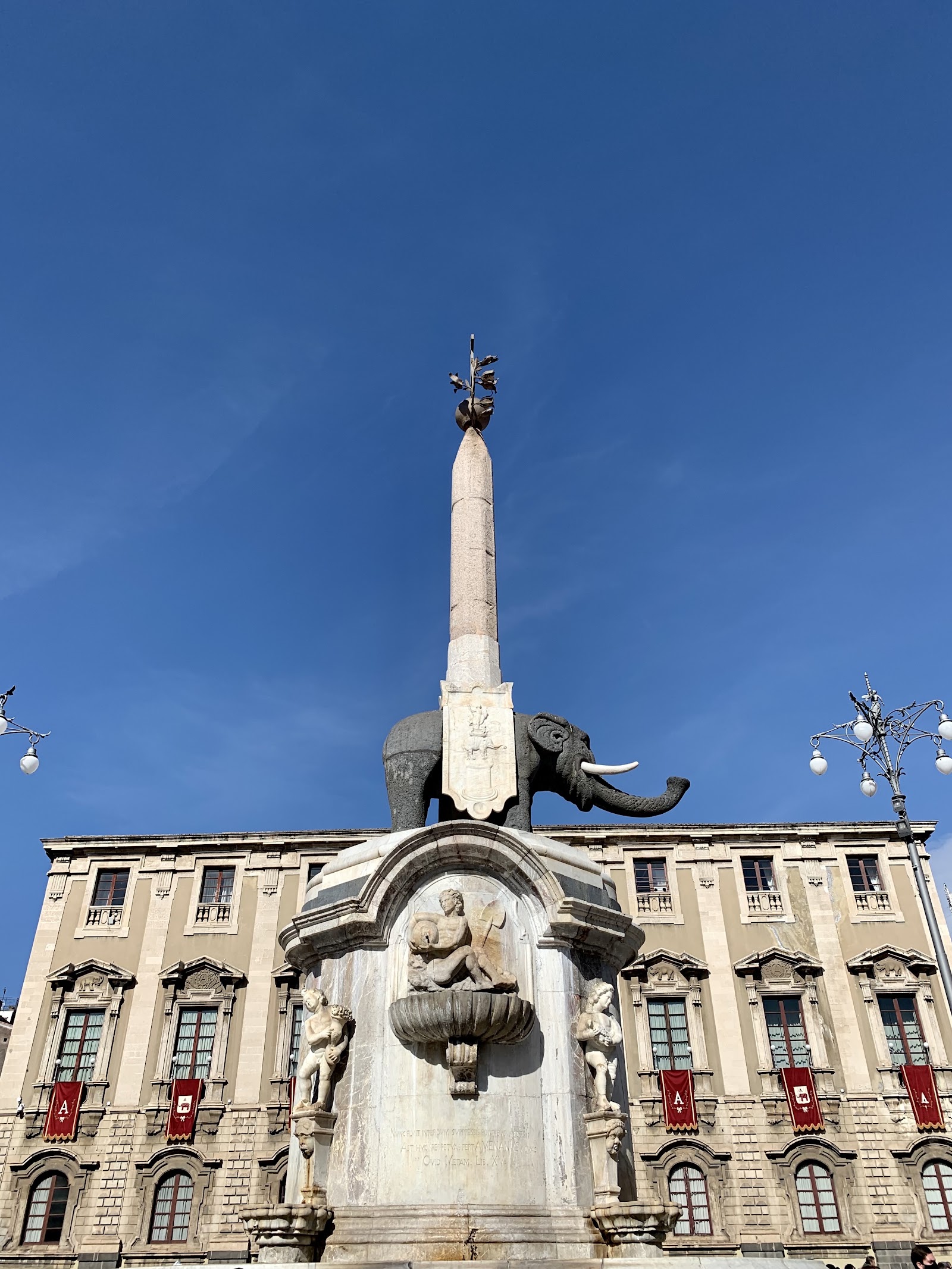
Stand at the centre of Piazza del Duomo and you are standing on top of Roman baths — barrel-vaulted thermal chambers from the 4th and 5th centuries sit about five metres below your feet, accessible through the Diocesan Museum if you want to see them. Above ground, the square arranges its competing authorities with deliberate symmetry: the Cathedral of Sant'Agata to the east, the Palazzo degli Elefanti (the town hall) to the north, and at the centre, a lava-stone elephant carrying an Egyptian obelisk covered in hieroglyphics.
This is a UNESCO-listed square, rebuilt from near-total ruin after the 1693 earthquake that levelled most of eastern Sicily. Everything you see is essentially early 18th-century Baroque, which means the grandeur here is not accumulated over centuries but designed, all at once, by a single architect with a clear idea.
💛 What travellers fall for
People who come back tend to time the Fontana dell'Amenano rather than the cathedral — the small marble fountain by Tito Angelini pours water in a single compact sheet locals call 'aqua a linzolu', a transparent veil. It sits right beside the entrance to the fish market, so the contrast of the two is worth a few minutes of standing still.
The story behind Piazza del Duomo, Catania
Roger I, the Norman count, founded a cathedral on this site in 1091. It survived until the earthquake of January 1693 — one of the most destructive in European recorded history — which collapsed the building along with the rest of the city. The commission to rebuild fell to Giovanni Battista Vaccarini, a Palermo-born architect who had trained in Rome and became the defining voice of Catanian Baroque. He designed the cathedral's façade in 1711, laid out the piazza's proportions, and created the Fontana dell'Elefante in 1736, placing a Roman lava elephant — already ancient when Vaccarini found it — beneath an Egyptian obelisk.
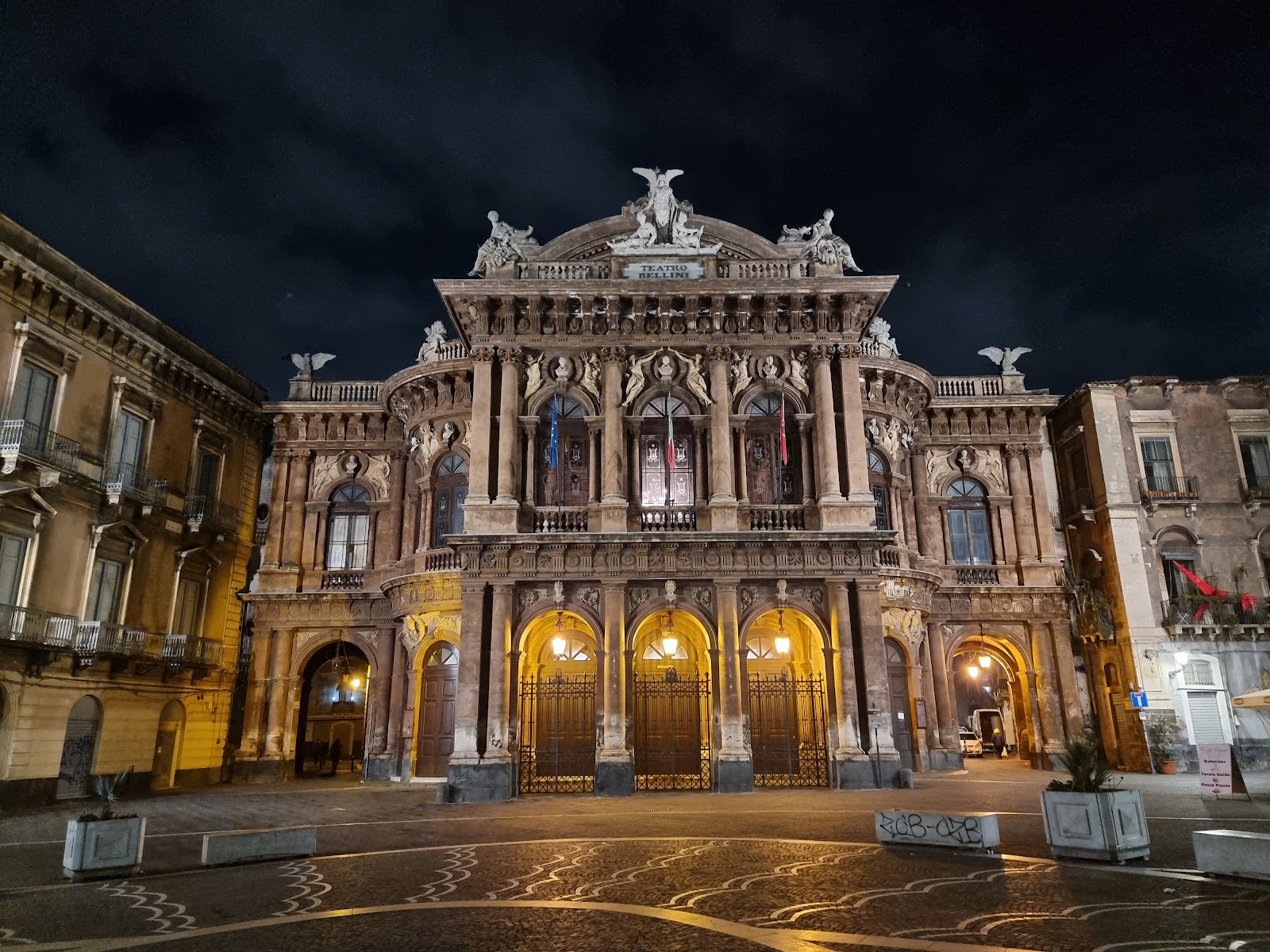
The Palazzo degli Elefanti, rebuilt after the earthquake by Giovan Battista Longobardo with Vaccarini contributing three façades, placed civic government directly opposite the church. The arrangement was not accidental: the square was conceived as a stage for both powers simultaneously. The composer Vincenzo Bellini, born nearby, is buried inside the cathedral.
Good to know
The piazza is free and open around the clock; the cathedral charges nothing but keeps split hours (closed midday). The bell tower requires a timed Giotto pass. The nearest metro stop, Italia, is an eight-minute walk. Budget 20 minutes for the square itself, an hour or more if you add the cathedral interior and the Diocesan Museum's underground Roman access.
Summer brings reliable heat and full sun — the pale Baroque stone reflects it hard by midday, so early morning is the better hour for photographs and lingering. Winter is mild by northern European standards, with occasional rain and soft light that suits the lava-dark fountain.
Where is Piazza del Duomo, Catania?
Location
- In Catania
- 37.5023, 15.0875
- Open in Google Maps
More tickets & tours for Piazza del Duomo, Catania
Book directly at the provider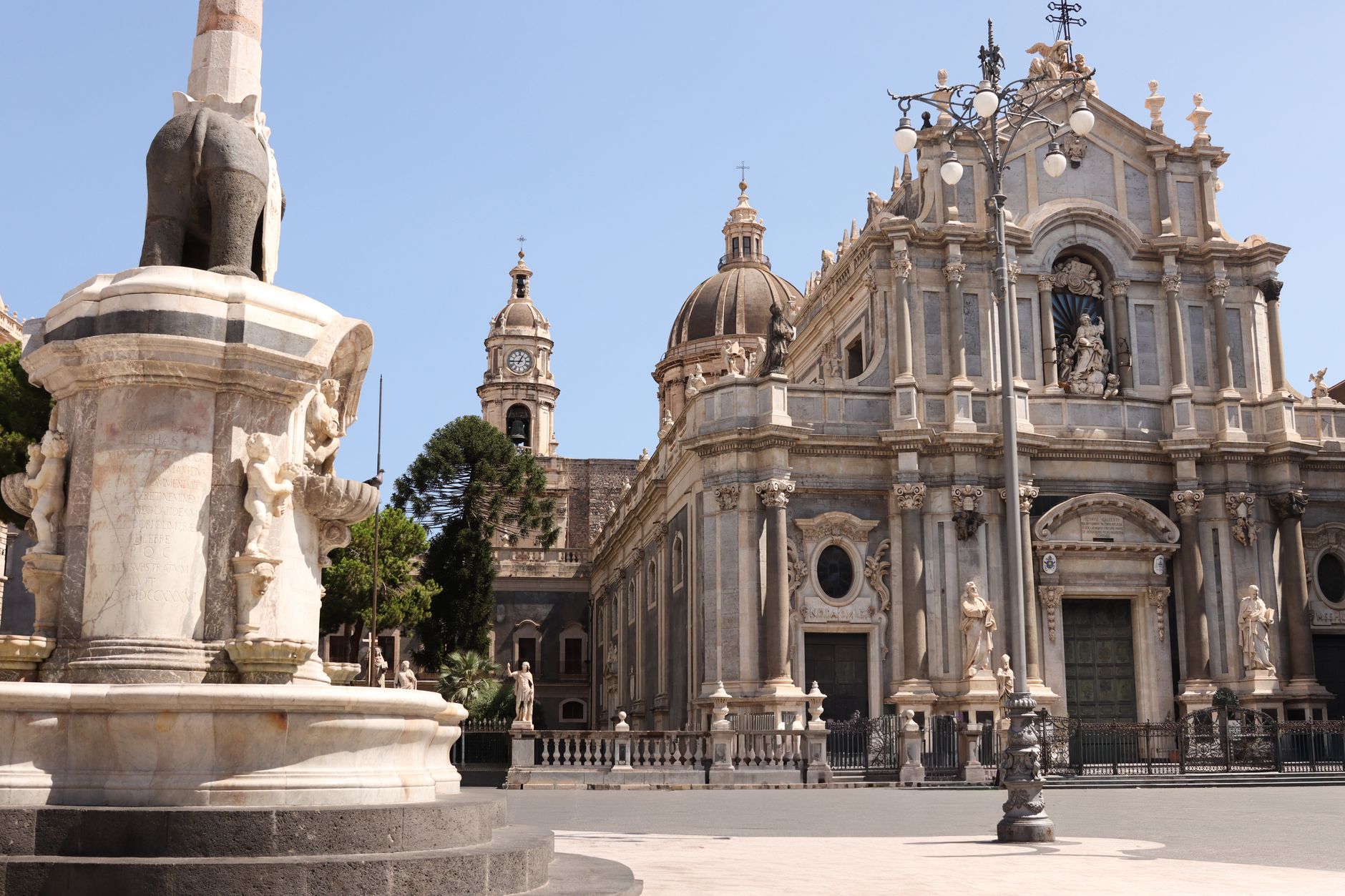
More of Catania
Discover where to stay, what to do and the best deals for your trip.
Explore Catania →More attractions in Catania
All of Catania →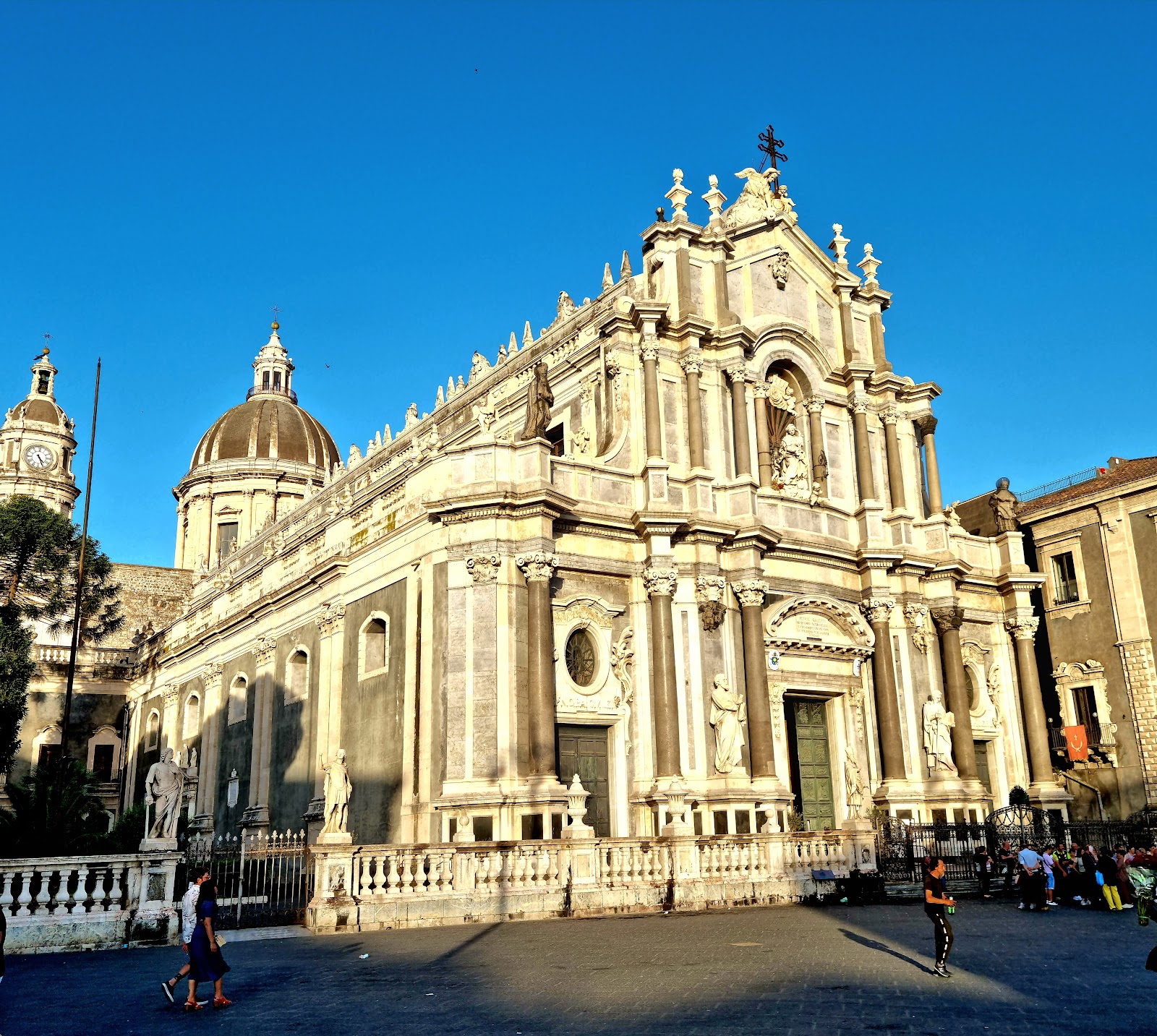
Background adapted from Wikipedia (CC BY-SA) · map data © OpenStreetMap contributors · ratings & place photos via Google · other photos with per-image credit. Ticket links may earn us a commission at no extra cost to you.