
Museo della Città (Tivoli City Museum)

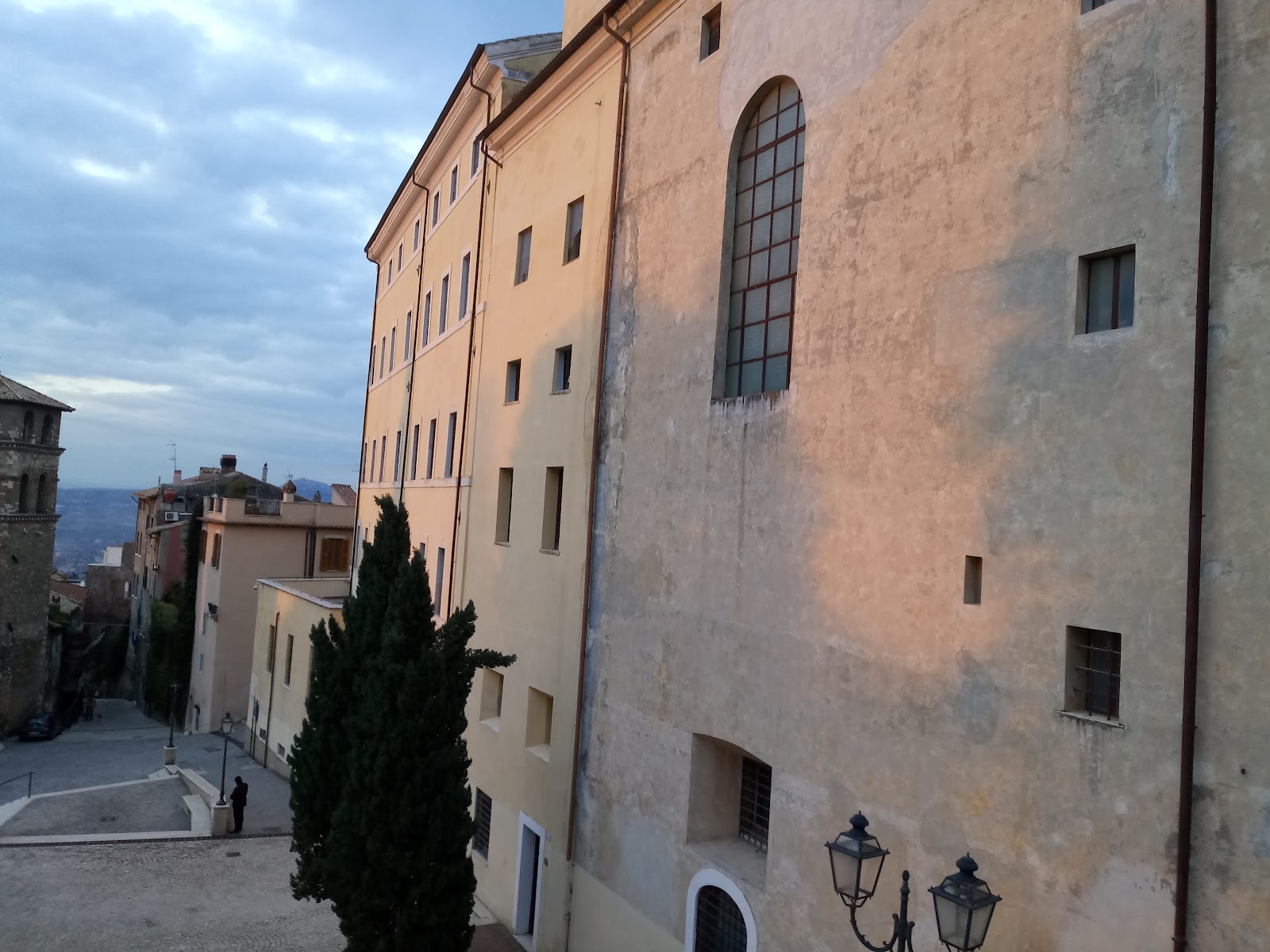
The building at Piazza Campitelli 1 has worn several lives on its face. Built in 1729 as a mission house for the priests of St. Vincent, it later became a reform school for juveniles — locals called it simply "I Discoli," the unruly ones — and after the Allied bombing of May 1944 it sheltered homeless families for nearly four decades. That layered past is part of what makes it an honest place to start understanding Tivoli.
Today the first three floors hold rotating exhibitions on the city's history and art, including 28 engravings by Giovanni Battista Piranesi — precise, dramatic records of the temples, villas and townscapes he found here in the eighteenth century, many of them now changed beyond recognition. Admission is free.
💛 What travellers fall for
People who return tend to pick up the Medieval Itinerary map here before heading out. It threads 29 points through the historic centre — Gothic friezes on Postera Street, tower houses, the Arengario in Piazza Palatina — and the educational panels posted along the route reward a slow afternoon on foot far more than a rushed circuit.
The story behind Museo della Città (Tivoli City Museum)
Bernardino della Torre raised the building in 1729 to house missionaries of St. Vincent working across the Tivoli area, a community that remained active here for close to two centuries. When the Italian state absorbed Church properties after 1870, the palace passed into government hands and was repurposed as a House of Correction for young offenders — a function that gave the building its stubborn nickname.
The bombing of Tivoli in May 1944 left much of the city in ruins, and the palazzo became emergency housing. Families occupied it until 1981, by which point the fabric of the building had been considerably altered. The City Council then designated it as the future Museo della Città. Restoration moved slowly through bureaucratic channels, and in December 2021 the State Property Office formally handed the building to the municipality. Work on the upper two floors continues.
Good to know
Open Fridays, Saturdays, Sundays and public holidays. Free entry. From Rome, take the FL2 train from Roma Tiburtina to Tivoli (roughly an hour) and walk six minutes uphill into the historic centre. The museum sits at Piazza Campitelli, close to the Church of San Pietro alla Carità.
Where is Museo della Città (Tivoli City Museum)?
More tickets & tours for Museo della Città (Tivoli City Museum)
Book directly at the provider
What travellers say about Museo della Città (Tivoli City Museum)
History about the city and all villas around. Free to enter.
The museum is located a short distance from the famous Villa d'Este. The three-story building has many rooms, but they are rather bare, except for three canvases and a painted panel. Many panels and prints are on display. The ticket, which can be combined with admission to the Rocca Pia, costs five euros.
The museum is housed in adequate spaces, and the palace has been perfectly restored. The Middle Ages in Tivoli are explored in a special way through an exhibition featuring panels, videos, and high-definition installations, revealing the artistic, historical, and cultural riches of the city during that period. All artifacts and finds are largely located elsewhere in the city. The museum's limitation is that it is more of a multimedia experience than a museum. However, the various photographic enlargements are appreciated. Admission is free.
A very beautiful museum, I recommend it to everyone, especially those from Tiburtina, who recognize the places described and will discover the history they may have been unaware of behind many corners of our city. Beautifully renovated, I really like how they used so many photos to explain, both huge ones on the walls (I love the drawings of the Temple of Cough, it feels like you're there) and the use of photos of church floors on the floor as if they were real floors. I think "outsiders" can still appreciate the exhibition, thanks to the photos that leave a wow factor, but I understand if they don't want to read the panels about unfamiliar places. I would recommend (but I understand the cost) adding more videos with explanations/recordings and something interactive: visitors will enjoy listening to them more than reading the panels. A guided tour would also be nice. I can't wait for the top two floors to open, and I love that it's FREE. I don't know if it's economically sustainable for it to remain free in the future, but if not, I hope it stays that way at least for the people of Tivoli, perhaps charging €1 to those who don't live in Tivoli (similarly for Rocca Pia).
If there was nothing at the Rocca Pia, here at the Civic Museum (City Museum) there are at least some files. But be warned: it's a purely informative experience that doesn't justify the cost of an admission ticket. Essentially, it's a series of panels and texts explaining local history, material that should be offered free of charge as a basic tourist service, not sold as a museum tour. The only noteworthy artifact is a marble head believed to belong to an ancient general or king, but otherwise it's emptiness. The most shocking thing, however, is the climate: radiators turned on full blast, creating a scorching, unbearable heat. The question arises: why all this wasted energy? Certainly not for the preservation of the works, since, aside from the aforementioned head, there's practically nothing to preserve that justifies such temperatures. In short: an information office masquerading as a museum, where you risk becoming ill from the heat. Save time and money.
More of Tivoli
Discover where to stay, what to do and the best deals for your trip.
Explore Tivoli →More attractions in Tivoli
All of Tivoli →
Background adapted from Wikipedia (CC BY-SA) · map data © OpenStreetMap contributors · ratings & place photos via Google · other photos with per-image credit. Ticket links may earn us a commission at no extra cost to you.