
Menara Gardens
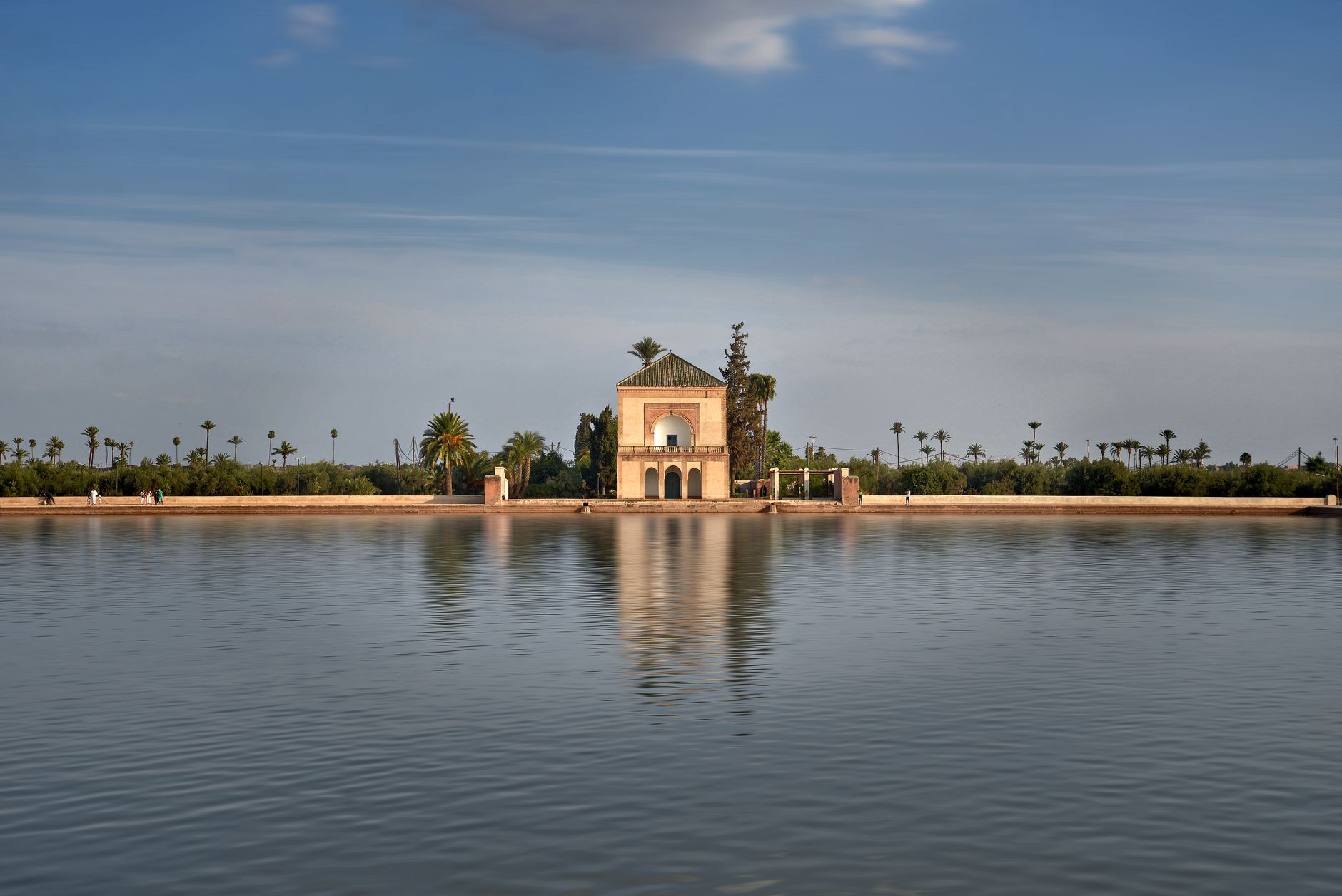
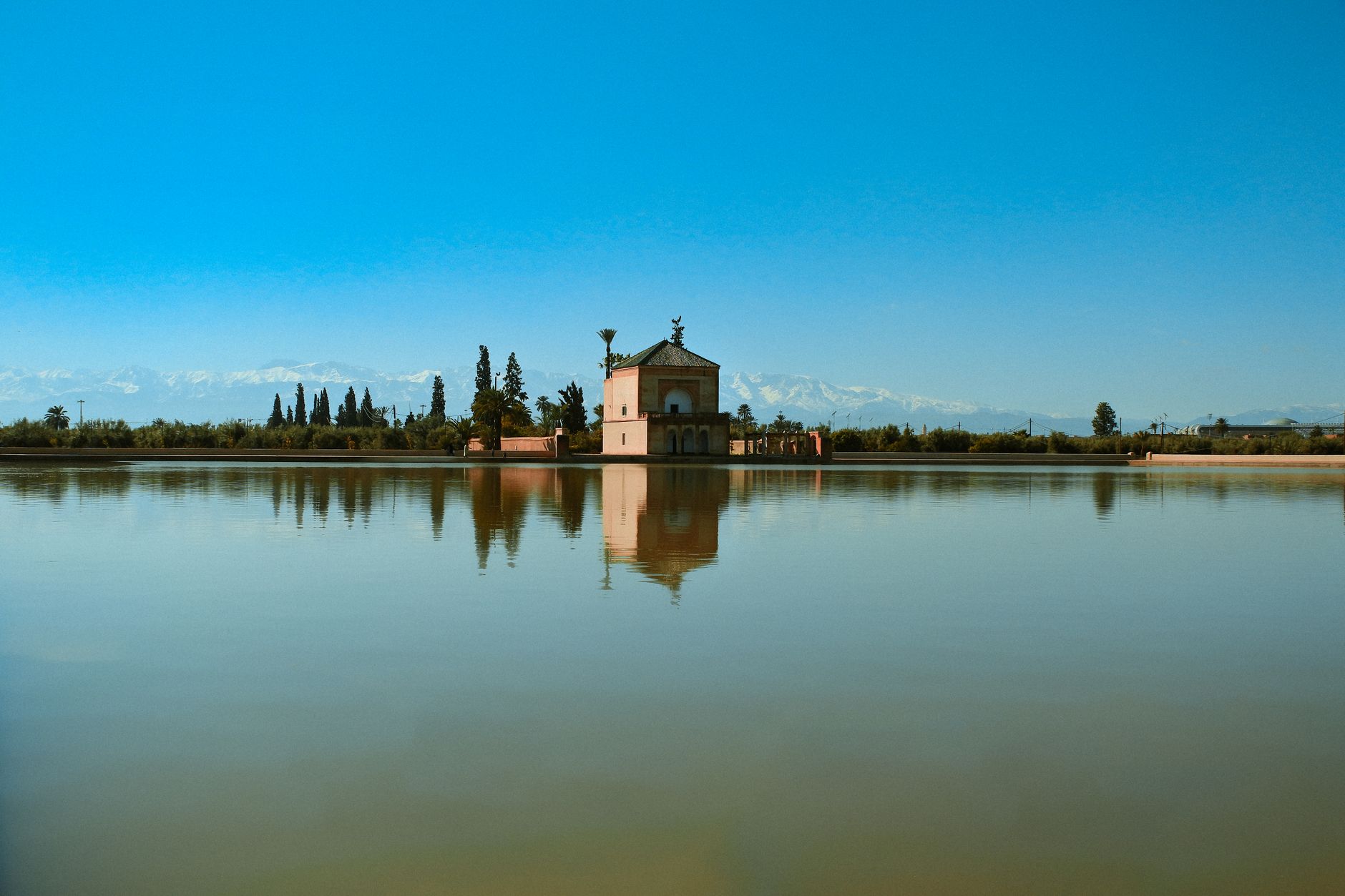
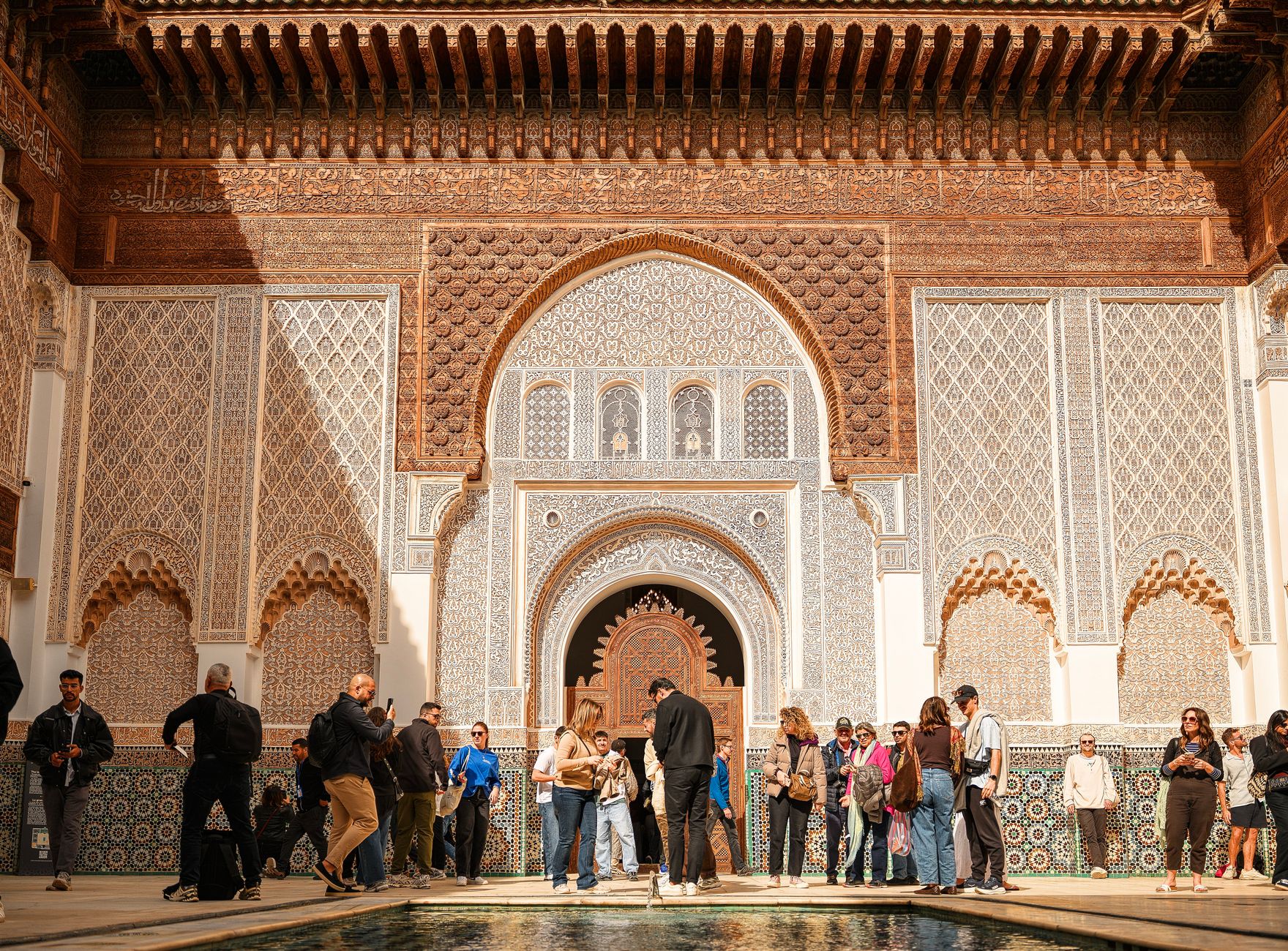
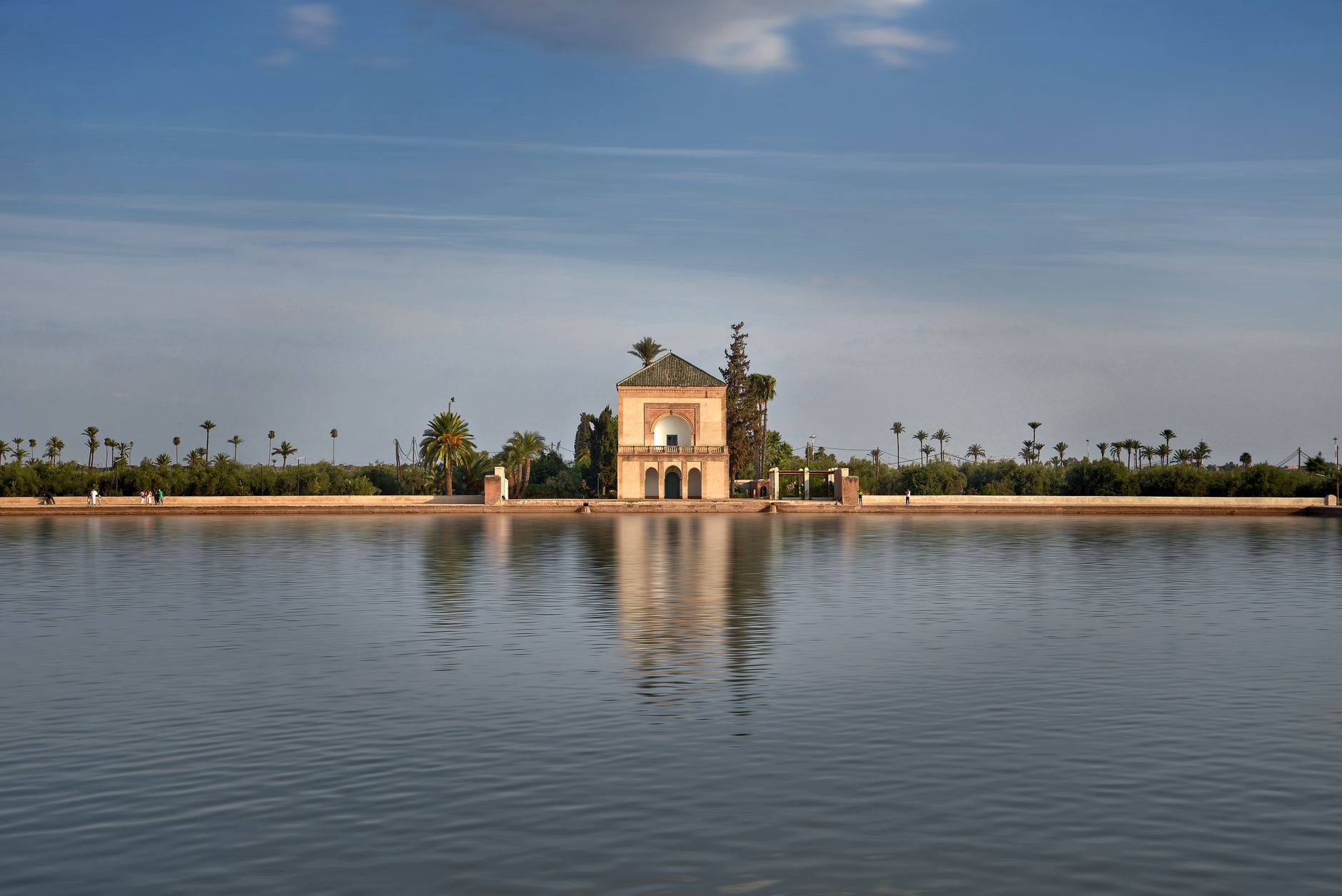
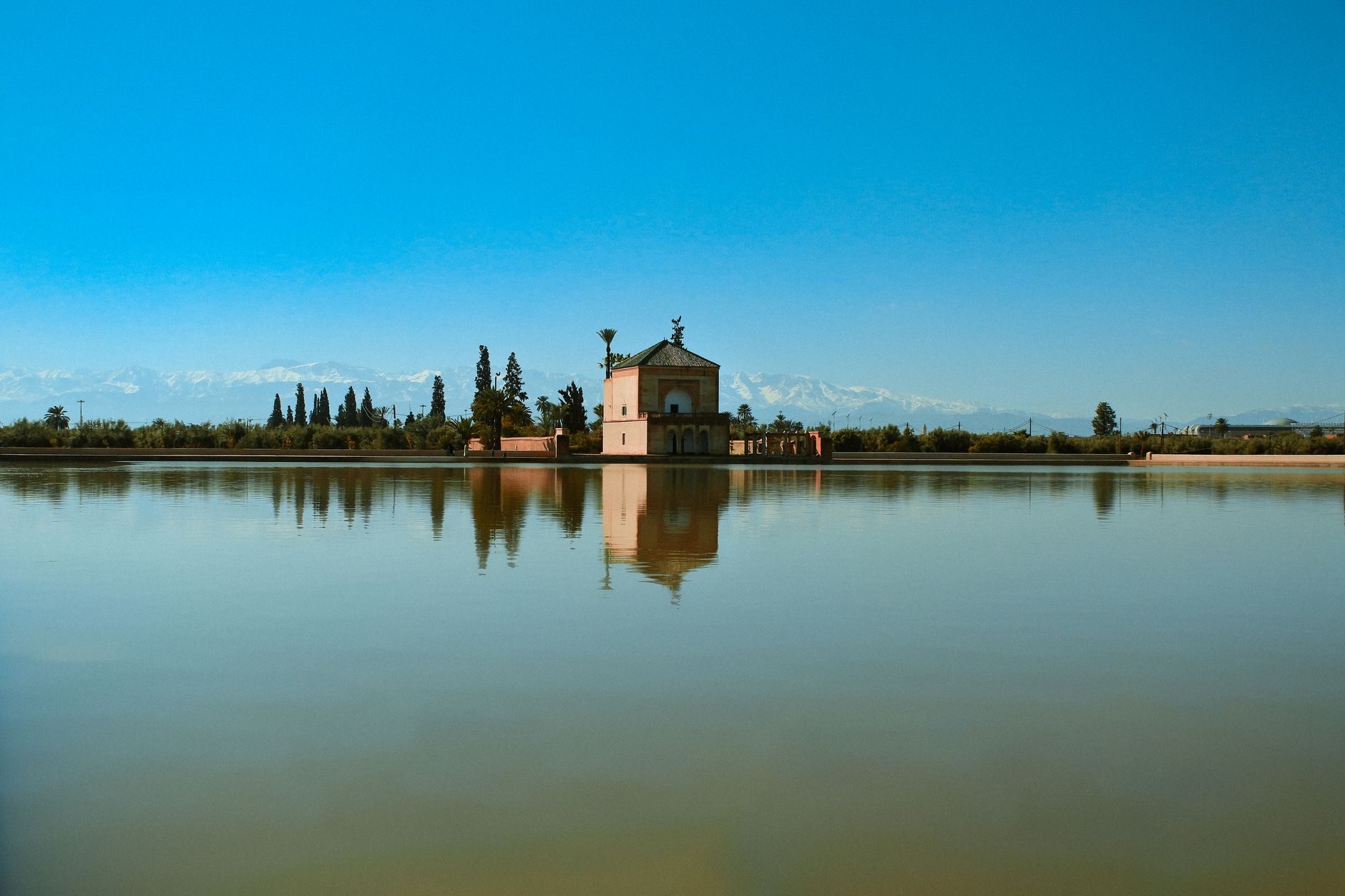
Stand at the edge of the Menara's reservoir — 195 metres long, 160 metres wide, built above the surrounding orchard so gravity alone could water the olive groves below — and the geometry of the thing stops you. The green-tiled pavilion at the far end sits its reflection perfectly in the water. On clear winter mornings, the snow-covered Atlas peaks appear behind it, a third layer of the composition that no postcard quite prepares you for.
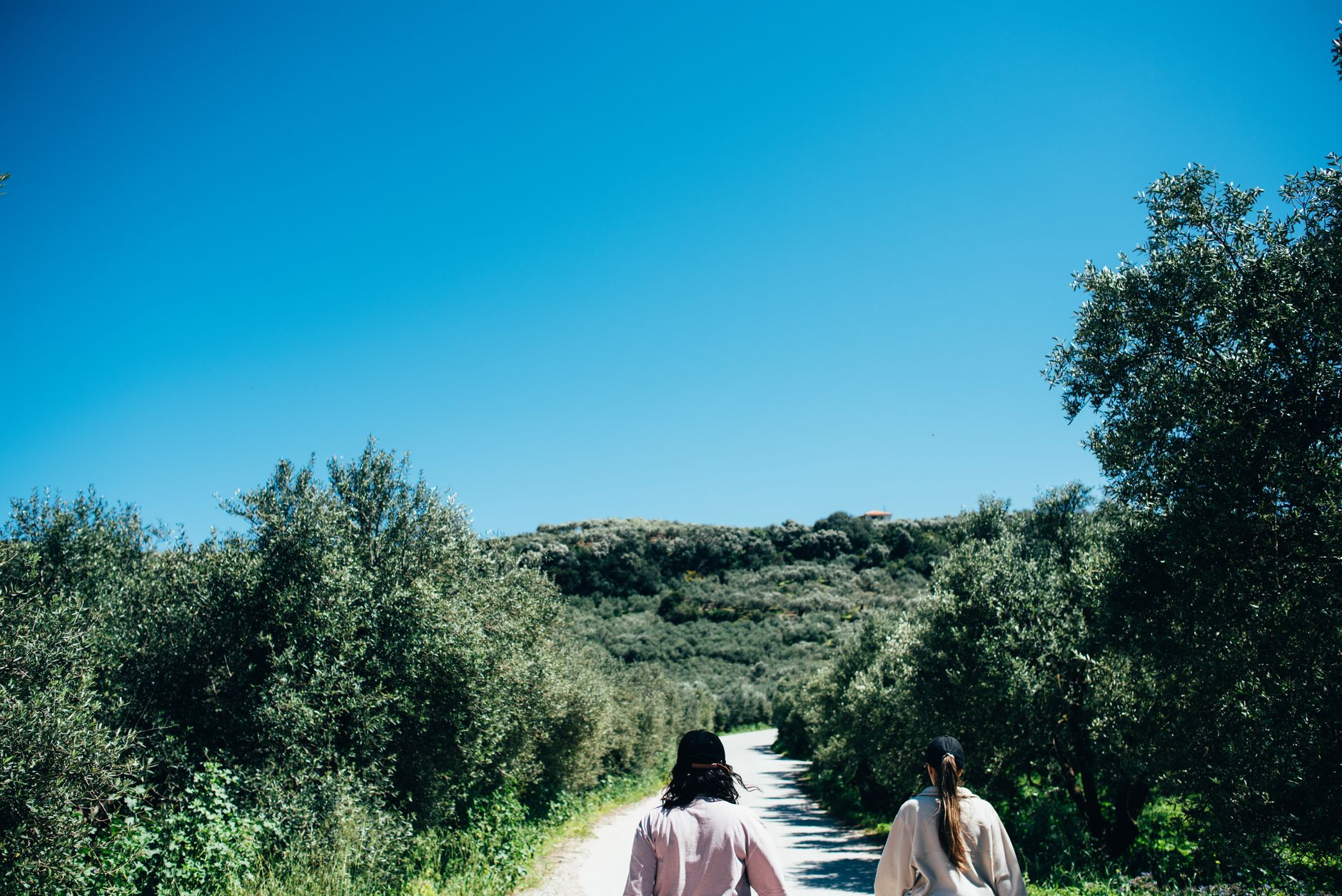
The gardens themselves are working land as much as ornamental space. Roughly a kilometre and a quarter of olive trees — around forty species of them — stretch out in every direction, the kind of scale that makes the city's noise feel genuinely remote.
💛 What travellers fall for
People who come back tend to arrive early, before the tour groups reach the basin. The pavilion interior (100 MAD to enter) rewards the fee: the upper room's north balcony frames the reservoir and the Atlas in a single rectangle. Worth it on a clear morning in October or November, when the light is low and the air has some bite.
Deals in Menara Gardens
Book directly at the provider
How Menara Gardens came to be
Abd al-Mu'min, the Almohad caliph, had the reservoir and orchard laid out around 1157, on returning from Salé. The engineering is credited to Hajj al-Ya'ish, an engineer from Malaga who also designed mechanical elements of the Kutubiyya Mosque. The intention was practical: a large enclosed orchard with a basin storing enough water to irrigate fruit trees and vegetables by gravity feed.
The gardens fell into neglect after the Almohads lost power in the 13th century and the Marinids moved the capital to Fez. The Saadians restored them in the 16th century and added the first pleasure pavilion over the water. The current pavilion — stone-built, two storeys, the pyramidal green roof you see today — was completed in 1870 under the Alaouite sultan Muhammad IV, on the ruins of that earlier Saadian structure. The gardens were listed as part of the UNESCO World Heritage Site of the Médina of Marrakesh in 1985.
Who and what shaped it
People who shaped it
Landmark buildings
See Menara Gardens in motion
Plan your visit
On the map
When to go
Spring (March–May) and autumn (September–November) are the easiest seasons to be here, with temperatures between 18°C and 28°C and manageable sun. Summer days regularly push past 38°C and the open ground around the basin offers almost no shade — if you come in July or August, go at first light. Winter brings the Atlas snow into view behind the pavilion, which is its own reward.
Right now
↡ Shopping areas
Background & history adapted from Wikipedia (CC BY-SA) · specs from Wikidata (CC0) · weather from Open-Meteo · map data © OpenStreetMap contributors · photos from Wikimedia Commons / Unsplash with per-image credit. No third-party reviews or social posts reproduced.