
La Piccola Gerusalemme (Jewish Ghetto)

Four medieval alleyways branch off Via Zuccarelli, and somewhere along them a matzo oven was still running in 1939. That detail — the persistence of ordinary ritual right up to the edge of catastrophe — is what La Piccola Gerusalemme keeps asking you to hold. The site preserves the physical fabric of a Jewish community that took root in Pitigliano in the late sixteenth century: a synagogue, a mikvah, a kosher butchery, a textile dye room and a winery, all carved into the same tufa rock the rest of the town is built on.
The cultural centre was founded in 1996 by Elena Servi, described as the last Jewish woman of Pitigliano, and that act of founding carries its own weight throughout the visit.
💛 What travellers fall for
People who come back tend to linger in the underground chambers rather than the synagogue itself — the scale of the tufa-cut rooms makes the daily life of the community feel immediate rather than museological. Ask about the sfratti, the local pastry whose name means 'eviction' and whose shape recalls the canes Medici agents used on ghetto doors. It's sold in town and the story behind it is worth knowing before you eat one.
The story behind La Piccola Gerusalemme (Jewish Ghetto)
Jewish families first documented in Pitigliano in the fourteenth century, but the community solidified in the late sixteenth century when refugees fleeing the Papal States arrived in numbers. In 1556, Count Niccolò Orsini's physician, Dr. Davide de Pomis, secured land for a Jewish cemetery. Construction of the synagogue began in 1598, commissioned by a weaver named Leone di Sabato. When the Medici took control in 1622, formal ghetto restrictions followed.
The synagogue's roof collapsed in 1757, was rebuilt, then collapsed again in the 1960s, and was restored a final time in 1995 — though the community no longer has a minyan to hold services. The main ghetto gates came down in 1799 under a pro-Napoleonic government. By 1938, when racial laws came into force, only sixty community members remained. Among those who had passed through the ghetto's alleyways were the Servi brothers, founders of the first Italian Jewish newspaper, and Dante Lattes, rabbi, publisher and one of the most prominent figures in twentieth-century Italian Jewish life.

Good to know
Enter from Vicolo Marghera off Via Zuccarelli. Open daily except Saturdays, Jewish holidays and Christmas Day — hours shorten significantly October through March, so check before arriving. The guided tour runs about an hour and departs from the ticket office beside the synagogue; book ahead for groups.
Where is La Piccola Gerusalemme (Jewish Ghetto)?
More tickets & tours for La Piccola Gerusalemme (Jewish Ghetto)
Book directly at the provider
What travellers say about La Piccola Gerusalemme (Jewish Ghetto)
Overrated museum. It's small and you can see a lot of similar or more beatiful things in this town for free. Also, it's a very uncomfortable feeling to walk through a quiet and tranquil town and then see two heavily armed soldiers guarding this museum. No thank you... We prefer places that are not so hostile.
Fabulous museum from the ghetto starting back to 1555 where the village of Pitigliano nicknamed "the small Jerusalem" was a place of refuge for the Jewish community, seeking to flee the city of Rome so as not to be subject to Catholic authority. The ghetto as such was formed at the beginning of the 17th Century which the Medici dynasty took command of the city and restricted Jewish mobility. Yet still the community was well integrated and respected, collaborating in the economic, social and cultural fabric of the town. Prior to the 2nd World War, the community was numerous and active. Throughout the 19th Century when there was greater freedom of movement, many members of the community left Pitigliano for the more economically attractive cities of Rome, Florence, Lucca or Livorno. By 1938, however, after Nazi racial laws took effect only 60 members of the community remained, many escaping capture thanks to their neighbors, but forced to hide with farming families in the valley. A plaque in the Ghetto commemorates the 22 Jews born in Pitigliano who were killed in concentration camps. The town of Pitigliano sided strongly against deportation and in 2002 the Yad Vashem Institute in Jerusalem, the honor of the "Righteous Among the Nations" was conferred to some Pitigliano families for their attempt to save their fellow citizens. The Synagogue was built in 1598 and following a landslide rebuilt in 1995 by the town. This visit include the synagogue (restored in 1995), Cultural center, ritual bathhouse, wine cellar, bakery, dye-works, all of which are dug into the native tufa stone, as well as the the fairly non-traditional Jewish cemetery tucked in a cypress grove below the town.
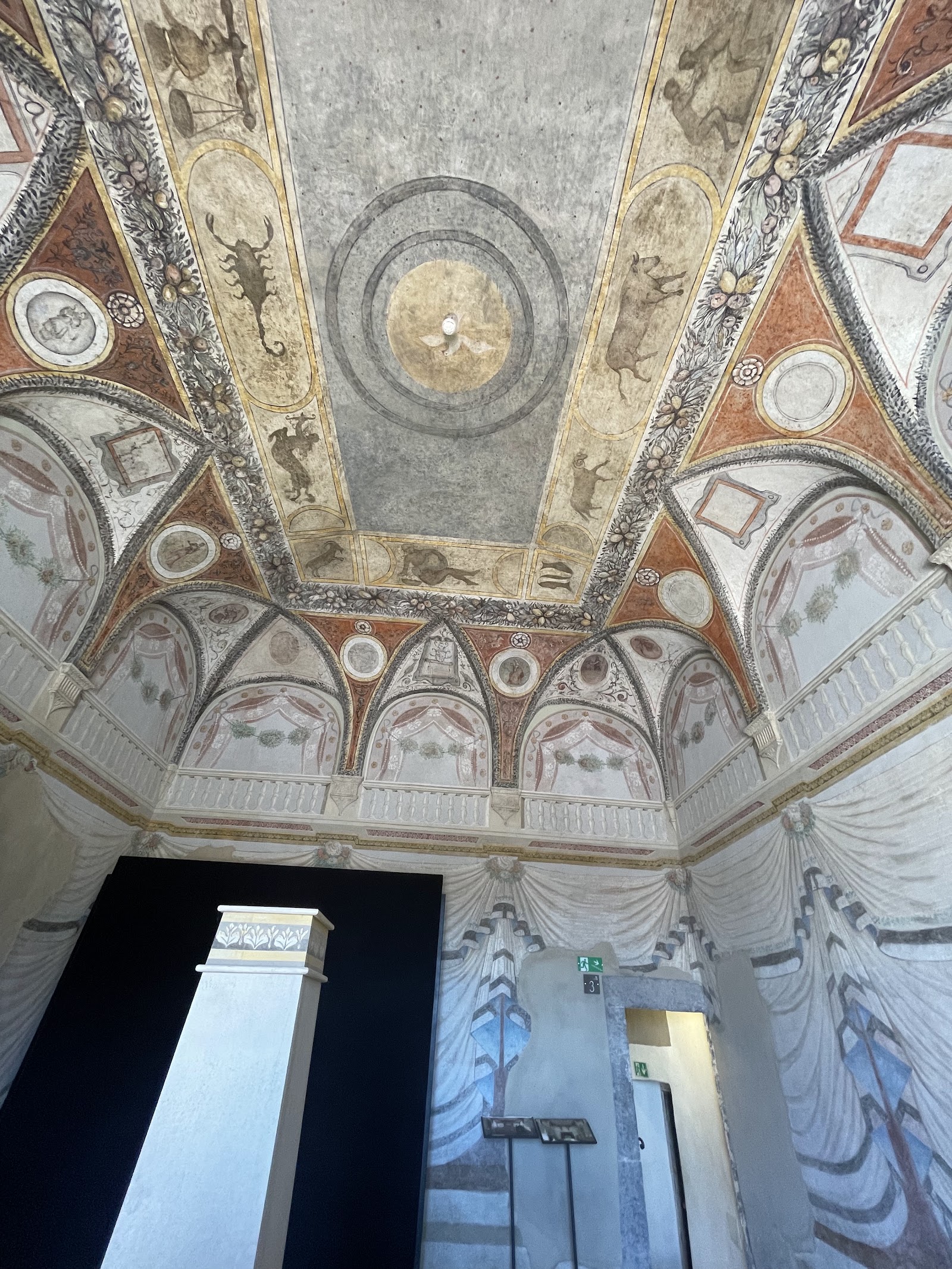
Fantastic history and well-appointed. Don’t miss the fantastic paintings on display as well. A truly wonderful experience that takes about forty-five minutes to fully absorb.
1598 a synagogue was built here, in 1622 ghetto created, in 19 century 1/4 of population were Jews- city was known for Jews as little Jerusalem. During the war 30 remaining Jews were helped by locals and hidden in the countryside
Small but very complete and informative museum with content in both Italian and English. As an American Jew, I found it interesting to read the descriptions of things I already know, to see how they are explained to others. I would recommend this visit as a wonderful learning experience for those who want to know more about the Jewish religion.
More of Pitigliano
Discover where to stay, what to do and the best deals for your trip.
Explore Pitigliano →More attractions in Pitigliano
All of Pitigliano →
Background adapted from Wikipedia (CC BY-SA) · map data © OpenStreetMap contributors · ratings & place photos via Google · other photos with per-image credit. Ticket links may earn us a commission at no extra cost to you.