
Fortezza Medicea (Cassero)
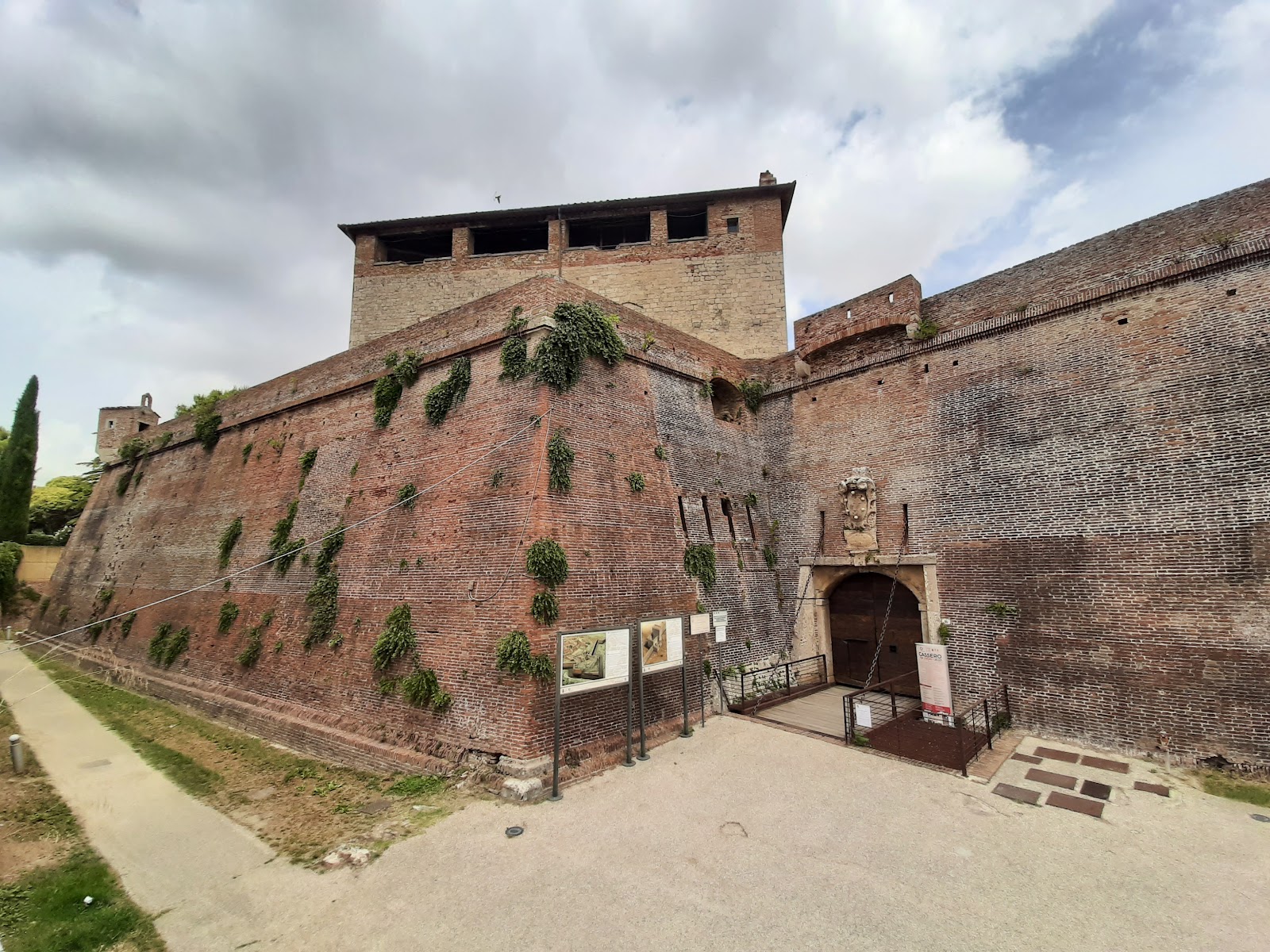
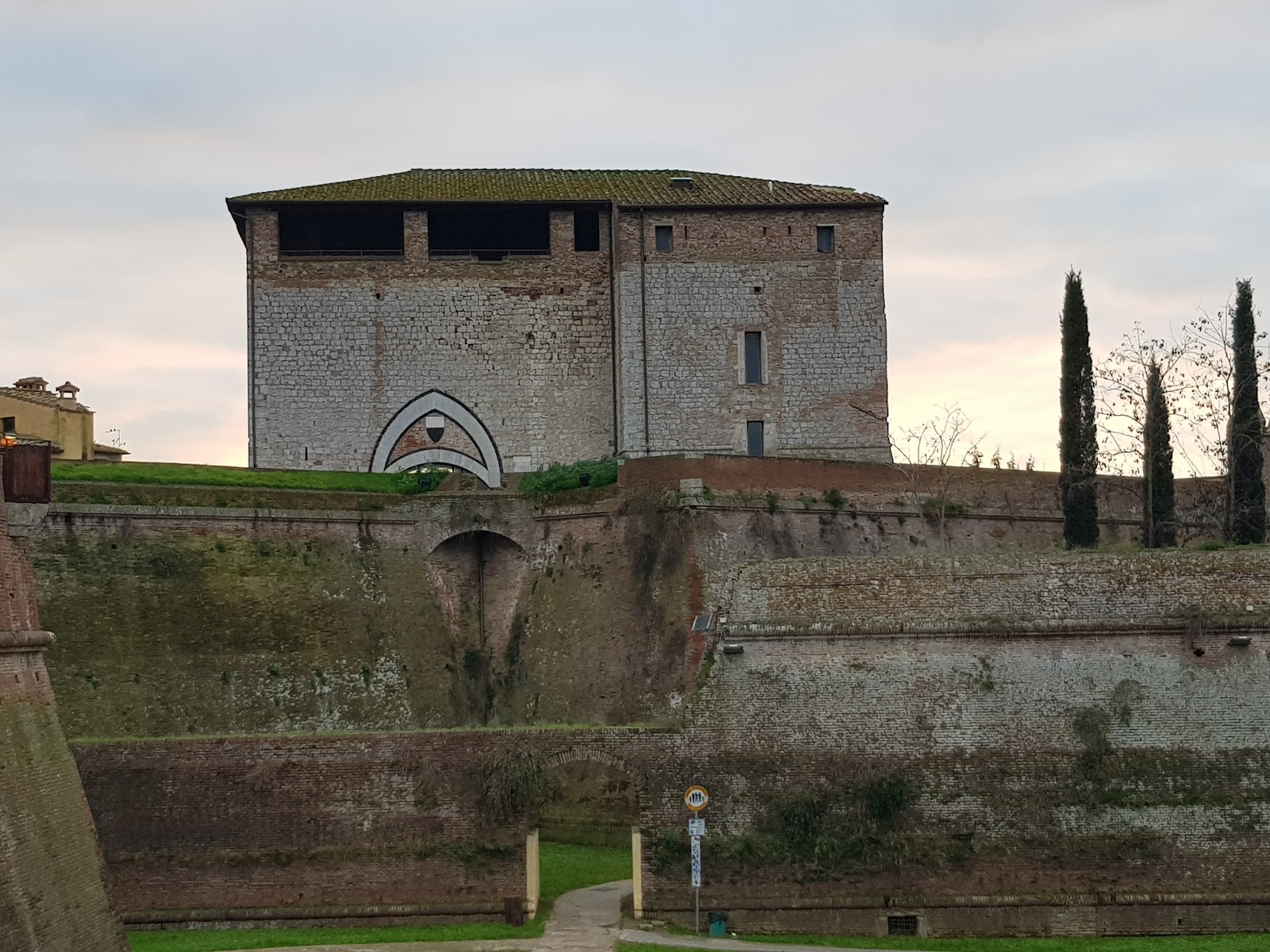
At the southwest corner of Grosseto's red-brick walls, the Cassero Senese rises in travertine and black marble — older than everything around it, and built in a single year. The double arch at its entrance, Gothic point sitting above a round arch, belongs to a different century than the Medici fortifications that eventually absorbed it. That survival is the story: when Cosimo I ordered Siena's defensive works demolished after his conquest, this 14th-century keep was the one thing left standing.
Today you climb steep, slippery stone steps to a terrace with crossbow loopholes still cut into the walls and views that open across Grosseto's rooftops to the flat Maremma countryside beyond. Below, in the Piazza d'Armi, an octagonal well draws from a cistern beneath the flagstones.
💛 What travellers fall for
People who return tend to come back for the roof at dusk, when the light flattens across the Maremma. The interior exhibitions change — photography one season, local heritage the next — so it's worth checking what's showing before you go. The narrow stairs demand proper shoes; the parapet rewards patience.
The story behind Fortezza Medicea (Cassero)
The Cassero Senese went up in 1344–1345, commissioned by the Republic of Siena as a fortified keep on the southwestern edge of Grosseto's medieval walls. It was quick work — completed in a year — and its Sienese coat of arms and travertine cladding still mark it as a different political moment than what surrounds it.
That difference almost erased it. In 1564, Cosimo I de' Medici, having absorbed the Republic of Siena into his Grand Duchy of Tuscany, commissioned engineer Baldassarre Lanci to design a new ring of fortifications. Construction began March 1565 and the medieval Sienese walls were largely torn down. The Cassero alone survived, integrated into the new Medici system. Lanci's son Marino continued the project after his father; Simone Genga and Geronimo Seriacopi oversaw the final phase. The Medici coat of arms was placed above the entrance gate in May 1593, marking completion of a circuit that took nearly three decades.
Good to know
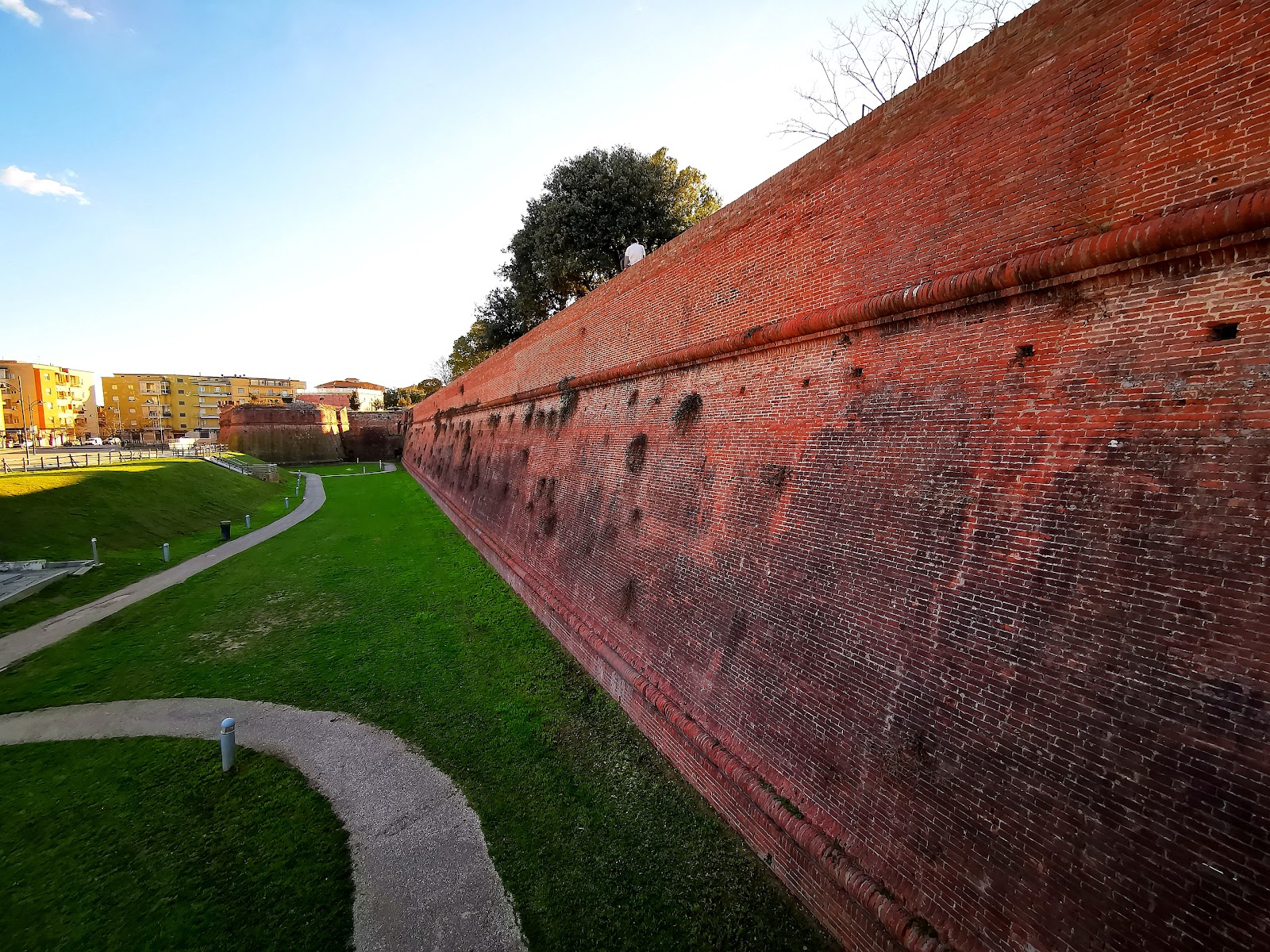
Enter from Via Aurelio Saffi. Admission is usually free, but the Cassero isn't always open — check locally before making a special trip. The walls themselves are a flat, tree-lined promenade and always accessible. Allow 30–45 minutes for the tower, longer if you walk the full hexagonal circuit.
Summer afternoons on the exposed rooftop terrace can be hot; morning visits are more comfortable from June through August. Spring and autumn offer the clearest views across the Maremma, and the wall promenade is at its best when the trees are in leaf.
Where is Fortezza Medicea (Cassero)?
More tickets & tours for Fortezza Medicea (Cassero)
Book directly at the provider
What travellers say about Fortezza Medicea (Cassero)
Nice castle in the city, a great sight to visit. There are some interesting art around it, on the walls, unfortunately the castle itself was closed when I was there.
A bit worn down. A lot of grafitti inside the Castle. Not any information. But free parkering nexst to the Castle.
Very friendly personnel, especially the guy who is originally from the Philippines (sorry didn't ask for the name)
Closed... in peak season. So sad.
beautiful medieval location
More of Grosseto
Discover where to stay, what to do and the best deals for your trip.
Explore Grosseto →More attractions in Grosseto
All of Grosseto →
Background adapted from Wikipedia (CC BY-SA) · map data © OpenStreetMap contributors · ratings & place photos via Google · other photos with per-image credit. Ticket links may earn us a commission at no extra cost to you.