
Benevento
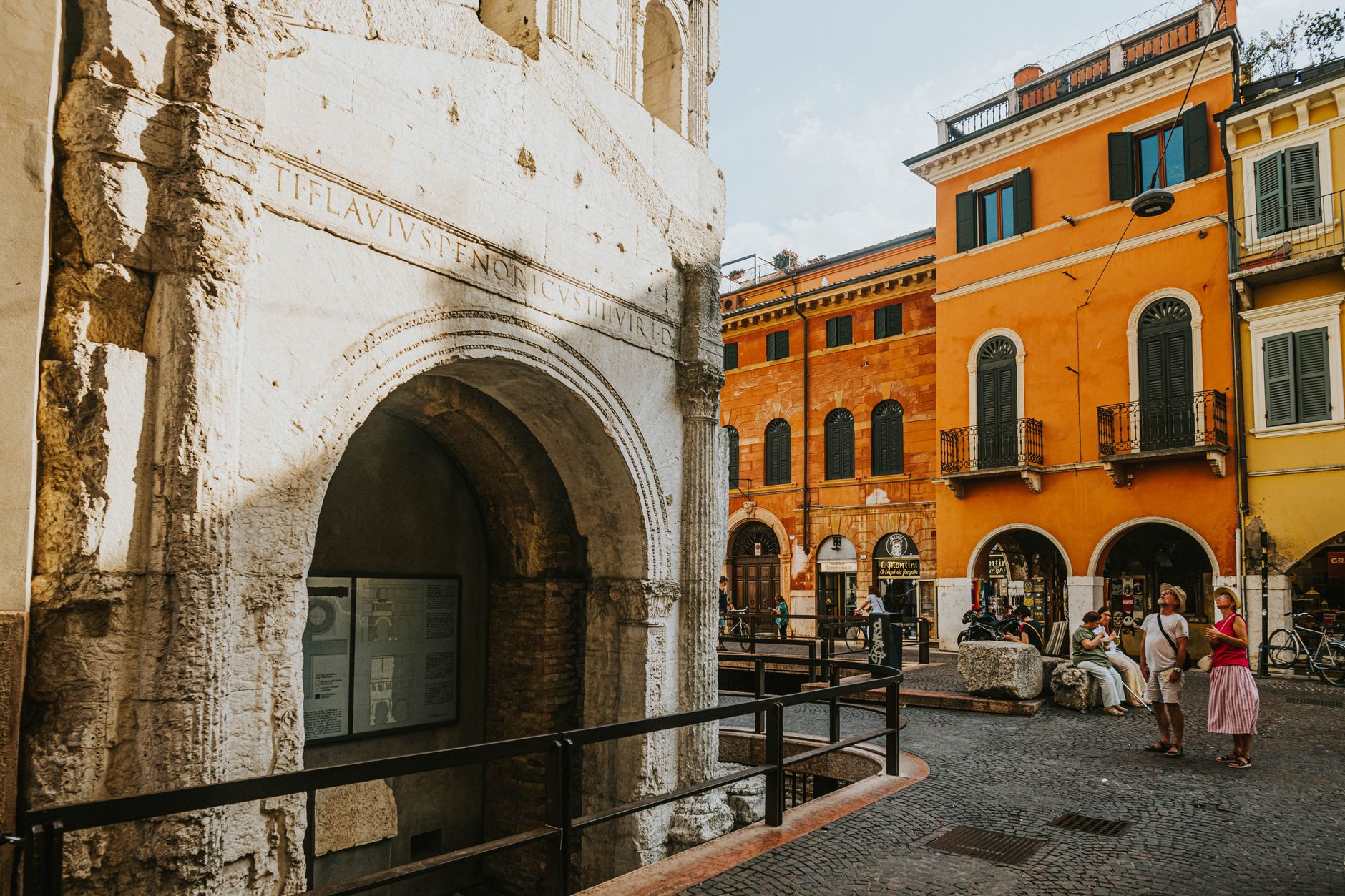
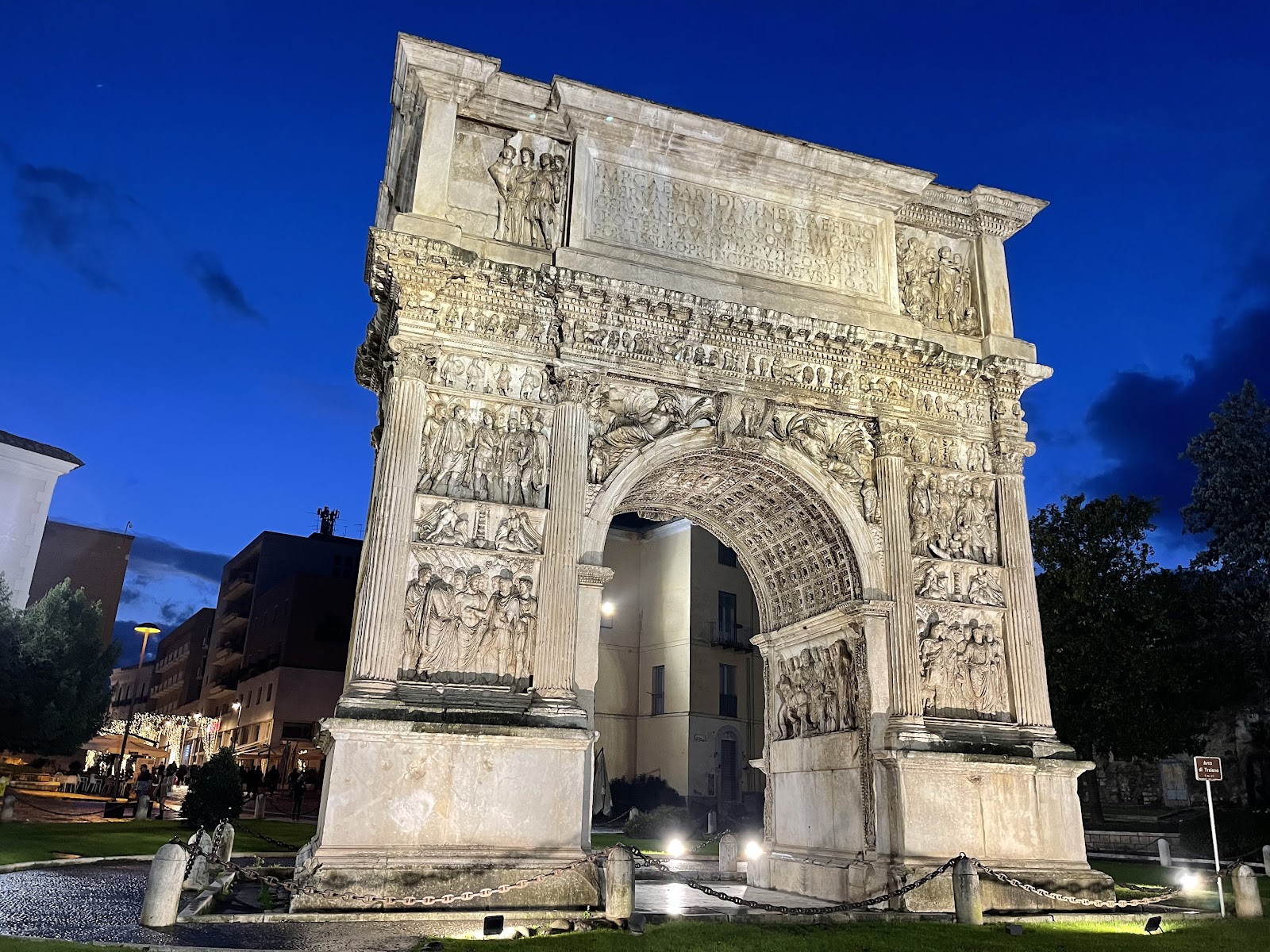
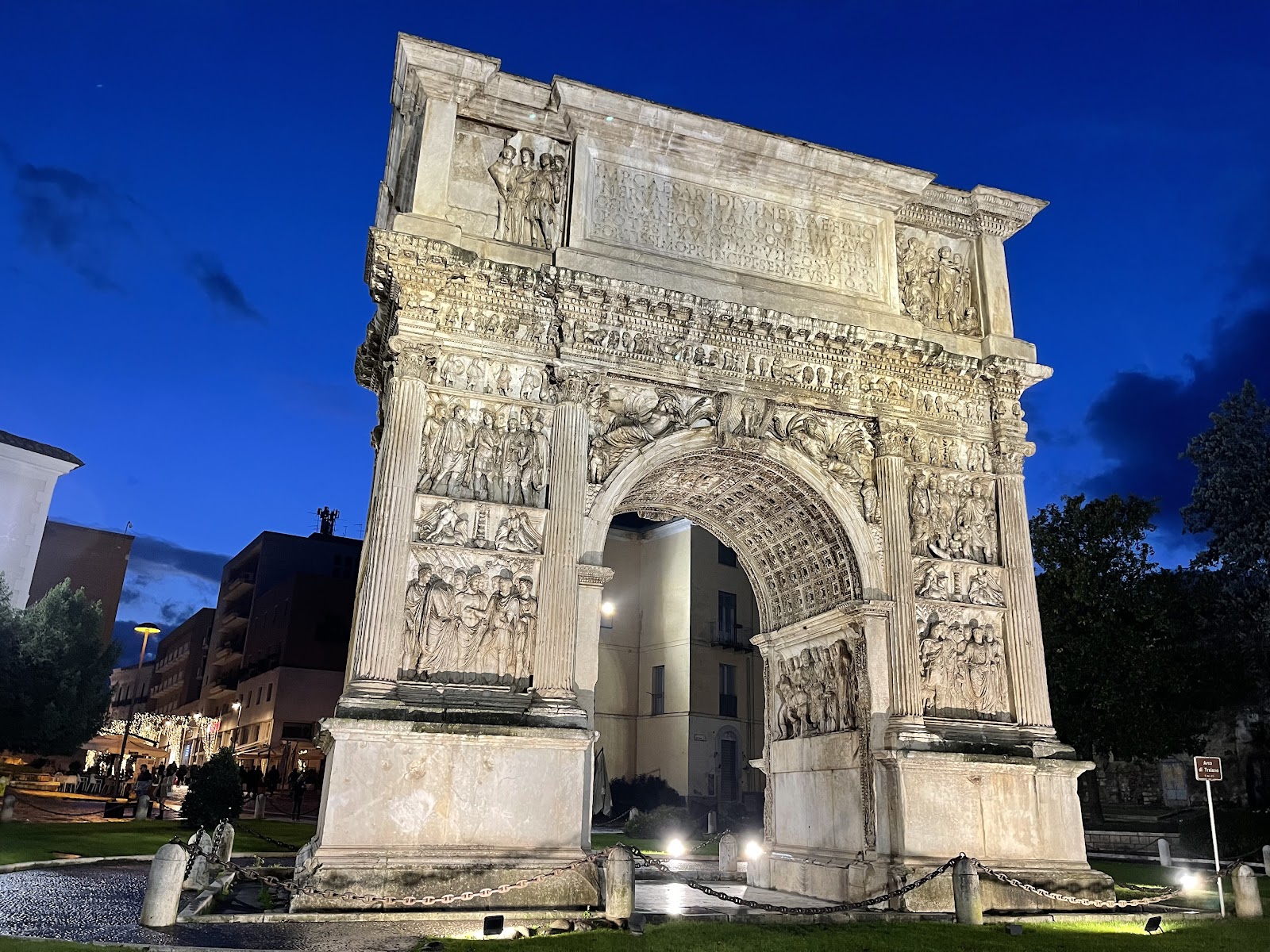
The Arch of Trajan stops you mid-street — a 15-metre triumphal gate, carved in relief so fine you can read the politics of 114 AD in the faces. Benevento earns its place on the map before you've had a coffee.
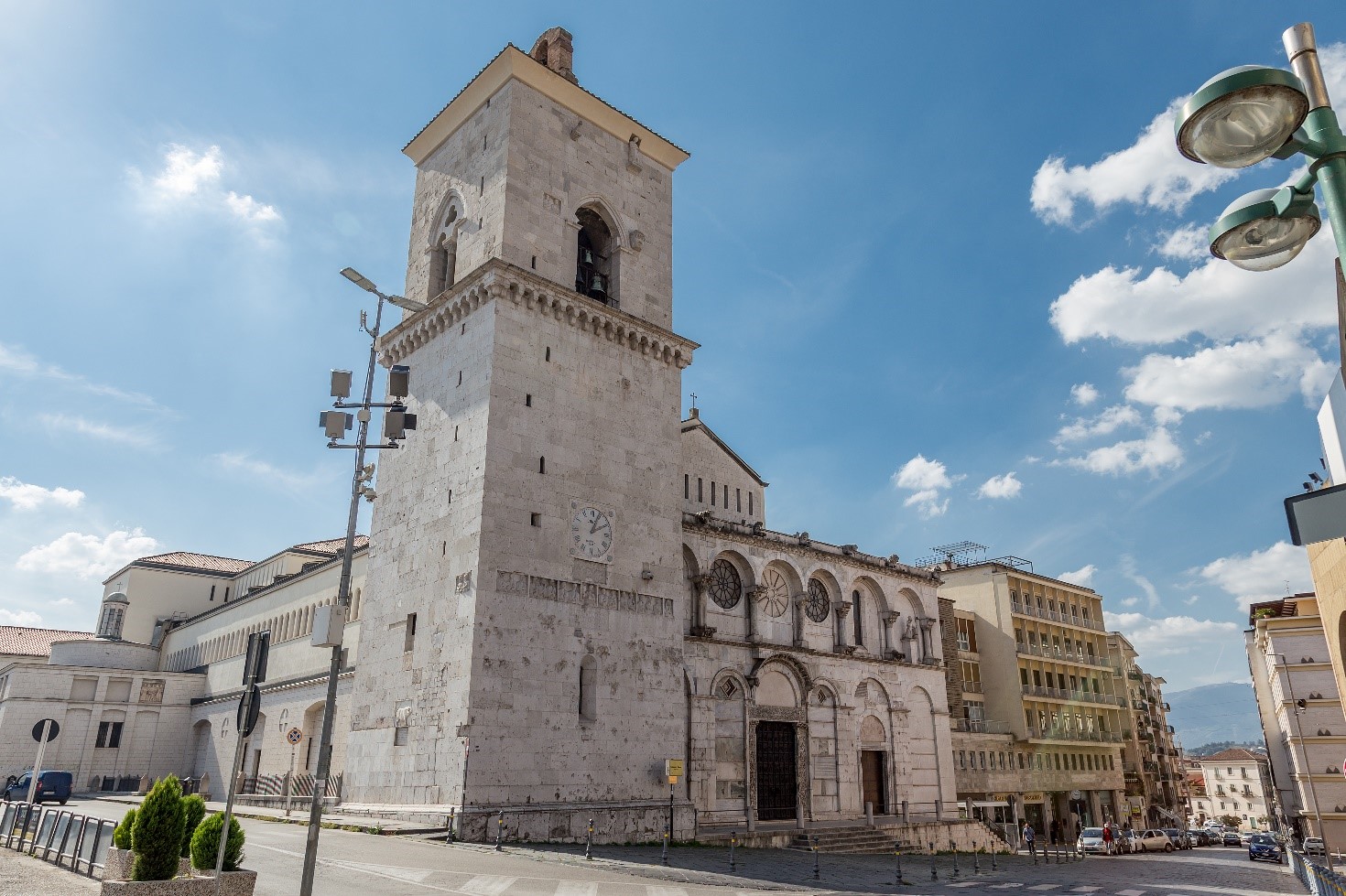
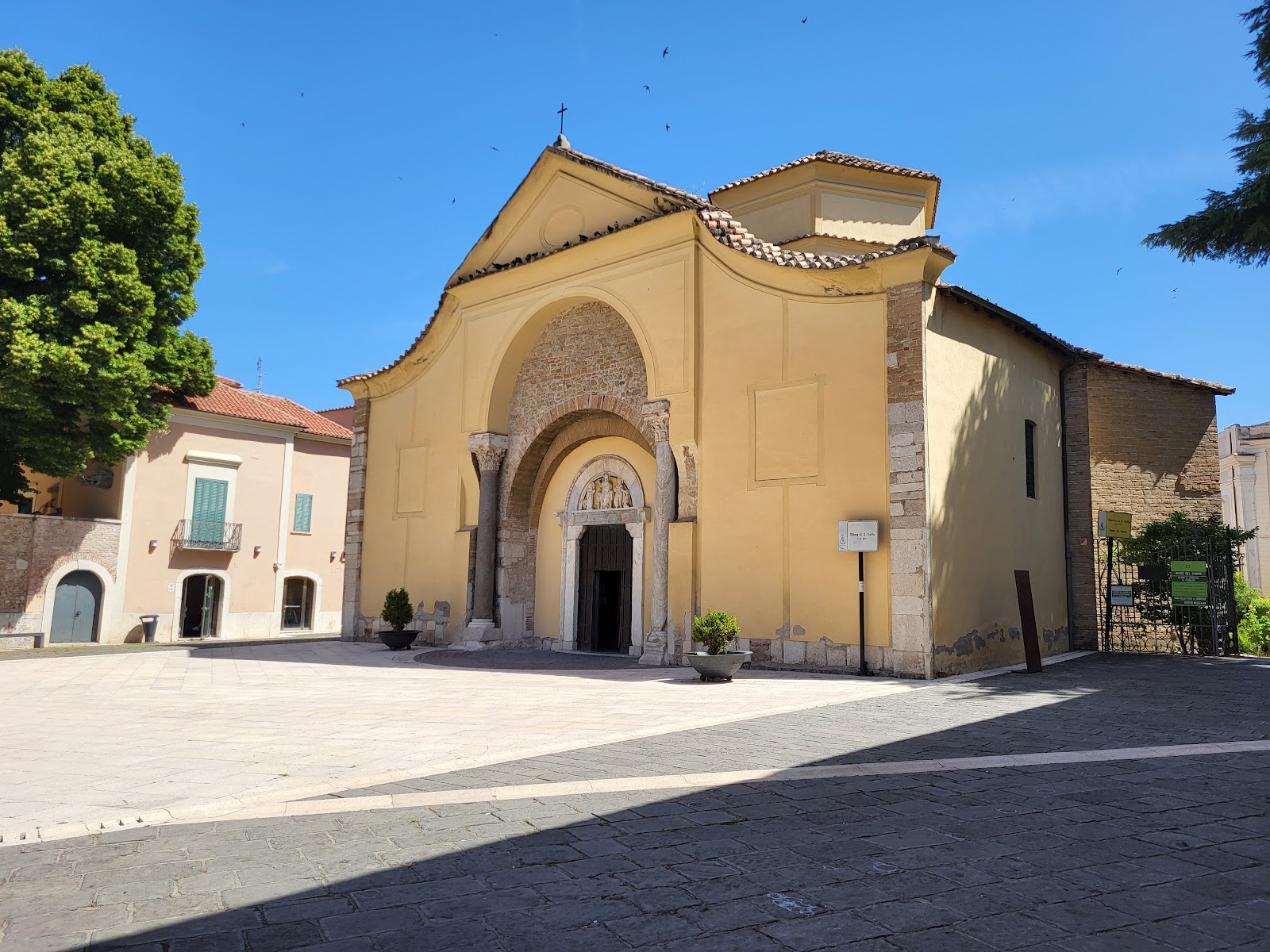
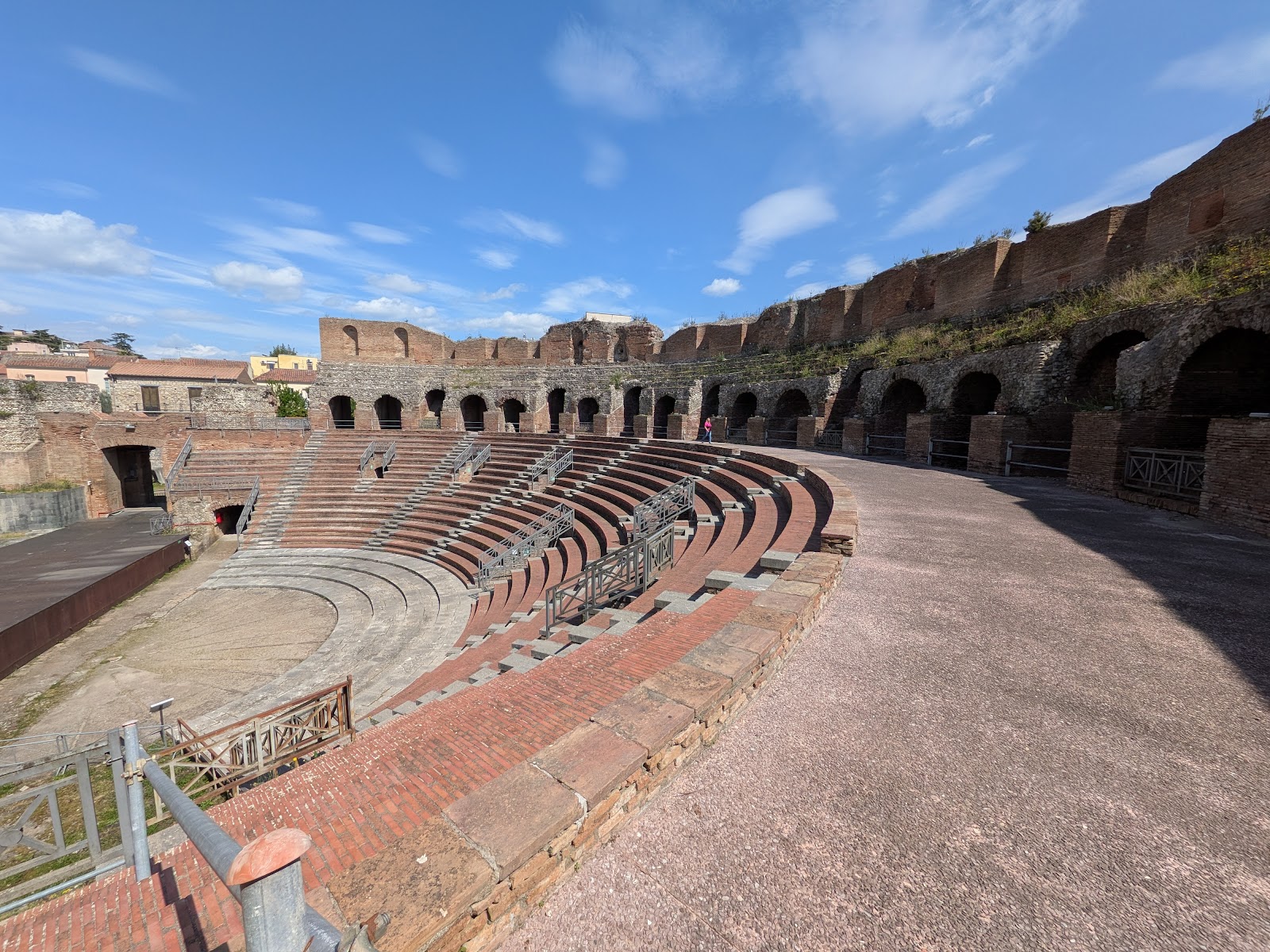
This inland Campanian city has been fought over by Samnites, Romans, Visigoths, Vandals, Lombards, Napoleon's minister Talleyrand, and Allied bombers. What survives is oddly coherent: a Roman theatre that once held ten thousand people, a Lombard church whose hexagonal plan still makes architects stop and stare, and a compact centro storico that rewards an afternoon on foot.
💛 What travellers fall for
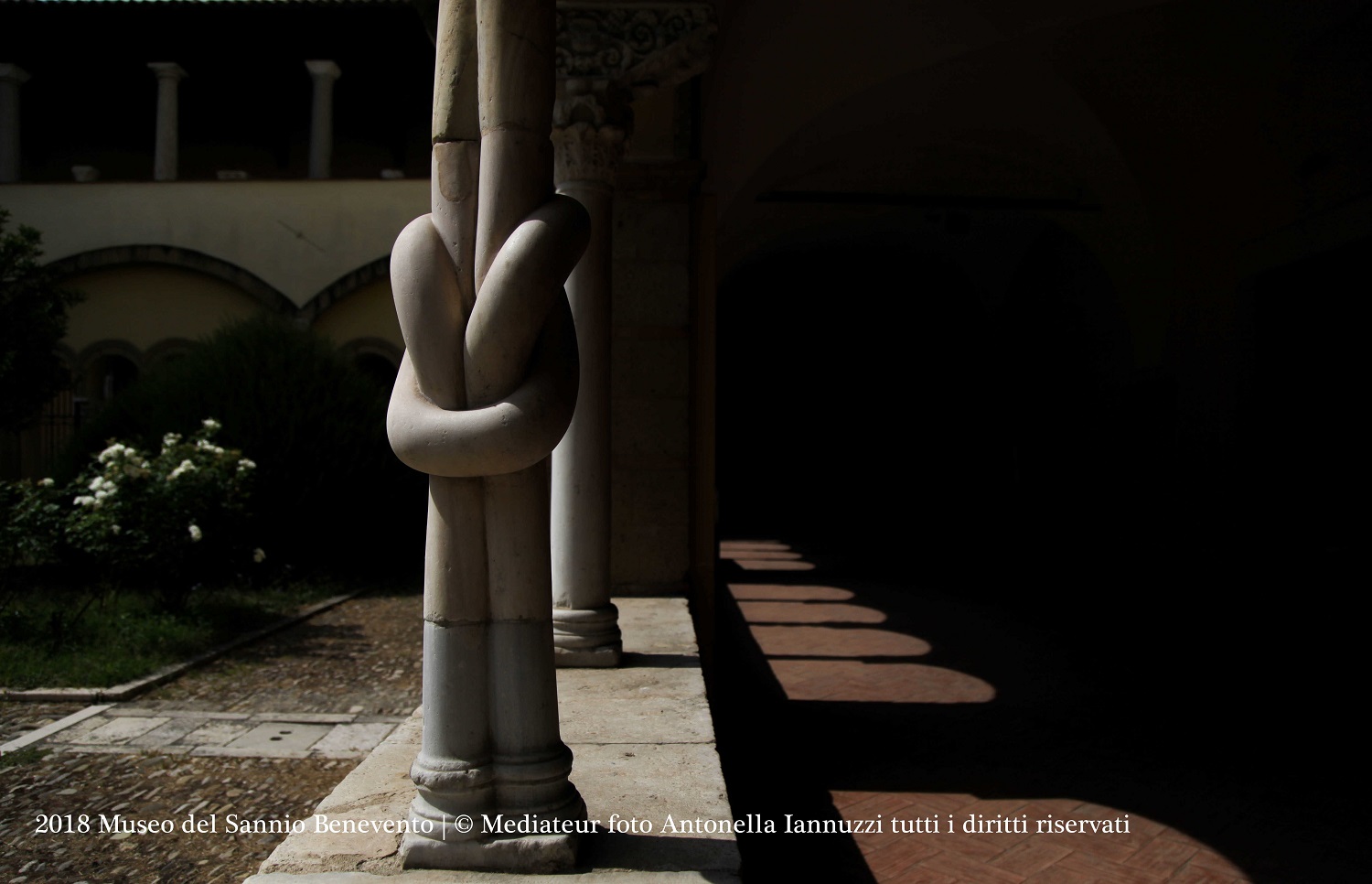
People who come back tend to go straight to the Roman Theatre on a quiet morning — the €2 entry is almost embarrassing. The Church of Santa Sofia rewards a second visit once you've read about its geometry: the central hexagon, the columns lifted from a Temple of Isis, the 12th-century cloister off to one side. The combined museum ticket at €6 covers more than you'd expect.
Experiences you don't want to miss



Deals in Benevento
Book directly at the provider

How Benevento came to be
Benevento began as a Samnite city called Maleventum. Rome took it during the Third Samnite War, and in 274 BC the armies of Pyrrhus of Epirus were defeated nearby — a loss that ended Greek ambitions in Italy. Two years later, Rome renamed the city Beneventum, a small piece of propaganda embedded in geography, and in 42 BC Lucius Munatius Plancus formally established it as a Roman colony.
After Rome's decline the city changed hands with brutal regularity — Visigoths, Vandals, Goths, then Lombards, who founded a duchy here in 571 AD and left their most lasting mark in the Church of Santa Sofia, built by Duke Arechi II around 760. The Papacy eventually acquired the city, held it through Napoleon's interlude (Talleyrand was its nominal prince from 1806 to 1815), and Benevento joined unified Italy in 1860.
Who and what shaped it
People who shaped it
Landmark buildings
See Benevento in motion
Plan your visit
On the map
When to go
Spring and early autumn bring mild days and manageable crowds — the ideal window. Summers are short, dry, and genuinely hot, with August afternoons pushing 30°C; winters are mild but rainy, with occasional fog and near-freezing nights.
Right now
↡ Attractions

Background & history adapted from Wikipedia (CC BY-SA) · specs from Wikidata (CC0) · weather from Open-Meteo · map data © OpenStreetMap contributors · photos from Wikimedia Commons / Unsplash with per-image credit. No third-party reviews or social posts reproduced.