
Ponte Leproso
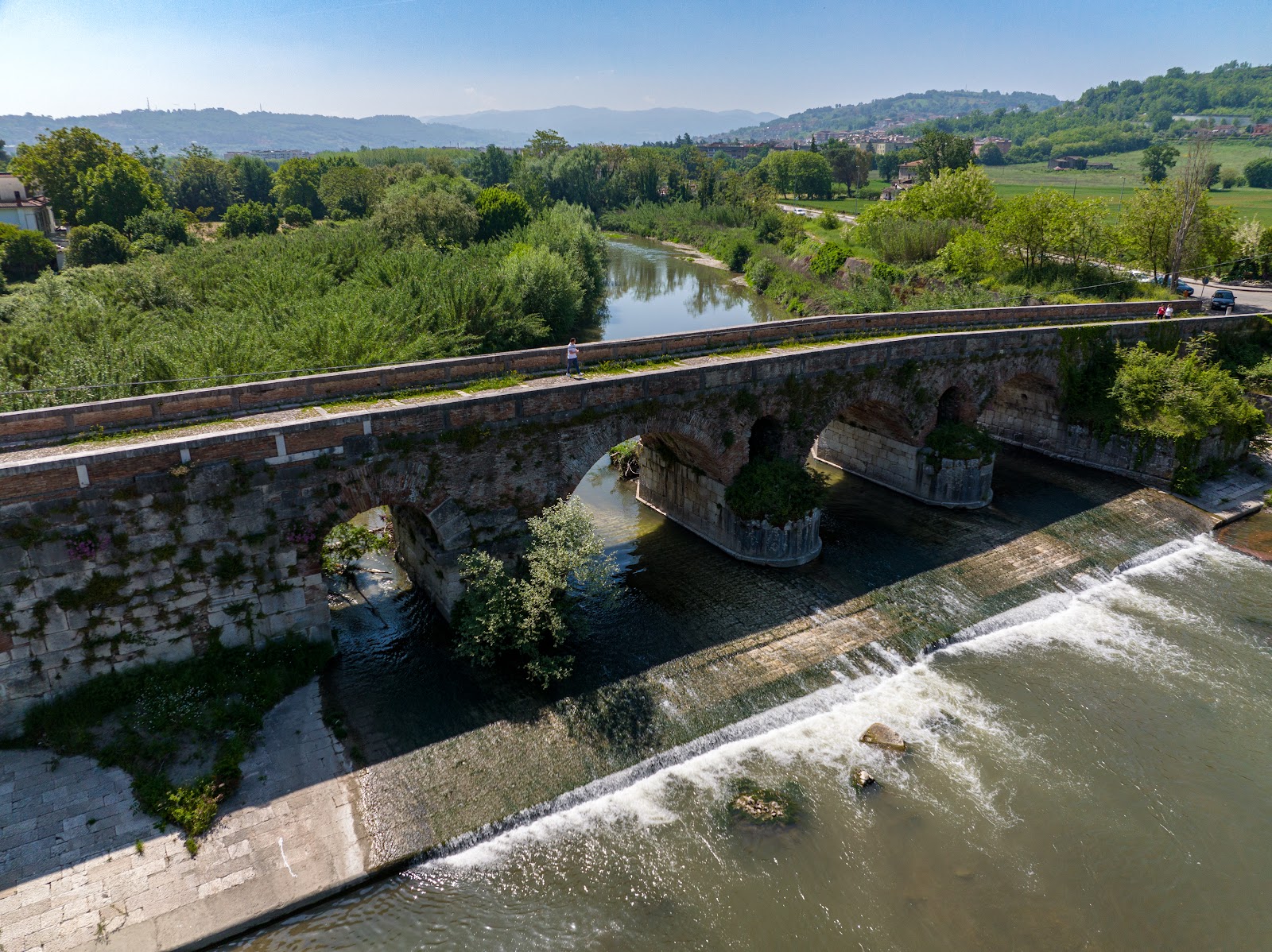
One original Roman pillar still stands beneath Ponte Leproso, its rough-faced opus quadratum blocks — some bearing reused inscriptions — holding their position since the third century BC. The rest of the bridge has been remade, damaged, argued over, and rebuilt, but that single pier is the thing you come to see: twenty-three centuries of river crossings compressed into a few courses of stone.
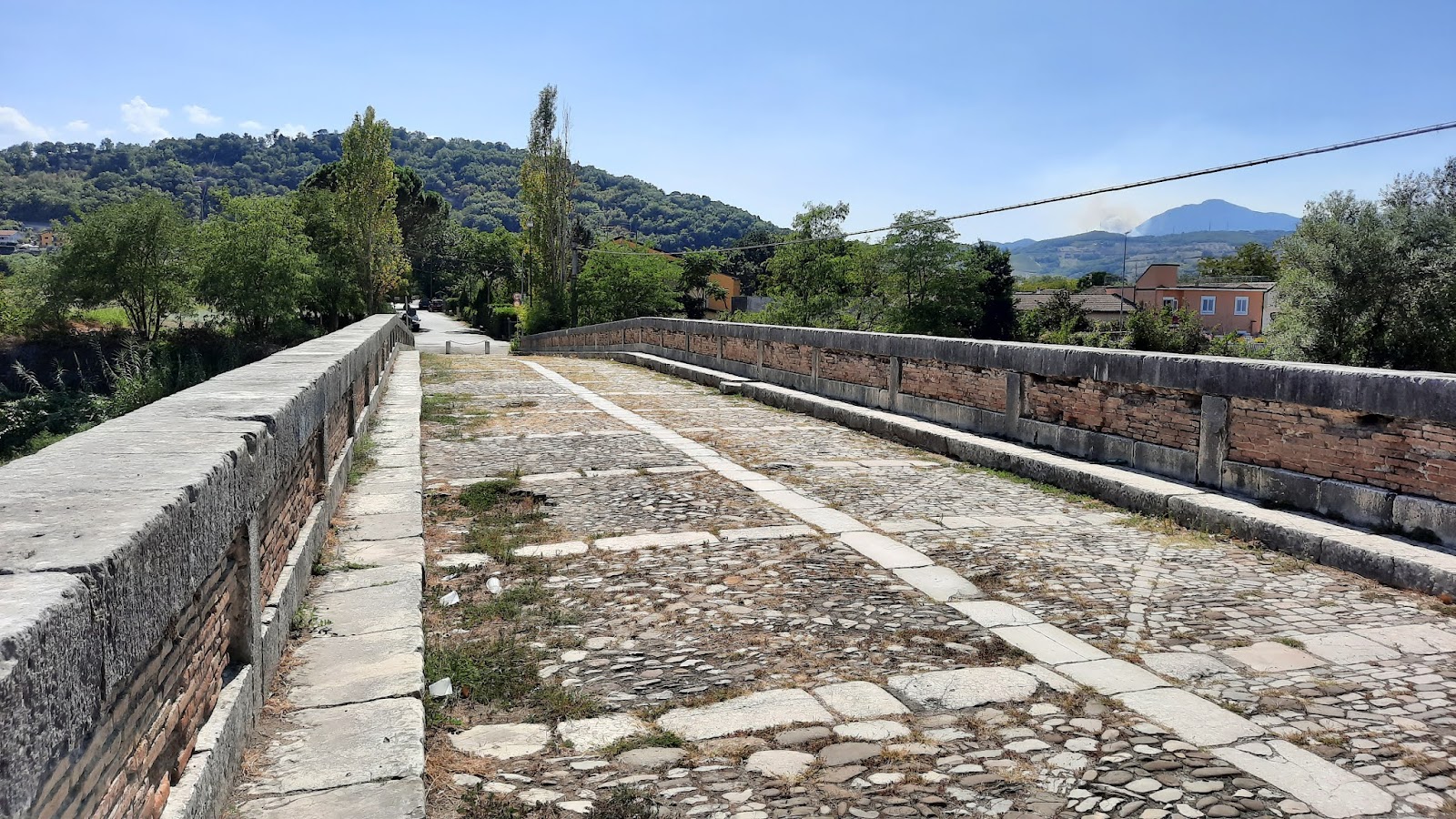
The bridge carries the Via Appia across the Sabato River at the edge of Benevento, and it does so as a pedestrian-only structure now, closed to traffic and sitting in the kind of quiet that lets you look properly. It is part of the UNESCO-listed Via Appia Regina Viarum.
💛 What travellers fall for
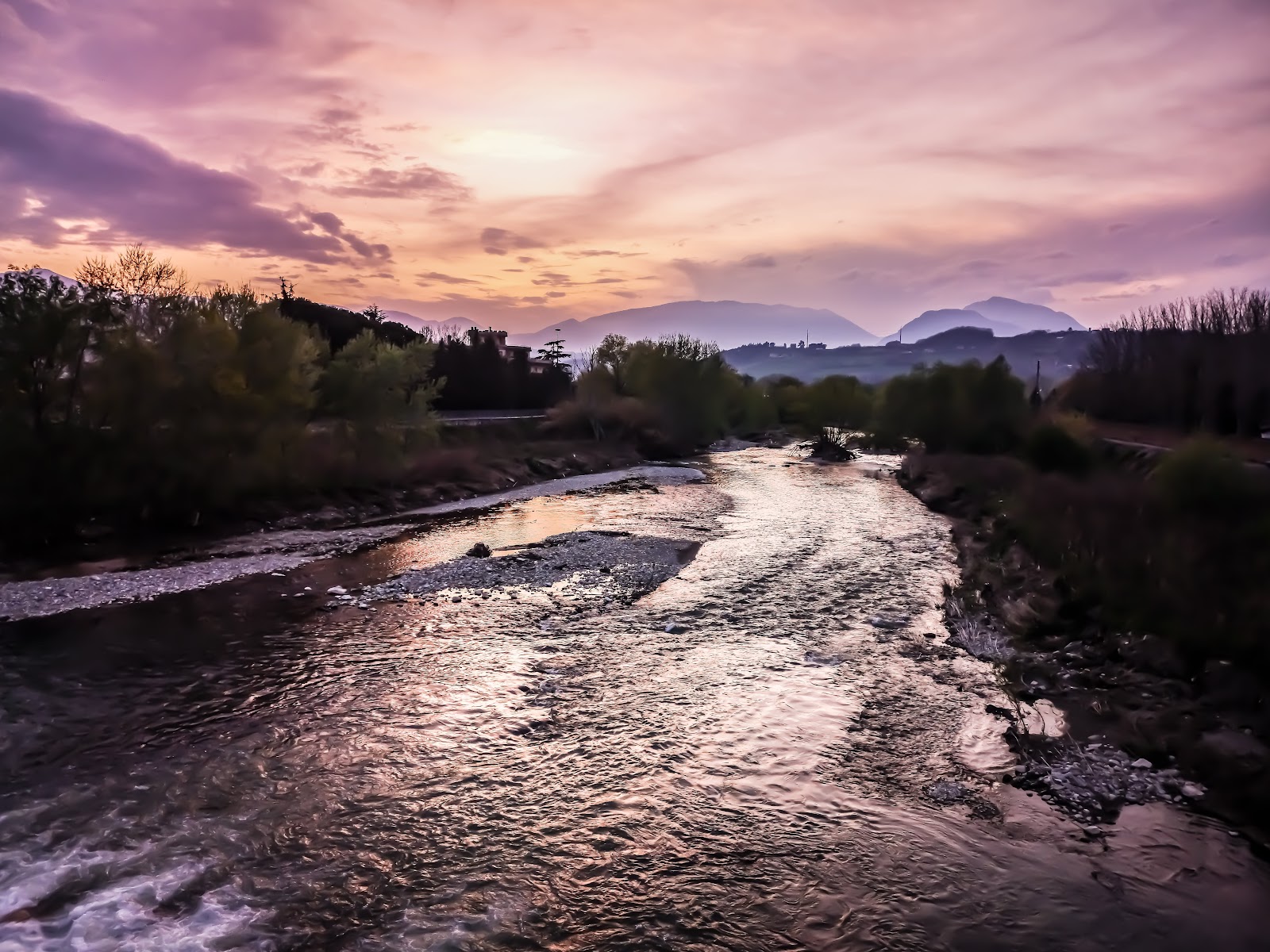
People who come back tend to arrive in the early morning, when the Sabato is catching low light and the bridge has the riverbank largely to itself. The walk from the station takes about twenty minutes and passes through ordinary Benevento neighbourhoods — the arrival feels earned rather than staged.
The story behind Ponte Leproso
The bridge was almost certainly built in the third century BC by the censor Appio Claudio Cieco, extending the Via Appia south from Capua shortly after Rome founded a colony at Benevento in 268 BC. It may have replaced an earlier Samnite crossing. Septimius Severus and Caracalla restored it in 202 AD; the Goths of Totila destroyed it in the sixth century. Medieval mill and canal works along the Sabato — sanctioned by Prince Landolfo VI in 1077 — forced structural modifications, and a fifth arch was eventually added on the left bank to counter river erosion.
The 1702 earthquake reduced the original five arches to four. By 1712, Neapolitan architect Giovan Battista Nauclerio had rebuilt the bridge in a classical revival style under Archbishop Vincenzo Maria Orsini. The structure was known for centuries as Ponte Marmoreo for its travertine facing; the name Ponte Leproso, first recorded in a document of July 830, is thought to derive from a medieval leper hospital nearby, though no source confirms this with certainty.
Good to know
Walk from Benevento station in roughly twenty minutes via Via Principe di Napoli, Ponte Calore, and Via Appio Claudio. No admission fee or set hours. Spring and early autumn are the most comfortable seasons; August highs can reach 39°C. Budget fifteen to thirty minutes at the bridge itself.
Spring (mid-April to mid-June) and early autumn (September to early October) offer the most straightforward conditions — warm, mostly dry, and manageable. Summer is genuinely hot, with highs regularly above 36°C and occasional spikes near 40°C; the bridge is fully exposed, so mornings matter.
Where is Ponte Leproso?
More tickets & tours for Ponte Leproso
Book directly at the provider
What travellers say about Ponte Leproso
The Leproso Bridge in Benevento is a Roman-era bridge named after a nearby leper hospital. Old bridge with so much character. It is the furthest attraction from the city centre but no more than 20-25 minutes walk.
Google maps inaccurate for this decoration I'm posting this as a service to people who look for destinations using Google maps which is what I always do. Unfortunately when you get to the place where Google says this is located it does not exist. What do you have to do is keep walking about 100 m or so Passing underneath a railway track. Then come to another street with the church in front under the left you see the street to the bridge. The bridge is truly beautiful and worth a visit and very historic.
The Leporoso Bridge is an ancient bridge built by the Romans to cross the Sabato River in Benevento. Its construction dates back to the 2nd century BC and served to extend the old Appian Way to Benevento. It has survived to this day in excellent condition, and although it is not passable, it is always a pleasure to cross it on foot or by bicycle. At the end of the bridge is the Church of San Cosimo e Damiano, built in the 18th century and much frequented by mill workers near the Sabato River. Attached are some photos from my recent visit.
A marvelous bridge, preserved almost intact to this day, that deserves a much better setting. The bridge can be crossed on foot or by bicycle: the pavement is not excessively uneven and is safe to walk on. Fortunately, cars are no longer allowed to pass, thanks to bollards on both sides. However, the San Cosimo square is in a terrible state, and the Santa Clementina side appears abandoned. It's a shame, because the monument is beautiful, and the view of the river with the Taburno River in the background is superb.
A very important point in ancient times because it marked the end of the Ancient Appian Way and the beginning of the new road to Brindisi. It is not easily accessible (few signs) and there is no sign that explains its importance.
More of Benevento
Discover where to stay, what to do and the best deals for your trip.
Explore Benevento →More attractions in Benevento
All of Benevento →
Background adapted from Wikipedia (CC BY-SA) · map data © OpenStreetMap contributors · ratings & place photos via Google · other photos with per-image credit. Ticket links may earn us a commission at no extra cost to you.