
Basilica of Pompeii
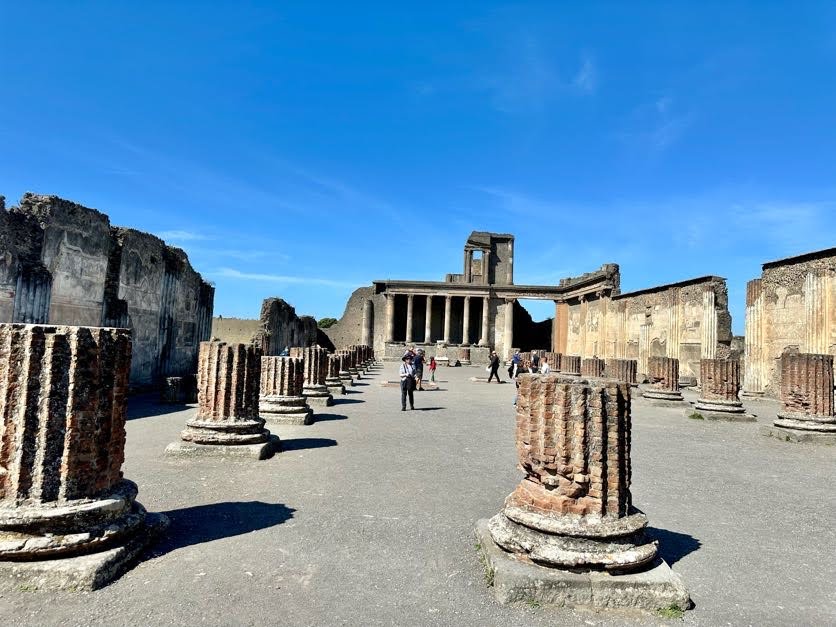
Before you reach the Forum, before you find the plaster casts or the frescoed walls, you pass through a building that was already old when Vesuvius ended everything. The Basilica of Pompeii dates to around 130–120 BCE, making it the oldest and most significant public building the city had. At 55 metres long and 24 wide, it was the place where deals were struck, disputes settled, and — if the graffiti scratched into its walls is any guide — where the unemployed spent their days hoping something would turn up.
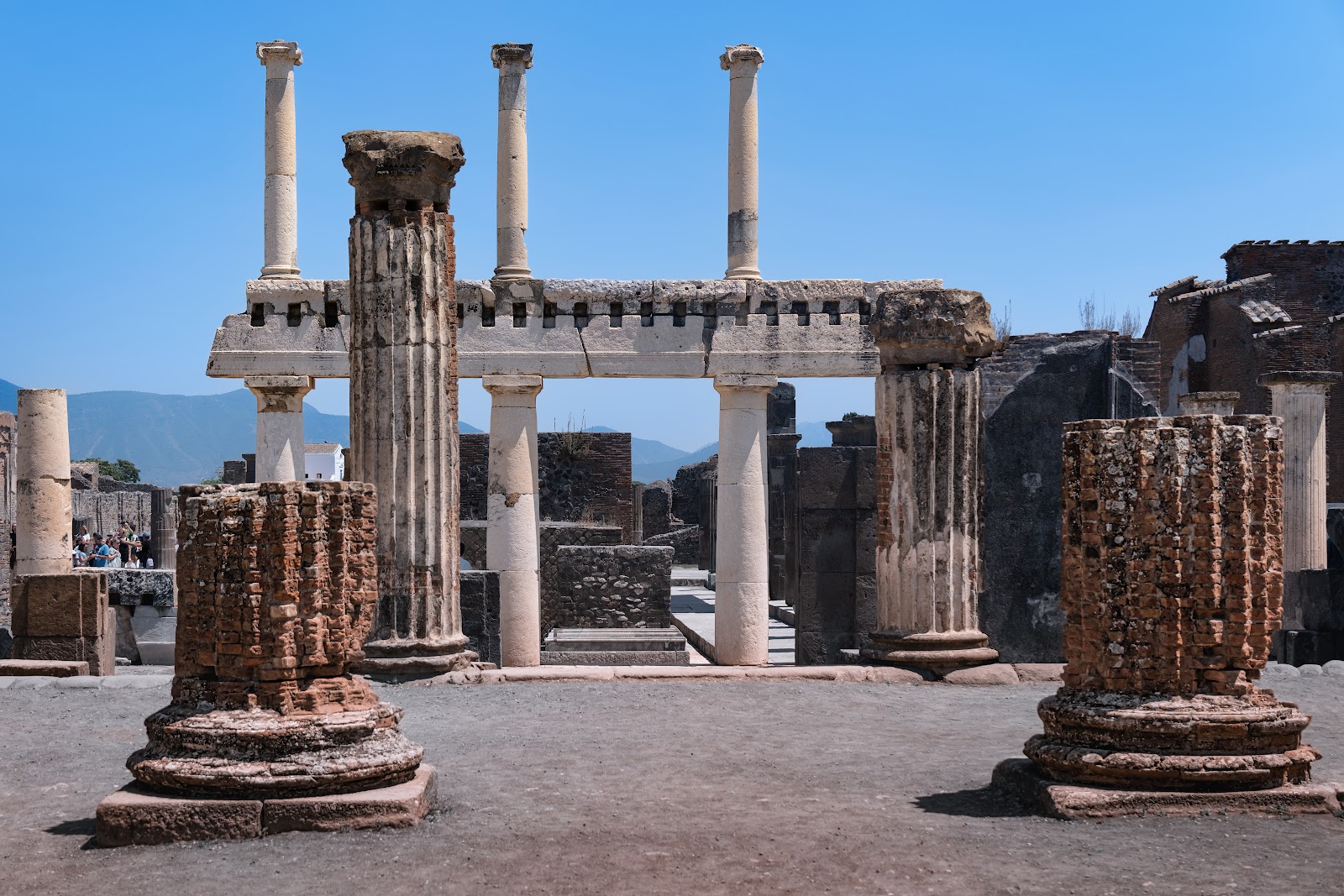
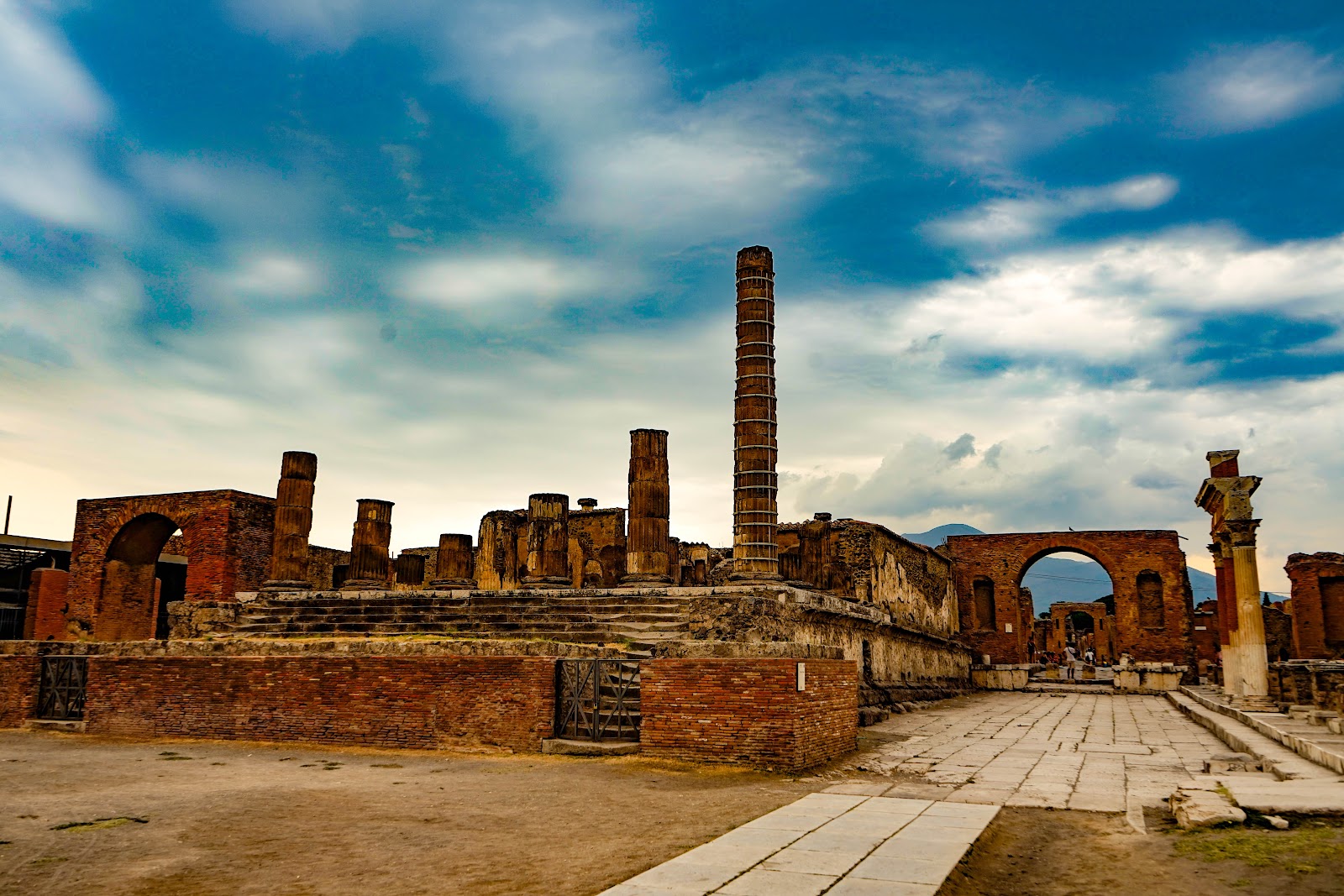
The structure still stands in its bones: 28 brick columns rising eleven metres, three naves, and first-style wall paintings that imitate marble in a way that reads as surprisingly confident even now. The tribunal podium at the far end, once reached by a wooden stair, gives you a sense of the room's hierarchy.
💛 What travellers fall for
People who slow down here tend to notice the graffiti before anything else — Latin scratched directly into the plaster, recording election endorsements, business notes, personal grievances. The main entrance faces the Forum through five tufa-pillared doors, and standing in that threshold early, with few others around, the scale of the nave reads clearly in a way it doesn't once the site fills up.
The story behind Basilica of Pompeii
The Basilica was built in the last decades of the 2nd century BCE, predating by some years the architectural principles that the Roman writer Vitruvius would later codify — which is to say, Pompeii's builders were working out a form that theory would only catch up with later. It served as the city's hub for commerce and law, a covered public hall where the business of civic life was conducted under one colonnaded roof.
Vesuvius buried it in 79 CE, and it stayed buried until excavations around the Forum began in 1806. Those investigations continued for decades, gradually uncovering a building whose First Style painted walls — false marble blocks rendered in stucco — had survived nearly two millennia underground.
Good to know
Take the Circumvesuviana from Naples Garibaldi to Pompeii Scavi–Villa dei Misteri (36 minutes, €3.40); the Porta Marina entrance is directly opposite. Site admission is around €20; the first Sunday of the month is free. Arrive at opening — 9am year-round — before the daily cap of 20,000 is tested.
Where is Basilica of Pompeii?
More tickets & tours for Basilica of Pompeii
Book directly at the provider
What travellers say about Basilica of Pompeii
Pompeii is one of the must-see places in Naples—the ancient city that was preserved after the eruption of Mount Vesuvius in 79 AD. During March, temperatures are typically between 18 and 23°C, and the tourist season hasn’t fully started yet.
The Basilica at Pompeii stands as an architectural marvel, embodying the grandeur of Roman civic life. This expansive structure, with its stunning columns and spacious aisles, served as a hub for legal proceedings and social gatherings, infusing the air with a sense of purpose and community. The intricate details of the remaining frescoes and the harmonious proportions of its design reflect the artistic mastery of the era. As you wander through, you’re enveloped by a sense of history, imagining the vibrant discussions and bustling activity that once filled this revered space. The Basilica, with its regal presence, is a poignant reminder of the societal foundations that flourished before time stood still in Pompeii.
One of the most beautiful, majestic and warm church I have visited to date. We were lucky to be there just as Sunday evening mass was ending and the organ was playing-wow. Quite full and attendees seemed very happy. A must visit in in Pompei.
This impressive building was constructed between 120 and 78 BC and served as the center of legal and commercial life in the city. It was used for court hearings, business transactions, and public gatherings. The Basilica had a rectangular shape measuring approximately 55 × 24 meters and was divided into three naves by columns. At the rear, there was a tribunal podium where judges performed their duties. Interestingly, there were no stone steps leading to the tribunal, suggesting that access was provided by wooden stairs, which were removed after use to prevent potential conflicts with the accused .
One of the few (fairly) well preserved public edifices along the former forum. Some colonnaded porticoes have survived as have some roofs and vaults. Worth a quick look on your way into the city.
More of Pompeii
Discover where to stay, what to do and the best deals for your trip.
Explore Pompeii →More attractions in Pompeii
All of Pompeii →

Background adapted from Wikipedia (CC BY-SA) · map data © OpenStreetMap contributors · ratings & place photos via Google · other photos with per-image credit. Ticket links may earn us a commission at no extra cost to you.