Torre del Trovador & Aljafería Ramparts
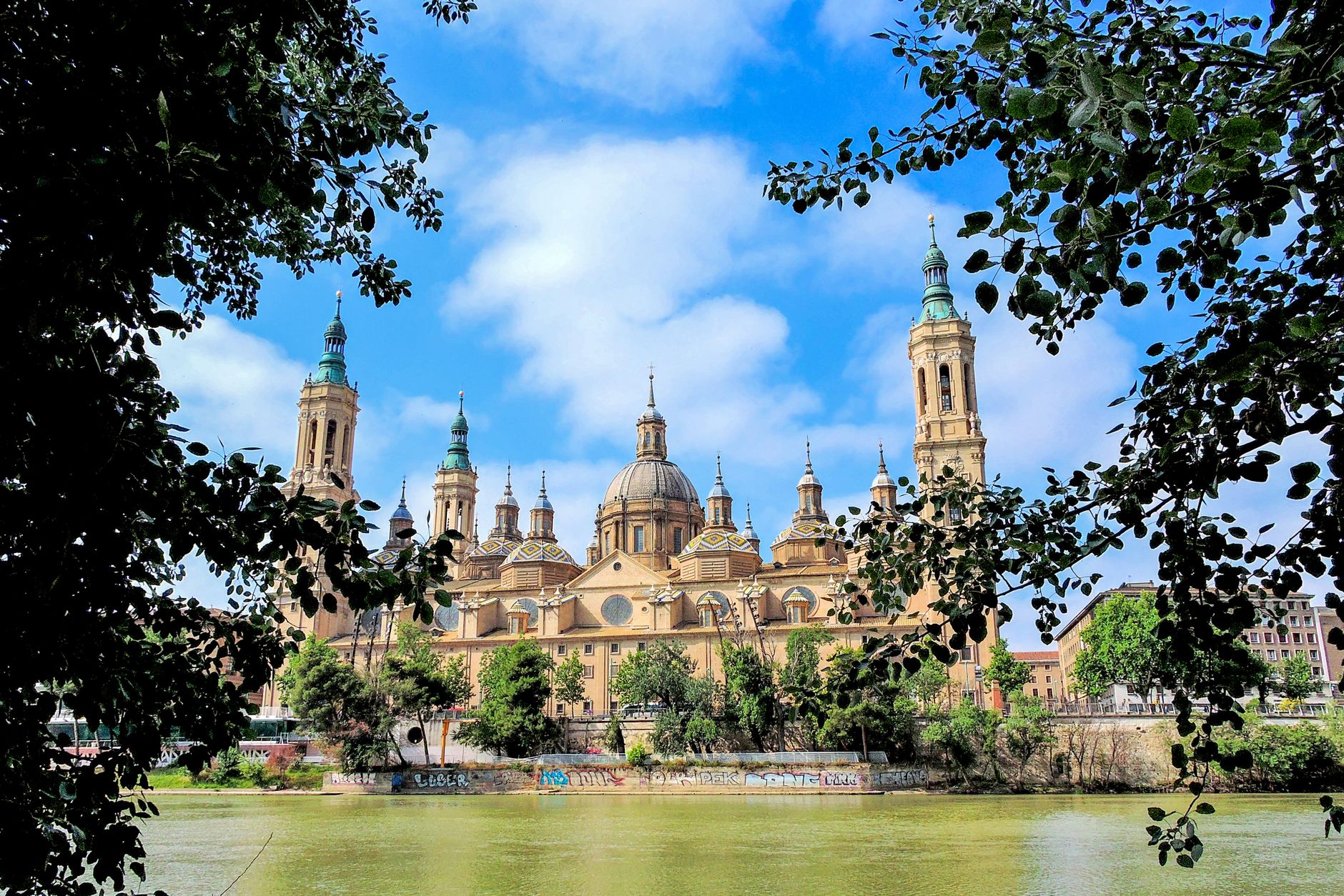
The Aljafería Palace is already one of Spain's finest examples of Moorish architecture outside Andalusia, but climb its 11th-century Torre del Trovador and you gain something extra: a commanding view across the Zaragoza plain that explains exactly why Islamic rulers chose this spot for their taifa-era court. The light at dusk turns the surrounding farmland amber and the basilica domes glow like em

The palace that inspired Verdi
Built by the Banu Hud dynasty around 1065, the Aljafería served successively as a Moorish pleasure palace, a Christian royal residence for Ferdinand and Isabella, and later a seat of the Spanish Inquisition. Verdi set his opera Il Trovatore here — hence the tower's romantic name — and the layered history gives the walls a storytelling density that few European monuments can match.
The interior Moorish oratory is a gem of interlaced arches and stucco tracery that rivals the Alhambra in its intricacy, yet the crowds here are a fraction of those in Granada. You can stand in the courtyard of Santa Isabel for long, unhurried minutes.
The view from the ramparts
Climb to the top of the Torre del Trovador via a tight spiral staircase and the reward is a 360-degree sweep: the Ebro valley stretching west, the Sierra de Guara foothills to the north, and El Pilar's dome cluster to the east. In clear winter weather the Pyrenean peaks are visible on the horizon.
The rampart walk along the restored outer walls gives a second, lower perspective — great for photographing the tower itself against a wide Aragonese sky. Late afternoon is the magic hour when the warm stone glows deepest.
More of Zaragoza
Discover where to stay, what to do and the best deals for your trip.
Explore Zaragoza →