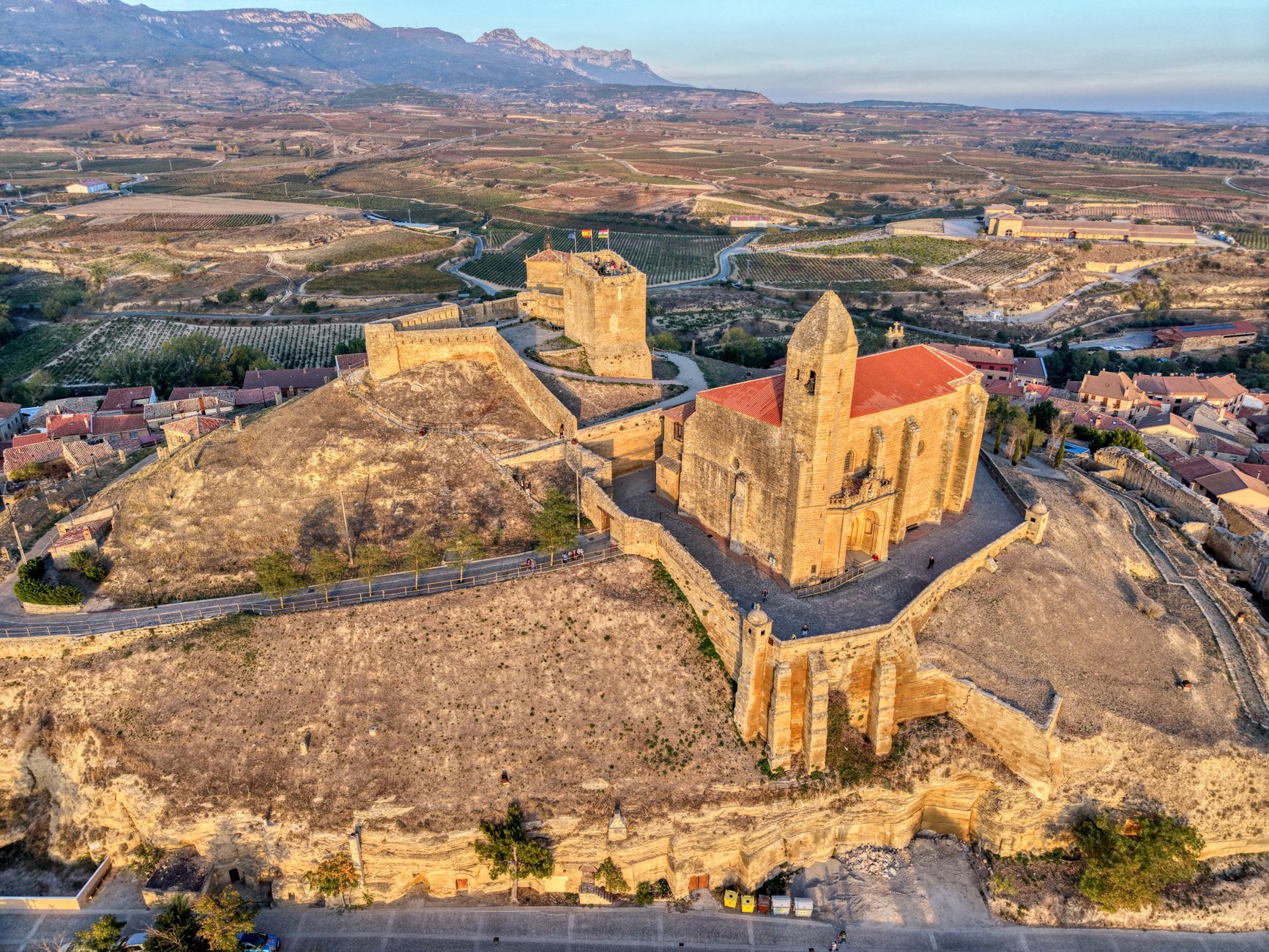
Iglesia de Santa María de la Asunción
Viana's skyline is dominated by this monumental Gothic church, one of the finest in all of Navarre. Its honey-coloured stone façade glows at golden hour and the interior holds centuries of art and one very famous burial.

A cathedral in all but name
Built between the 13th and 16th centuries, Santa María de la Asunción grew so ambitious in scale that locals simply call it 'the cathedral'. The three-nave interior rises to soaring ribbed vaults decorated with carved keystones, and the Renaissance portal on the south side is a masterclass in Plateresque stonework.
Don't miss the gilded main altarpiece, a late-Gothic retablo packed with painted panels and polychrome saints that took multiple workshops decades to complete. Natural light filters through the clerestory windows and catches the gold leaf at mid-morning, making it the best time to visit.

The tomb of César Borgia
Beneath a marble slab just inside the main door lies César Borgia, the infamous Renaissance prince and son of Pope Alexander VI. He died in an ambush near Viana in 1507 and was buried here — his epitaph, carved in Latin, is worth crouching down to read.
The church museum, accessed from the sacristy, displays medieval chalices, embroidered vestments and a striking 12th-century Romanesque Virgin that predates the Gothic building itself. It is a small but genuinely rewarding collection that most visitors rush past.

Practical visit tips
The church stands on Plaza de los Fueros, the heart of the old town, and is easy to combine with a walk along the medieval walls. Guided tours in Spanish are offered on weekend mornings and cover both the art history and the Borgia legend in satisfying detail.
Photography inside is permitted without flash, and the south portal makes an excellent exterior shot in the late afternoon when the sun rakes across the carved reliefs.
More of Viana
Discover where to stay, what to do and the best deals for your trip.
Explore Viana →