Cartagena's Roman Theatre
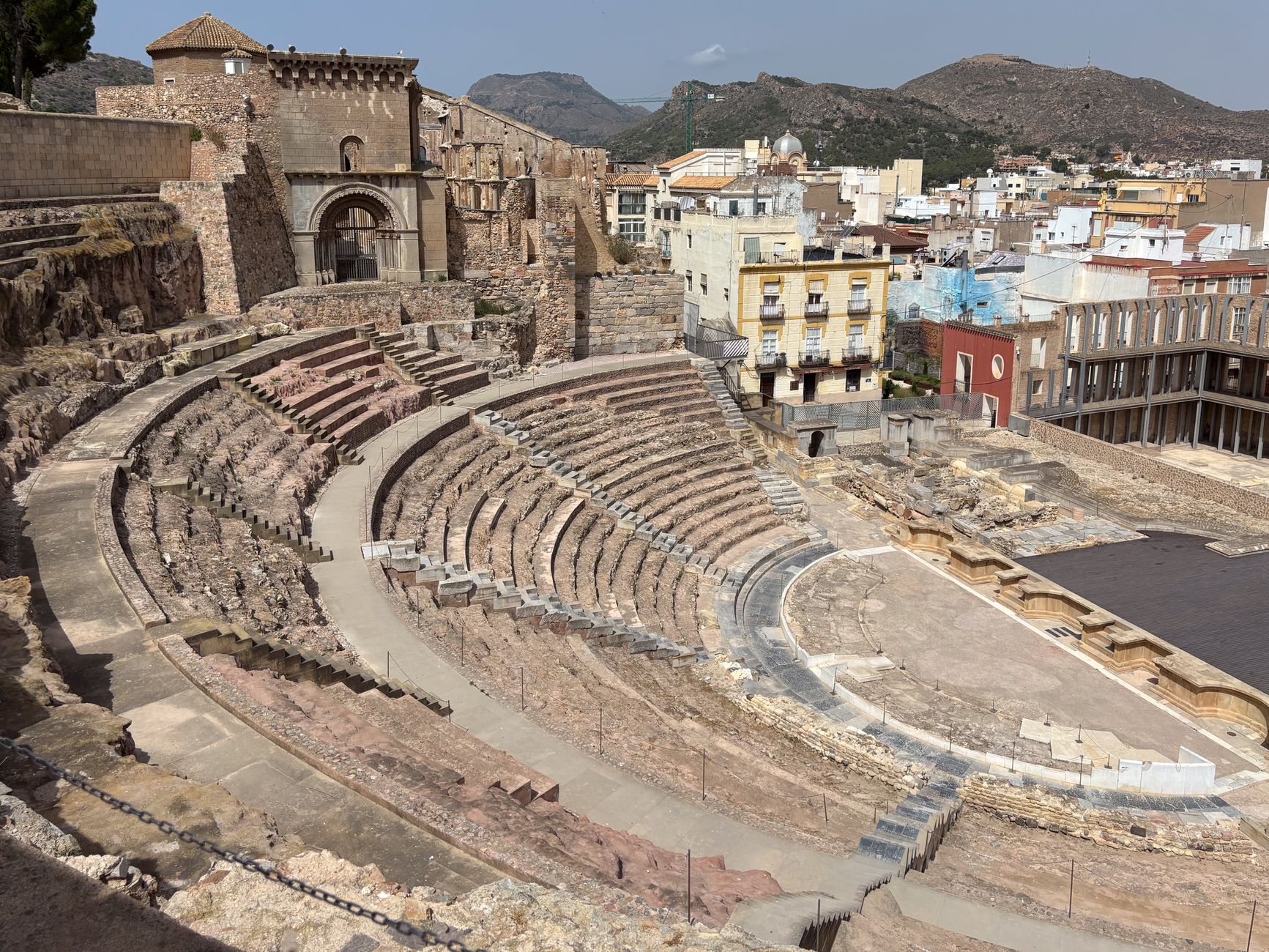
Buried under medieval rubble for centuries and only fully excavated in 1988, Cartagena's Teatro Romano is one of the largest and best-preserved Roman theatres on the Iberian Peninsula. Walking its marble tiers feels like stepping directly into the first century BC.

A City Built on Layers
Cartagena was founded by the Carthaginian general Hasdrubal in 227 BC and later became one of Rome's most prized Iberian colonies. The theatre, which seated up to 7,000 spectators, sat hidden beneath the city's old quarter for nearly 1,500 years until construction workers accidentally broke through its vaulted corridors.
The adjacent Museo del Teatro Romano — designed by Rafael Moneo — uses glass walkways and clever lighting to reveal the archaeological strata, so you literally walk above Roman street level and look down into the excavated orchestra pit. It is one of the most intelligently designed site museums in Spain.

Beyond the Theatre
Cartagena's harbour front tells the rest of the story: the Castillo de la Concepción looms on the hill above, offering panoramic views of the bay and the five defensive hills that made the city militarily irresistible for two millennia. The naval museum down on Paseo Alfonso XII houses a full-scale replica of the world's first successful submarine, built by local inventor Isaac Peral in 1888.
Allow at least half a day to combine the theatre, the castle and a walk along Calle Mayor, where Modernista facades by Victor Beltrí sit cheek-by-jowl with Roman column bases embedded in café walls.
More of Murcia
Discover where to stay, what to do and the best deals for your trip.
Explore Murcia →