Santa Cova Chapel & the Rosary Path
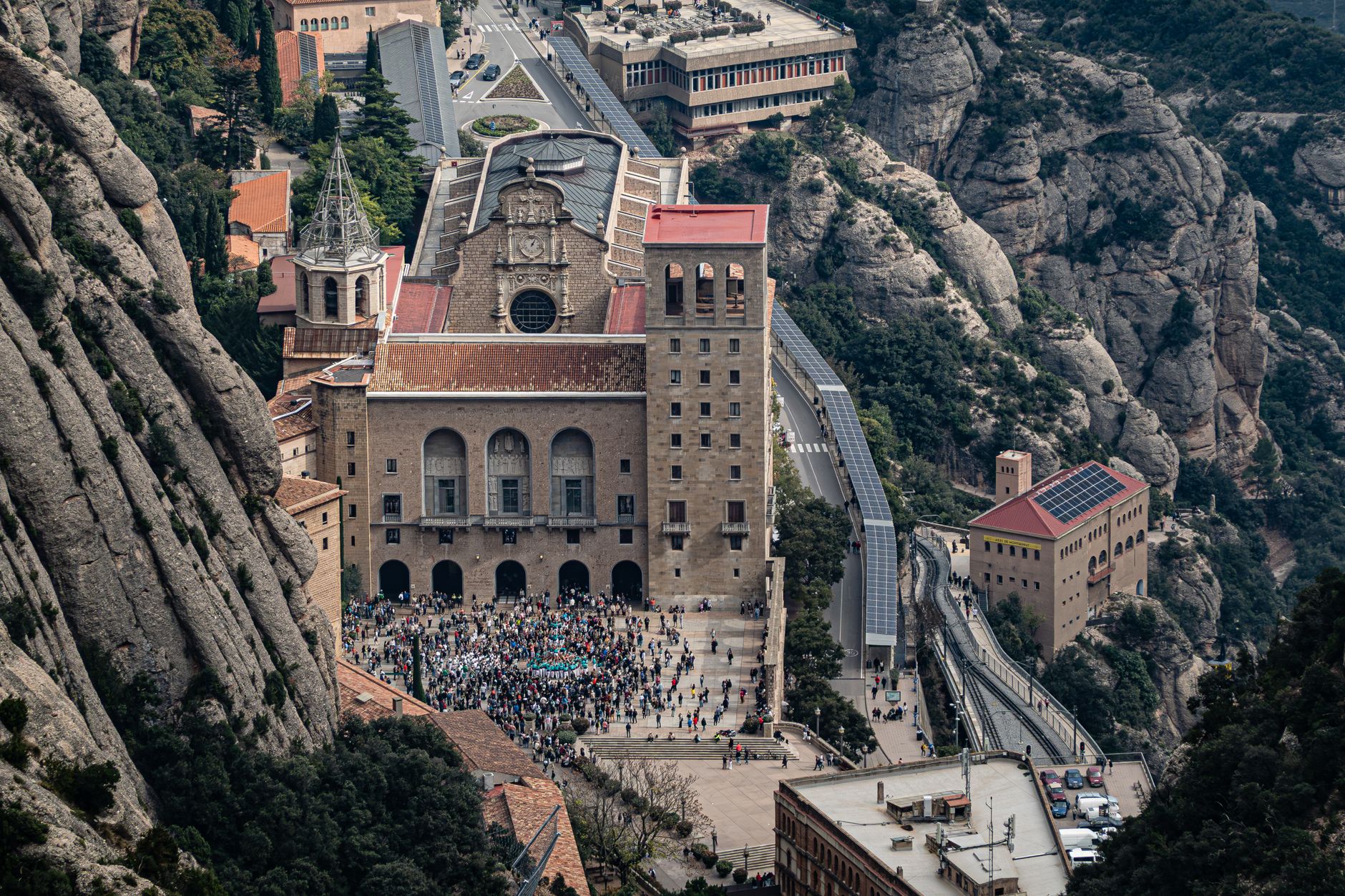
Most visitors never realise that a second funicular descends from the monastery plaza to the Santa Cova — the Sacred Cave — where legend says the Black Madonna was discovered in the 9th century. The path leading to it is lined with 15 monumental sculptural groups depicting the Mysteries of the Rosary, created by the greatest Catalan Modernista artists of the early 20th century.
The Sculptural Stations
The fifteen rosary monuments were commissioned between 1896 and 1916 and include works by Josep Llimona, Enric Clarasó and a young Antoni Gaudí — yes, Gaudí designed the first station, a gilded bronze Annunciation that clings to the cliff face like a jewel box. It is one of his least-known public works and entirely free to see.
The path descends gently for about 1.2 km along a natural rock ledge with views across the valley. Each station is set into the cliff or perched on rocky outcrops, making the whole route feel like an open-air Modernisme museum suspended in mid-air.
The Santa Cova Itself
At the end of the path, a small 17th-century baroque chapel marks the spot of the original discovery of the Madonna. The interior is intimate and atmospheric, with a replica of the original statue and walls covered in silver ex-votos. It rarely has more than a handful of visitors even on busy days.
The Santa Cova funicular (lower station beside the monastery) runs every 20 minutes and costs €3.20 single. But the walk down the Rosary path is the real experience — take the funicular back up to save your legs.
More of Montserrat
Discover where to stay, what to do and the best deals for your trip.
Explore Montserrat →