Calanques National Park — Calanque de Sormiou
Just 12 kilometres from Marseille's city centre, the Calanques National Park protects 20 kilometres of dramatic white limestone cliffs plunging into water so transparently turquoise it looks digitally enhanced. Sormiou is the largest and most accessible of the calanques, with a small beach, a handful of cabanons (fishermen's huts) and snorkelling straight off the shore.
The Landscape
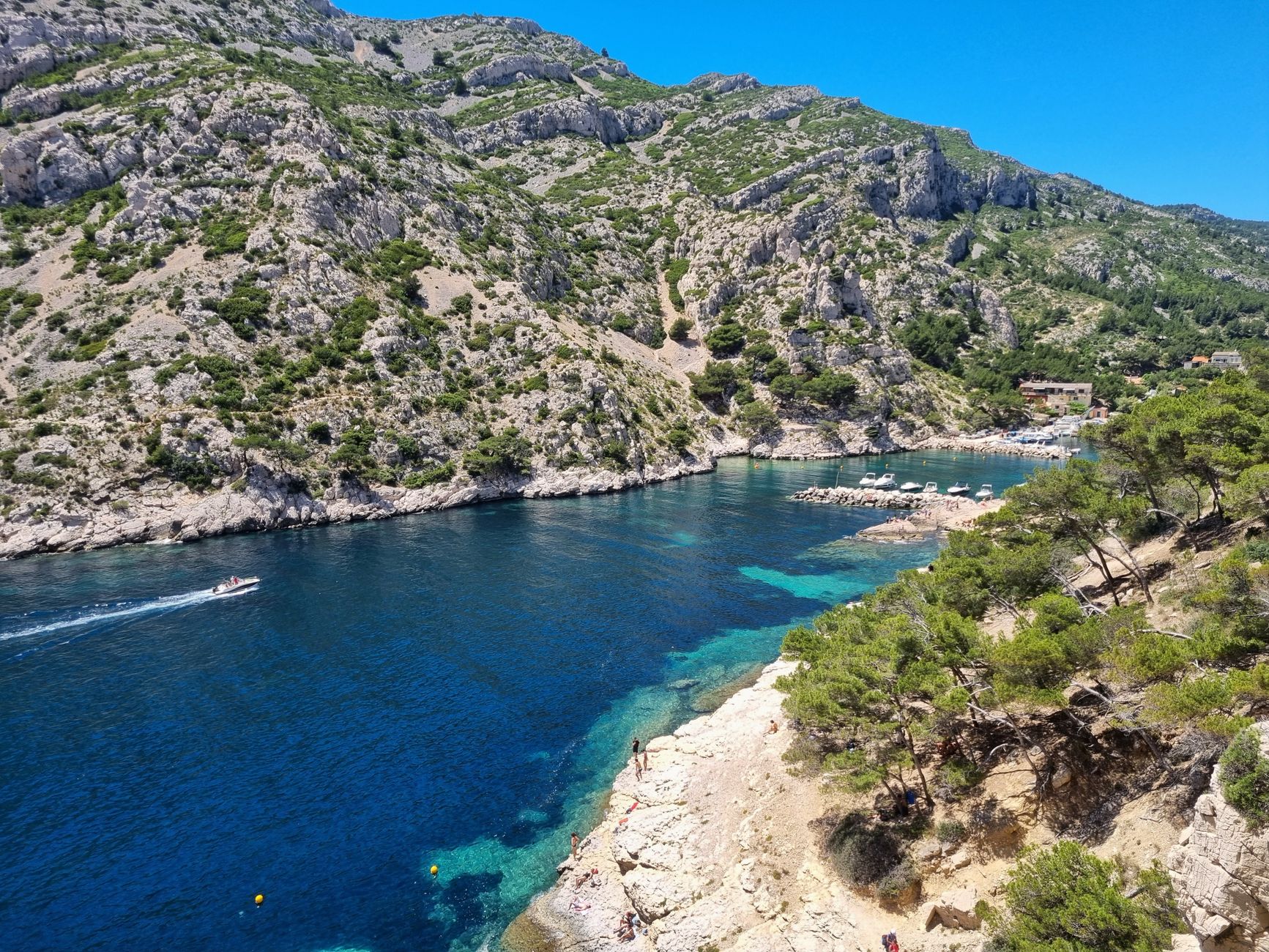
The Calanques were formed by river valleys that flooded as sea levels rose after the last ice age, creating narrow, cliff-lined inlets that resemble Norwegian fjords transplanted to the Mediterranean. The rock is Urgonian limestone — blindingly white in summer sun — and the vegetation clinging to it is garrigue: wild rosemary, thyme, cistus and kermes oak.
Underwater, the clarity is extraordinary. Posidonia seagrass meadows shelter octopus, sea bream and the occasional moray eel. The Cosquer Cave, discovered beneath the cliff face of the Calanque de Morgiou in 1991, contains 27,000-year-old paintings of horses, bison and auks — now accessible only via a replica museum in Marseille's MUCEM area.
Hiking to Sormiou
The classic approach is a 45-minute hike from the Col de Sormiou car park — a well-marked trail that descends through pine and garrigue before the calanque reveals itself dramatically at the final turn. The sight of that turquoise water appearing between white cliffs never loses its impact, no matter how many times locals have made the walk.
From June to September the road down to Sormiou is closed to private vehicles on weekdays; take bus 23 from the Métro Castellane terminus and walk the final stretch. This restriction actually improves the experience — the calanque is quieter and the air smells of the sea rather than exhaust.
Swimming & Responsible Visiting
The water at Sormiou is calm enough for confident swimmers to paddle around the headland to smaller, wilder coves. Snorkelling gear is worth bringing — visibility regularly exceeds 15 metres. The small restaurant Le Château on the beach serves grilled fish and cold rosé with an unbeatable view.
The park has strict rules: no barbecues, no camping, no picking plants. In high fire-risk periods (typically July–September) access may be restricted or closed entirely — always check the Parc National des Calanques website before setting out.
More of Marseille
Discover where to stay, what to do and the best deals for your trip.
Explore Marseille →