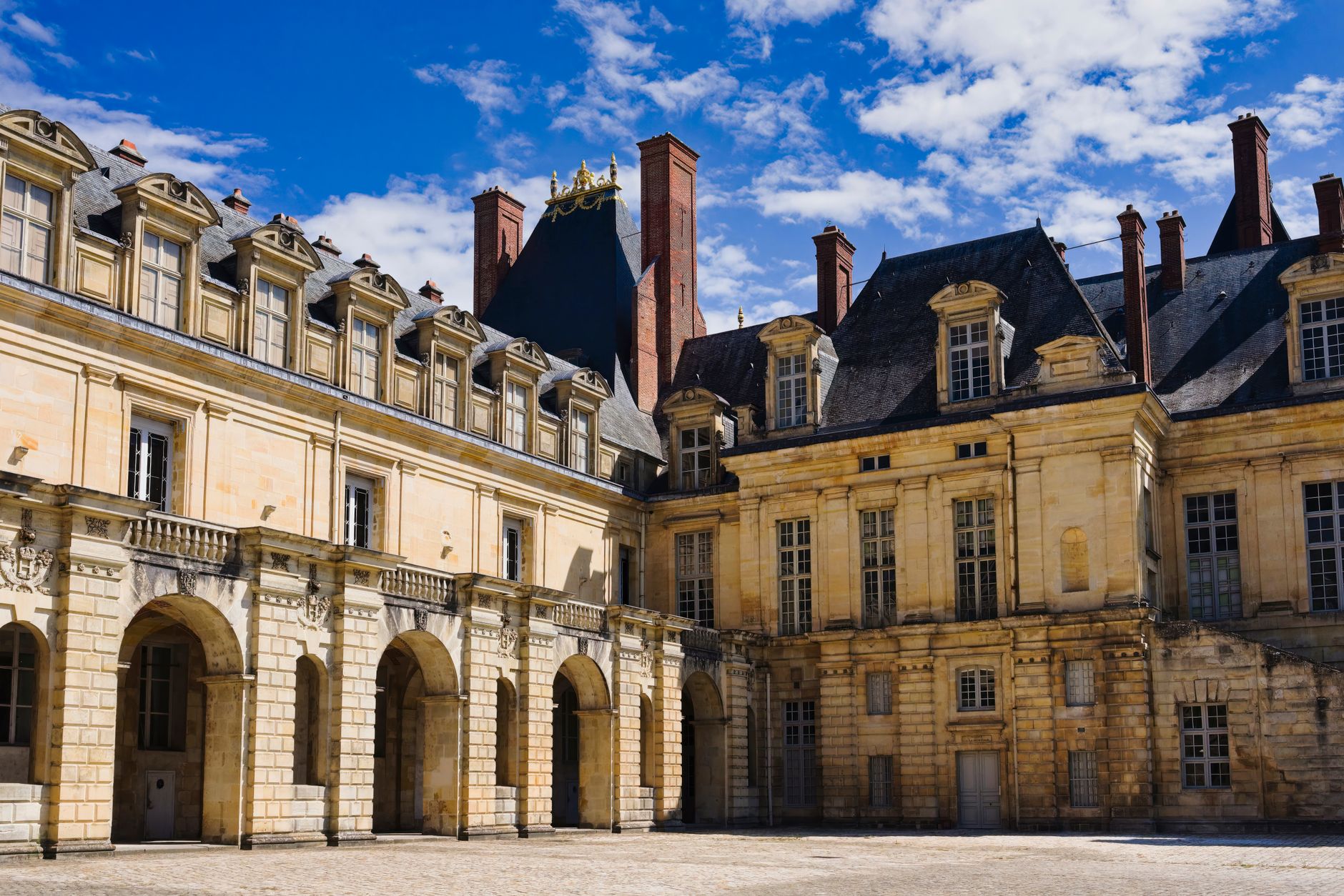
Château de Fontainebleau
One of the largest and best-preserved royal châteaux in Europe, Fontainebleau was home to every French monarch from François I to Napoleon III — and it shows in every gilded ceiling and frescoed gallery. Unlike Versailles, the crowds here are manageable and the atmosphere is genuinely intimate.

Eight centuries of royal history
François I essentially invented the French Renaissance here, importing Italian masters like Rosso Fiorentino and Primaticcio to decorate the Galerie François I — still the most breathtaking corridor in the building.
Napoleon adored Fontainebleau so much he called it 'the true home of kings.' His personal apartments, including the small throne room and the abdication salon where he signed his first abdication in 1814, are preserved almost exactly as he left them.

Gardens, carp pond and the Grand Parterre
The formal gardens stretch for 130 hectares and include the Grand Parterre, designed by André Le Nôtre — the same landscape architect behind Versailles. It is free to enter and rarely crowded even on summer weekends.
Don't miss the famous carp pond at the heart of the château grounds, where enormous fish have been swimming since the 17th century. Locals still come to feed them on Sunday afternoons, a quietly charming ritual.
The Jardin Anglais, tucked behind the main parterre, offers a wilder, romantic contrast — shaded paths, old plane trees and a small grotto that most visitors walk straight past.

Château de Fontainebleau on video
More of Fontainebleau
Discover where to stay, what to do and the best deals for your trip.
Explore Fontainebleau →