
Via Cordici and the Quartiere Spagnolo
Most visitors follow the main drag to the castle and miss the tight medieval lanes of the Quartiere Spagnolo, where 17th-century Spanish-era palazzi slowly surrender to climbing roses and the only sounds are your own footsteps on worn basalt cobbles. This is the quietest, most photogenic corner of a town that is already achingly beautiful.
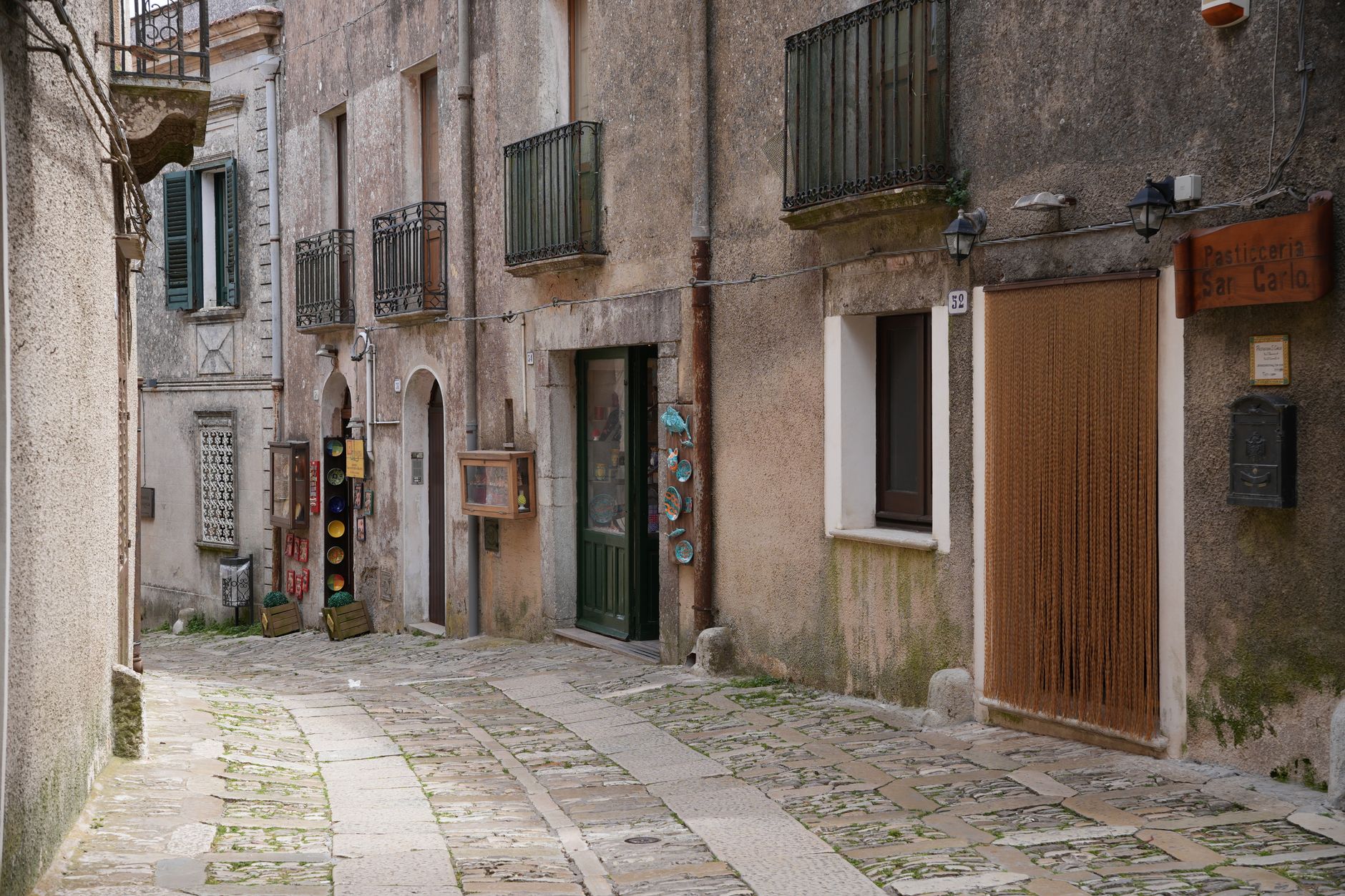
The Architecture of Quiet Decline
The Spanish quarter occupies the northeastern sector of Erice's walled perimeter, roughly between Via Cordici and Via Carvini. Here the palazzi have the characteristic heavy-bossed stone doorways and wrought-iron balconies of 17th-century Spanish colonial influence, many now draped in bougainvillea and wisteria that soften the austere limestone facades.
The Palazzo Municipale on Via Cordici houses a small but worthwhile museum (Museo Cordici) containing a marble Annunciation attributed to Antonello Gagini, a 16th-century Sicilian sculptor of the first rank — and almost nobody is ever looking at it.
The Walls, the Gates and the Capers
Walking the inner face of Erice's ancient walls — sections of which date back to the Elymian people, pre-dating Greek colonisation — takes you past the three original gates: Porta Trapani, Porta Spada and Porta Carmine. Each gate has a different architectural personality and a different view out over the valley.
The walls themselves are colonised by wild caper plants (Capparis spinosa) whose white-and-purple flowers bloom extravagantly in June. This is the same caper that ends up in the Saturday market — growing wild, unpicked, from the very fabric of the ancient city.
More of Erice
Discover where to stay, what to do and the best deals for your trip.
Explore Erice →


