
Boboli Gardens
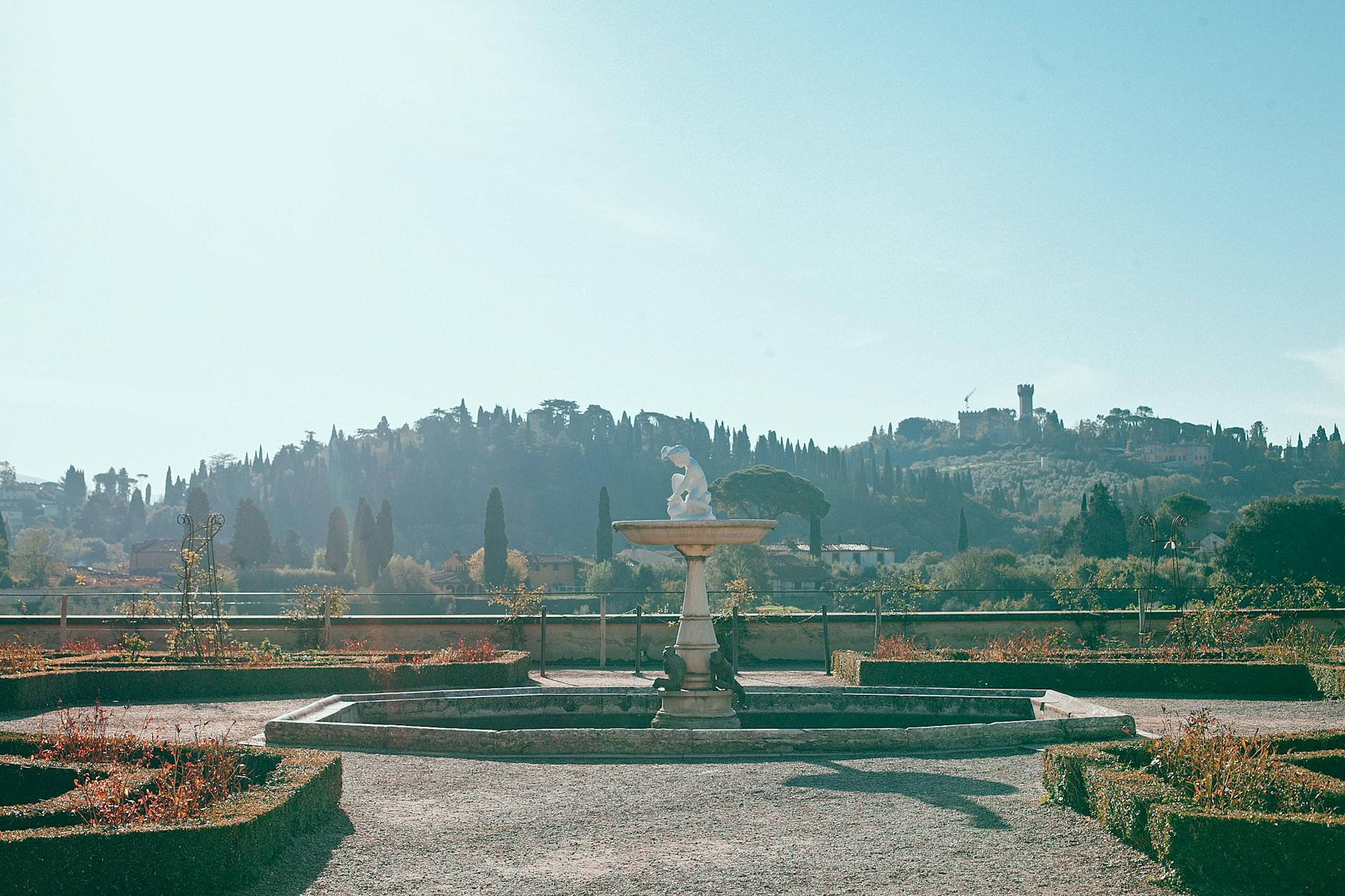
Sprawling behind the Pitti Palace, the Boboli Gardens are one of Europe's finest examples of Italian Renaissance garden design — 111 acres of fountains, grottos, and cypress allées that have barely changed since the Medici laid them out in the 1550s. Walking here feels less like sightseeing and more like stepping into a living painting.
The Grand Axis and Amphitheatre
The garden's spine is a long gravel axis that climbs from the Pitti Palace courtyard up to the Neptune Fountain and beyond, framed by perfectly clipped hedges and terracotta statuary. At the base sits the elliptical Amphitheatre, carved into the hillside in the 17th century and used for Medici court spectacles — it's widely considered the prototype of the modern opera house.
Pause at the Fountain of Neptune to look back toward the palace: the perspective is deliberately theatrical, designed to make the Medici appear godlike to any visitor gazing up from below. Early morning, when the gravel is still damp and the light is golden, this axis is almost completely empty.

The Buontalenti Grotto and Isolotto
Near the main entrance hides the Grotto of Buontalenti, a Mannerist cave dripping with fake stalactites and encrusted with shells, sponges, and frescoes. Inside its innermost chamber stands Giambologna's original marble Venus — one of the most quietly astonishing sculptures in Florence, seen by a fraction of the crowds who queue for the Uffizi.
At the garden's far western end, the Isolotto is a baroque island garden sitting in a moated oval pool, reached by two stone bridges guarded by herms. The central fountain of Oceanus, with its muscular sea-god, is reflected perfectly in the still water — a composition that rewards a slow walk around the entire perimeter.

More of Boboli Gardens
Discover where to stay, what to do and the best deals for your trip.
Explore Boboli Gardens →
