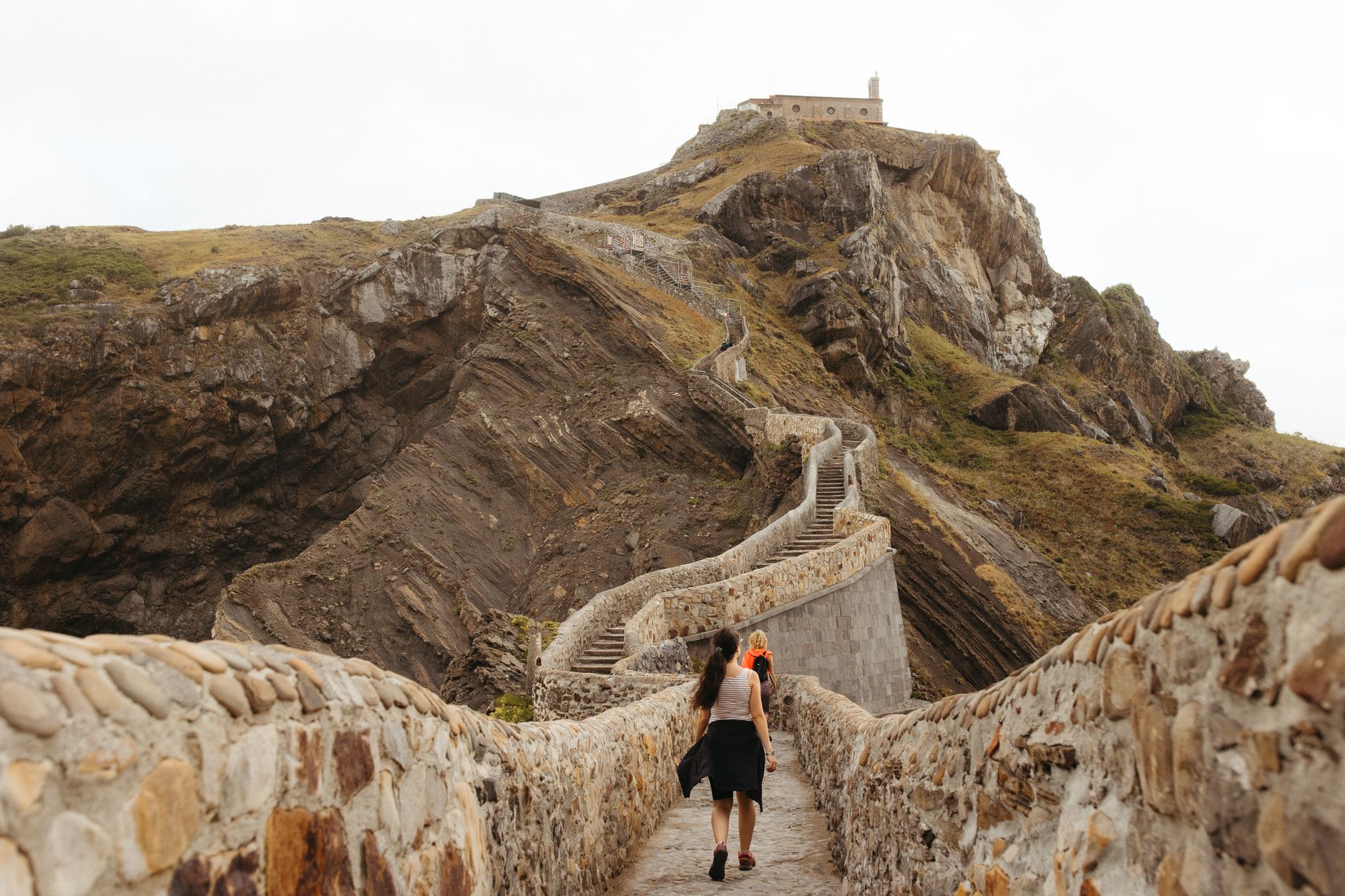
Costa Vasca: Zumaia's Flysch Cliffs
The coastline between Zumaia and Deba is one of the most scientifically significant stretches of rock in the world: continuous layers of flysch sediment record 60 million years of Earth's history in the cliff face, including the precise geological boundary marking the mass extinction that killed the dinosaurs. It is also, simply, staggeringly beautiful.
What the Flysch Actually Is
Flysch is a sequence of alternating dark and light sedimentary layers — dark shale from deep-sea mud, pale limestone from calcareous organisms — stacked and then tilted almost vertical by tectonic forces. At Zumaia the layers run in dramatic stripes straight into the sea, like the pages of an enormous open book.
The Cretaceous-Paleogene boundary — the moment 66 million years ago when the asteroid impact changed everything — is visible as a thin dark band in the cliff. A guided geology walk will point it out precisely; it is easy to miss on your own.
Seeing the Cliffs
The best views of the flysch are from the clifftop path that runs from Zumaia's Itzurun beach westward toward Deba — a 13-kilometre coastal walk with vertiginous drop-offs and no shade, so bring water and sun protection. The path is well-marked and takes about four hours one way.
Alternatively, take one of the seasonal boat trips that depart from Zumaia harbour and cruise along the base of the cliffs. Seeing the vertical strata from sea level, with the Atlantic swell at your feet and the layers rising 100 metres above, is a completely different and equally spectacular perspective.
Getting There and Combining Visits
Zumaia is on the Euskotren line from San Sebastián (about 45 minutes, €3.70 each way) — one of the most scenic regional rail journeys in the Basque Country, hugging the coast through Zarautz and Getaria.
Getaria itself is worth a stop: a tiny fishing village with a medieval church, the birthplace of Juan Sebastián Elcano (the first person to circumnavigate the globe), and a terrace of restaurants serving grilled fish straight off the boats. The local Txakoli wine is produced on the hillsides immediately above the village.
More of Basque Country
Discover where to stay, what to do and the best deals for your trip.
Explore Basque Country →