
Villa Mirabello
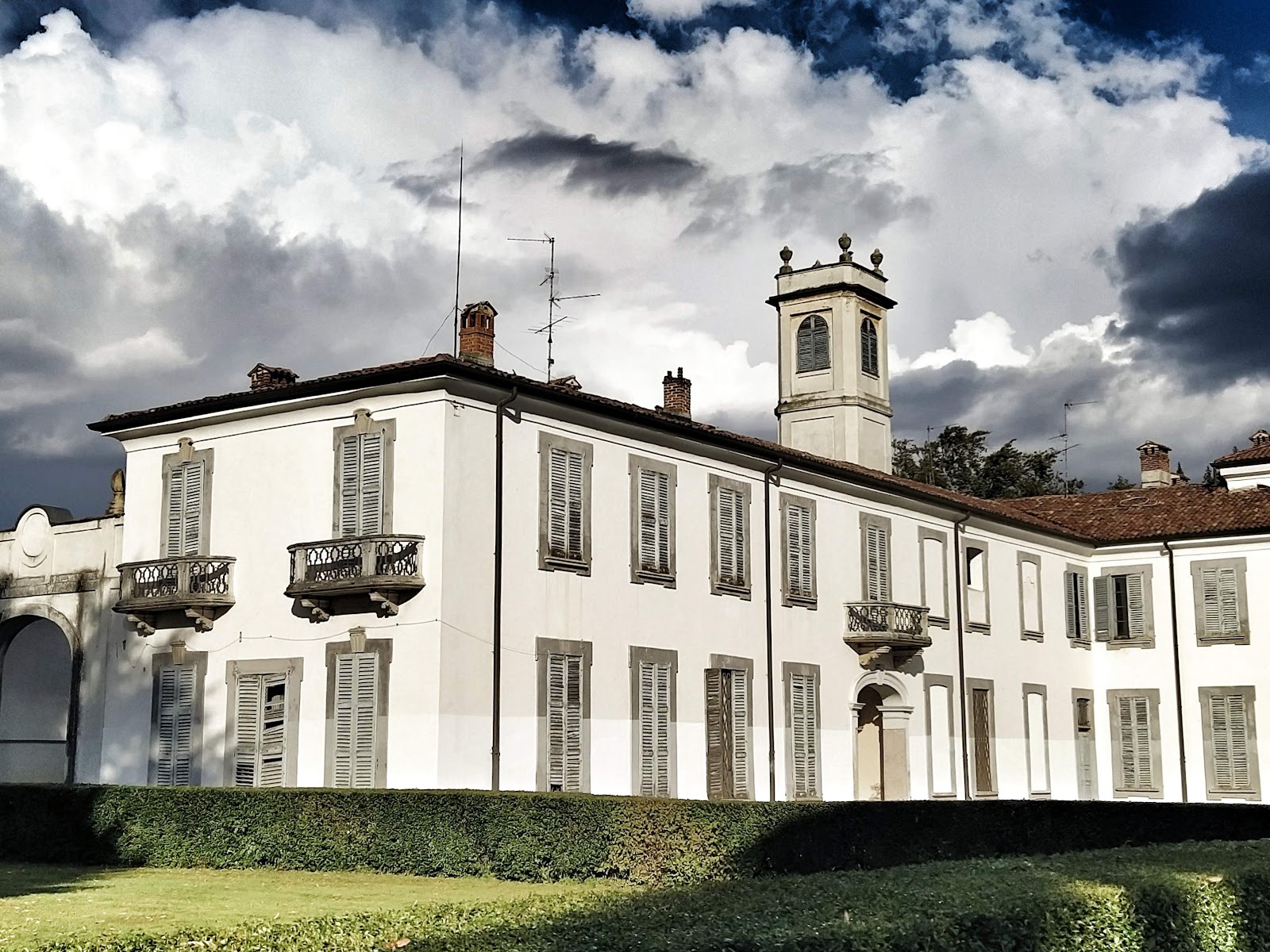
The three-arch portico faces east, its balcony topped by a triangular pediment, two small towers anchoring either end of the central block — one a campanile, one a belvedere for looking out over the wooded slope toward the Lambro river below. Villa Mirabello sits inside the Parco di Monza with the quiet authority of a building that has been many things: aristocratic seat, cardinal's salon, horse-breeding station, environmental research centre, and now a public library.
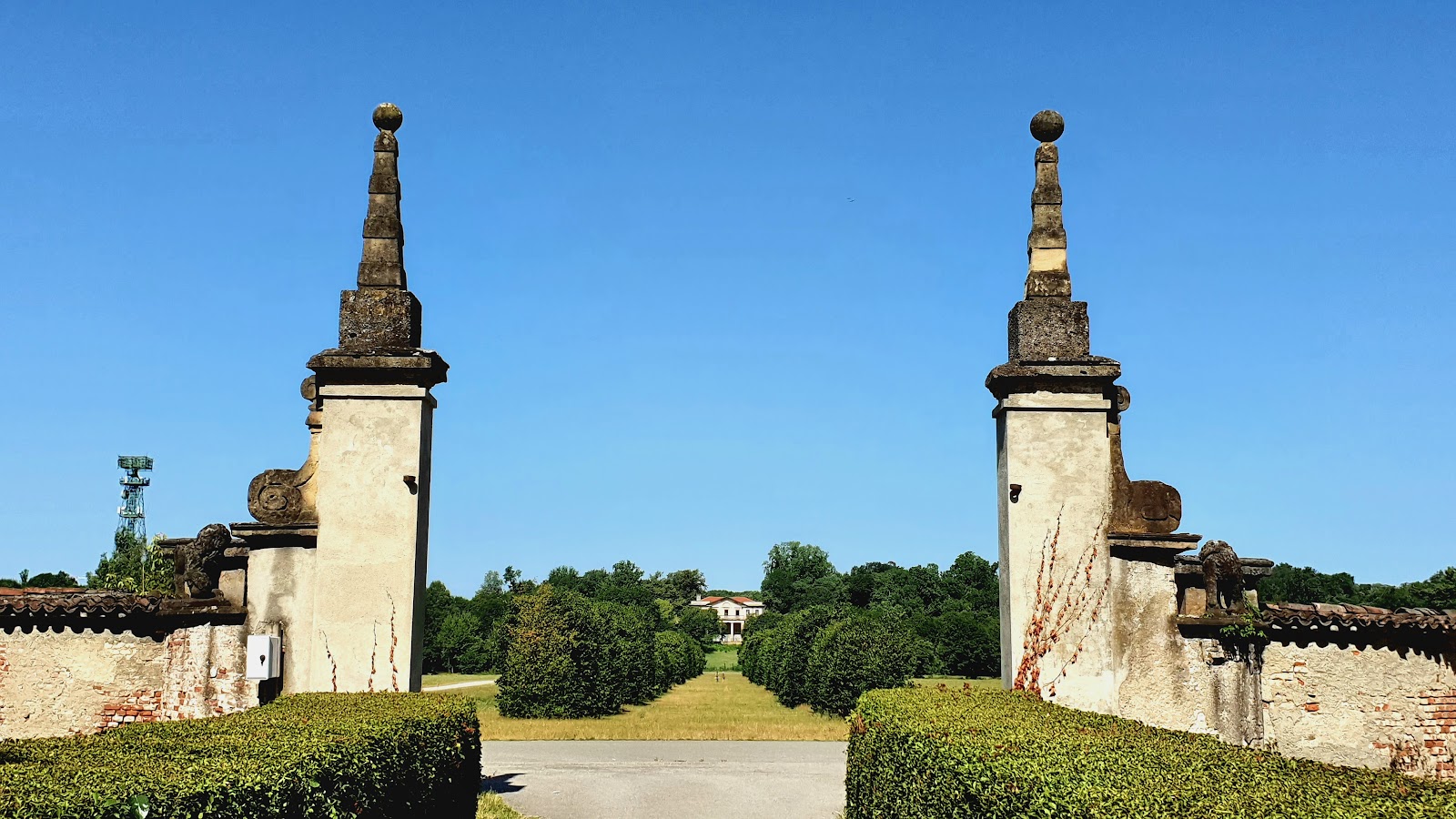
Walk the tree-lined avenue that links it to the smaller Villa Mirabellino and you get a sense of the estate's original scale, even if the hippodrome laid across the meadow in 1925 broke the intended sightline between the two.
💛 What travellers fall for
People who come back tend to time it for a weekday morning, when the park is unhurried and the cortile degli stalloni — the old porticoed stallion courtyard with its small riding track — is easy to linger in. The park's little train stops on Viale Mirabello if walking the full grounds feels like too much.
The story behind Villa Mirabello
Count Giuseppe Durini commissioned the villa in 1656, with architect Gerolamo Quadrio designing the U-shaped structure and its integrated octagonal chapel. The Durini family, Milanese bankers who had acquired feudal rights over Monza from the De Leyva family back in 1613, used the villa as their seat through the 17th and 18th centuries. A fire in 1715 was repaired the same year.
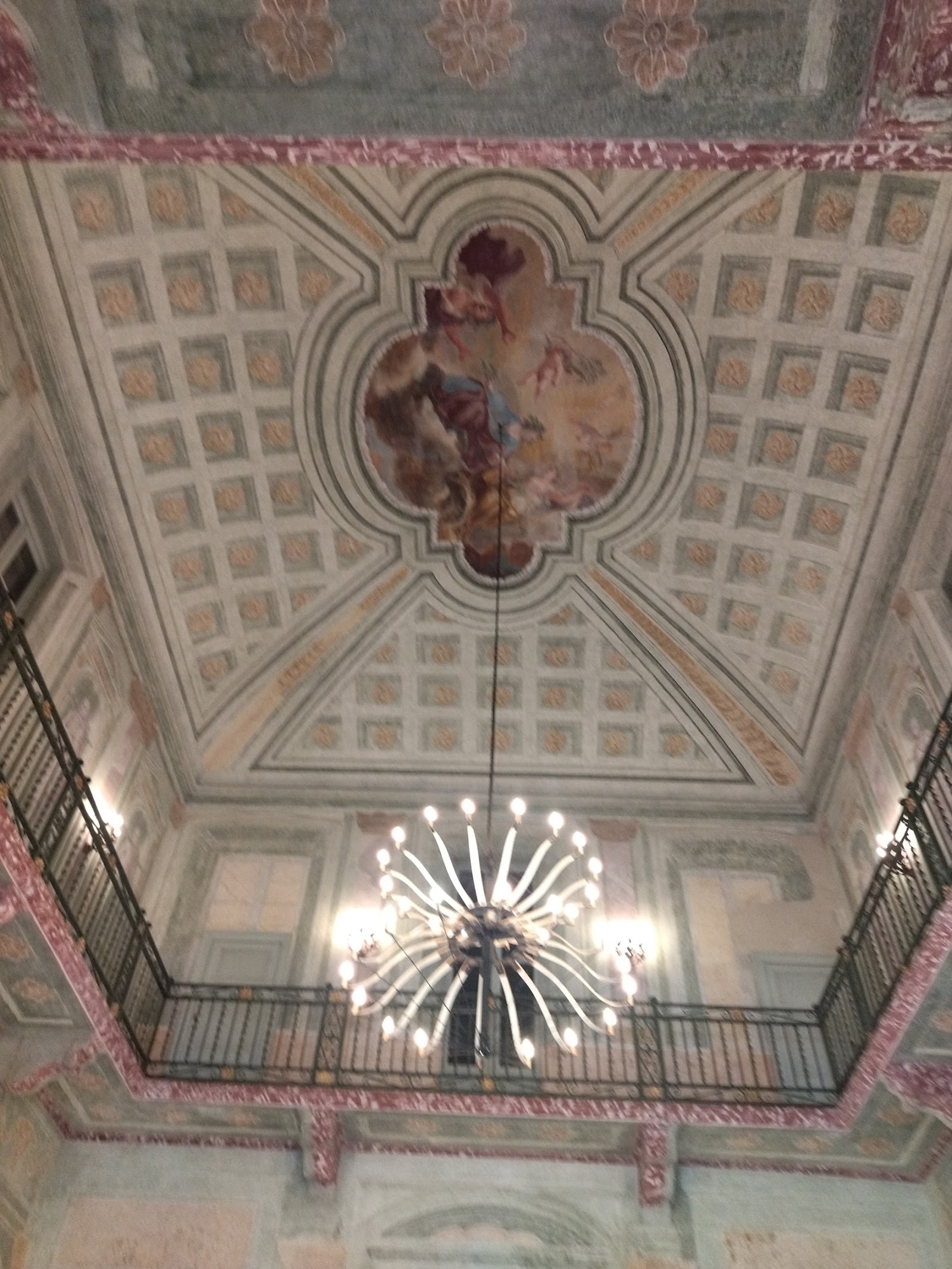
The most culturally charged period came between 1776 and 1788, when Cardinal Angelo Maria Durini made it his residence and transformed the frescoed rooms — painted by Ercole Procaccini il Giovane, Federico Bianchi, Pietro Maggi and others — into a working salon. Napoleon's government expropriated it in 1805 for the Villa Reale park expansion. After passing to state ownership in 1919, it spent decades as a horse-breeding facility, then park offices, then an environmental research centre, before a library moved into one wing in 1993.
Good to know
The park is free to enter and open from 7 AM (closing at 7 PM in winter, 9:30 PM in summer). The villa's interior access is limited — the library wing is the most reliably open section. From Monza station it's an 18-minute walk, or a short bus ride on Z208 or Z221.
The villa sits on a slope open to Lombardy's full seasonal range — cold and occasionally foggy from November through February, warm and sometimes humid in July and August. Late spring and early autumn give the most comfortable conditions for walking the grounds and the avenue to Villa Mirabellino.
Where is Villa Mirabello?
More tickets & tours for Villa Mirabello
Book directly at the provider
What travellers say about Villa Mirabello
Cool place to visit
Nice place
Giuseppe Durini built the villa near the city of Monza between 1656 and 1675, commissioning the architect Gerolamo Quadrio to design it. The villa is therefore the oldest of all the buildings that still exist in the park of the same name. Towards the mid-18th century, Cardinal Angelo Maria Durini transformed the villa into a small palace, thanks to the skill of architect Giulio Galliori. The villa was enriched with late Baroque decorations on the windows and frescoes in the ground-floor hall, which depicted poets from ancient classical times and contemporary times.
In 1613, G. G. Durini acquired the rights to the fiefdom of Monza from the De Leyva family (the family of the nun of Monza mentioned by Manzoni). His son Giuseppe built the villa, which is older than all the buildings currently standing in Monza Park, between 1656 and 1675, designed by architect Gerolamo Quadrio. Due to its particularly pleasant location, the villa was named Mirabello. The building later belonged to Cardinal Angelo M. Durini (1725-1796), who often hosted Giuseppe Parini, a close friend, and built the "Mirabellino" opposite. Today, the villa cannot be visited, but it serves as a landmark within the Park, with well-preserved architectural features.
I've had the opportunity to see some cultural initiatives in this villa. The walls and windows don't give it a pretty good appearance, but I'm confident they'll be taken care of soon. My opinion is that this structure could be used more actively through an interdisciplinary approach involving schools, universities, senior citizens, theater, painting, sculpture, and Arte Povera. What makes Villa Mirabello unique is the entire context surrounding it, and the main road leading to it is the most popular for long walks or sports.
More of Monza
Discover where to stay, what to do and the best deals for your trip.
Explore Monza →More attractions in Monza
All of Monza →

Background adapted from Wikipedia (CC BY-SA) · map data © OpenStreetMap contributors · ratings & place photos via Google · other photos with per-image credit. Ticket links may earn us a commission at no extra cost to you.