
Via Sacra of Paestum

The first thing you notice is the wheel ruts. Nine feet of limestone paving stretches ahead of you, and pressed into the stone are the grooves left by Roman chariot axles — a commute worn into rock. This is Via Sacra, the spine of ancient Paestum, and it has been carrying foot traffic, processions and carts for roughly 2,600 years.
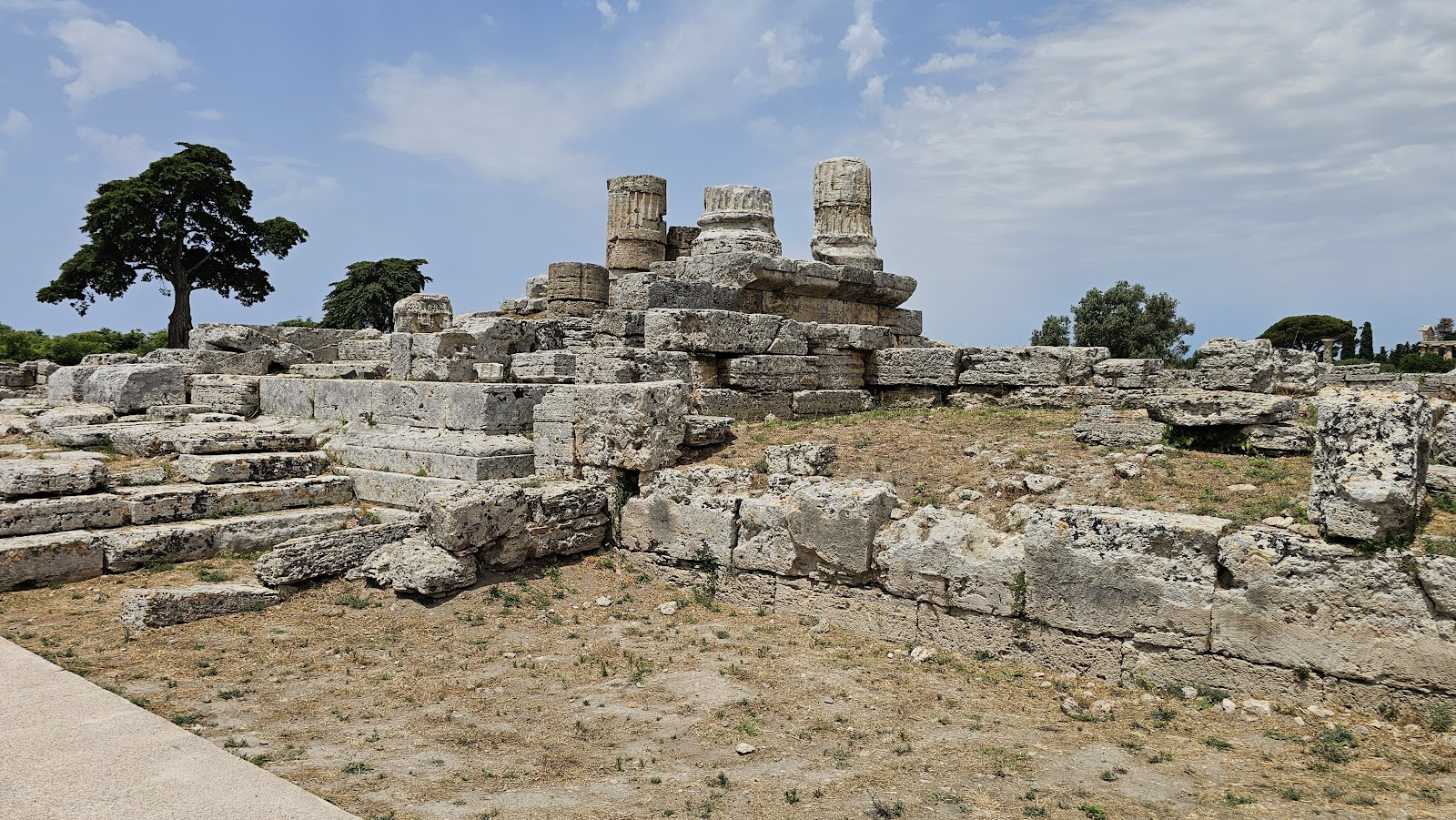
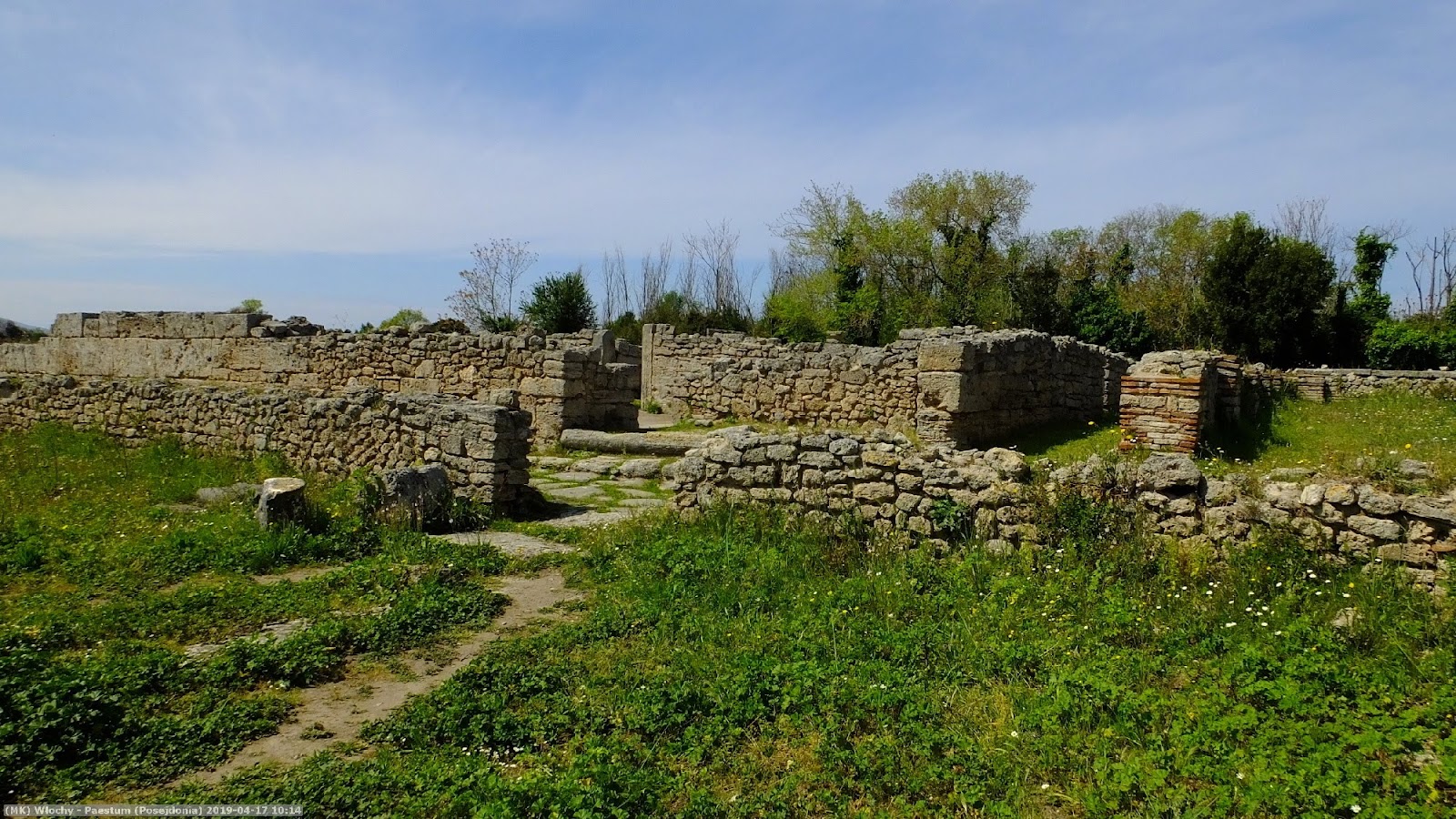
Walk it north to south and the whole city unfolds on either side: Doric temples in golden travertine, the footprint of a Roman forum with its shops and stoa, eight excavated housing blocks still holding their Roman-era orientation. The street itself is the exhibit.

💛 What travellers fall for
People who come back tend to arrive early, before the tour groups, when the limestone catches the low morning light and the site is nearly silent. The wheel ruts are easier to photograph then, and you can stand at the forum end of the street and look straight toward the Temple of Neptune without anyone in the frame.
The story behind Via Sacra of Paestum
Greek Achaeans from Sybaris founded the city as Poseidonia around 600 BCE, and Via Sacra served from the beginning as a processional route linking the major temples. The travertine paving came later, laid by Roman hands after 273 BCE when the Lucanians surrendered and the city was renamed Paestum — though the street's religious function predates the Roman stones by centuries.
Systematic excavation began in 1907. The residential quarter along the western side of Via Sacra, with its eight uniform housing blocks, dates to the Roman Imperial period and was gradually uncovered through the 20th century. The site drew literary visitors long before archaeology arrived: Goethe, Shelley, Piranesi and Canova all walked here after Charles III of Bourbon opened State Road 18.

Good to know
Paestum train station is under a kilometre from the entrance at Porta Sirena gate — about 40 minutes from Salerno. A €15 ticket (€10 in winter) covers three days and includes the museum. The site has almost no shade, so sun protection matters more than you'd expect.
April through June and September through October offer the most comfortable walking conditions — mild temperatures and thinner crowds. In summer the site is fully exposed and shade is essentially absent; in winter the park closes around 5 PM.
Where is Via Sacra of Paestum?
More tickets & tours for Via Sacra of Paestum
Book directly at the provider
What travellers say about Via Sacra of Paestum
THE SACRED WAY THE TERM "SACRA," ATTRIBUTED TO THE VIA DI BASOLI THAT CROSSES THE CENTRAL PART OF POSEIDONIA-PAESTUM FROM SOUTH TO NORTH, IS MOTIVATED BY THE FACT THAT THIS ROAD BORDERED THE CITY'S TWO MAJOR SANCTUARIES. IN REALITY, MORE THAN "SACRA," THIS ROAD CAN BE CONSIDERED THE "VIA DEL CORSO" OF POSEIDONIA-PAESTUM BECAUSE, BUILT AROUND 530-520 BC, IT DID NOT SERVE AS A WAY TO ENTER THE SACRED SPACES, BUT BUT DIVIDED THE SACRED PLACES AND THE ANCIENT LIVING SPACES. THIS MAJOR CITY STREETS, ALMOST 10 METERS WIDE, ALLOWED THOUSANDS OF PEOPLE TO MOVE FROM NORTH TO SOUTH OR NORTH TO SOUTH: IMAGINE THE SOUND OF FOOTSTEPS AND THE CONTINUOUS BACKGROUND VOICES DURING JOURNEYS TO THE CITY CENTER AND THE OUTSKIRTS. COVERED PORTICOS LINED THE ROAD AND SHELTERED CITIZENS FROM THE SUN AND BAD WEATHER. IN ROMAN TIMES, THE rammed earth road surface was replaced by a set of limestone slabs, on which you can still see the RUTS LEFT BY THE WHEELS OF THE CHARIOTS THAT circulated through the city.
More of Paestum
Discover where to stay, what to do and the best deals for your trip.
Explore Paestum →More attractions in Paestum
All of Paestum →

Background adapted from Wikipedia (CC BY-SA) · map data © OpenStreetMap contributors · ratings & place photos via Google · other photos with per-image credit. Ticket links may earn us a commission at no extra cost to you.