
Via dei Mercanti (Historic Center)
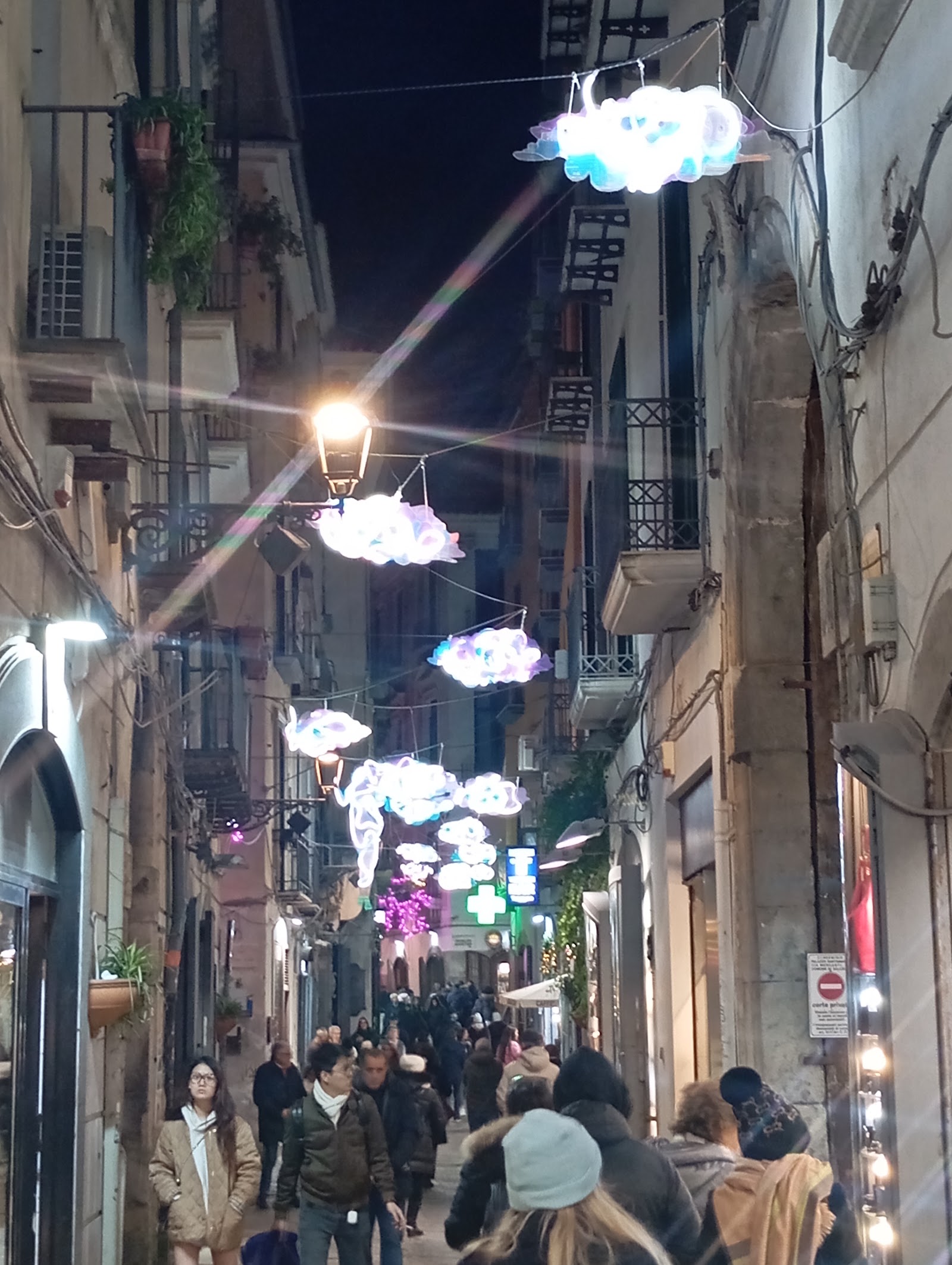
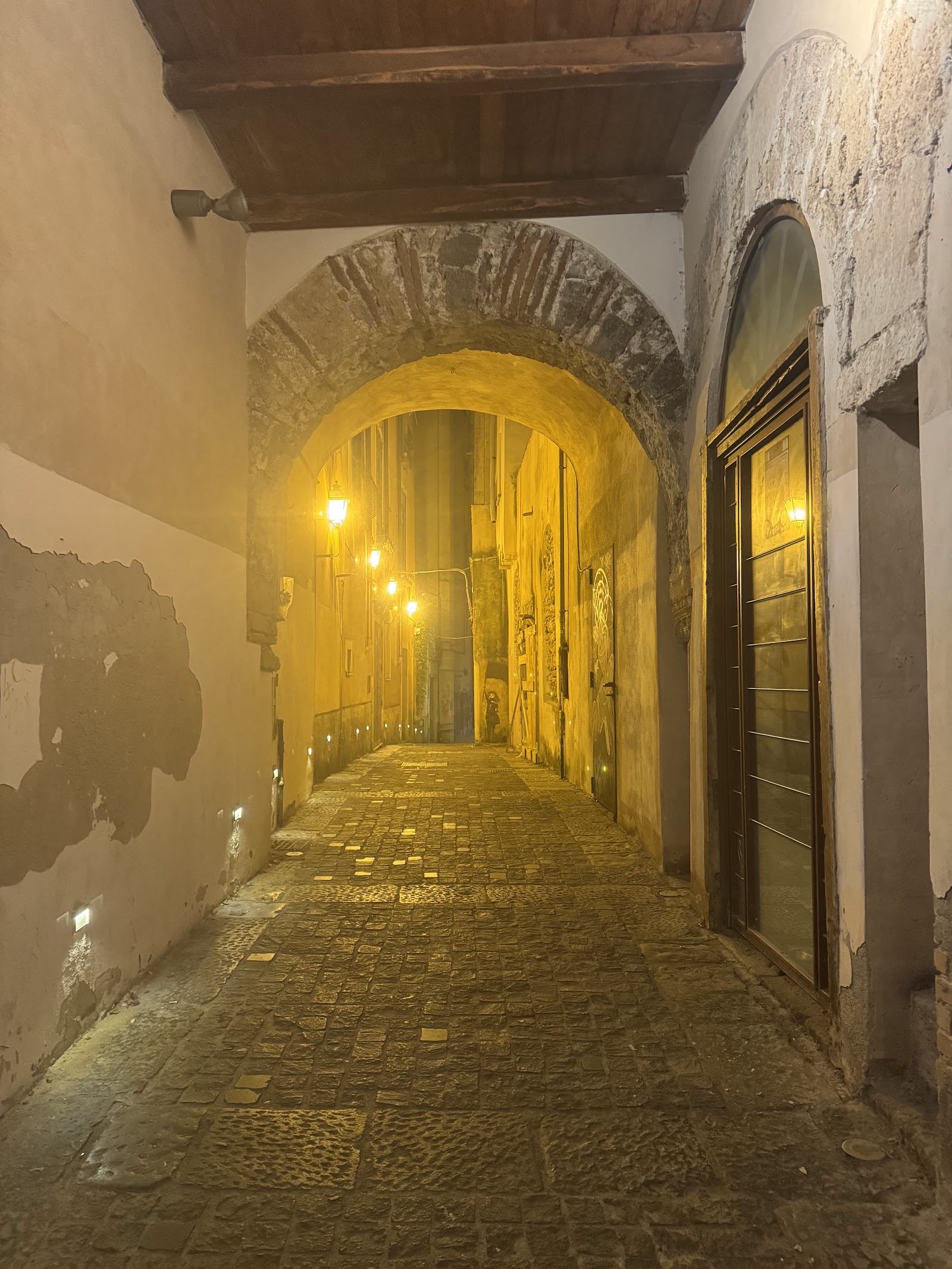
Via dei Mercanti begins under the Arco di Arenchi and runs for about a kilometre through Salerno's oldest quarter, lined with grand palazzi whose ground floors have been converted into shops, bars and small restaurants. The street is pedestrian, uneven in places, and occasionally interrupted by steep lanes that branch off toward viewpoints you weren't expecting.
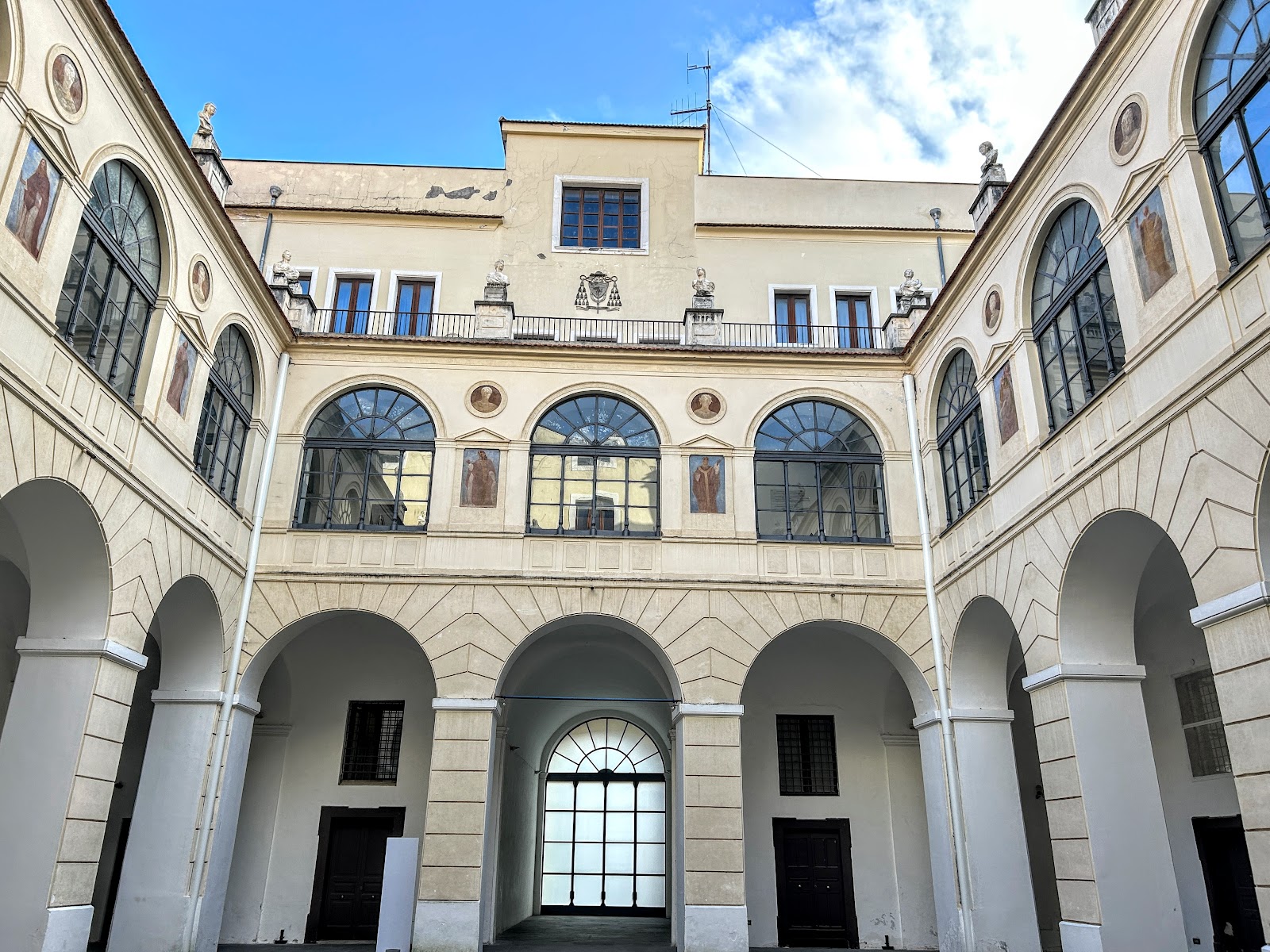
At its most photogenic stretch you'll find Palazzo Genovese — late Baroque, built in 1744 — and the Fontana dei Pesci, a fountain by Luigi Vanvitelli, set into the fabric of the street as if it had simply grown there. The Cathedral of San Matteo is a few steps off to one side; the city's pinacoteca occupies the nearby Renaissance Palazzo Pinto.
💛 What travellers fall for
People who come back tend to do so in December, when the Luci d'Artista installations run along the street and the evening crowds thin out after 9pm. The Church of San Giorgio, easy to walk past, has Baroque frescoes worth the detour. Coffee at one of the palazzo-front bars mid-morning, before the street fills up, is the consistent recommendation.
The story behind Via dei Mercanti (Historic Center)
The street's roots are Lombard, and by the 13th century it had become the commercial spine of medieval Salerno. It was known then as Drapperia — the cloth district — a name that tells you exactly what was traded here: fabric, dye, the worked goods of a city that sat at the crossroads of Mediterranean exchange.
Over the following centuries the character of the street shifted from raw trade to something more architectural. Palazzo Genovese went up in 1744 in late Baroque style; Vanvitelli's Fontana dei Pesci was set into the streetscape. The churches of Santissimo Crocifisso and San Giorgio both took their current Baroque form during this period. The name Via dei Mercanti — Street of the Merchants — kept the memory of the trade that had shaped it.

Good to know
From Salerno train station, it's roughly 15 minutes on foot: head west toward the sea, pick up Corso Vittorio Emanuele, and the street begins at Piazza Portanova. Bus lines 4 and 9 connect the ferry and maritime terminals; a single ticket runs about €1.30. No entry fee, no ticket needed — just walk.
Spring (mid-April through early June) and early autumn (September into October) give you the most comfortable walking weather, with temperatures between roughly 15 and 22°C and little rain. Summer is reliably dry but July and August can push above 28°C on the stone-paved stretches; winters are mild but can bring wet spells.
Where is Via dei Mercanti (Historic Center)?
More tickets & tours for Via dei Mercanti (Historic Center)
Book directly at the provider
What travellers say about Via dei Mercanti (Historic Center)
I love this narrow street in the historical centre of town. Shopping road with some restaurants and coffee shops. Very busy during holidays! Lovely atmosphere
Via Dei Mercanti is one of Salerno's most characteristic streets. It's very similar to a street in the historic center of Naples, with narrow streets lined with small shops and beautiful architecture. It can be considered the heart of the Campania capital, along with Corso Vittorio Emanuele, which connects the street. Ideal Duration: 30 min / 1 hour
Virtually parallel to the seafront, Via dei Mercanti is one of Salerno's most attractive streets. It begins in Piazza Portanova and runs through the city's historic center, with its characteristic narrow streets. Once the main thoroughfare and commercial hub, today it's a popular shopping street, also known for its numerous bars, chip shops, and restaurants. It's particularly charming during the Christmas season with its Luci d'Artista installations.
A truly iconic place in Salerno, a must-see for strolling through the shops brimming with gadgets and trinkets. A journey through the labyrinthine streets of Salerno's historic district is a thrilling experience.
It is Salerno's most characteristic street, with some historic shops and some of the city's most unique stores, from vintage clothing to fashion and streetwear, typical taverns or places to enjoy traditional sandwiches or restaurants of various ethnicities, unusual and unique gadgets, here you can find the most famous and oldest pastry shop in Salerno, the narrow alleys, the ancient buildings, everything truly beautiful and unique. In the early morning when life is slowly awakening it is truly a wonderful experience, but in the evening, in full nightlife, it is even better!
More of Salerno
Discover where to stay, what to do and the best deals for your trip.
Explore Salerno →More attractions in Salerno
All of Salerno →
Background adapted from Wikipedia (CC BY-SA) · map data © OpenStreetMap contributors · ratings & place photos via Google · other photos with per-image credit. Ticket links may earn us a commission at no extra cost to you.