
Lungomare Trieste
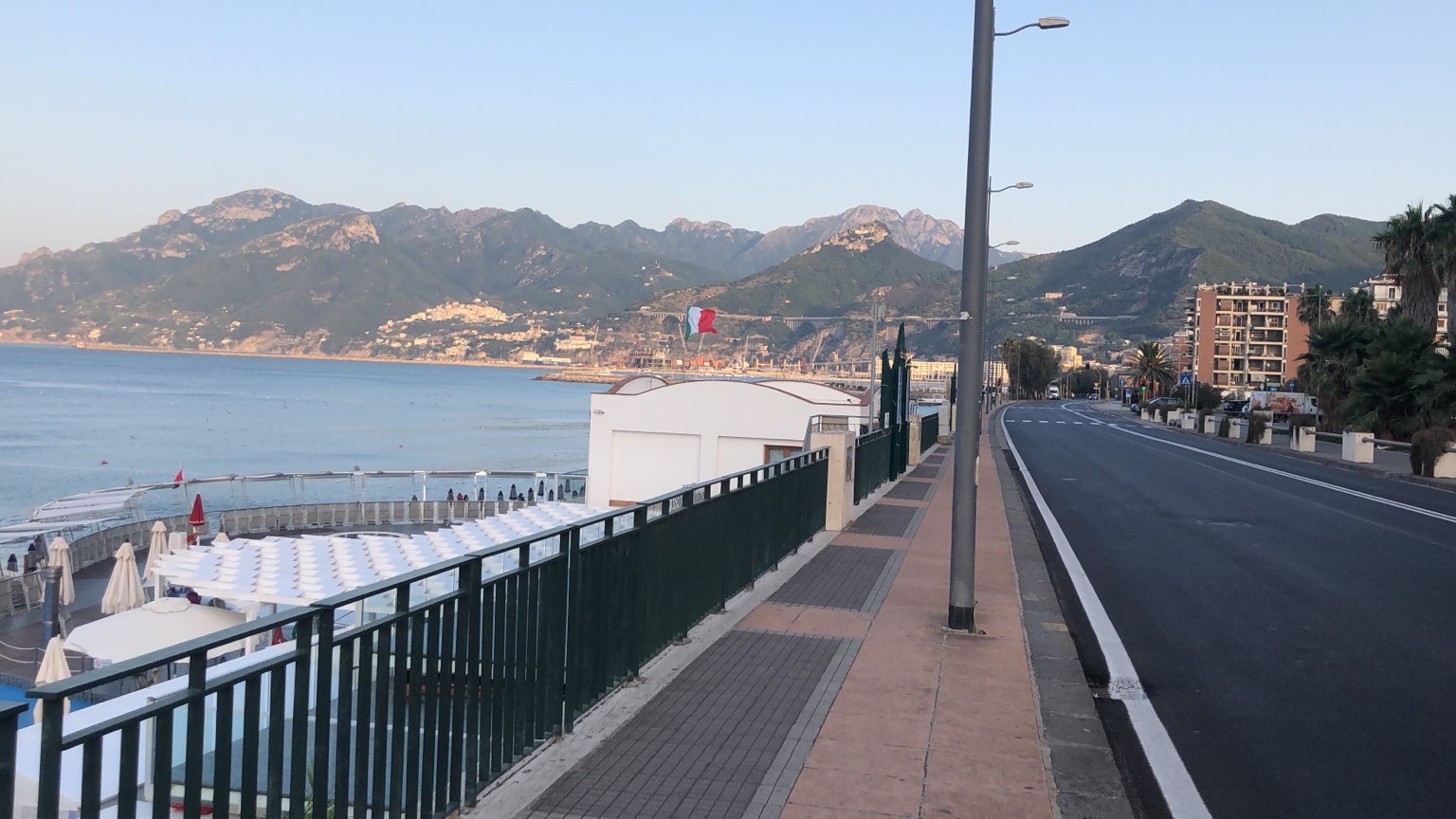
The palms along Lungomare Trieste are the first thing you register — rows of Phoenix canariensis and Washingtonia rising from three parallel flowerbeds, casting the kind of shade that makes a late-afternoon walk feel like a reward. The promenade runs roughly 1.5 kilometres from Piazza della Libertà to the Masuccio Salernitano tourist port, with the hill and its castle on one side and the Tyrrhenian on the other.
Part of its texture comes from what you can't see: the volcanic ash from Vesuvius worked into its foundations, and rubble from buildings lost in wartime bombardments used in its construction. The people of Salerno have been walking this stretch every evening for the better part of a century, and it shows — in the worn smoothness of the paths, in the ease of it.
💛 What travellers fall for
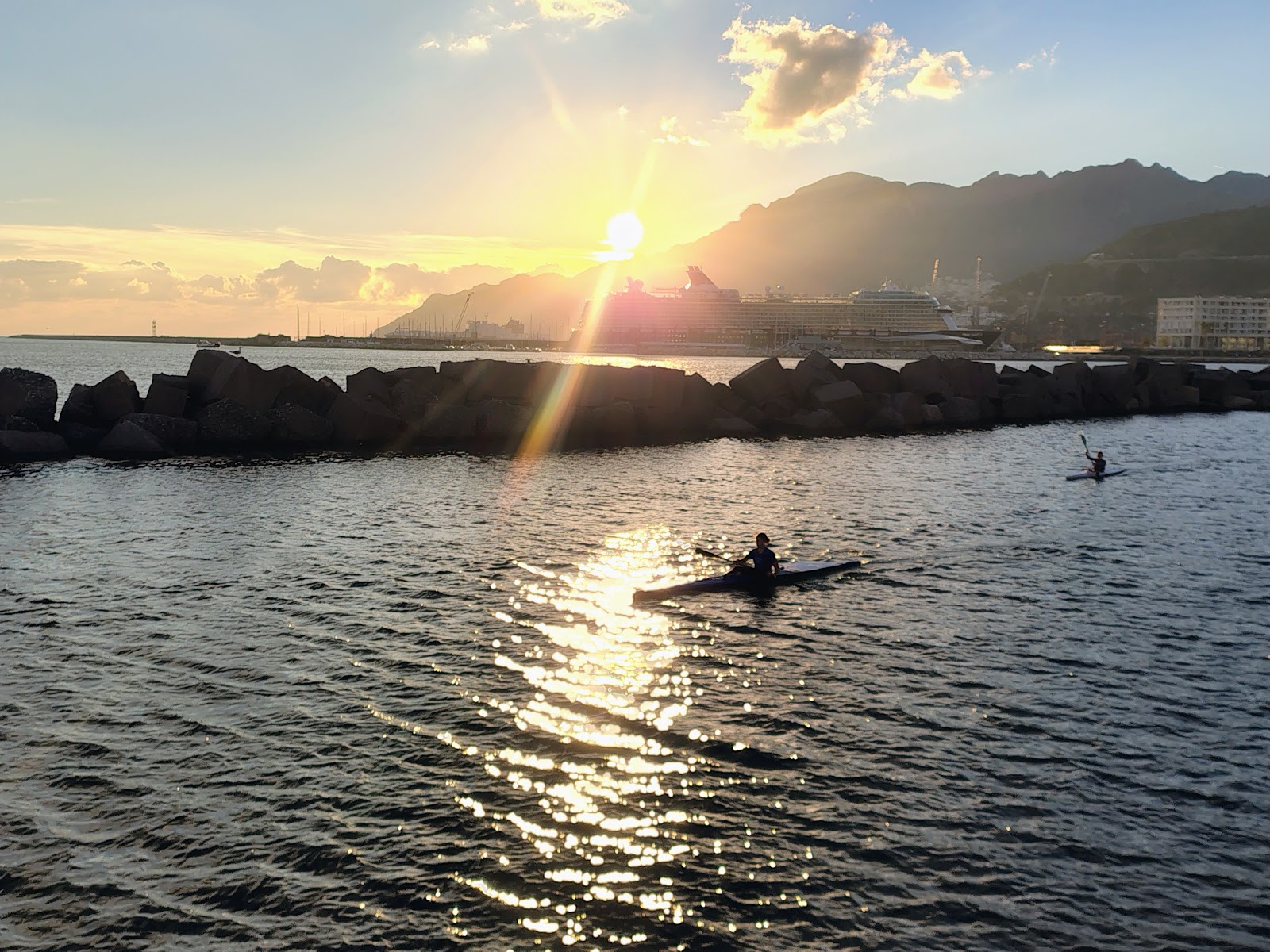
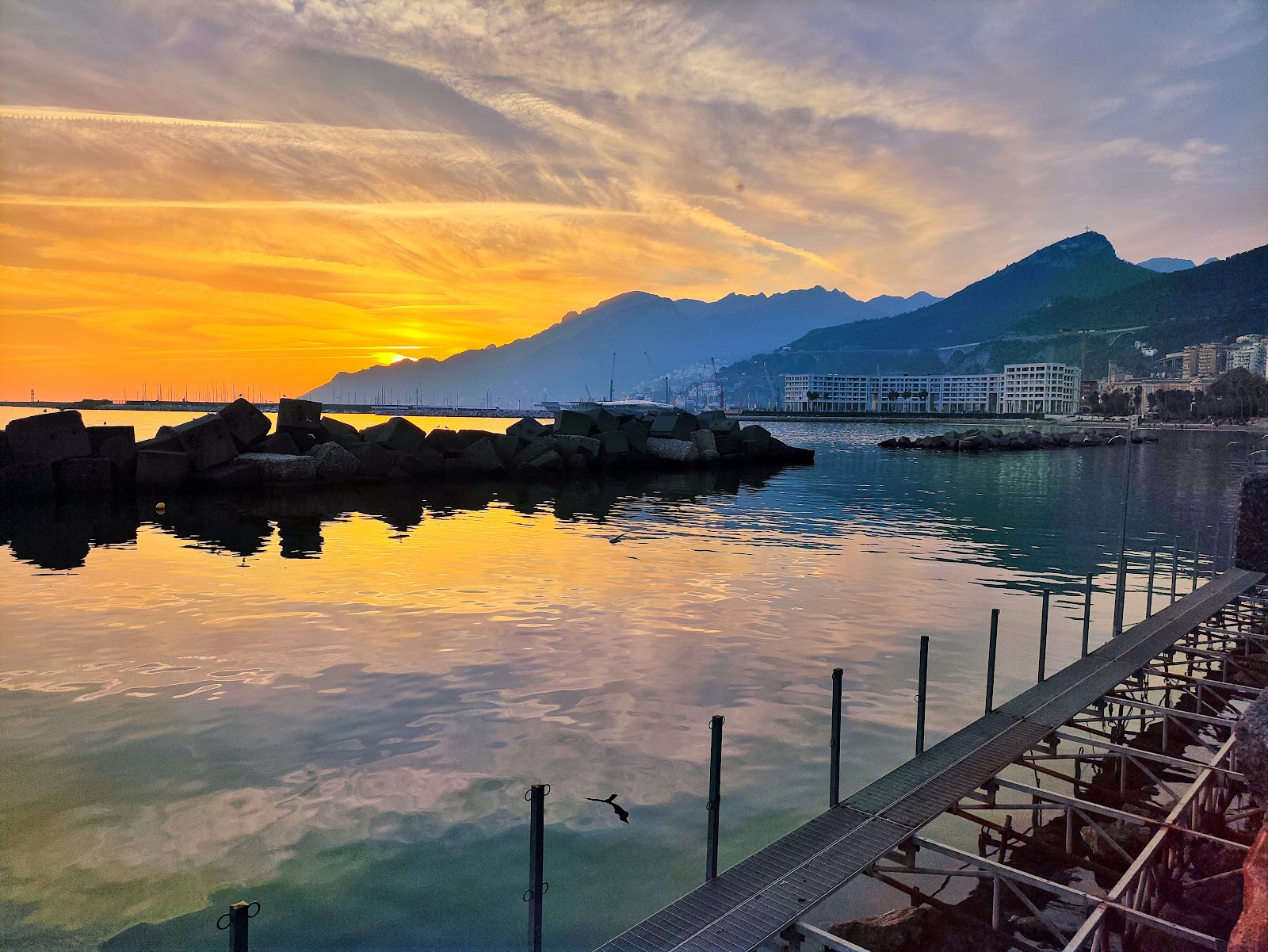
People who come back tend to time it the same way: arrive before sunset, when the light off the water is at its most useful for photographs, then stop at Bar Nettuno for the brioche filled with gelato — a local habit worth adopting. The stretch near the Sailor's Monument at Piazza Concordia is quieter than the central section and worth the extra few minutes on foot.
The story behind Lungomare Trieste
Construction started in 1920 as part of an effort to stabilize the beach against wave erosion. The main stretch — 1.3 kilometres, with its gardens and institutional buildings — took shape between 1926 and 1933, and a contemporary account called it the most beautiful work yet executed for the city's embellishment. The southern section, including the tourist port and Piazza Concordia, came in the early 1950s under Mayor Alfonso Menna, who later said the expansion was partly inspired by King Vittorio Emanuele III during a stay in Salerno. By mid-century, some were calling it the most beautiful waterfront in the Mediterranean.
In the early 1990s, the promenade underwent extensive restoration led by architect Giovanni Carpentieri as project director, designer Mario Villani, and engineer Aniello Sessa. Accessibility improvements followed in 2011. A quieter blow came between 2006 and 2007, when the red palm weevil — Rhynchophorus ferrugineus — killed much of the original palm population, and replanting gradually began.
Good to know
The nearest train station is about seven minutes on foot; local bus lines 4, 5, 6, and 17 also stop nearby. No entrance fee, no ticket, open at all hours. Weekday mornings and late afternoons are calmer than weekend evenings, when the promenade fills with Salerno's own.
Summer evenings are warm and sociable, though the promenade can be crowded on weekends. Spring and autumn offer the most comfortable walking weather, with mild temperatures and softer light — the kind of conditions that make a slow circuit of the full 1.5 kilometres feel unhurried.
Where is Lungomare Trieste?
Location
- In Salerno
- 40.6760, 14.7520
- Open in Google Maps
More tickets & tours for Lungomare Trieste
Book directly at the provider
More of Salerno
Discover where to stay, what to do and the best deals for your trip.
Explore Salerno →More attractions in Salerno
All of Salerno →
Background adapted from Wikipedia (CC BY-SA) · map data © OpenStreetMap contributors · ratings & place photos via Google · other photos with per-image credit. Ticket links may earn us a commission at no extra cost to you.