
Temple of Juno Lacinia
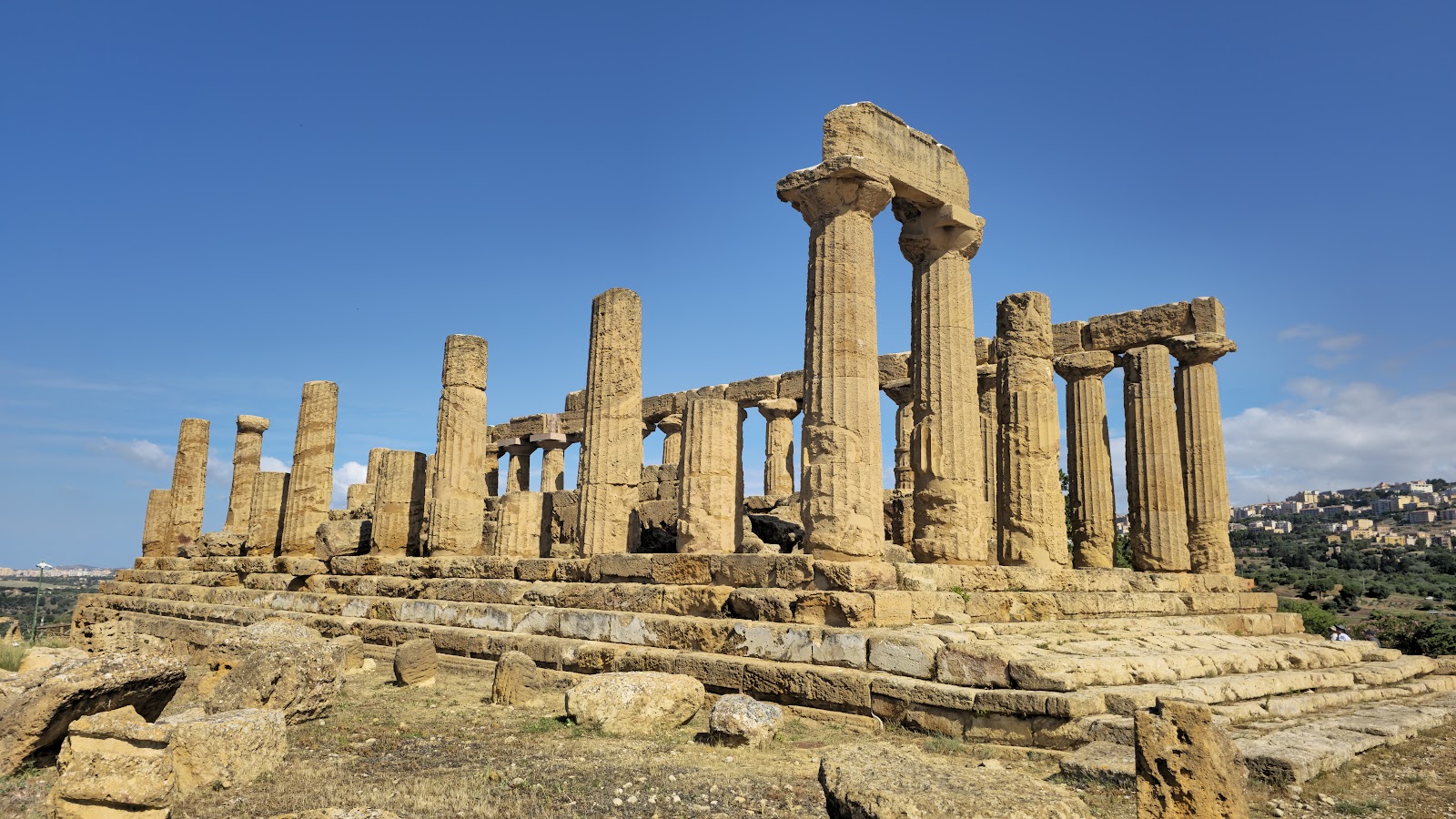
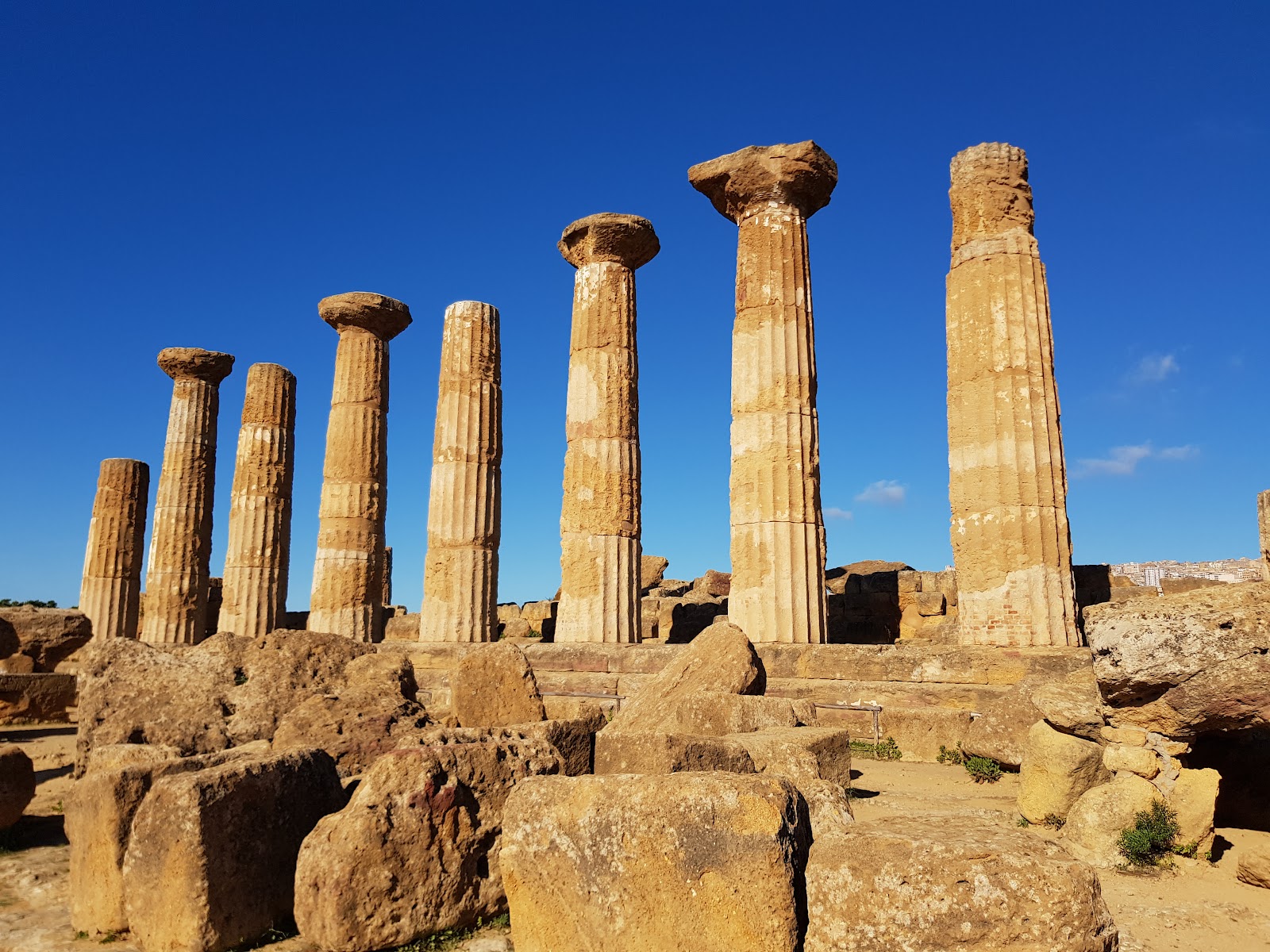
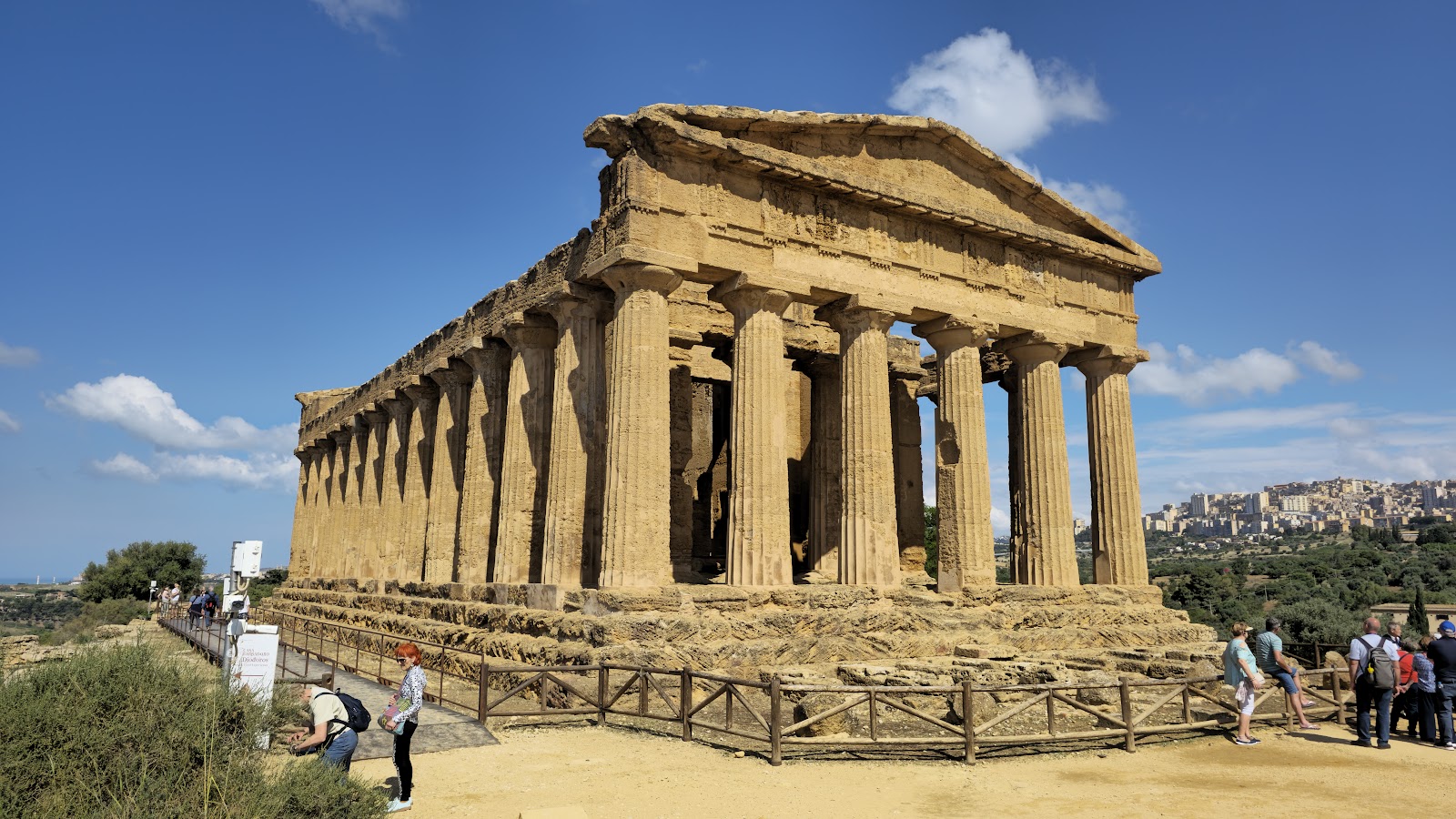
The Temple of Juno Lacinia stands at the eastern tip of the ridge, higher than anything else along the sacred way, and from here the land drops away toward the sea in long, slow terraces of olive and almond. Thirty columns of warm golden limestone are still upright on the north and south flanks, and on several of the north-side drums you can still read the reddish fire-scarring left by the Carthaginian assault of 406 BC — not a metaphor, but actual stone scorched in an actual siege.
The name is a historical accident. A Roman-era misreading of Pliny the Elder attached the epithet 'Lacinia' to this temple when Pliny was actually describing a sanctuary near Crotone, in Calabria. The goddess worshipped here was almost certainly Hera, but the misnomer has stuck for centuries.
💛 What travellers fall for
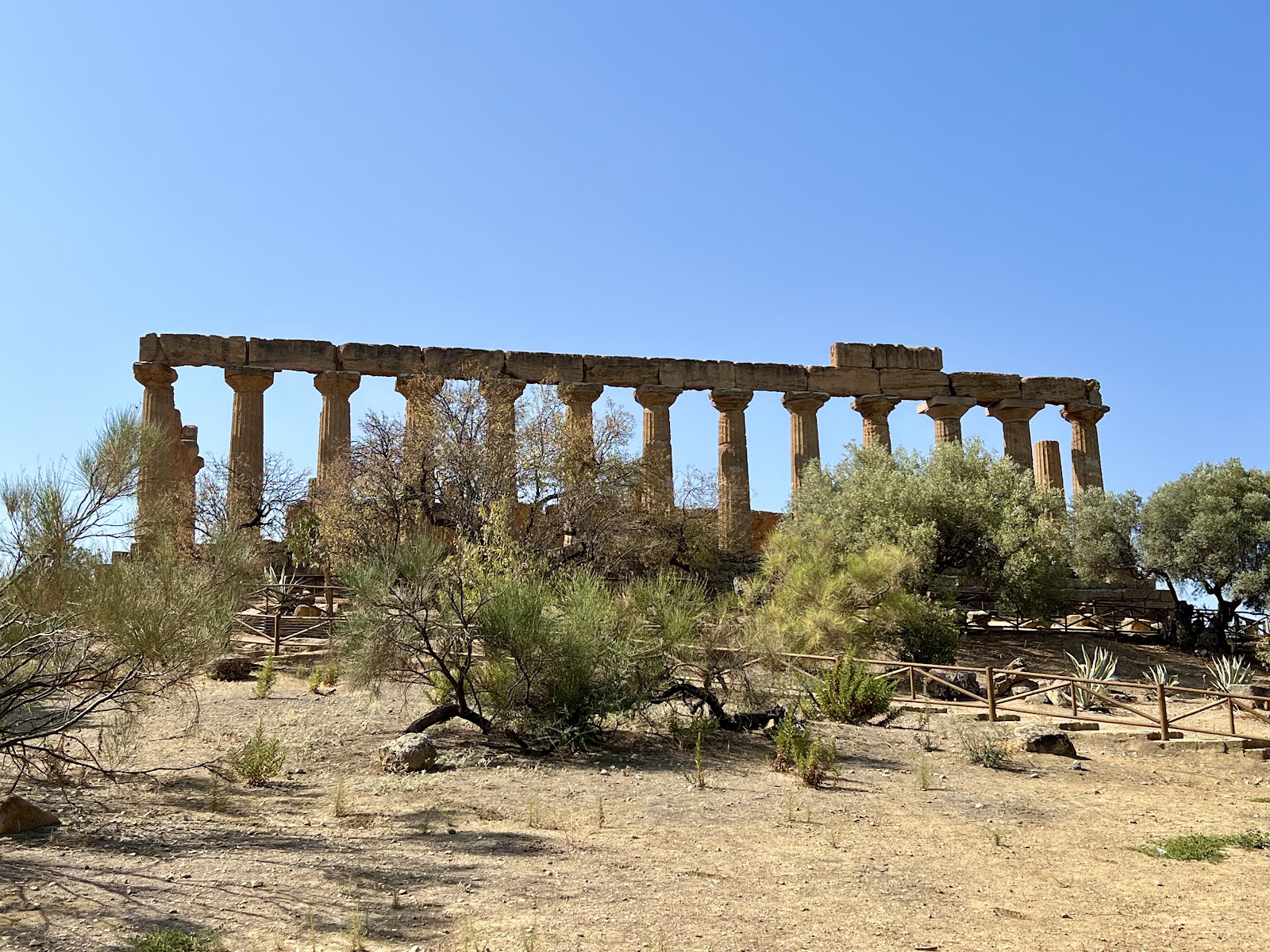
People who come back tend to arrive either first thing at 8:30, when the light is still low and raking across the column drums, or in summer on a weekday evening when the site stays open until 11 pm and the limestone goes amber, then grey. The altar remains on the eastern face are easy to walk past — don't.
The story behind Temple of Juno Lacinia
The temple was built around 450 BC on a rocky outcrop at the highest point of the Collina dei Templi, the long ridge that formed the southern boundary of ancient Akragas. Its floor plan runs roughly 38 by 16.9 metres, with a peristyle of thirty-four columns, each assembled from four stacked drums and standing 6.4 metres tall, rising from a four-step crepidoma. The interior is a cella of the double antis type — no internal colonnade, with a pronaos at the front mirrored by an opisthodomos at the back.
In 406 BC the Carthaginians sacked Akragas, and the fire damage is still legible in the stone. During the Roman period the temple was restored and its original terracotta roof replaced with marble, cut at a steeper pitch on the eastern side. A medieval earthquake brought down part of the structure, and in the 18th century the collapsed columns on the north side were re-erected by anastylosis.
Good to know
City buses on lines 1, 2, 2/ and 3/ run from Piazzale Rosselli and the central railway station directly to the Valley of the Temples. Entry is €17, free for under-18s, and free for everyone on the first Sunday of the month. Spring (mid-April to mid-May) and early autumn are the most comfortable seasons for walking the ridge.
July and August regularly push above 30°C on this exposed ridge, with no shade between the columns and no mercy from the sun — mid-April to mid-May and mid-September to mid-October are far more comfortable for a slow look around. Winter is mild and sometimes rainy, but the low light can be worth the gamble.
Where is Temple of Juno Lacinia?
More tickets & tours for Temple of Juno Lacinia
Book directly at the provider
What travellers say about Temple of Juno Lacinia
A beautiful and impressive temple, definitely one of the highlights of the Valley of the Temples in Agrigento. The Temple of Juno is stunning, both for its historical importance and for its position within the archaeological park. Standing in front of it, you can really feel the grandeur of the ancient Greek site and imagine how impressive this place must have been in the past. The setting is wonderful: ancient columns, open landscape, and beautiful views all around. It is a very atmospheric and photogenic place, especially while walking along the route through the Valley of the Temples. What makes it special is not only the temple itself, but the feeling of being surrounded by history in such a scenic location. Absolutely worth visiting, and a must-see for anyone coming to Agrigento.
Amazing site! Count on at least 3+ hours...there is a shuttle that will take you to the top, and then walk down...we chose the parking lot at the bottom. A truly impressive afternoon excursion
Amazing place to visit. Temple ruins are well kept. Sitting on the side of the pathway makes you wonder and imagine how they built it and what it would be like in the old times. Not sure why they won't allow tripods to take photos. Both food place next to each other defeats the purpose for those who can't walk a lot.
The Valley of the Temples is the largest archaeological park in Europe, the most impressive ensemble of Hellenic architecture, included in the UNESCO World Heritage List, one of the most fascinating tourist attractions, a symbol of Sicily.
Amazing view of the temple of hera/juno. Built in 450 BC and evidence of the destruction from a fire during the Carthaginian sack of the city in 406 BC.
More of Agrigento
Discover where to stay, what to do and the best deals for your trip.
Explore Agrigento →More attractions in Agrigento
All of Agrigento →

Background adapted from Wikipedia (CC BY-SA) · map data © OpenStreetMap contributors · ratings & place photos via Google · other photos with per-image credit. Ticket links may earn us a commission at no extra cost to you.