
Temple of Concordia
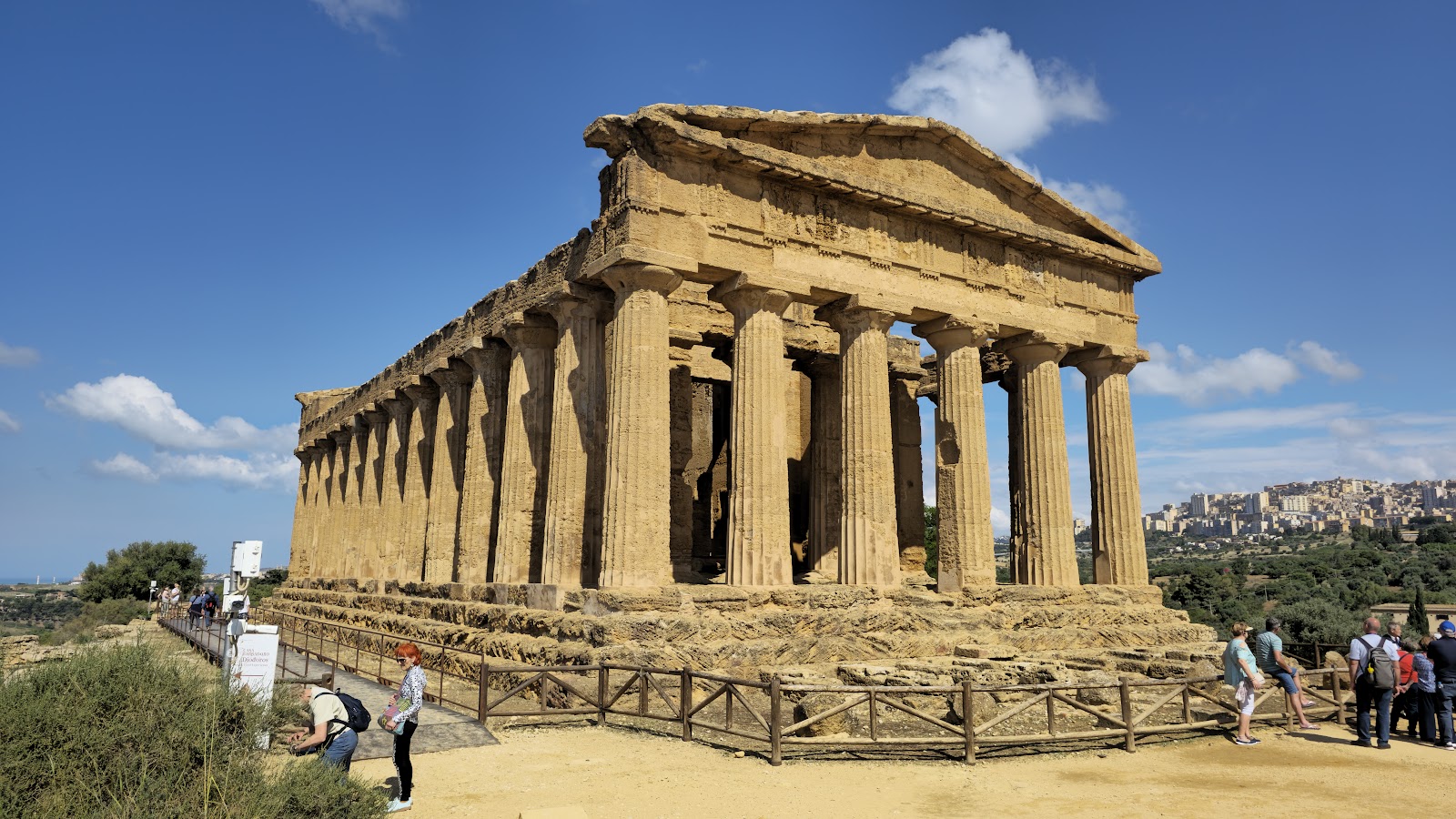
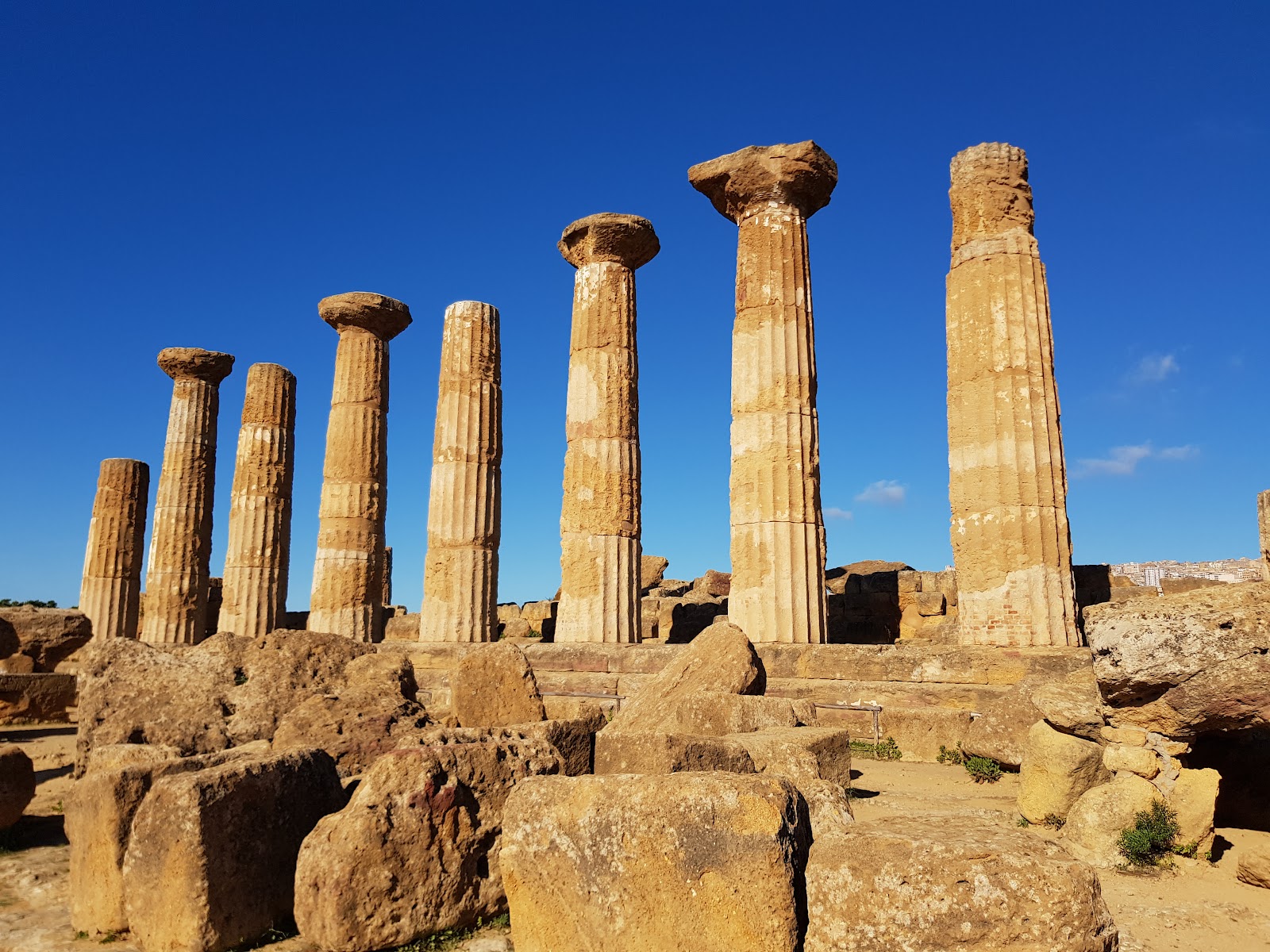
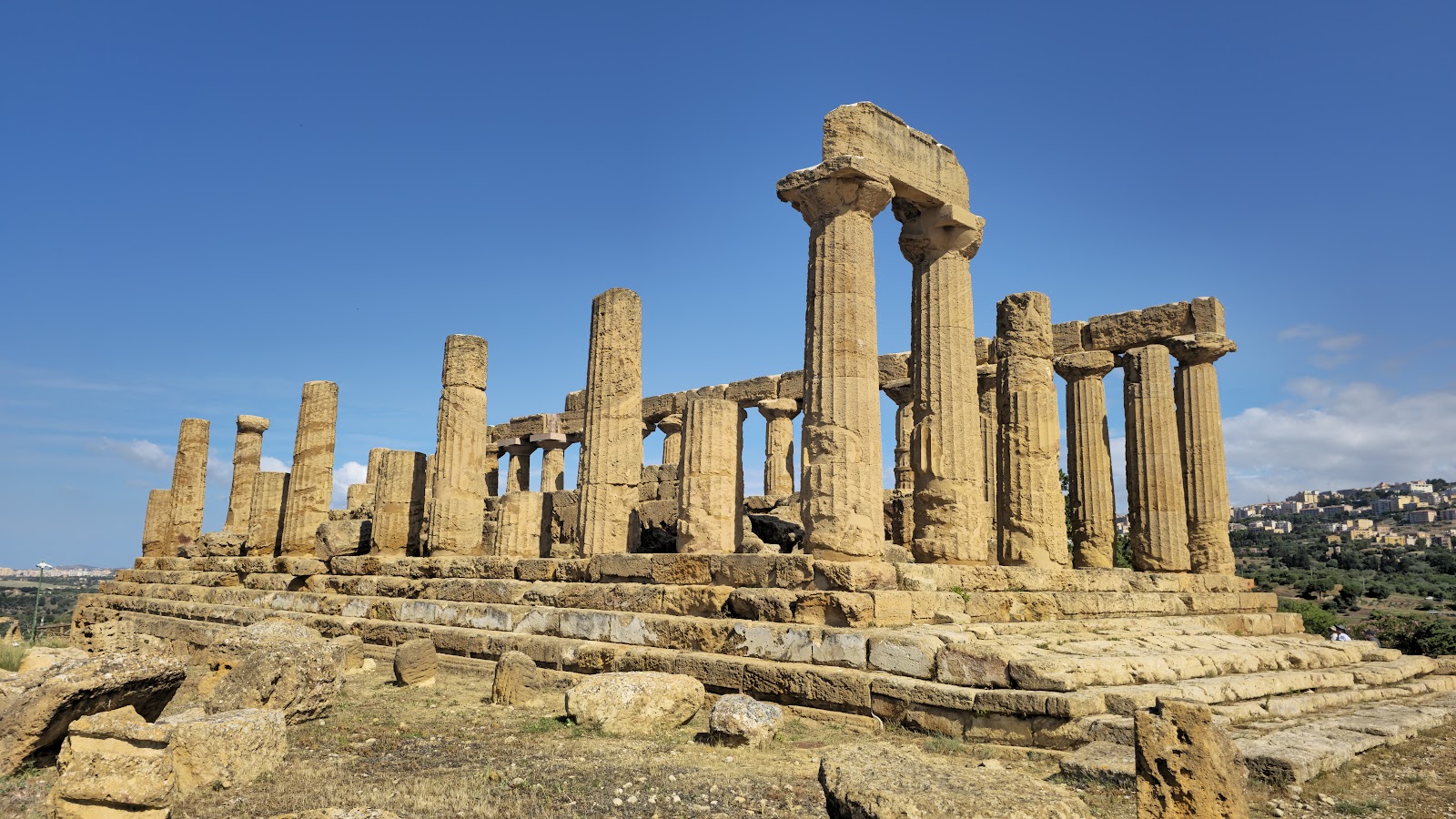
The name is borrowed — a 16th-century Dominican friar called Tommaso Fazello spotted a Latin inscription nearby, liked the word Concordia, and it stuck. Nobody knows which deity this temple was actually built for. What we do know is that it went up around 440–430 BC, and that it is still, more than two millennia later, largely intact: thirty-four Doric columns, each carved with twenty flutes, standing on a ridge that Sicilians call a valley but isn't.
Beneath the rock on which it stands runs a seam of soft clay that has absorbed centuries of tremors. That geological accident, more than any human effort, explains why you're looking at something so complete.
💛 What travellers fall for
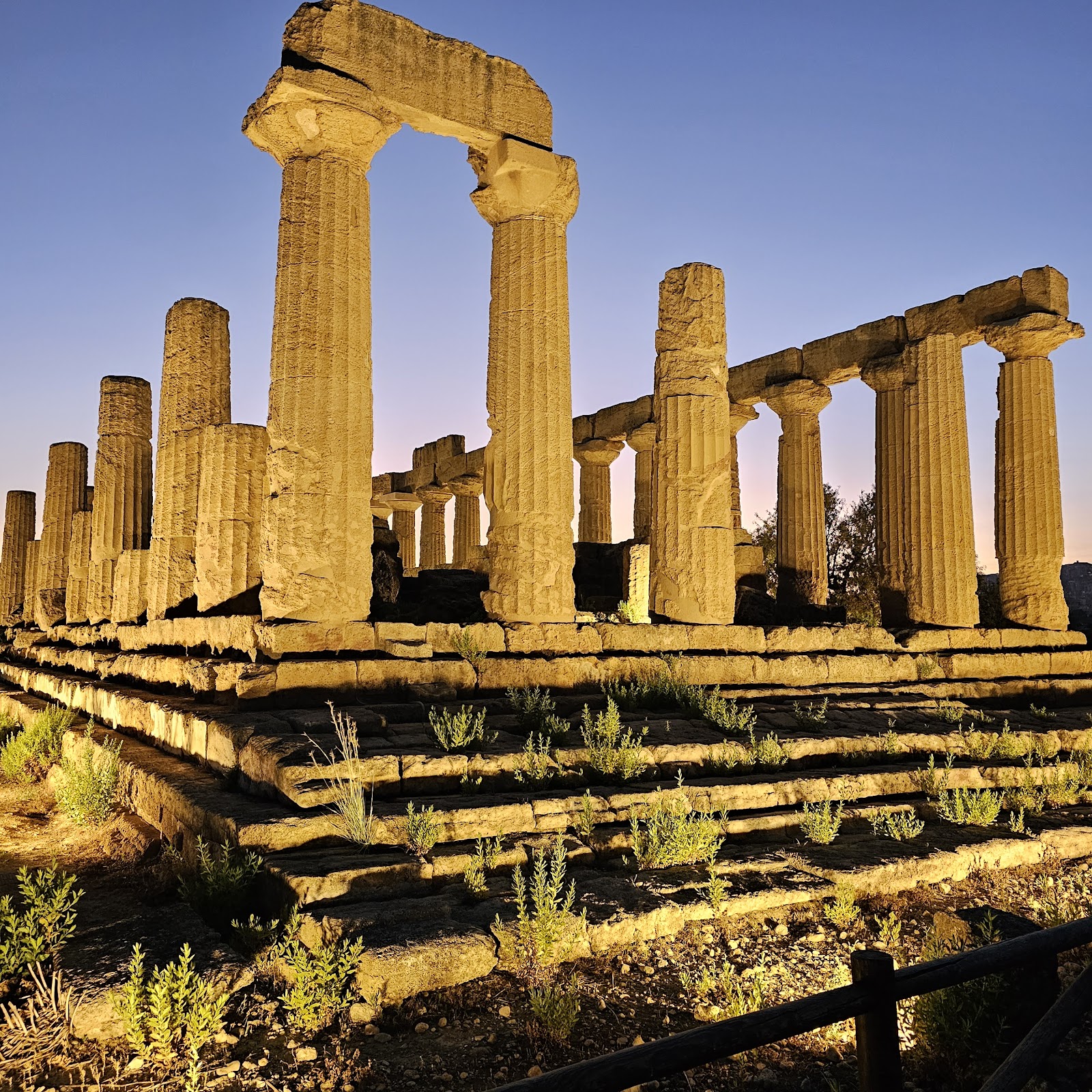
People who come back tend to arrive early — by 9 AM the light is low and the stone turns a warm amber. The Igor Mitoraj statue of Icarus, donated in 2011 and lying in pieces near the colonnade, catches people off guard the first time. On the first Sunday of the month, admission is free.
The story behind Temple of Concordia
The temple was built in the fifth century BC, during Agrigento's period of greatest wealth, though its original dedication remains unknown. It survived where others fell partly because of what happened in 597 AD: Archbishop Gregory II of Agrigento converted it into a Christian basilica dedicated to Saints Peter and Paul. Walls were raised between the columns, arched windows cut into the cella, and the building acquired a new purpose that kept it maintained through the medieval centuries.
In 1748, restoration work stripped back the Christian additions and returned the structure closer to its ancient form. Fazello's borrowed name — Concordia — was formalised at the same time, and has been on the maps ever since.
Good to know
Open daily 8:30 AM to 8 PM; summer evenings extend to 11 PM Monday through Friday. Tickets run €12–17, free on the first Sunday of the month. Bus lines 1 and 2 connect to the valley's eastern and western entrances from Piazzale Rosselli; a bus ticket costs €1.20. Wear shoes with grip — the ground is uneven.
Summer in Agrigento is dry and hot; midday at the temple in July or August is genuinely punishing. Aim for before 10:30 AM or after 4 PM. Spring and autumn offer the most comfortable conditions, and the surrounding almond trees bloom in late winter.
Where is Temple of Concordia?
More tickets & tours for Temple of Concordia
Book directly at the provider
What travellers say about Temple of Concordia
It was a great experience to visit this archaeological site. I really appreciated the history behind the site. Just one to think about if you’re driving there, park in the car park at the bottom of the site and take a group taxi which is €3 euro per person. They will take you the top. This means you can walk from the top to the bottom in 1 hour or so, rather than walking up to walk back down to your car.
One of the most impressive ancient temples I’ve ever seen, few minutes walking down from tempio di giunone. Remarkably well preserved, majestic, and even more beautiful in the golden evening light. A highlight of Sicily! Try to go mid-morning to enjoy good temperature and beautiful light contrast before the sun gets too high in the sky
Wow! Well maintained and well preserved. Incredible views and not busy at all if you go in the off season (February)
Magical in the sunset and into night when they light up the temples. The walk is also lit though you may want to bring a flashlight or use your phone. If you take the path north from the Temple of Concordia you very soon come to a sensory garden that is quite lovely and shady. We visited in January when the crowds were low and the rain made beautiful reflections.
An amazing site to visit. The Temples, both standing and ruins, are well worth the 3 miles of walking involved. The hills are steeper than they look. The views are also stunning. Take lots of water, it gets very hot in the sun.
More of Agrigento
Discover where to stay, what to do and the best deals for your trip.
Explore Agrigento →More attractions in Agrigento
All of Agrigento →

Background adapted from Wikipedia (CC BY-SA) · map data © OpenStreetMap contributors · ratings & place photos via Google · other photos with per-image credit. Ticket links may earn us a commission at no extra cost to you.