
Temple of Castor and Pollux

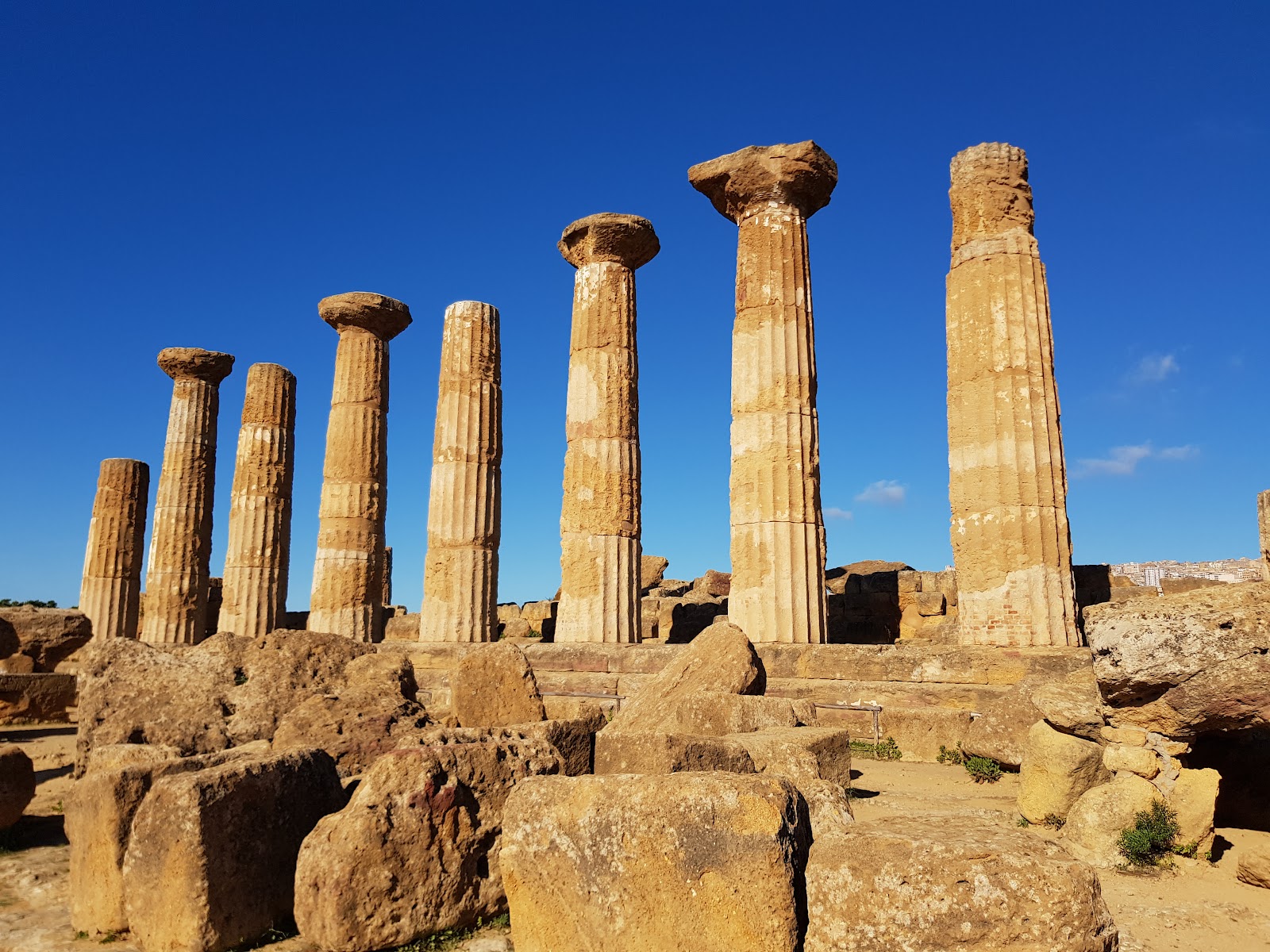
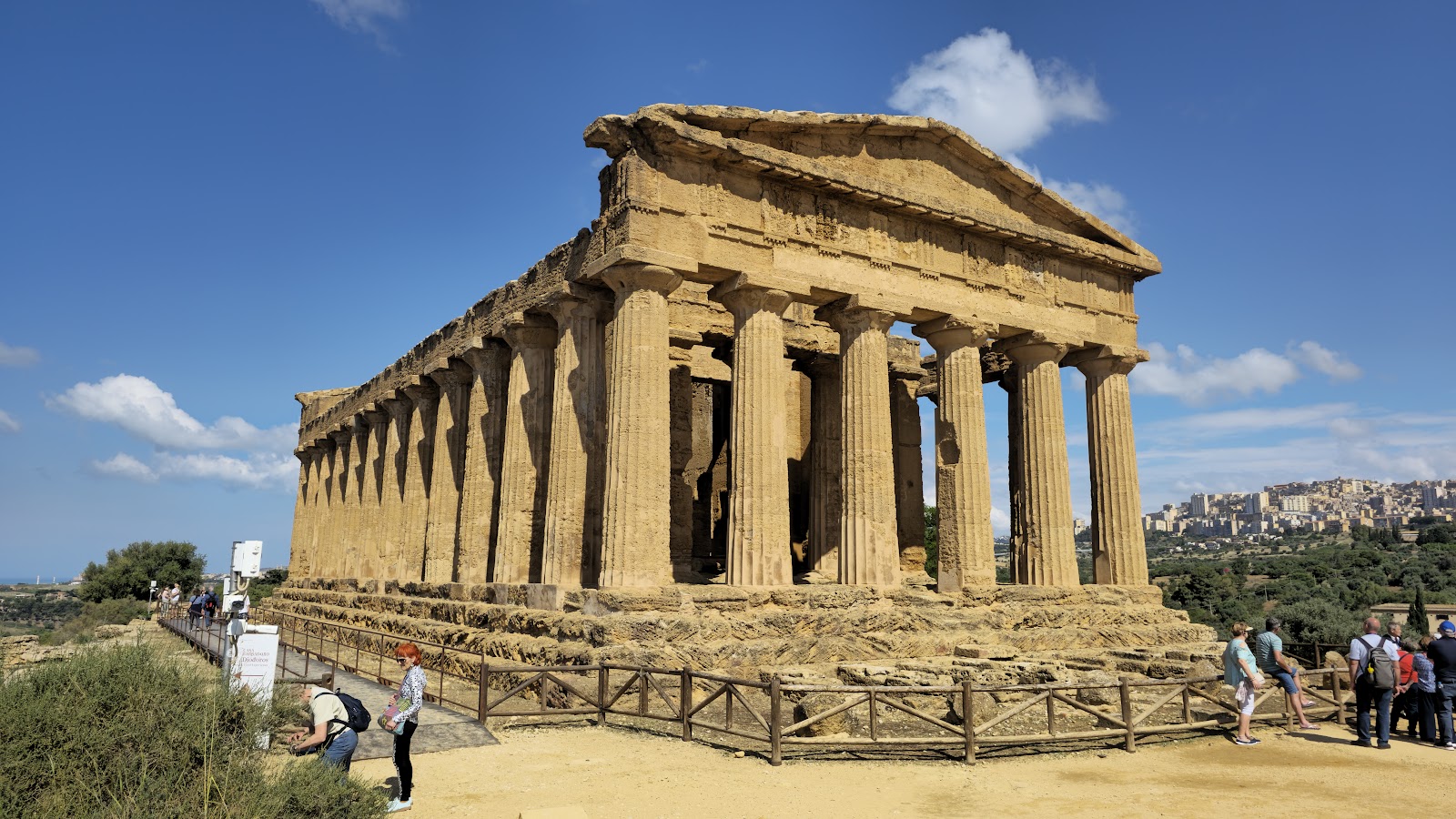
Four columns are all that remain standing out of an original thirty-four, yet this is the image that ends up on every postcard of Agrigento. The columns don't even belong to the same corners of the original building — they were gathered and re-erected in the nineteenth century from scattered fragments, which makes the composition part ruin, part romantic invention.
The temple sits inside the Sanctuary of the Chthonic Deities, a precinct devoted to the earth and underworld. Olive trees press in close, and on one corner ashlar a carved rosette survives from the fifth century BCE — easy to miss, worth finding.

💛 What travellers fall for
People who've been more than once tend to walk the perimeter slowly and look behind the columns to the altar complex just to the rear, where low walls and sacrificial precincts hint at the older, stranger worship that preceded the temple itself. Late afternoon, when the stone goes amber, is when photographs actually work.
The story behind Temple of Castor and Pollux
The temple was built between 480 and 460 BCE, with six columns on each short facade and thirteen along each long side — a standard Doric arrangement for the period. Its dedication has never been settled: the name Castor and Pollux derives from a reading of a Pindar poem, but archaeologists now believe it more likely stood within a cult of Demeter and Persephone, the fertility goddesses whose sanctuary surrounds it.
The Carthaginians destroyed it; an earthquake finished the work. What you see today is largely the result of a reconstruction ordered by the Duke of Serradifalco and carried out by the Commission of Antiquities of Sicily between 1836 and 1852. Archaeologists Villareale and Cavallari unearthed three columns and raised them on three steps; a fourth was added in 1856. The result is honest about being a reconstruction, if you look at it that way.

Good to know
The temple is inside the Valley of the Temples site (€15 adults, €9 for EU citizens 18–25, free under 18; free for all on the first Sunday of the month). Bus 2/ from Piazzale Rosselli drops you at the Juno entrance; the Castor and Pollux temple is at the opposite, western end of the complex. Allow two to three hours for the full valley.
The site is fully exposed, and in July and August temperatures regularly exceed 30°C with almost no shade. Mid-April to mid-May and mid-September to mid-October give you comfortable walking weather and reasonable crowds. Winter visits are quieter and often sunny, though some days bring rain.
Where is Temple of Castor and Pollux?
More tickets & tours for Temple of Castor and Pollux
Book directly at the provider
What travellers say about Temple of Castor and Pollux
At the south-east corner of the Forum, three tall Corinthian columns mark the Temple of Castor and Pollux. Tradition says it was founded after the Battle of Lake Regillus, when the divine twins helped Rome and watered their horses at the nearby Spring of Juturna. First dedicated in 484 BC, it was rebuilt several times and reached its grand marble form under Tiberius. The podium front served as one of the Forum’s rostra, where figures such as Julius Caesar argued major laws. Inside the podium, officials kept standard weights and measures and bankers rented rooms. What remains today is only a corner of a temple that once tied miracle, markets and politics into a single façade.
Visiting the Roman Forum was an incredible experience, and I can say it is a must-visit. Many of its structures date back to 500 BC and are still partially preserved, like the Temple of Castor and Pollux.
This ruined temple is better known as the Temple of Castor and Pollux. It is ancient even as Roman standards go since it goes back to the 4th century BC. Only three columns survive but they are quite picturesque.
The temple to Dioscuri, or the mythical gods Castor and Pollux, the twin sons of Zeus has three columns left. Tiberius rebuilt the temple, so it was in pristine condition when the Apostle Paul passed it as he entered the city in the first century. As Paul passed the temple, he may have thought back to the ship that brought him to Rome (see Acts 28:11). Dr. Stanley D. Toussaint wrote: "The twin gods Castor and Pollux on the ship’s figurehead were the heavenly twin sons of Zeus and Leda according to Greek mythology; supposedly they brought good fortune to mariners. If their constellation, Gemini, was seen during a storm it was an omen of good luck. Possibly Luke included this detail to contrast the superstition of the people of Malta, Rome, Greece, and Egypt with Christianity."
One of the most ancient pieces. The temple of two brothers. Built much before the Roman emperor and three pillars have withstood the test of time.
More of Agrigento
Discover where to stay, what to do and the best deals for your trip.
Explore Agrigento →More attractions in Agrigento
All of Agrigento →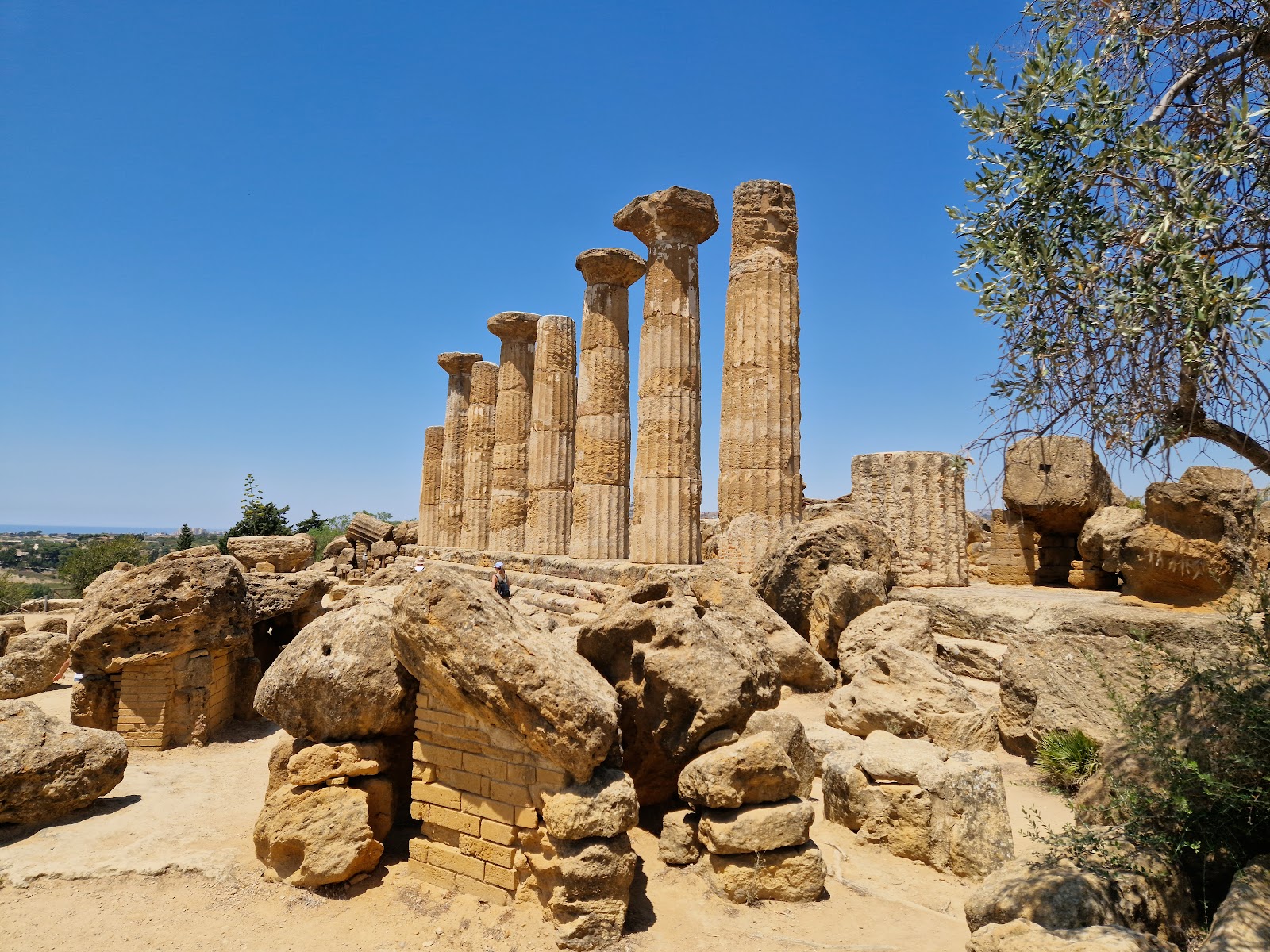

Background adapted from Wikipedia (CC BY-SA) · map data © OpenStreetMap contributors · ratings & place photos via Google · other photos with per-image credit. Ticket links may earn us a commission at no extra cost to you.