
Tempio dell'Incoronata
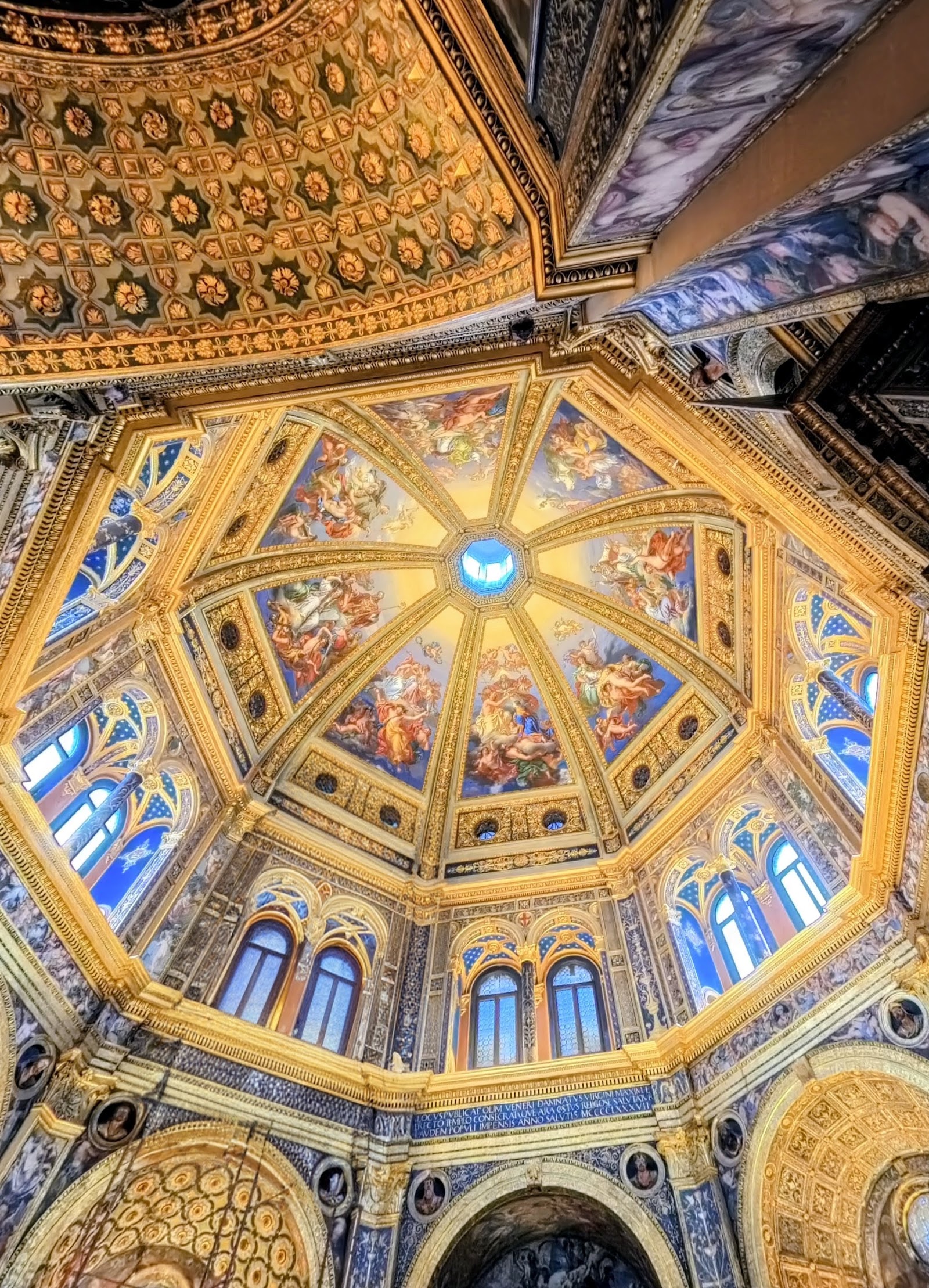
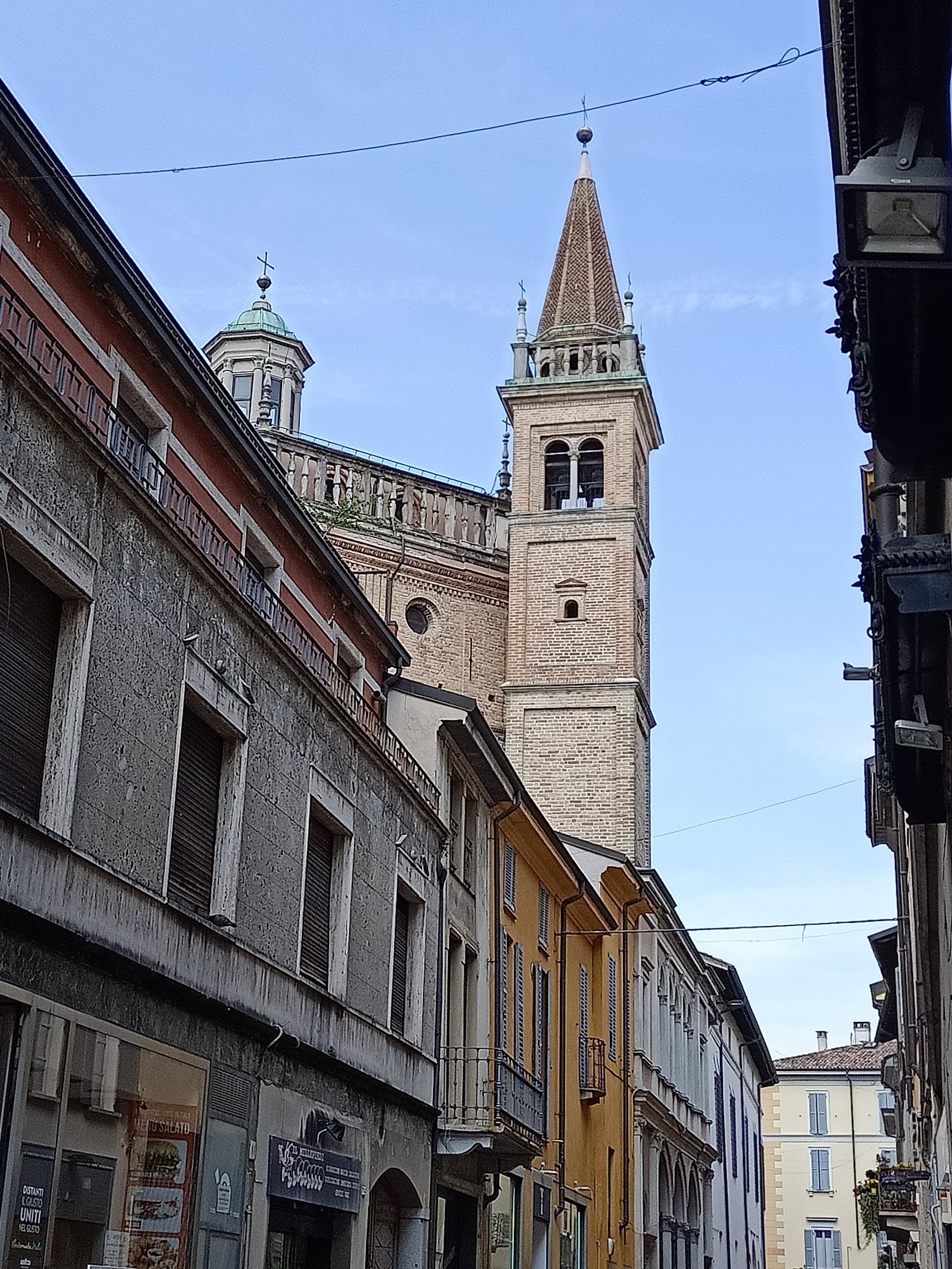
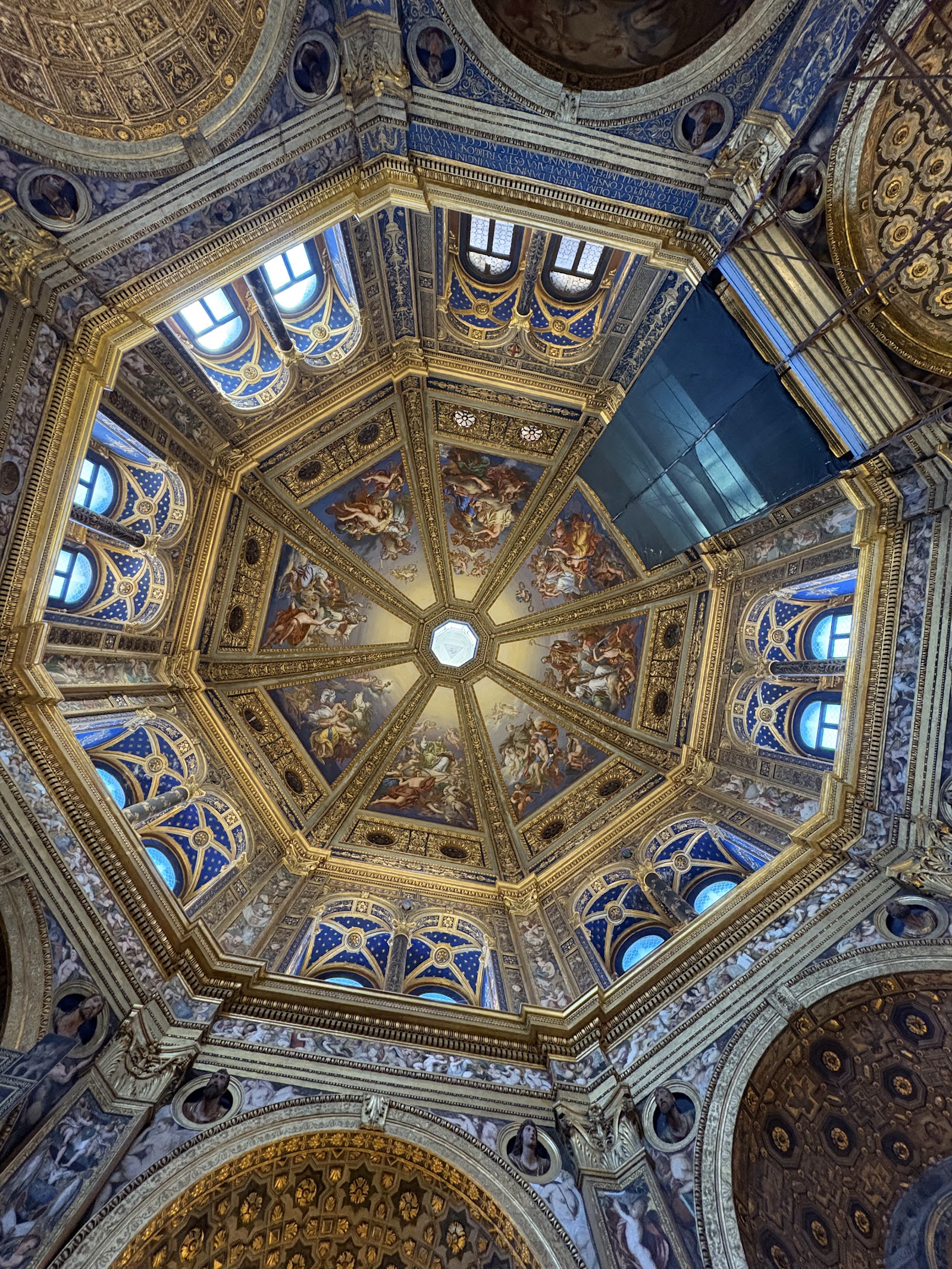
On a narrow street near Piazza della Vittoria, the Tempio dell'Incoronata announces itself with a three-arch portico and an octagonal silhouette that sits oddly, beautifully, out of scale with the lane around it. Step inside and the dome opens above you in eight frescoed segments — saints and gold and blue columns rising in a way that takes a moment to absorb.
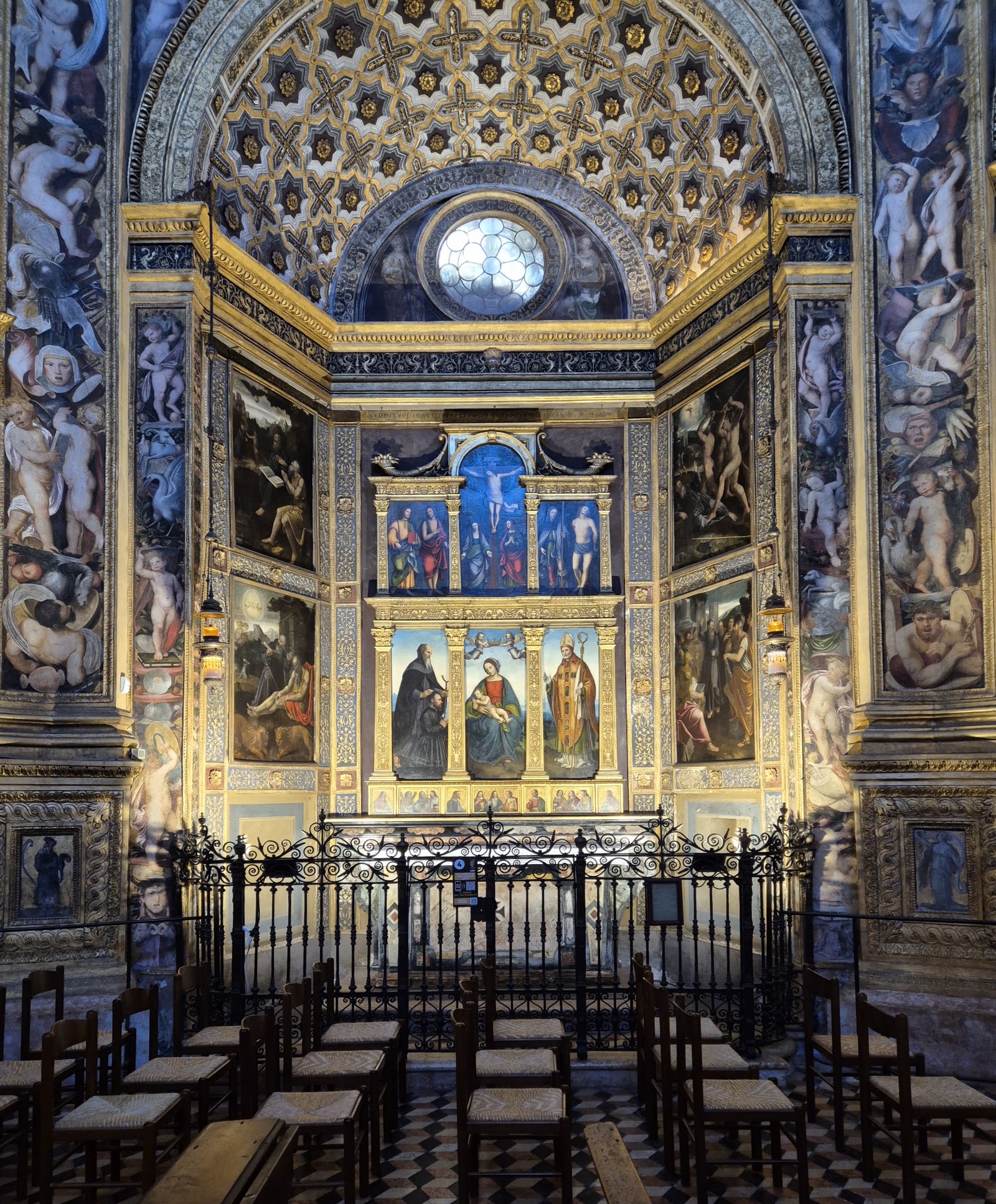
This is a working church, not a museum, and the air carries the particular stillness of a place that has been continuously used for over five centuries. The 1507 pipe organ, its framework engraved and gold-plated, stands to one side; the miraculous fresco of the Virgin, which started all of this, occupies the high altar.
💛 What travellers fall for
People who come back tend to time a Sunday afternoon visit to catch the Museo del Tesoro, open only then in the underground spaces below the sacristy — illuminated manuscripts, worked copper vessels, candelabra that repay a slow look. The museum is free and rarely crowded, which makes it one of the more quietly satisfying hours in Lodi.
The story behind Tempio dell'Incoronata
On a September day in 1487, a fresco of the Virgin Mary on a house wall in via Lomellini reportedly wept and spoke; days later a Lodigian nobleman claimed a miraculous healing. Within a year, Bishop Carlo Pallavicino and Duke Ludovico il Moro had authorized a proper sanctuary. Construction began 28 May 1488 under Giovanni Battagio, a pupil of Bramante, who laid out the unusual octagonal plan. Disputes with the building committee led to his dismissal in April 1489; Gian Giacomo Dolcebuono took over and completed the dome by April 1491.
The interior accumulated its richness over decades: Ambrogio Bergognone painted panels including the Annunciation, the Piazza brothers contributed polyptychs, and Callisto Piazza worked on decorations for roughly forty years after returning to Lodi in 1529. The bell tower went up in 1503, the façade was finished in 1879 by Alfonsino Truzzi, and in 1988 — the five-hundredth anniversary — the underground treasury museum opened.
Good to know
Via Incoronata is a short walk from Piazza della Vittoria, the central square. The Tempio is open mornings daily and afternoons Tuesday through Sunday; the Museo del Tesoro opens Sunday afternoons only, 15:00–18:00. Arrive at least ten minutes before a scheduled Mass if you want uninterrupted time inside. No entrance fee for either.
Where is Tempio dell'Incoronata?
More tickets & tours for Tempio dell'Incoronata
Book directly at the provider
What travellers say about Tempio dell'Incoronata
The Tempio Civico della Beata Vergine Incoronata, also known as the Sanctuary of the Incoronata, is a Catholic church in Lodi, Lombardy, Italy, and a masterpiece of Lombard Renaissance art. Origins: The temple was built starting in 1488, following reported miracles in 1487, when a fresco of the Virgin Mary on a brothel’s facade in Via Incoronata (formerly Contrada Lomellini) allegedly wept during a fight. This prompted the citizens of Lodi to construct a civic temple dedicated to the Crowned Virgin. Civic Significance: The term "Civico" (municipal) reflects its ownership by the Lodi commune, not the diocese, as it was funded and promoted by citizens and local authorities, symbolizing civic pride and devotion. Construction: Designed by Giovanni Battagio, a pupil of Bramante, construction began on May 29, 1488. Gian Giacomo Dolcebuono took over in 1489, completing the dome by 1491, and Lorenzo Maggi finished the bell tower in 1503. The facade was completed in 1879 by Alfonsino Truzzi.
Built in 1488 by Dolcebuono who was a pupil of Bramante. Decorated by Amadeo. Well worth a visit.
Extraordinary and beautiful.
A highlight of Lodi!
Best.
More of Lodi
Discover where to stay, what to do and the best deals for your trip.
Explore Lodi →More attractions in Lodi
All of Lodi →
Background adapted from Wikipedia (CC BY-SA) · map data © OpenStreetMap contributors · ratings & place photos via Google · other photos with per-image credit. Ticket links may earn us a commission at no extra cost to you.