
Shibuya Sky Observation Deck
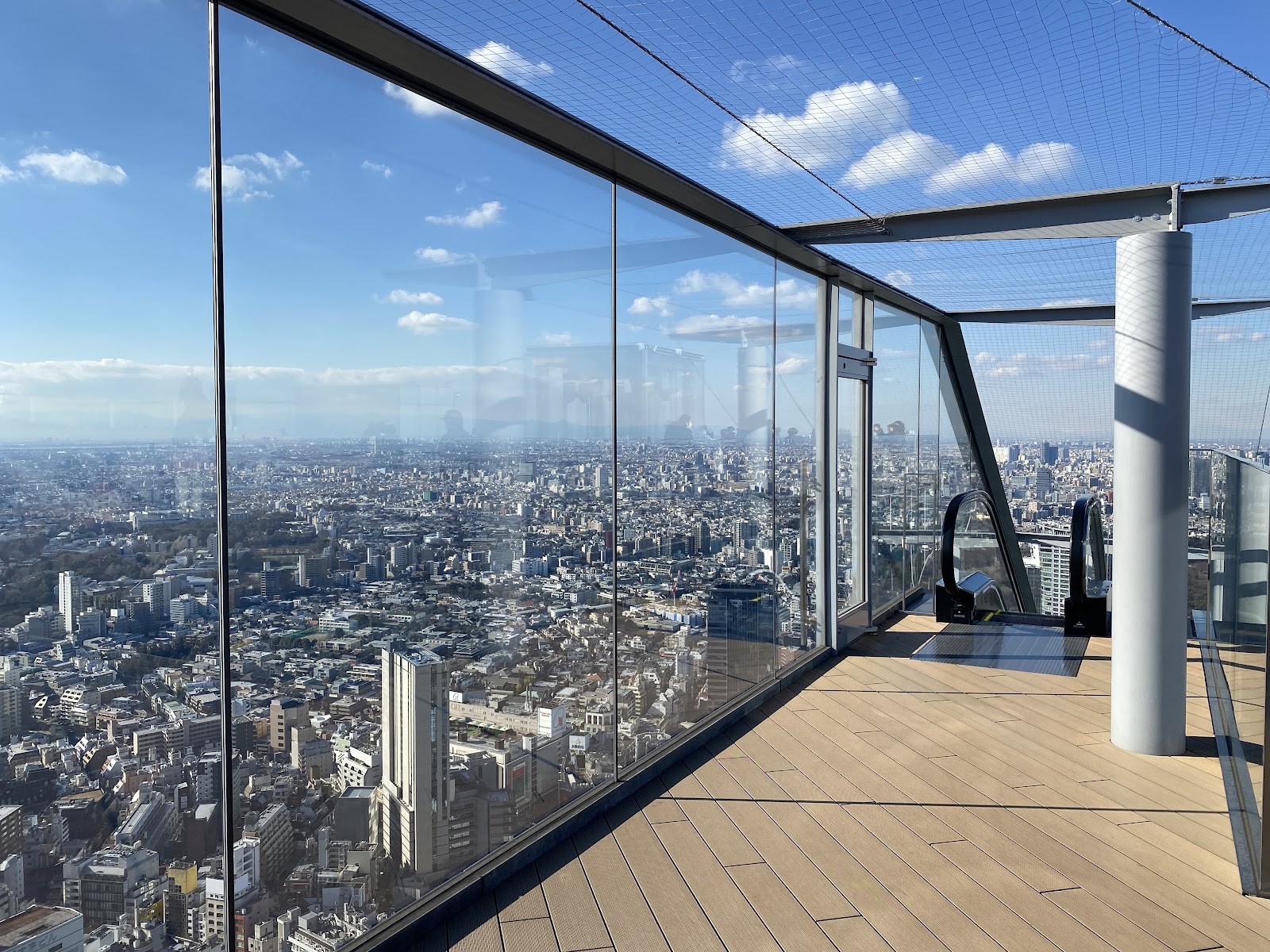
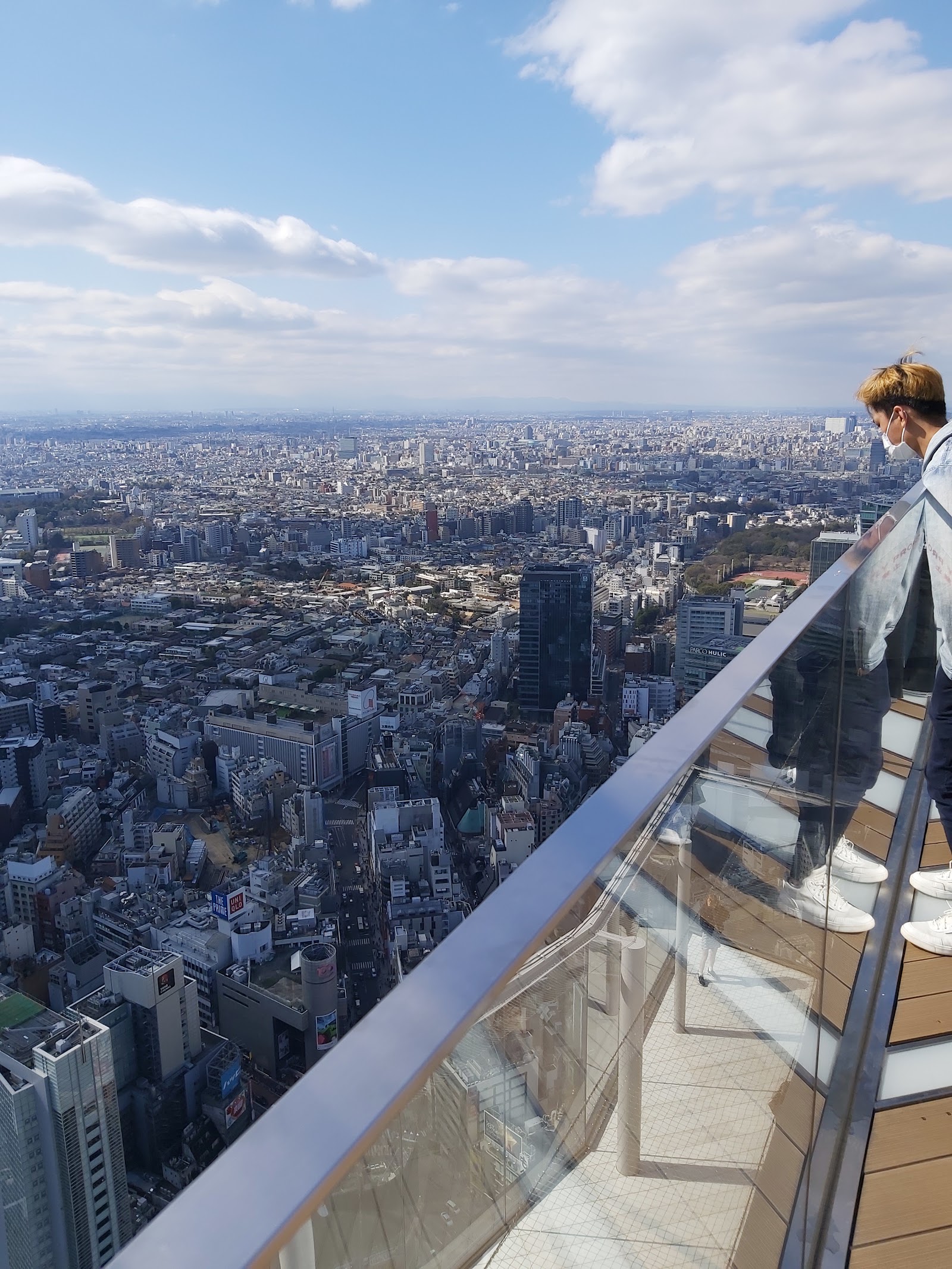
The elevator from the 14th floor to the top of Shibuya Scramble Square takes about 40 seconds, and it earns every one of them — images, 3D sound, and light collapsing around you before the doors open onto 229 metres of open Tokyo sky. Up here, the Scramble Crossing below becomes a slow-moving pattern, the grid of the city stretches to the bay, and on clear winter mornings, Mount Fuji sits unmistakably at the edge of it all.
The rooftop SKY STAGE spans 2,500 square metres with almost nothing between you and the air. Every 30 minutes from 7pm, 18 searchlights sweep outward in a seasonal soundtrack sequence called Crossing Light — less spectacle than punctuation, a way of marking the hour from the highest point in Shibuya.

💛 What travellers fall for
People who've been up more than once tend to book the slot 30 minutes before sunset, when the light shifts across the city in real time. They also know to stow everything in the ¥100 lockers before heading up — you're only allowed a camera and a wind-proof jacket on the rooftop — and to check the weather forecast the morning of, since SKY STAGE closes in rain or strong wind without refund.
The story behind Shibuya Sky Observation Deck
Shibuya Scramble Square opened on November 1, 2019, the culmination of a major redevelopment of the land directly above Shibuya Station — one of Tokyo's most layered and logistically complicated transit hubs. The 47-story tower, the tallest structure in the neighbourhood, was designed through a collaboration involving Nikken Sekkei Ltd., Kengo Kuma, and SANAA, with Takeyuki Katsuya overseeing the redevelopment of the station precinct, the tower, and the observatory itself.
Shibuya Sky was conceived as part of the building from the outset, not added as an afterthought. The three-zone structure — SKY GATE, SKY GALLERY, and SKY STAGE — was designed to make the ascent itself part of the experience, so that arriving on the roof feels earned.
Good to know
Directly connected to Shibuya Station via JR Yamanote Line, Tokyo Metro, and Keio Inokashira Line — one minute from the south exit. Book online (tickets open two weeks out at midnight JST) to save ¥300 and skip the 14th-floor queue. Last admission is 21:20; doors close at 22:30. Closed New Year's Day.
The rooftop SKY STAGE closes in rain and strong wind, so a clear forecast matters. For the best chance of seeing Mount Fuji, come between 10am and noon on a winter morning — skies are sharpest then, and sunset falls as early as 4:30pm in December, which compresses the golden-hour window considerably.
Where is Shibuya Sky Observation Deck?
More tickets & tours for Shibuya Sky Observation Deck
Book directly at the provider
What travellers say about Shibuya Sky Observation Deck
cool place, very tourist. The line in entrance was not very long, there was only 2 elevator so you will have to wait for going up. Also you will have to wait in queue for some photo spots Would be better if you come near the sunset hours, the views will be amazing. My picture was taken around 5 pm. I also recommend to buy the tickets in advance, since they always sold out if you buy them on the spot.
5/5 – A Must-Visit in Tokyo Shibuya Sky was one of the highlights of our Tokyo trip. The panoramic views of the city are absolutely stunning, and on a clear day, you get an incredible skyline stretching in every direction. A few tips: * Book your tickets well in advance. Tickets often sell out for the day, especially during peak travel periods. * Check the weather forecast before booking. We were fortunate to visit on a perfect day with clear skies, which made a huge difference to the experience. * Consider booking a sunset slot. Watching Tokyo transition from day to night is truly spectacular. * It can get quite windy on the rooftop, so carrying a light jacket is a good idea. The open-air rooftop is the main attraction, and you can easily spend a good amount of time there enjoying the views and taking photos. The photo opportunities are fantastic, and you’ll come away with some memorable shots of the Tokyo skyline. One thing to note is that the rooftop may be closed in case of rain, strong winds, or lightning. However, you can still enjoy the enclosed observation area on the floor below, which also offers excellent views. When we visited, the bar section was not operational, but that didn’t take away from the overall experience. Overall, Shibuya Sky is absolutely worth visiting for the breathtaking 360-degree views of Tokyo. Don’t forget your camera—you’ll want to capture the skyline from every angle!
Even though we visited Tokyo after the cherry blossom season, we were surprised by how crowded it still was. Japan truly is a year-round favourite destination for travellers! We underestimated the demand and only tried to book the sunset time slot shortly before our visit. Unfortunately, all the sunset tickets were already sold out, so my advice is to book as early as possible if you want to enjoy the magical transition from sunset to the stunning night view. On the day we visited, it was drizzling and the wind was getting stronger as a typhoon was approaching Tokyo. The rooftop observatory was eventually closed for safety reasons, but thankfully we had already finished exploring and taking in the breathtaking views. Despite the weather, Shibuya Sky was worth the visit. The panoramic views over Tokyo are incredible, and it’s definitely one of the city’s must-visit attractions. Just remember to book early, especially if you’re hoping to catch sunset!
Good place to get an incredible view of Shibuya and far beyond. There’s a lot of people up top so I would encourage walking as far as you can since there are a lot of good spots for photos all around. Something cool that they offer as well are photos from a professional for your whole group. The photos take 30 minutes to develop but it’s actually quite easy to pass even if you go inside and retrieve all your things from your locker immediately. There’s an area inside you can walk around, an interactive experience, benches, a souvenir shop, a specialty coin machine and a food court. By the time you finish with all of that your photos should be ready. You don’t have to purchase them though, once the photographer is done each group gets a minute to take as many pictures as they want in the same spot. If it’s raining the rooftop may be closed so do be wary of that. I think sunset is a great time to go and do recommend getting tickets in advance since it can get packed pretty easily depending on where you go.
SHIBUYA SKY is one of the most impressive observation decks in Tokyo, and it feels very different from other viewpoints because of how open and minimal it is. From a visitor’s perspective, the experience starts inside Shibuya Scramble Square, where you move through a very controlled, timed-entry system. This is important entry slots are strict, and they don’t usually allow walk-ins, so booking in advance is almost necessary, especially for sunset times. Once you reach the top, the transition is striking. Unlike enclosed observation decks, SHIBUYA SKY is mostly open-air, which gives you a completely unobstructed 360-degree view of Tokyo. On clear days, you can see landmarks like Tokyo Tower, Tokyo Skytree, and even Mount Fuji in the distance. The rooftop “Sky Stage” is the main highlight. It’s a large open space with very minimal structures, designed for people to just sit, lie down, and watch the city. At sunset, the atmosphere becomes especially memorable as the lighting shifts and Shibuya below slowly turns into a sea of neon and movement. From a practical point of view, timing matters a lot. Sunset slots are the most popular and sell out quickly, but they also offer the best experience. Night visits are also very beautiful, with the full Tokyo skyline lit up. One useful tip: there are lockers provided before you go up, and you are required to store bags, loose items, and anything that could be affected by wind. It can get very windy at the top, so this is something to be prepared for. Overall, SHIBUYA SKY is not just a viewpoint it’s a carefully designed experience that lets you feel the scale of Tokyo in a very direct and open way. It’s simple, modern, and visually powerful, especially compared to more traditional indoor observation decks.
More of Tokyo
Discover where to stay, what to do and the best deals for your trip.
Explore Tokyo →More attractions in Tokyo
All of Tokyo →

Background adapted from Wikipedia (CC BY-SA) · map data © OpenStreetMap contributors · ratings & place photos via Google · other photos with per-image credit. Ticket links may earn us a commission at no extra cost to you.