
Meiji Jingu Shrine

The approach to Meiji Jingu begins before you realise it — a gravel path beneath a canopy of 120,000 trees, donated from every corner of Japan when the shrine was established in 1920. Forestry experts at the time designed the forest to regenerate itself over a century, and it has done exactly that. The city disappears behind you within a few minutes of walking.
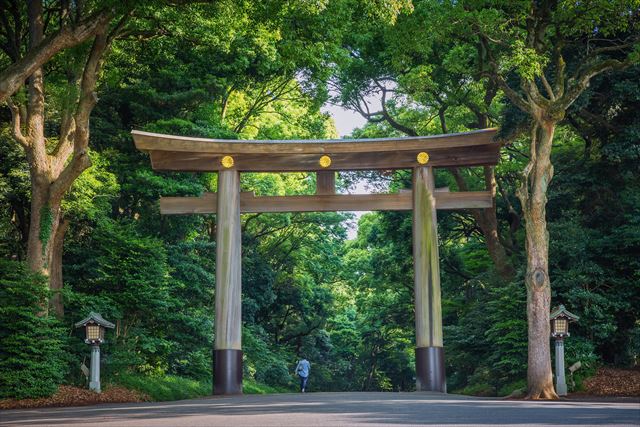
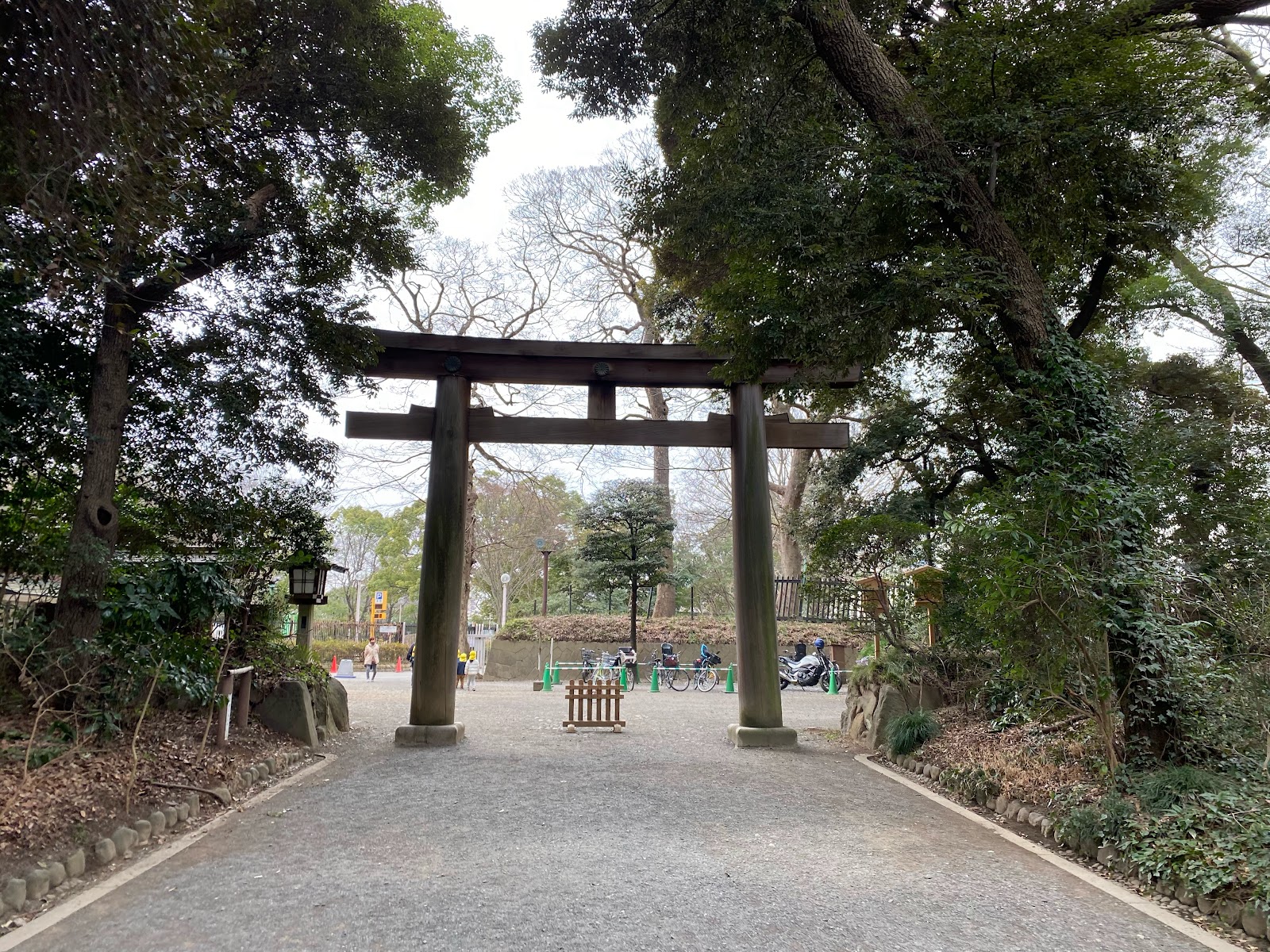
At the centre stands the Main Hall, built in nagare-zukuri style from Japanese cypress under copper roofs — an Important Cultural Property, rebuilt in 1958 after the original was lost to wartime air raids. Before you reach it, you pass under the largest wooden myōjin-style torii gate in Japan: 12 metres tall, 17 metres wide, made from Taiwanese cypress.
💛 What travellers fall for
People who come back tend to arrive early — the entrance opens at sunrise, and the gravel path through the forest before the crowds arrive is a different place entirely. The Inner Garden is worth the ¥500 only in early to mid-June, when the irises are out. Kiyomasa's Well, named after the feudal lord said to have dug it in the 1600s, produces 60 litres of spring water per minute at a constant 15°C — it's easy to walk past, but worth finding.
The story behind Meiji Jingu Shrine
Emperor Meiji died in 1912, and the Japanese Diet quickly resolved to commemorate his central role in the Meiji Restoration — the sweeping transformation that ended Japan's feudal era and restored imperial rule after centuries of shogunate control. Architect Itō Chūta began construction in 1915; the shrine was completed on November 1, 1920, built with timber donated by citizens and raised in part by voluntary youth labour.
The shrine is dedicated jointly to Emperor Meiji and Empress Shoken, who died in 1914. The Inner Garden on the south side predates the shrine itself — Emperor Meiji had it renovated in 1903 so that his consort, who was in poor health, could walk there. The original complex was destroyed in the 1945 air raids and rebuilt to near its original form by 1958.
Good to know
Harajuku Station on the JR Yamanote Line puts you at the southern entrance in under two minutes. Entry to the shrine and forest is free; the Inner Garden costs ¥500 and the Kengo Kuma–designed museum ¥1,000. Skip the Inner Garden outside June. Allow 40 minutes for the shrine alone, 90 minutes if you're walking the garden. The museum closes Thursdays.
Spring brings mild temperatures and the famous cherry blossoms to the surrounding forest paths, though crowds peak sharply in late March and early April. Summer is hot and humid — the forest canopy offers real shade, but the Inner Garden in June is the seasonal reason to visit. Autumn turns the trees and the air cooler from October; winters are cold but clear, and the shrine sees enormous crowds in the first days of January for hatsumode, the traditional New Year visit.
Where is Meiji Jingu Shrine?
More tickets & tours for Meiji Jingu Shrine
Book directly at the provider
What travellers say about Meiji Jingu Shrine
A stunning shrine at the heart of Shinjuku and Shibuya, Meiji Jingu offers a rare reprieve from the hustle and bustle of Tokyo. We entered through the Northern entrance and were greeted with a beautiful torii gate towering high. The walk to the shrine itself is not very long and the trees lining it make you feel like you’ve stepped into another world. Along the walk to the shrine there’s an area with sake barrels lining the path that are famous for photo ops so keep an eye out for them. Once you arrive at the shrine (about a 10 min walk) you can enter and take a look around. They do some public performances here depending on the time so if you’re interested then lookup performance times to make sure you’ll be around. You can walk up to view the shrine and pay respects but they discourage any kind of photography upfront. While the shrine is quaint and nice to see, it feels like a bit of a lackluster payoff considering the rest of the park that it’s in. It is by no means a bad shrine, it’s more so that it’s smaller and doesn’t have much going on. Ultimately this is a place of worship so we understand that may not hold much weight in reality, but if you’re going with the sole purpose of sightseeing then don’t expect too much is all we’re saying. At its core this is a historical must see that keeps you engaged and excited to see the next parts, a good way to kick off a day.
Peaceful, serene and a perfect place to take in a little culture. The main attraction is a the Shinto shire in the centre, which is stunning. There is a Buddhist temple on site too but we didn't go. It gets a little "touristy" at places, which is good on one level, because there's cafes and a resturant and plenty of amenities. I mean the place is rather large. Walking to the temple proper will take you 15 minutes. There's a dusting of the commercial to it at places too. I mean it's a tourist hot spot and maintaining that level of beauty takes cash and the have to earn it somehow. Overall, a nice place for a walk and some introspection.
Meiji Shrine is a beautiful escape from the energy of Tokyo. Walking through the towering forest and massive torii gates creates a sense of peace that makes you forget you’re in one of the world’s largest cities. The grounds are immaculately maintained, and the atmosphere is calm, spiritual, and incredibly relaxing. The highlight of my visit was the iris garden. The seasonal blooms add stunning color to the landscape, and the traditional garden setting makes it feel like stepping into another era. The paths are easy to explore, and there are plenty of quiet spots to stop and appreciate the scenery. If you’re visiting Tokyo, I highly recommend taking the time to explore both the shrine and the iris garden. Together they offer a perfect combination of culture, nature, and tranquility right in the heart of the city.
An unforgettable visit and a absolute must-do ! We had an amazing time visiting this place during our trip to Japan ! It is a total must-see for any tourist. The shrine is absolutely beautiful and surrounded by a deeply peaceful and relaxing forest. Best of all, it is fully accessible to everyone and completely free to enter, which is an extra reason to visit ! If you collect stamps, you will find different commemorative stamps on-site to add to your stamp books or temple notebooks. There are also plenty of shops and restaurants right there to satisfy any needs. We highly recommend it , it’s truly an unforgettable experience ! Two French friends and tourists 🇫🇷
Meiji Jingu is a breathtaking oasis right in the heart of Tokyo. Walking through the massive torii gates into the towering forest makes you completely forget you are next to Harajuku. The scale of the shrine grounds is magnificent and deeply humbling. Pro Tip: Come in early! There are loads of crowds that pour in by mid-morning and afternoon, which can take away from the tranquil atmosphere of the forested paths. Arriving first thing in the morning lets you experience the shrine at its most peaceful. Also, if you are lucky, you might witness traditional Shinto wedding processions walking across the main courtyard. It is an absolutely incredible sight to see, with the couple and their families dressed in beautiful, traditional attire. However, please remember to maintain respect and don’t be too invasive with your camera. It is a deeply solemn ceremony for the families involved, so keeping a respectful distance is a must. An absolute staple of any trip to Tokyo—just set that early alarm! ⛩️🌲✨
More of Tokyo
Discover where to stay, what to do and the best deals for your trip.
Explore Tokyo →More attractions in Tokyo
All of Tokyo →
Background adapted from Wikipedia (CC BY-SA) · map data © OpenStreetMap contributors · ratings & place photos via Google · other photos with per-image credit. Ticket links may earn us a commission at no extra cost to you.