
Roman Amphitheatre of Syracuse

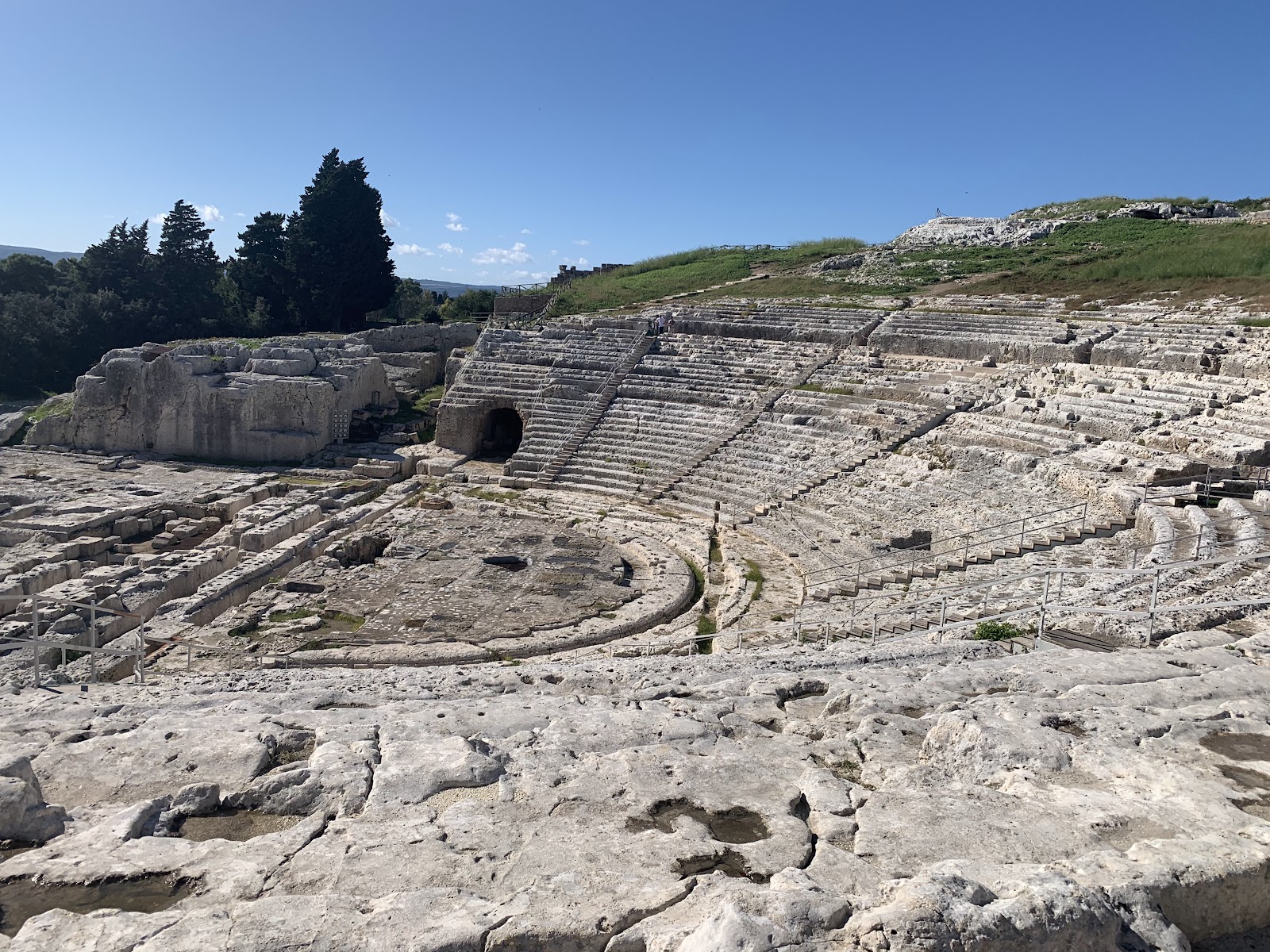
The names are still there — Statili, Pilati, Cestiani — carved into the marble balustrade, Roman family names that reserved the best seats in stone as confidently as any season-ticket holder. The amphitheatre they watched from is the largest ever built in Sicily, roughly 140 metres long, cut directly into the living limestone of the Neapolis hill so that the rock itself became the lower tiers of seating.
What stands now is mostly the ima cavea, the lowest ring of seats, plus the elliptical arena floor with its rectangular central pit — once covered, once fitted with machinery for the shows — and the vaulted corridor through which gladiators entered from the south.

💛 What travellers fall for
People who come back tend to walk the perimeter of the arena ditch rather than staying on the main path — it gets you close to the rock-cutting and the scale of the underground passage reads more clearly from that angle. The site shares a ticket with the Greek Theatre, so factor that in; most visitors find the Greek Theatre pulls the longer gaze.
The story behind Roman Amphitheatre of Syracuse
Syracuse fell to Rome in 212 BC during the Second Punic War, but the amphitheatre came later — built sometime in the late 1st century BC or early 1st century AD, during the Augustan or Julio-Claudian period, after Augustus refounded the city as a Roman colony in 21 BC. That refounding triggered a wave of construction, and the amphitheatre was its largest monument.
It survived intact until the 16th century, when Spanish engineers systematically dismantled its upper tiers to quarry stone for new fortifications on Ortigia. What the Spanish left, the earth preserved. The first systematic excavation came in 1839, led by archaeologist Domenico Lo Faso Pietrasanta. The site has been part of the UNESCO World Heritage designation 'Syracuse and the Rocky Necropolis of Pantalica' since 2005.

Good to know
Entry (€10, concessions €5) covers the whole Neapolis Archaeological Park including the Greek Theatre. Free on the first Sunday of each month. Book online in peak season. Wear proper shoes — the terrain is uneven limestone. Winter hours are limited to Sunday mornings only.
April to May and mid-September to mid-October give you the most comfortable conditions — warm enough to linger, cool enough to walk the uneven ground without difficulty. July and August can push above 40°C with almost no shade in the arena; if you come in summer, arrive at opening time.
Where is Roman Amphitheatre of Syracuse?
More tickets & tours for Roman Amphitheatre of Syracuse
Book directly at the provider
What travellers say about Roman Amphitheatre of Syracuse
Complete disgrace how they maintain and keep this historic grounds. They charge €14 for this, and also the path is completely closed around, they won’t let you walk around the grounds and path that’s surrounding. It was closed for “tree maintenance” said the worker who was also rude when I asked. Don’t waste your money or time, they clearly don’t care and let this place deteriorate, and they are more than happy to take your money.
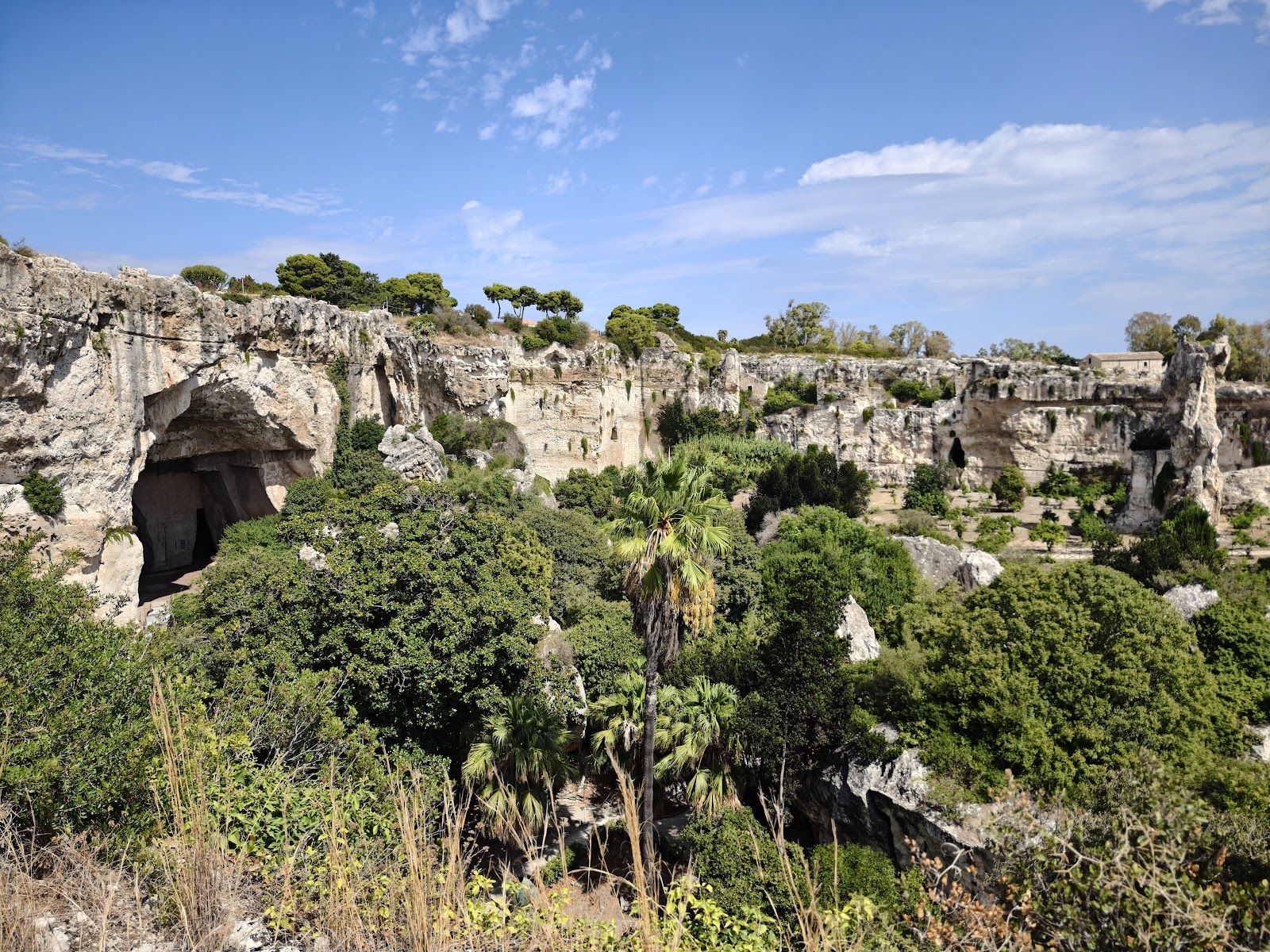
Very strong marketing, but the reality is bit less fantastic. The Amphitheater is not really in good shape, more like few rocks here and there, the one in Taormina is in much better shape. Cave(s)were nice, the area in general as well, byt 14€ feels a bit too much in comparison to other attracrions. Syracuse in general were a bit dissapointing, we liked Taormina and Catania more.
We arrived at this park with great expectations. It took us 15 minutes to find the ticket office. We asked for a map but they said sadly there was no mo but the bookstore has one. It was the map to go with the audio tour. Most of the sites had no signage to explain what we were looking at. Then to make matters worse when we saw an area of interest that path was closed. I’d say over half the park was closed. The Roman amphitheater was being renovated with at least a quarter of the seating renovated with plywood or concrete? When we asked a park employee why half the park was closed she replied ‘I am just the ticket checker’. The ruins are actually disappearing under long grass and weeds. It looks very poorly maintained. The Valley of the Temples and Villa Romana del Casales on the other hand were sparkling examples of Sicily’s dedication to preservation. There are other fine examples of Roman amphitheaters in Sicily available to see when in Catania or in Taormina. We were very disappointed. It wreaked of apathy.
Old historical Roman park, lots to see & learn about history. Most areas of the park are closed with no warning signs telling you until you're already inside & the path just ends. Cafes everywhere. Other historical places I have visited normally have signs explaining how it was built, what it is, when it was built, a history of the old ruins. I think I saw 3 signs in the entire park. At the main gates when buying your tickets, they try & sell you a tour guide. Over all it was ok, I was more annoyed as the places that were closed I believe were better than the area that was open. We walked along the outside looking in & it was a better experience. Over price entry ticket, when they haven't maintained the park. If all areas are open I would say it was worth it.
This is part of a larger complex that charges 17 euro pp for entry. This amptheater was getting the lawn cut, so I have the workers in my pictures. There was another amptheater in the complex that was larger and more for theatrical performances, but it was covered over in modern bleachers due to a recent special event. (They were in the process of tearing them down, so that was closed to the public.) Many of the other exhibits and areas were roped off as well. I do think it's a worthwhile place to visit, but I feel ripped off for the price charged. I should also note that most of the bronzes and statues were not ancient... most were done within the last 20 years.
More of Siracusa
Discover where to stay, what to do and the best deals for your trip.
Explore Siracusa →More attractions in Siracusa
All of Siracusa →

Background adapted from Wikipedia (CC BY-SA) · map data © OpenStreetMap contributors · ratings & place photos via Google · other photos with per-image credit. Ticket links may earn us a commission at no extra cost to you.