
Riserva Naturale delle Saline di Trapani e Paceco
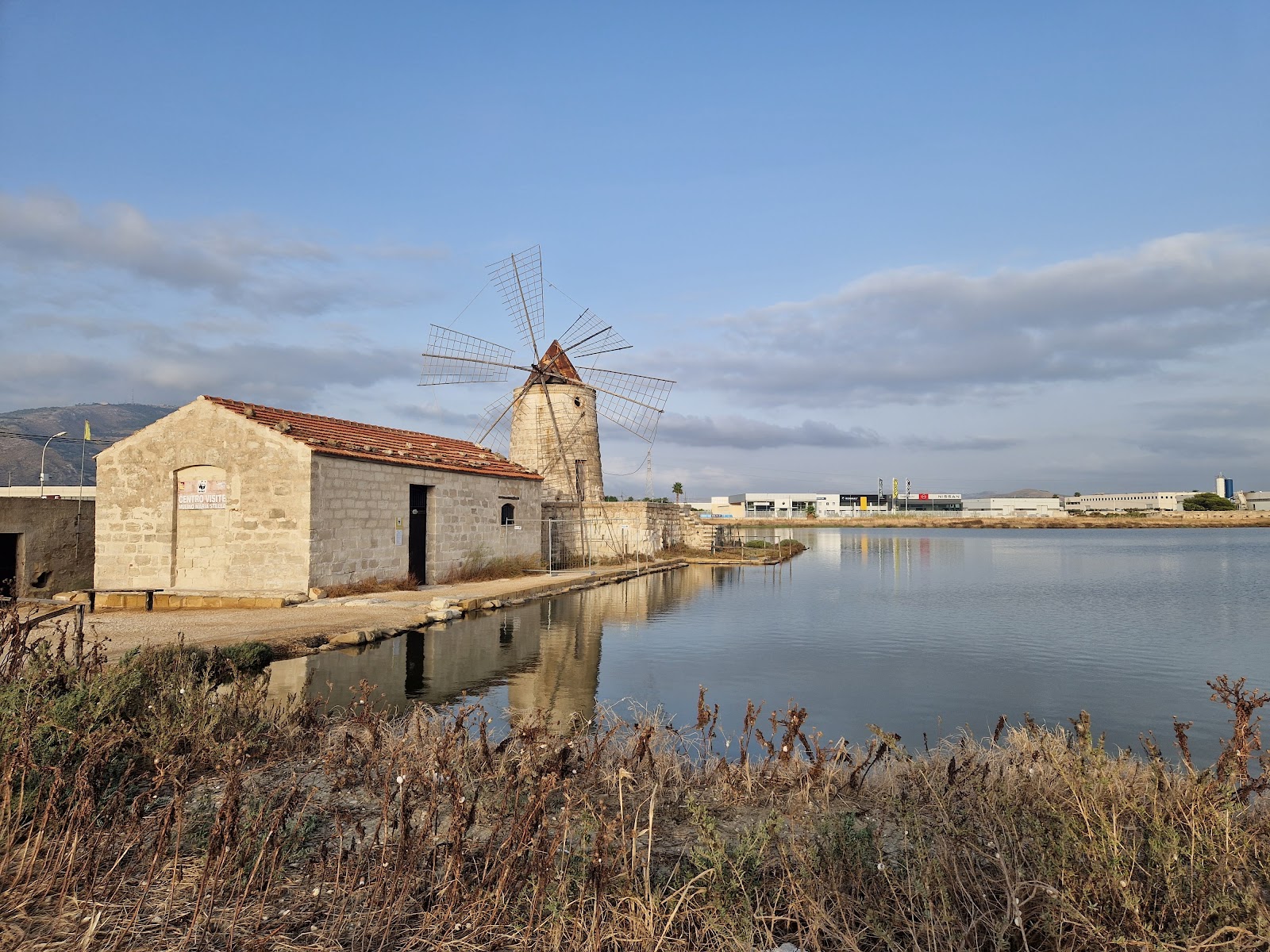
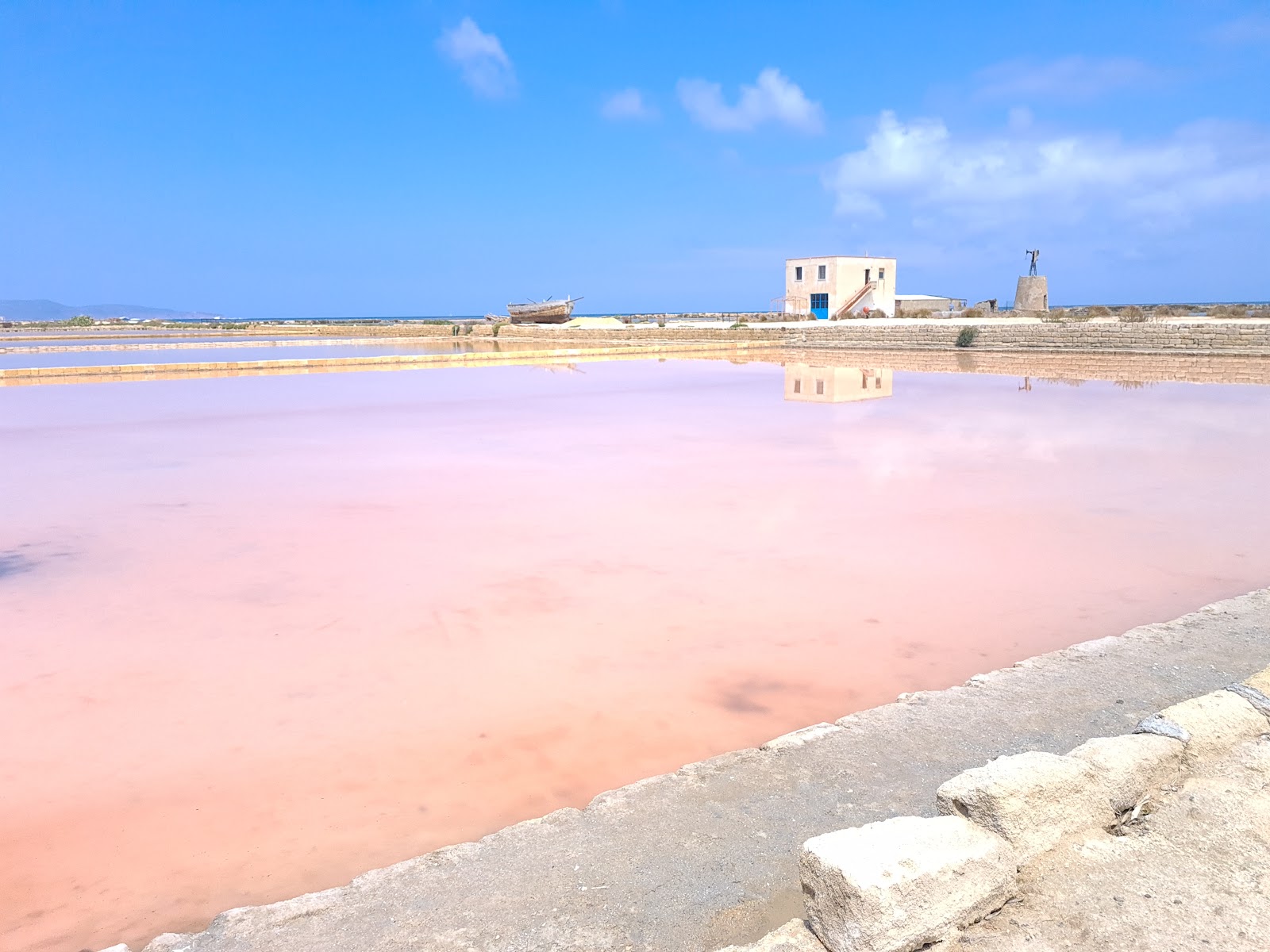
South of Trapani, where the coast flattens and the light turns white, the salt pans begin. Shallow rectangular basins stretch toward the horizon, their water shifting from pale grey to deep terracotta depending on the season and the salinity — a colour the salt workers still read the way a farmer reads soil. Windmill towers punctuate the flats, some of them centuries old, and in summer the air carries a faint mineral sharpness that stays with you.
The Riserva Naturale delle Saline di Trapani e Paceco covers almost 1,000 hectares across the municipalities of Trapani, Paceco and Misiliscemi. Managed by WWF Italia since 1995, it is both a working saltworks — producing around 80,000 tonnes a year — and a protected wetland where flamingos, avocets and herons move through the shallows between the extraction basins.
💛 What travellers fall for
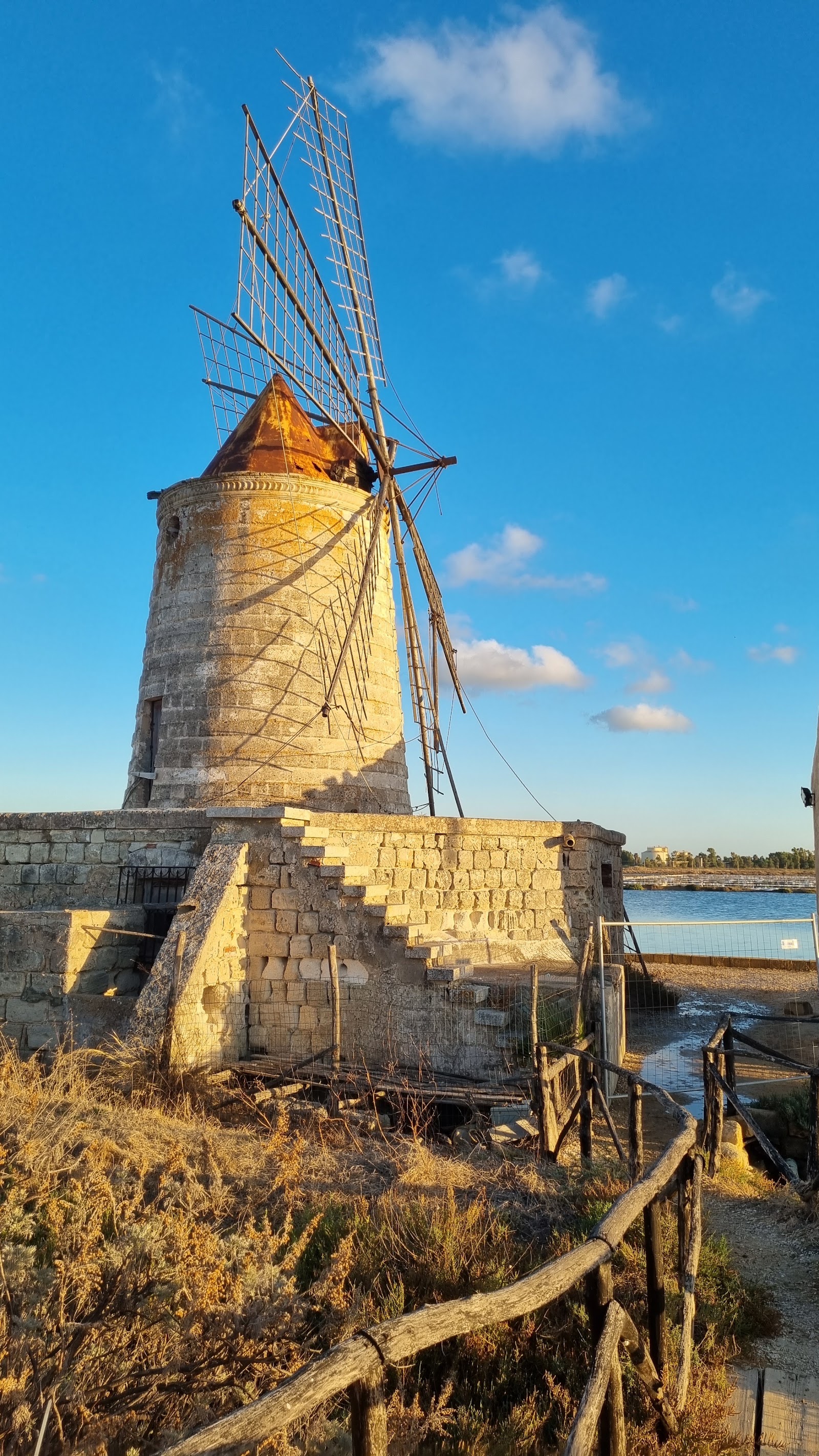
Regulars say the Museo del Sale inside the 17th-century Casa Salaria repays a slow look: the wooden mill blades called ntinni, the Archimedes' screw, the heavy millstone. Most also end up lingering near Salina Culcasi longer than planned, watching the flamingos work the shallows at their own unhurried pace. Book the Wednesday or Saturday tour — guides adjust the route to what's actually happening that week.
The story behind Riserva Naturale delle Saline di Trapani e Paceco
Al-Idrīsī, the Arab geographer writing for the Norman court in 1154, described a large salt pan running from Trapani's outskirts to the slopes of Mount Erice — evidence that organised production was already centuries old by the medieval period. Phoenician activity in the area is thought to go back roughly 3,000 years, though the written record begins with al-Idrīsī's account.
Under Spanish and Bourbon rule, the industry expanded into one of western Sicily's principal economic pillars. Decline came in the 20th century: floods damaged machinery, refrigeration made artisanal salt less essential, and competition from Asian producers gutted the market. By the 1980s many basins stood empty. The regional government established the reserve on 11 May 1995, entrusting it to WWF Italia. Producers including the Culcasi family and Sosalt committed to restoring the abandoned lagoon infrastructure, and output has since climbed from around 50,000 to 80,000 tonnes annually.
Good to know
Guided tours run Wednesday, Friday and Saturday by reservation; each lasts roughly two hours, with a 75-minute museum visit included. The visitor centre sits at the Mulino Maria Stella on SP21. From Trapani you can drive SP21 toward Paceco and follow signs, or take the Paceco bus and walk in. Spring and late summer are the best seasons for both birdlife and active salt harvesting.
Summer visits mean fierce sun and very little shade — the salt amplifies the glare, so a hat and water are not optional. Spring and autumn bring softer light, more active birdlife and the particular pleasure of watching the basins change colour as salinity shifts; the reserve is exposed to both the mistral and the sirocco, so there is almost always a wind moving across the flats.
Where is Riserva Naturale delle Saline di Trapani e Paceco?
More tickets & tours for Riserva Naturale delle Saline di Trapani e Paceco
Book directly at the provider
What travellers say about Riserva Naturale delle Saline di Trapani e Paceco
Unfortunately, it's in ruins. Furthermore, if you're walking, it's a very difficult and dangerous route. I recommend taking a taxi if you want to get there. It's a shame the place is so neglected.
The road up is very twisty and high but we'll worth it when you arrive, lots of little shops and cafes, great views but quite busy, we got the Cableway down but it takes you to nowhere special so we went straight back up.
The place is nice, though a little bit dull and could be better maintained. There was also a small shop there, I think one can buy salt or souvenirs from there, but I am not sure. To road to the destination is pretty bad, but doable. The best part was that we saw flamingos on the way back from the Saline di Trapani, in a lake. 🦩
it is an interesting phenomenom (saline) but it is not a functioning nor beautiful place to walk around. I advise you to find a viewpoint somewhere up (Erice for instance) and look down. The salina is not functioning, and some of the visitors’ sites are closed. No entrance ticket, we walked along the road and checked these salt ponds. It was exciting to see this in life, but no “wow” moments whatsoever. No entrance tickets, no opening hours.
The visit was part of a tour of Marsala that I wasn’t too interested in. How wrong I was! I never knew how much I didn’t know about salt! Fascinating visit- loved seeing the workings of the old windmill and tasting the different types of salt. Really really interesting! Plus we arrived near sunset and had fantastic views
More of Trapani
Discover where to stay, what to do and the best deals for your trip.
Explore Trapani →More attractions in Trapani
All of Trapani →

Background adapted from Wikipedia (CC BY-SA) · map data © OpenStreetMap contributors · ratings & place photos via Google · other photos with per-image credit. Ticket links may earn us a commission at no extra cost to you.