
Ponte Romano di Rieti
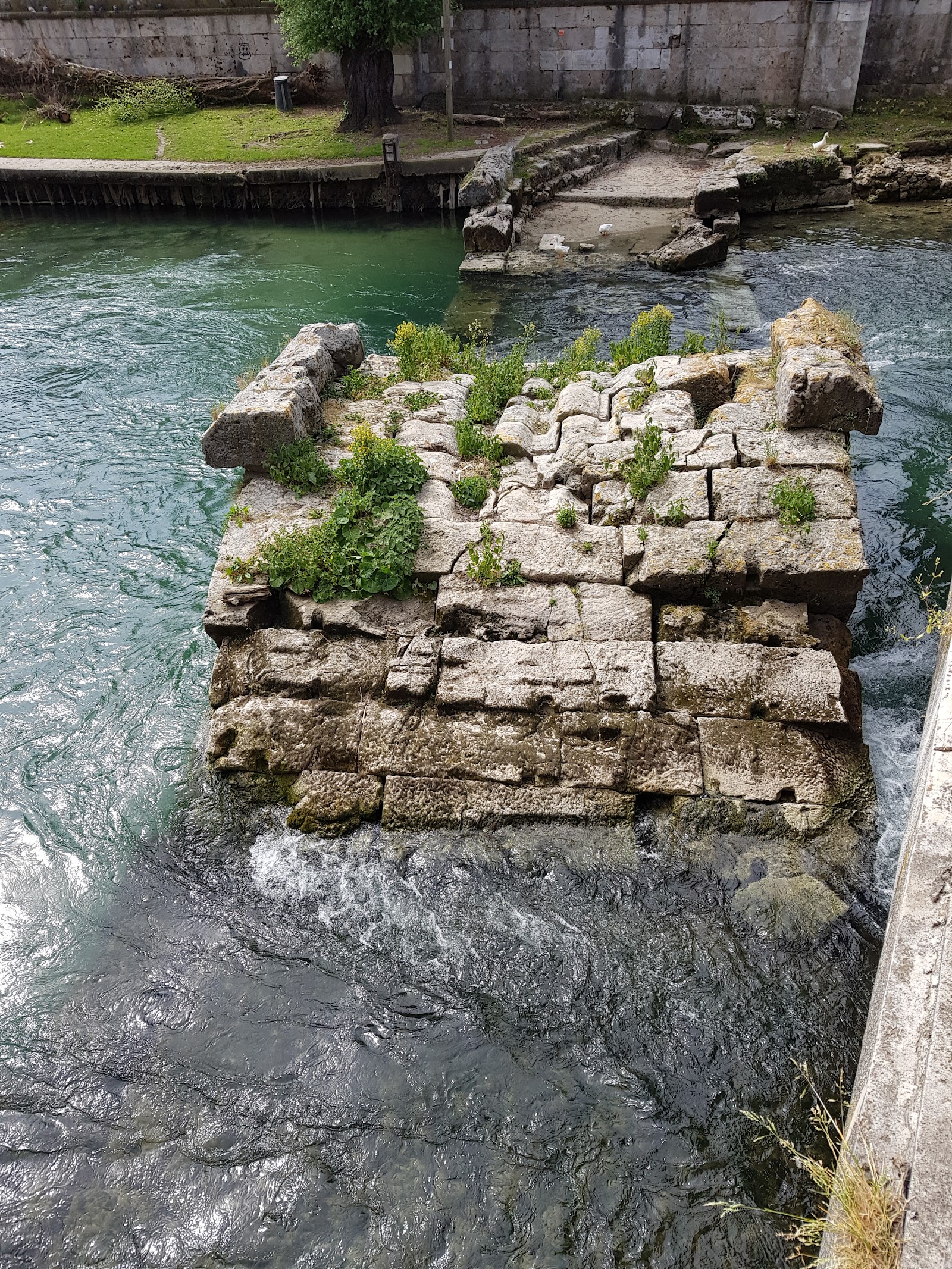
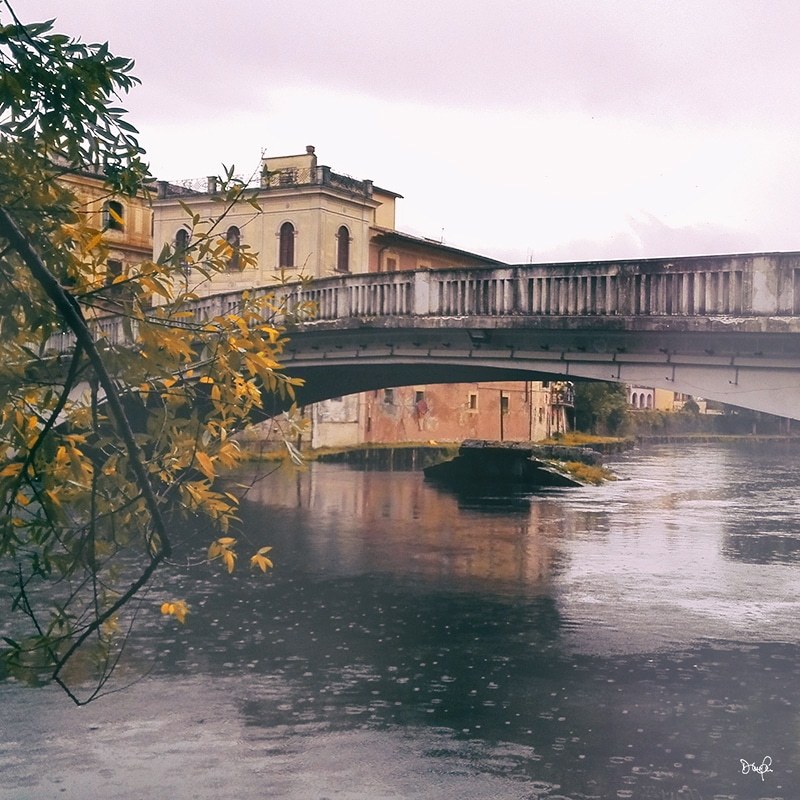
Stand on the modern bridge over the Velino and look down: the Roman stonework is right there in the riverbed, three arches of travertine limestone laid in the opus quadratum style, still legible after two thousand years. Geese paddle around the submerged blocks as if they own the place, which, in a sense, they do now.
This is what remains of the bridge that once carried the Via Salaria — the old salt road — across the Velino and into the heart of Sabine territory. The original structure served Rieti continuously until 1939, when it was demolished and replaced by a cement crossing that German forces then destroyed within a few years.
💛 What travellers fall for
People who come back to Rieti tend to walk down the stairs from Lungovelino Nello Bellagamba to the riverbank, where you get level with the stonework rather than looking down at it. From there the scale of the individual travertine blocks — each roughly a metre long — lands differently. Early morning, before the light flattens out, is worth the effort.
The story behind Ponte Romano di Rieti
The bridge dates to the 3rd century BC, built after Rome absorbed the Sabine region and needed a reliable crossing on the Via Salaria. An inscription dated 42 AD records restoration work under Emperor Claudius, which points to the structure's long operational life. A medieval cassero — a defence tower — stood on the left bank from 1312, rebuilt by Giacomo da Varese, then demolished twice for obstructing river flow before being reconstructed in 1439 and finally removed in 1883.
In the 1920s engineers proposed dismantling the Roman bridge and reusing its stone for a taller replacement, but the cost was prohibitive. Instead it was demolished in 1939 and briefly renamed Ponte XXVIII Ottobre in reference to Mussolini's March on Rome. The German destruction of the 1939 cement bridge during the war left the city without a crossing until the 1950s structure was built — the one you stand on today to look down at what the Romans left behind.
Good to know
The remains are always accessible and free to view from the modern bridge or from the riverbank stairs off Lungovelino Nello Bellagamba. Allow 15–30 minutes. If you want more Roman infrastructure, Rieti Sotterranea runs guided tours of an underground Roman viaduct departing from nearby Piazza Cavour — book ahead.
May through mid-June and September are the most comfortable months, with temperatures between 20 and 26°C and manageable crowds. Summer brings stretches of real heat; winter months from November through March can see snowfall, which makes the stonework dramatic but the riverbank slippery.
Where is Ponte Romano di Rieti?
Location
- In Rieti
- 42.4028, 12.8605
- Open in Google Maps
More tickets & tours for Ponte Romano di Rieti
Book directly at the provider
More of Rieti
Discover where to stay, what to do and the best deals for your trip.
Explore Rieti →More attractions in Rieti
All of Rieti →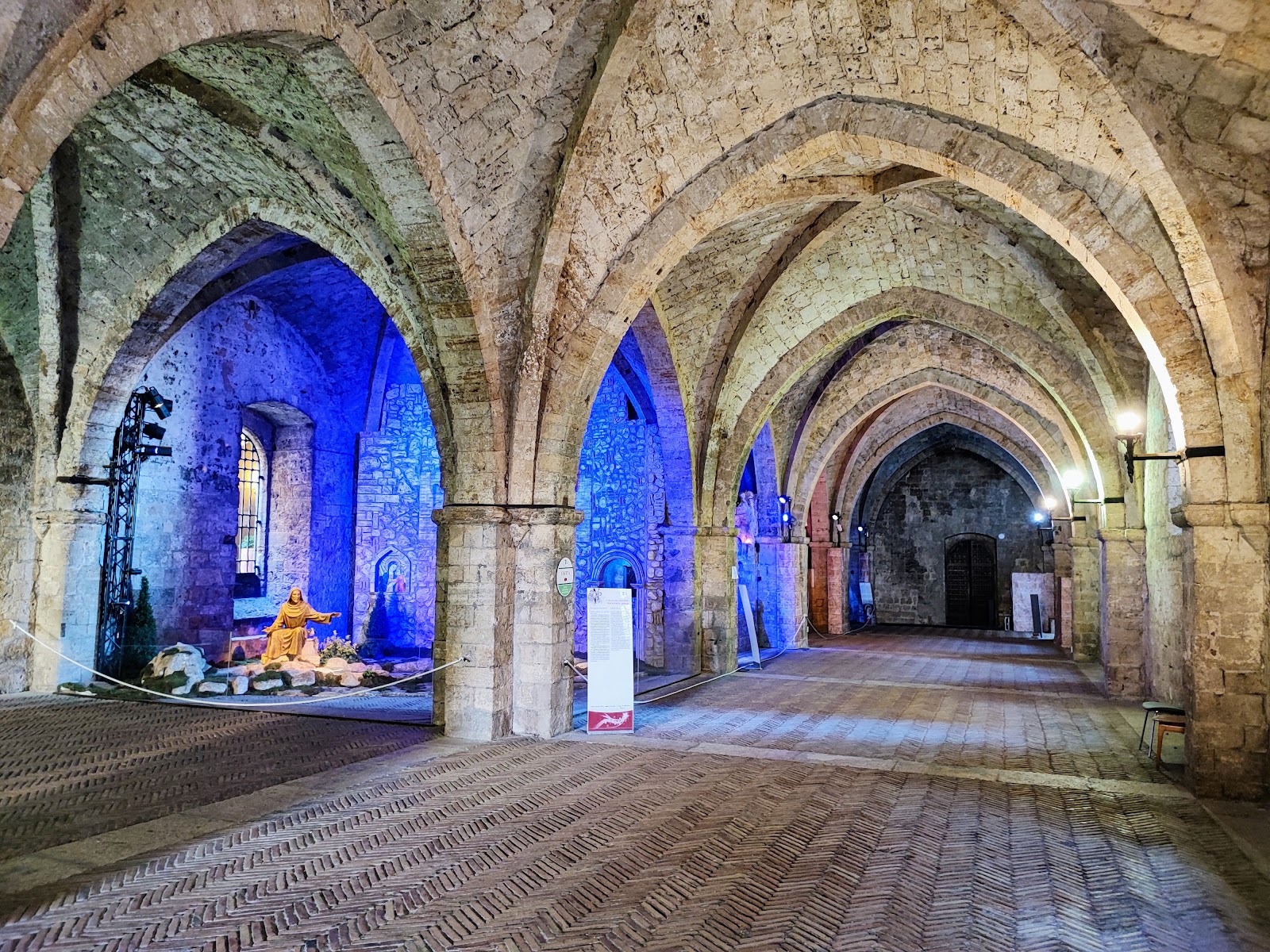
Background adapted from Wikipedia (CC BY-SA) · map data © OpenStreetMap contributors · ratings & place photos via Google · other photos with per-image credit. Ticket links may earn us a commission at no extra cost to you.