
Palazzo Vescovile di Rieti
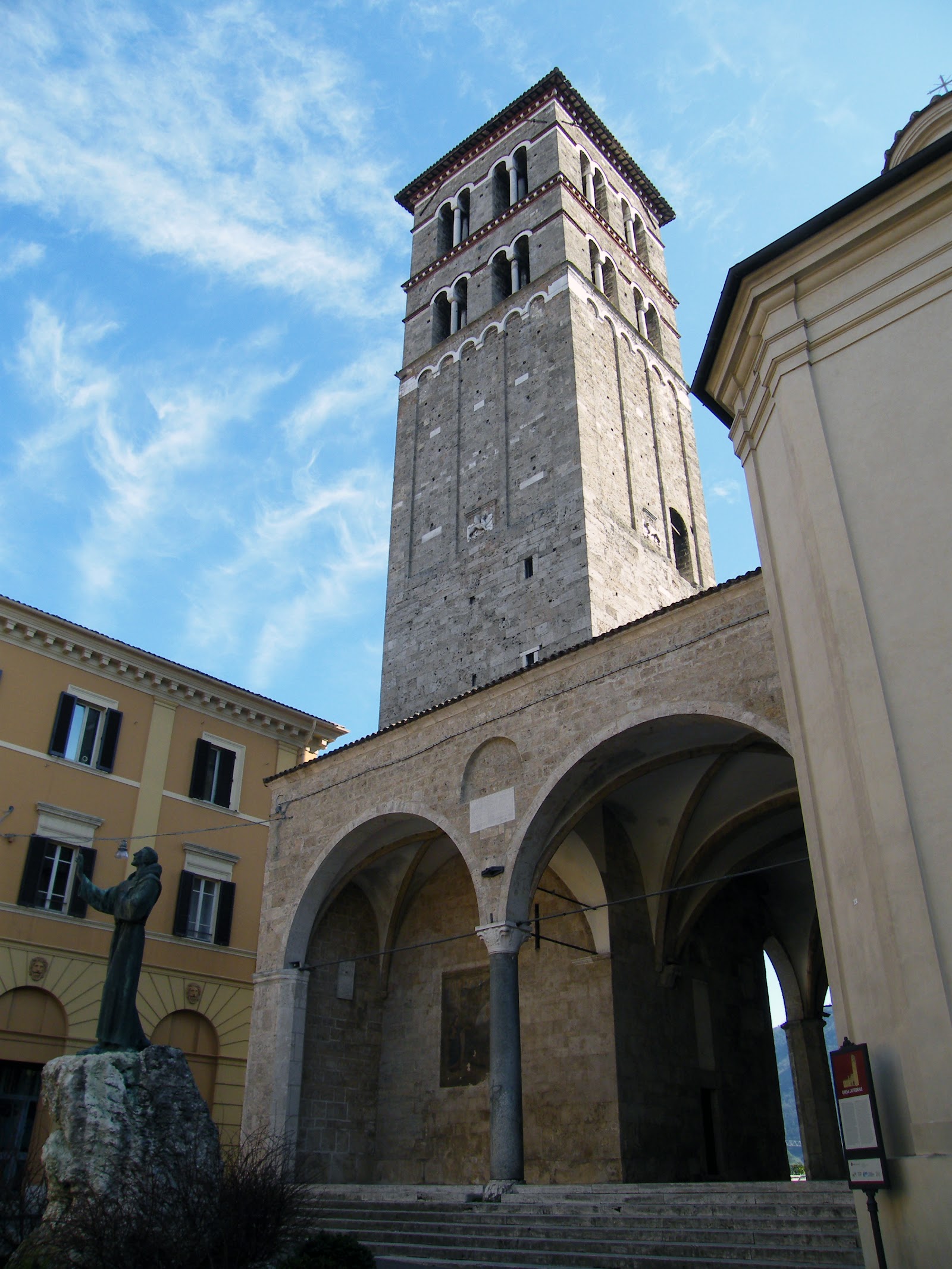
Walk along via Cintia and you'll pass under a stone arch that a pope ordered built in 1298, after an earthquake cracked the city, to shore up the palace beside it. That arch — the Arco di Bonifacio VIII — still spans the street, and the Palazzo Vescovile it was meant to protect still stands behind it, its façade opening onto Piazza Mariano Vittori.
The palace is part bishop's residence, part diocesan offices, and part museum. The one room you can enter as a visitor, the Salone delle Udienze, is worth the trip on its own: 46 metres long, 14 wide, 13 and a half high, with a diocesan art collection arranged inside it since 2005.
💛 What travellers fall for
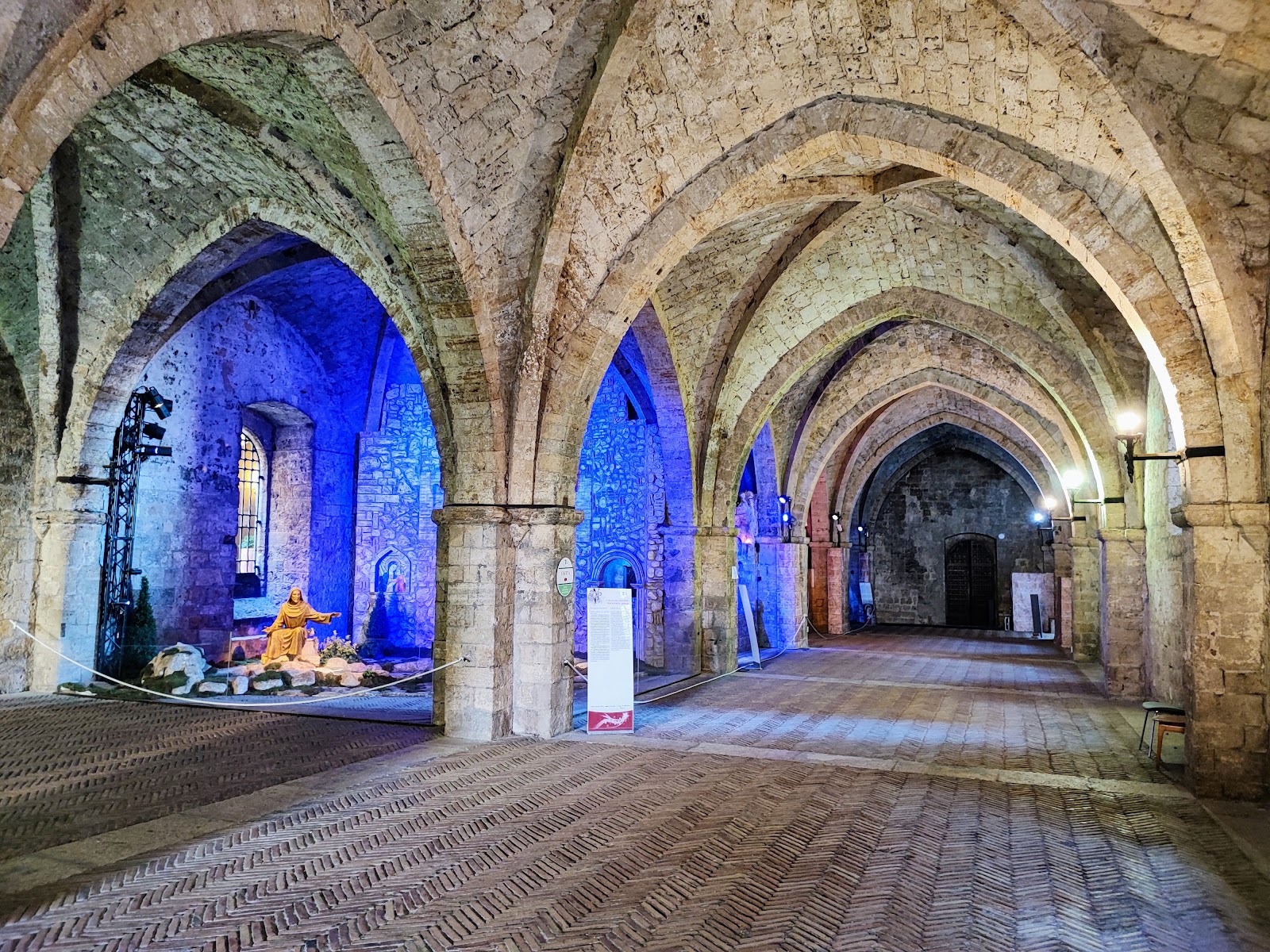
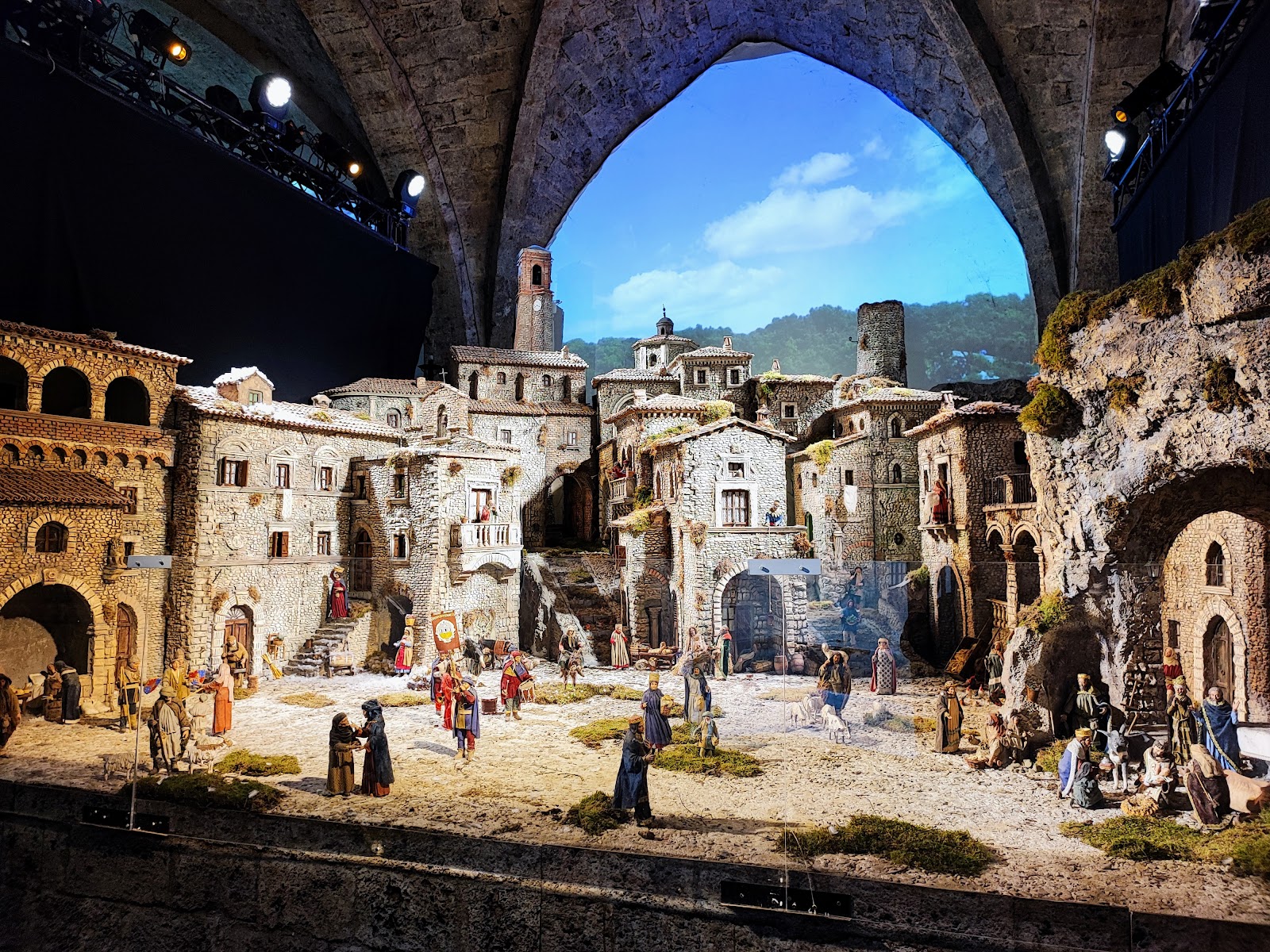
People who come back tend to linger in the vaulted ground-floor vestibule — the Volte del Vescovado — where a fountain basin cut from a Roman sarcophagus sits quietly beside a 12th-century griffin relief. Under the arches, large nativity scenes by Franco Artese depict the hill villages of Poggio Bustone and Greccio in careful miniature.
The story behind Palazzo Vescovile di Rieti
Bishop Pietro Gerra commissioned the palace in 1283, and a master builder named Andrea completed it by 1288 — the same year Pope Niccolò IV arrived in Rieti. The city had already been hosting popes for nearly a century: Innocenzo III came in 1198, Onorio III in 1219 and 1225, Gregorio IX three times between 1227 and 1234. The palace became their seat.
The 1298 earthquake destabilised the structure, and Bonifacio VIII responded by commissioning the arch over via Cintia to buttress it. In 1849, General Garibaldi requisitioned the building as barracks for 75 days. A second earthquake in 1898 caused further damage, and the full restoration came between 1927 and 1934 under architect Francesco Palmegiani, working alongside Bishop Massimo Rinaldi. Vincenzo Manenti's frescoes in the Sala degli Stemmi and Sala San Probo survive from an earlier period, now within the private residential quarters.
Good to know
Opening hours for the pinacoteca are not reliably published, so contact the Diocese of Rieti before visiting. The palace is at Via Cintia 83, a short walk from Piazza Vittorio Emanuele II. Much of the building remains private; plan for a focused visit to the Salone rather than a full tour.
Where is Palazzo Vescovile di Rieti?
More tickets & tours for Palazzo Vescovile di Rieti
Book directly at the provider
What travellers say about Palazzo Vescovile di Rieti
Under the arches… Next to the cathedral is the Bishop's Palace, also known as the Papal Palace. Built in the 12th century to house the Curia, Rieti was often the seat of the Pope during that century. Don't miss the large nativity scenes under the arches of the Bishop's Palace of Rieti, created by master Franco Artese, depicting the villages of Poggio Bustone and Greccio. A visit is highly recommended.
Bellissimo palazzo duecentesco, e molto suggestiva la mostra dei presepi a carattere francescano
Worth a visit for the reconstructions of Greccio and the nativity scene of San Francesco
Beautiful to see everything
Monumental and everlasting nativity scene under the porticoes of the bishop's palace
More of Rieti
Discover where to stay, what to do and the best deals for your trip.
Explore Rieti →More attractions in Rieti
All of Rieti →
Background adapted from Wikipedia (CC BY-SA) · map data © OpenStreetMap contributors · ratings & place photos via Google · other photos with per-image credit. Ticket links may earn us a commission at no extra cost to you.