
Palazzo Vecchio
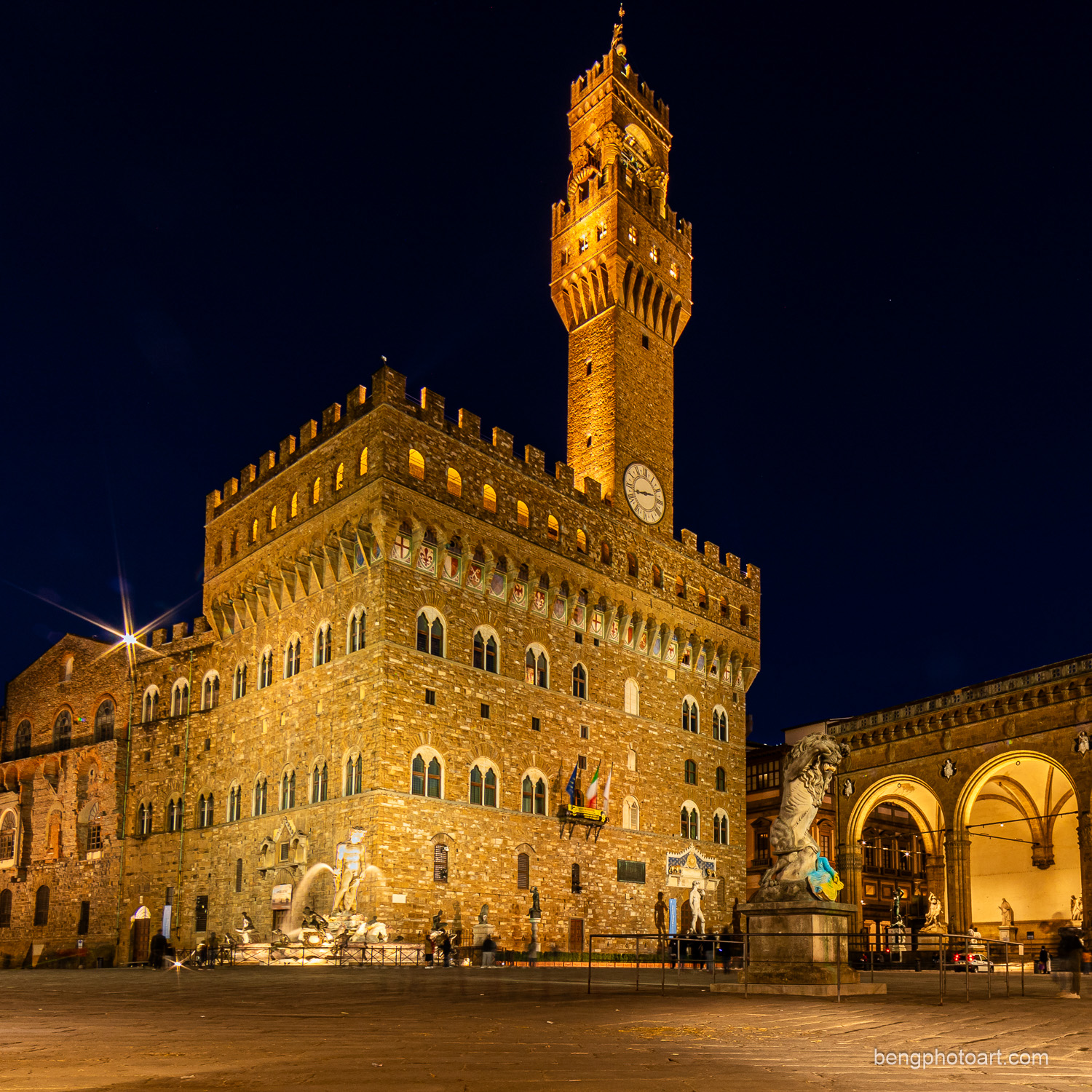
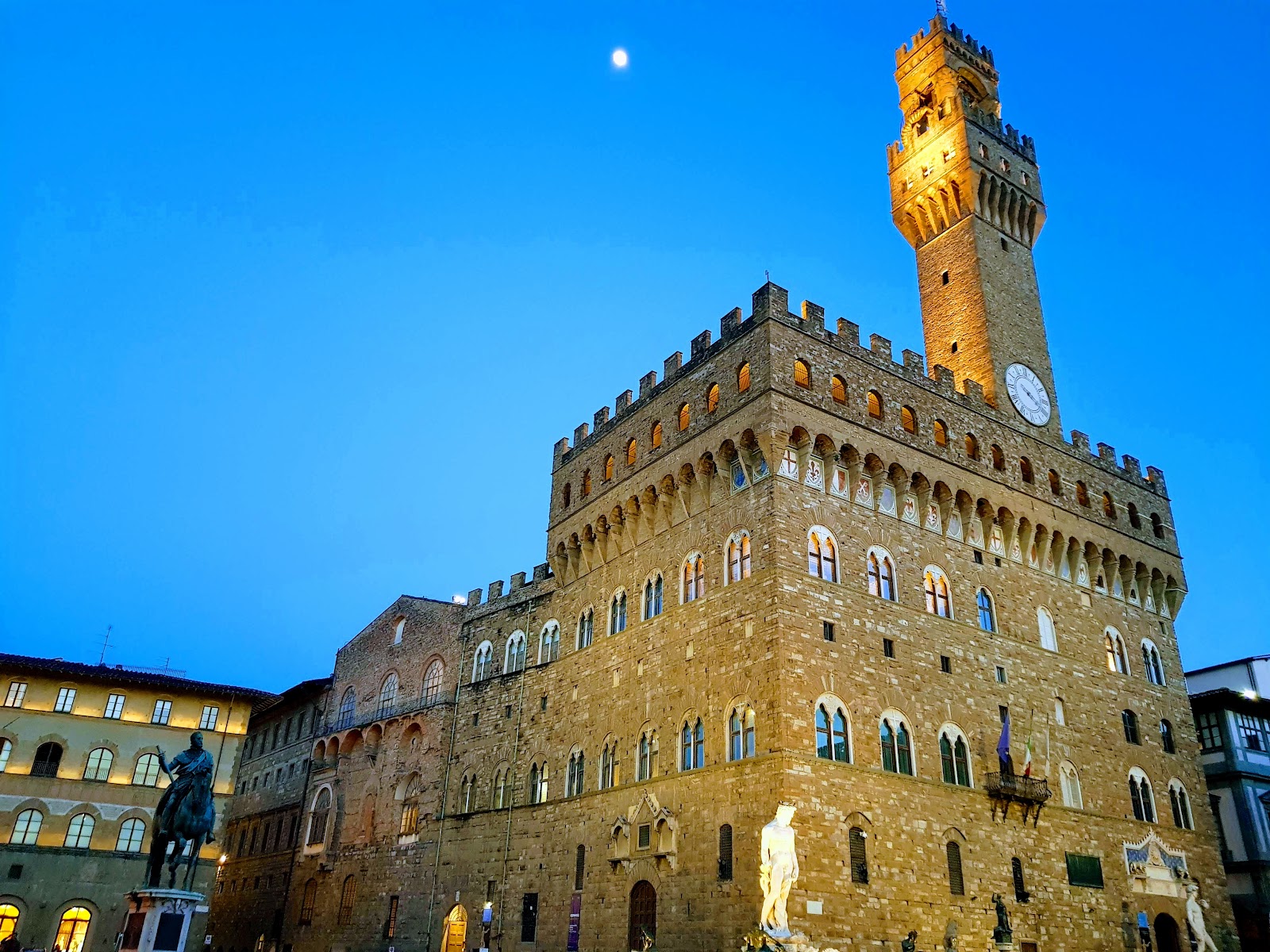
The clock on the Torre d'Arnolfo has only one hand — a detail that stops you mid-stride once you notice it. The original was made in 1353; the replica you see today came from a craftsman in Augsburg three centuries later. That layering of time and authorship is what Palazzo Vecchio is really about.
Built between 1299 and 1314 to the designs of Arnolfo di Cambio — the same architect behind the Duomo — it has served as republican seat, Medici residence, provisional capital of a newly unified Italy, and, since 1872, the office of Florence's mayor. It is still a working town hall.
💛 What travellers fall for
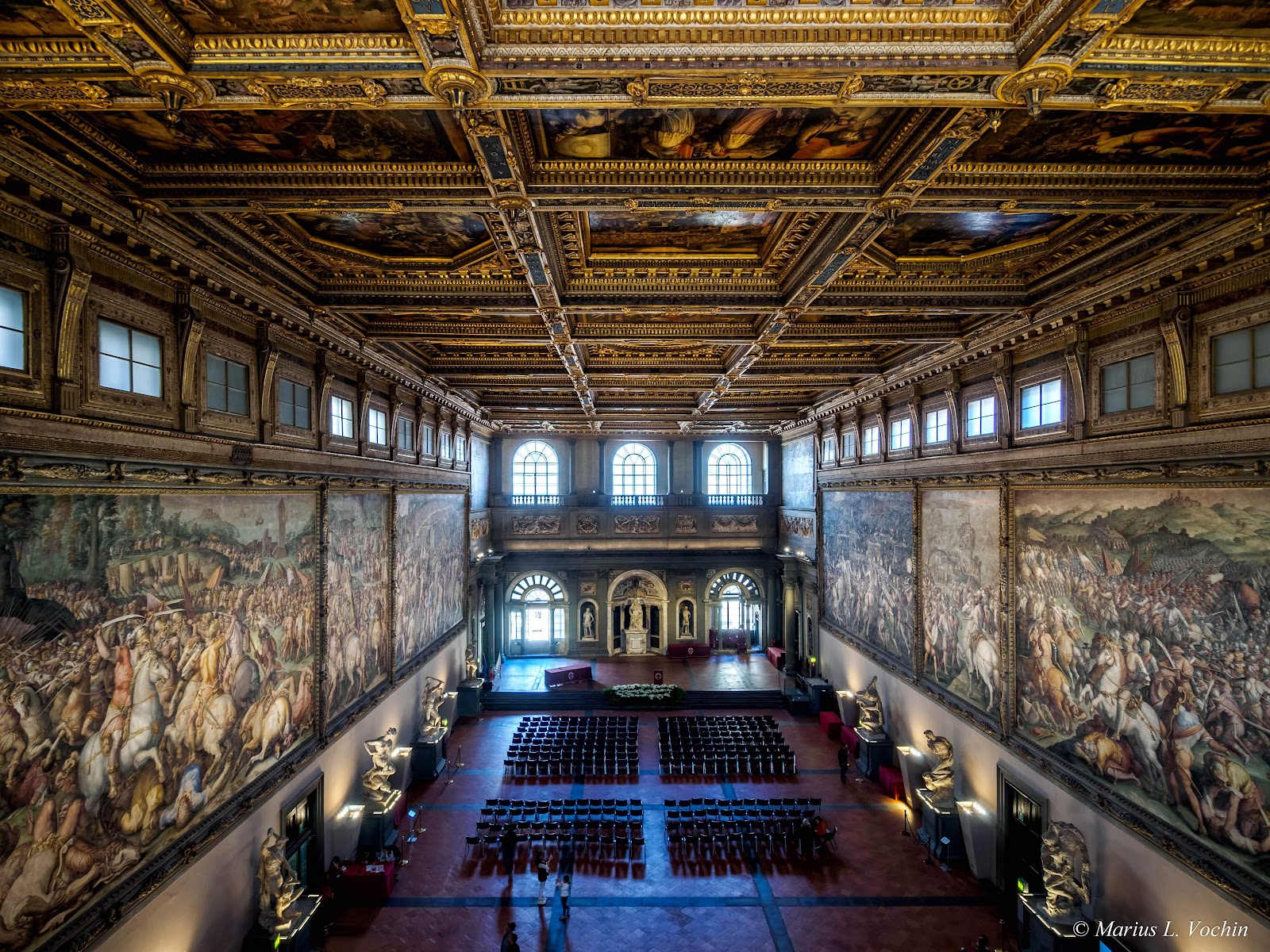
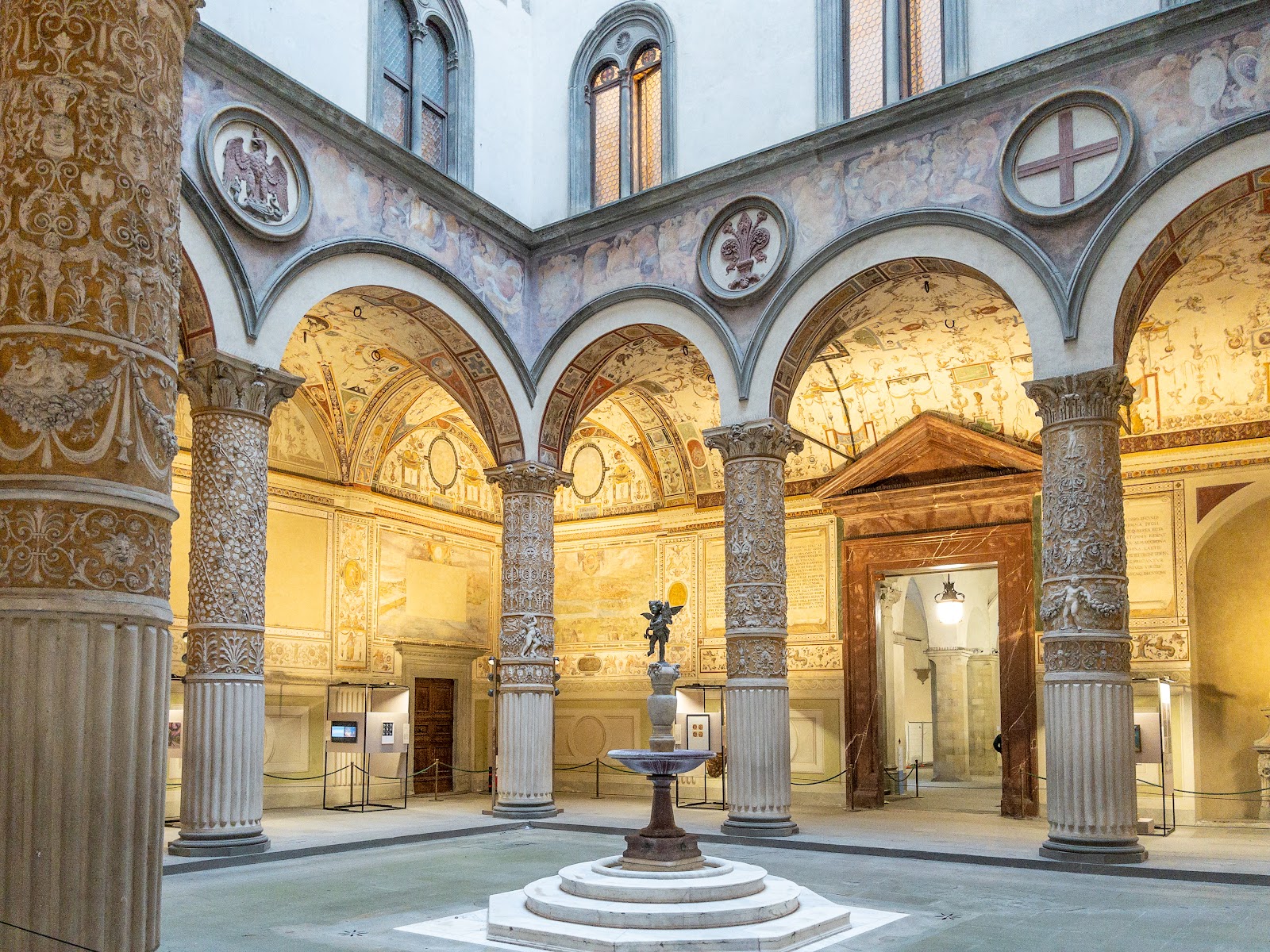
People who return tend to linger in the Cortile di Michelozzo rather than rushing upstairs — Verrocchio's Putto with Dolphin at the centre of the courtyard fountain is easy to walk past, harder to forget. The Salone dei Cinquecento rewards a slow circuit: the ceiling paintings by Vasari are best read from the far corners, not the middle.
The story behind Palazzo Vecchio
The commune of Florence commissioned the palace in 1299 as a seat secure enough for the city's magistrates in turbulent times. Arnolfo di Cambio raised it on the ruins of properties once belonging to the Uberti family, finishing the fortress-like structure and its tower by 1314. Michelozzo added the first courtyard in 1453; Giorgio Vasari, working for Cosimo I de' Medici after 1540, expanded and lavishly redecorated it.
Cosimo's arrival was itself a statement — moving from the family's palazzo on Via Larga to the seat of republican government signalled that Medici rule was now permanent. When he later moved to Palazzo Pitti, he renamed his former home the Palazzo Vecchio, the Old Palace. Between 1865 and 1871, while Florence served as the temporary capital of unified Italy, it briefly housed the national government.
Good to know
Thursday closing at 2 PM catches many visitors off guard — check before you go. The tower climb is 233 steps and closed to under-sixes. Last entry is one hour before closing. Buses C1 and C2 stop close by; Santa Maria Novella station is a 16-minute walk. Budget two to three hours.
Where is Palazzo Vecchio?
More tickets & tours for Palazzo Vecchio
Book directly at the provider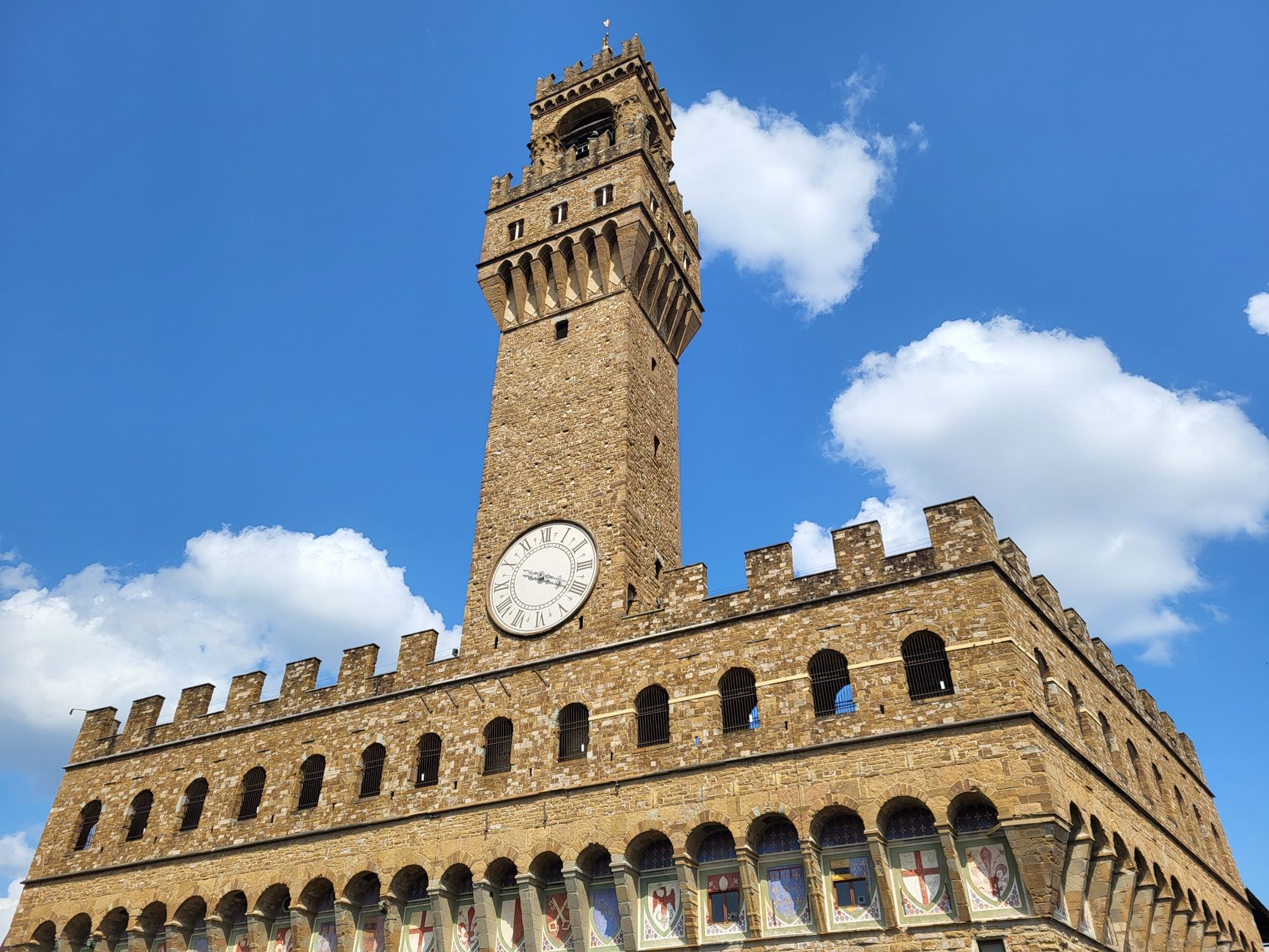
What travellers say about Palazzo Vecchio
Visiting Palazzo Vecchio was like walking straight into the beating heart of Florence’s history. From the moment I entered this powerful medieval palace, I felt surrounded by authority, ambition, and centuries of political life. This is not just a museum — it is a place where Florence was ruled, defended, and shaped. The contrast between the exterior and the interior is striking. Behind the fortress-like walls, the rooms are filled with unexpected elegance. The Salone dei Cinquecento completely took my breath away — vast, dramatic, and overwhelming in the best way. The scale of the hall, the richly painted walls, and the massive ceiling make you feel both small and deeply impressed by the power this space once represented. Walking through the private apartments, I was captivated by the intricate frescoes, hidden symbols, and detailed ceilings. Every room tells a story of the Medici family — their influence, pride, and desire to leave a lasting mark on Florence. I found myself slowing down, looking closely, and imagining the decisions once made within these walls. One of the most memorable moments was climbing the tower. The narrow stairway makes the final view even more rewarding. From the top, Florence unfolds in all directions, with the Duomo standing proudly nearby — a view I will never forget.
Palazzo Vecchio… just wow. It is one of the most striking landmarks in Florence, capturing the political and artistic heart of Florence. The building itself is imposing and rich in history, but what makes the experience truly special is the atmosphere of the piazza surrounding it. Right in front of the palace, the square feels like an open-air museum, filled with impressive sculptures. From a replica of David to the powerful figures in the Loggia dei Lanzi. Walking through the piazza, you can really feel the weight of history, where art and civic life have blended for centuries.
Palazzo Vecchio is a breathtaking masterpiece in Florence! Its fortress-like Romanesque architecture and towering Arnolfo tower dominate Piazza della Signoria. Inside, the Hall of the Five Hundred takes your breath away with stunning frescoes. A must-visit symbol of Florentine history and art.
Palazzo Vecchio is one of Florence’s most iconic landmarks, showcasing centuries of history, art, and political power. Its impressive architecture, grand halls, and stunning views from the tower make it an unforgettable attraction.
Palazzo Vecchio is a striking symbol of the city’s political power and artistic heritage. Its fortress-like exterior contrasts with the richly decorated interiors, filled with impressive frescoes and grand halls like the Salone dei Cinquecento. Climbing the tower rewards you with fantastic views over Florence, making it both a cultural and scenic highlight of any visit.
More of Florence
Discover where to stay, what to do and the best deals for your trip.
Explore Florence →More attractions in Florence
All of Florence →

Background adapted from Wikipedia (CC BY-SA) · map data © OpenStreetMap contributors · ratings & place photos via Google · other photos with per-image credit. Ticket links may earn us a commission at no extra cost to you.