
Piazza della Signoria
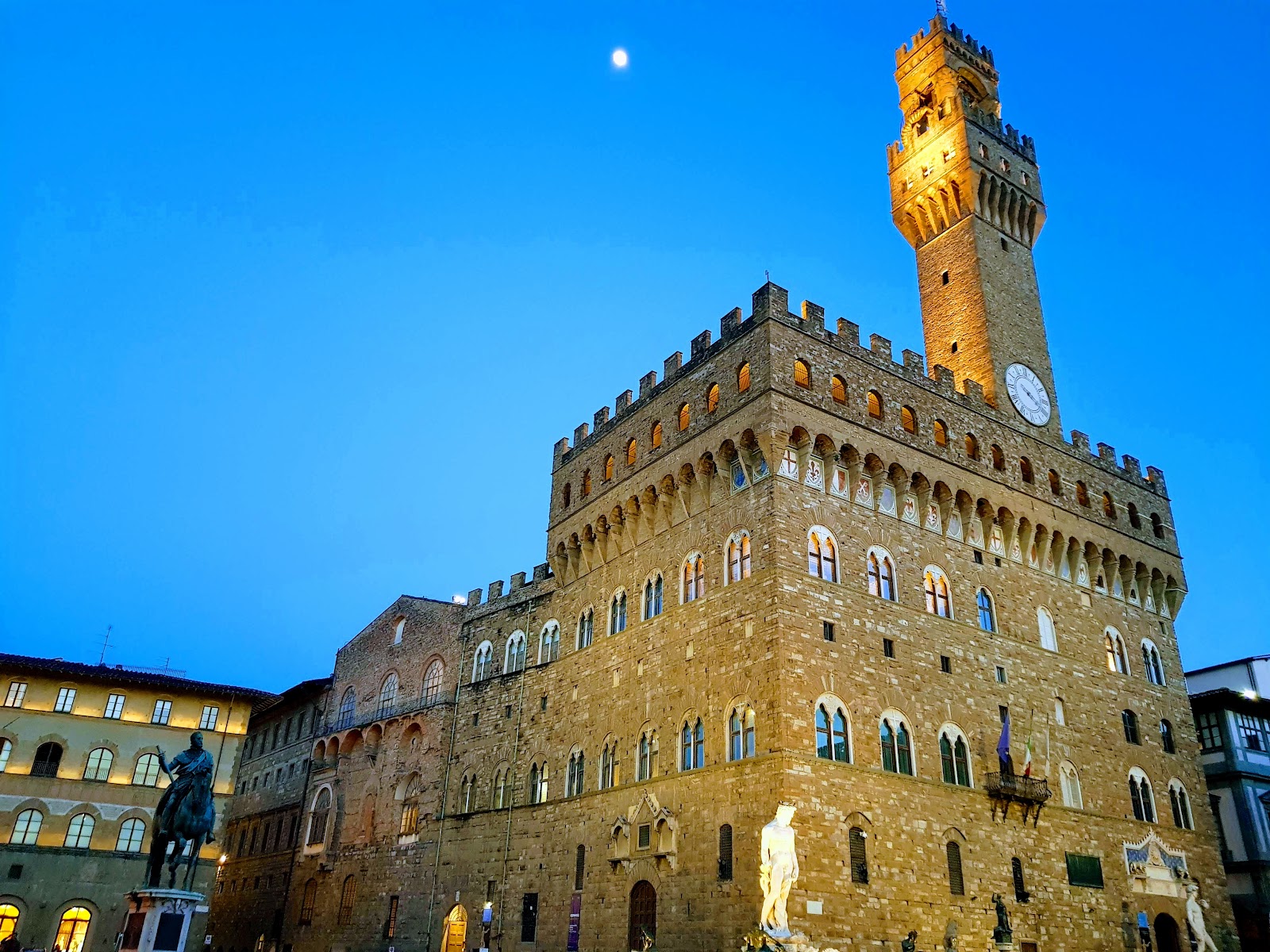
The piazza opens without warning — you turn a corner and suddenly there is Palazzo Vecchio's 308-foot tower cutting the sky, a copy of David standing where the original stood for centuries, and Neptune bone-white on his chariot. This is Florence's civic stage, and it has been one since 1268, when the victorious Guelphs razed thirty-six Ghibelline houses and forbade anyone from building on the rubble.
What remains is an L-shaped space shaped by political revenge and layered, over the following centuries, with bronze, marble and meaning. The sculptures are not decoration — each one was placed here to say something about power, republic, dynasty.
💛 What travellers fall for
People who return tend to arrive early, before the tour groups settle in, and spend time inside the Loggia dei Lanzi rather than just photographing it from outside. Cellini's Perseus — cast bronze, roughly ten feet tall — rewards a long look up close. The Florentines' nickname for the Neptune Fountain, Biancone (the big white one), tells you something about the local sense of humour.
The story behind Piazza della Signoria
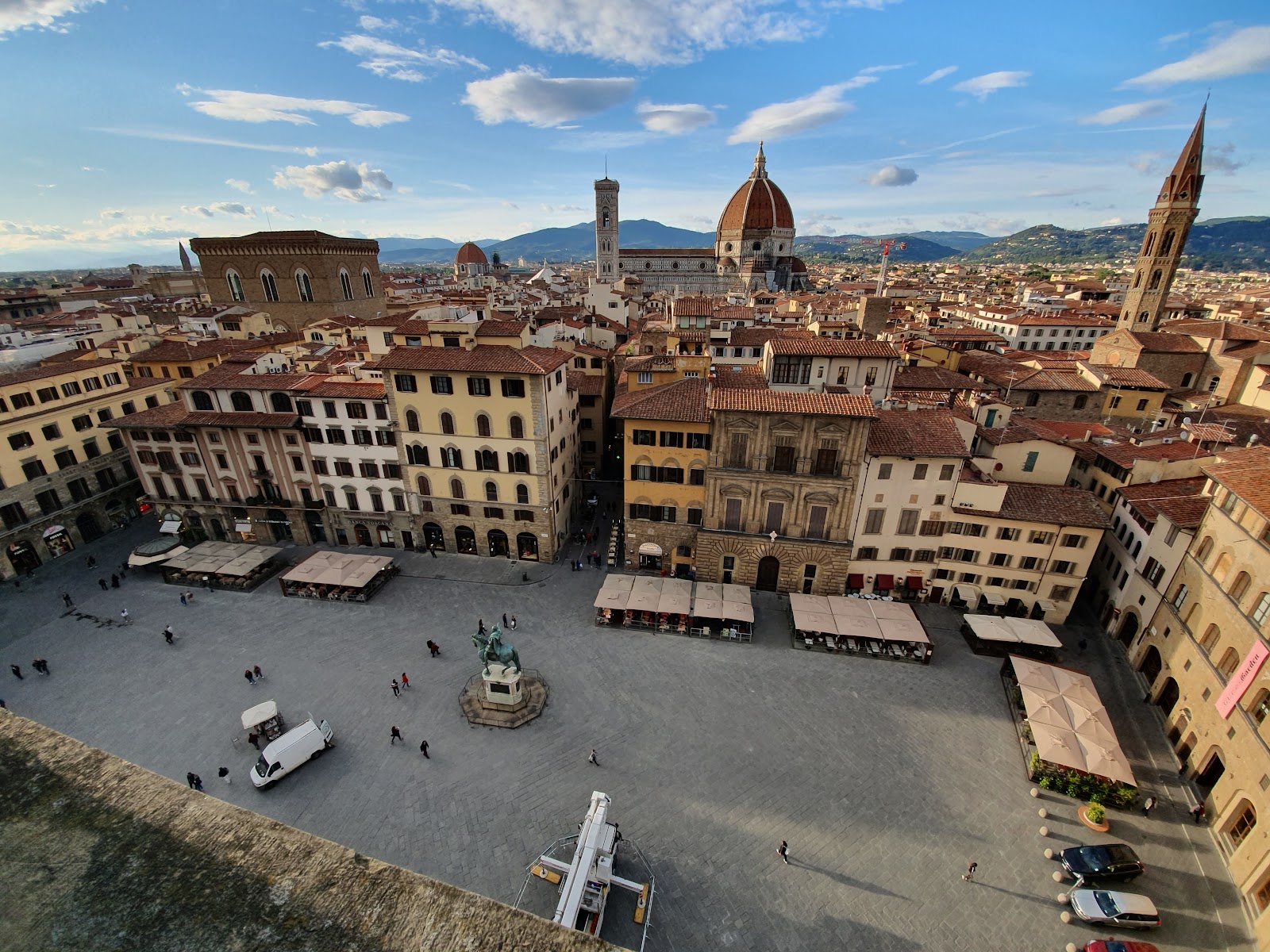
The ground beneath your feet holds Roman baths, a theatre and a Neolithic site — all uncovered during repaving in the 1980s. The piazza's peculiar L-shape dates to 1268, when Guelph authorities demolished thirty-six Ghibelline family towers after defeating them and refused to let the land be rebuilt upon. The space was paved by the end of the 14th century and took its current form around 1356.
Palazzo Vecchio, begun in 1299 to Arnolfo di Cambio's design, anchors the square. The Loggia dei Lanzi — designed by Orcagna and completed in 1382 — was later turned into an open-air sculpture gallery under Cosimo I. In 1498, the preacher Savonarola was burned at the stake here. A small disc in the pavement still marks the spot. The piazza became a UNESCO World Heritage Site in 1982.
Good to know
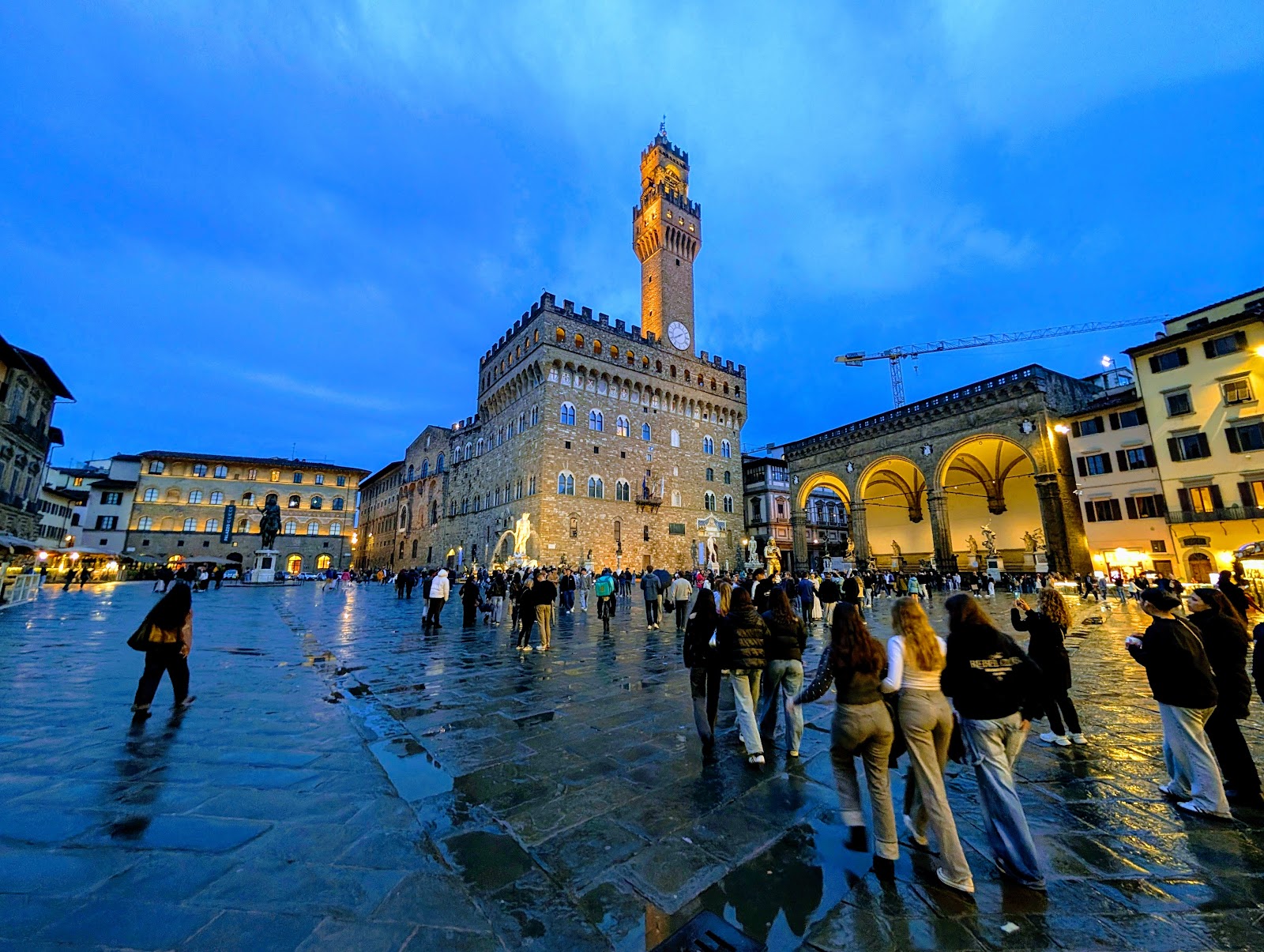
The piazza is open around the clock and free to enter. Palazzo Vecchio charges €10 for adults and keeps extended hours on Thursdays. Come at dawn or after 8 pm to move through it without jostling. The surrounding cafés are tourist-priced — Rivoire on the piazza itself is historic but not cheap.
Summer afternoons are hot and the stone reflects heat — late morning or early evening visits are more comfortable from June through August. Spring and autumn offer the best light and the most tolerable crowds; winter mornings can be cold but the square is often nearly empty.
Where is Piazza della Signoria?
More tickets & tours for Piazza della Signoria
Book directly at the provider
What travellers say about Piazza della Signoria
Piazza della Signoria is truly the heart of Florence. Surrounded by stunning architecture, historic statues, and an incredible atmosphere, it feels like an open-air museum. Walking through the square, you can admire masterpieces of Renaissance art while soaking in the vibrant energy of the city. Whether you visit during the day or at sunset, the beauty and history of this place are unforgettable. A must-see for anyone visiting Florence! 📍 Highly recommended for history lovers, art enthusiasts, and anyone wanting to experience the magic of Florence.
Piazza della Signoria is a must-see in Florence, rich in history and art. Surrounded by stunning sculptures, Palazzo Vecchio, and lively cafés, it offers a powerful glimpse into the city’s Renaissance soul. The piazza is alive day and night !!!
Piazza della Signoria is a beautiful square, surrounded by historic buildings and art, it feels like an open-air museum. The Palazzo Vecchio was the headquarters of the Medici family; the replica of the Michelangelo's David, the Neptune Fountain and Uffizi Gallery. Many restaurants, bars, shops around. Definitely a must see when you are in Florence.
A lively and historic square filled with beautiful sculptures and architecture. It feels like an open-air museum, with something interesting in every corner. Great place to walk around, take photos, and soak in the atmosphere.
Beautiful architecture and landscape to enjoy, free entry to the area and the church, only to buy ticket to enter the pisa tower. If you travel by train, get off at Pisa Rosorre station, only 10 minutes away by walking.
More of Florence
Discover where to stay, what to do and the best deals for your trip.
Explore Florence →More attractions in Florence
All of Florence →


Background adapted from Wikipedia (CC BY-SA) · map data © OpenStreetMap contributors · ratings & place photos via Google · other photos with per-image credit. Ticket links may earn us a commission at no extra cost to you.