
Florence Cathedral (Duomo di Firenze)
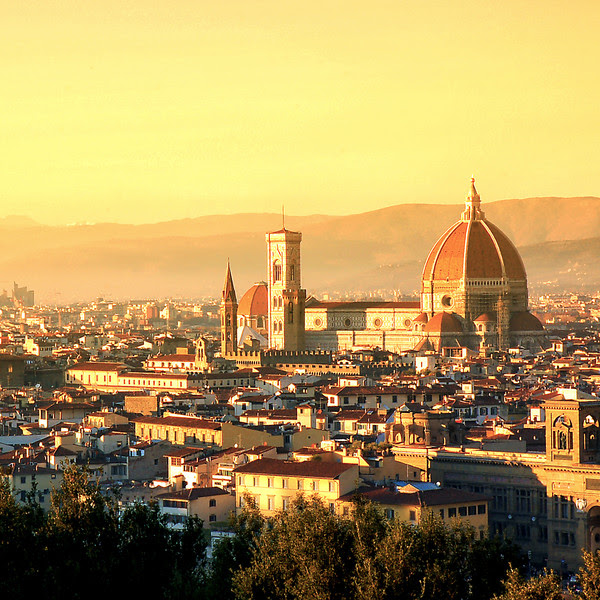
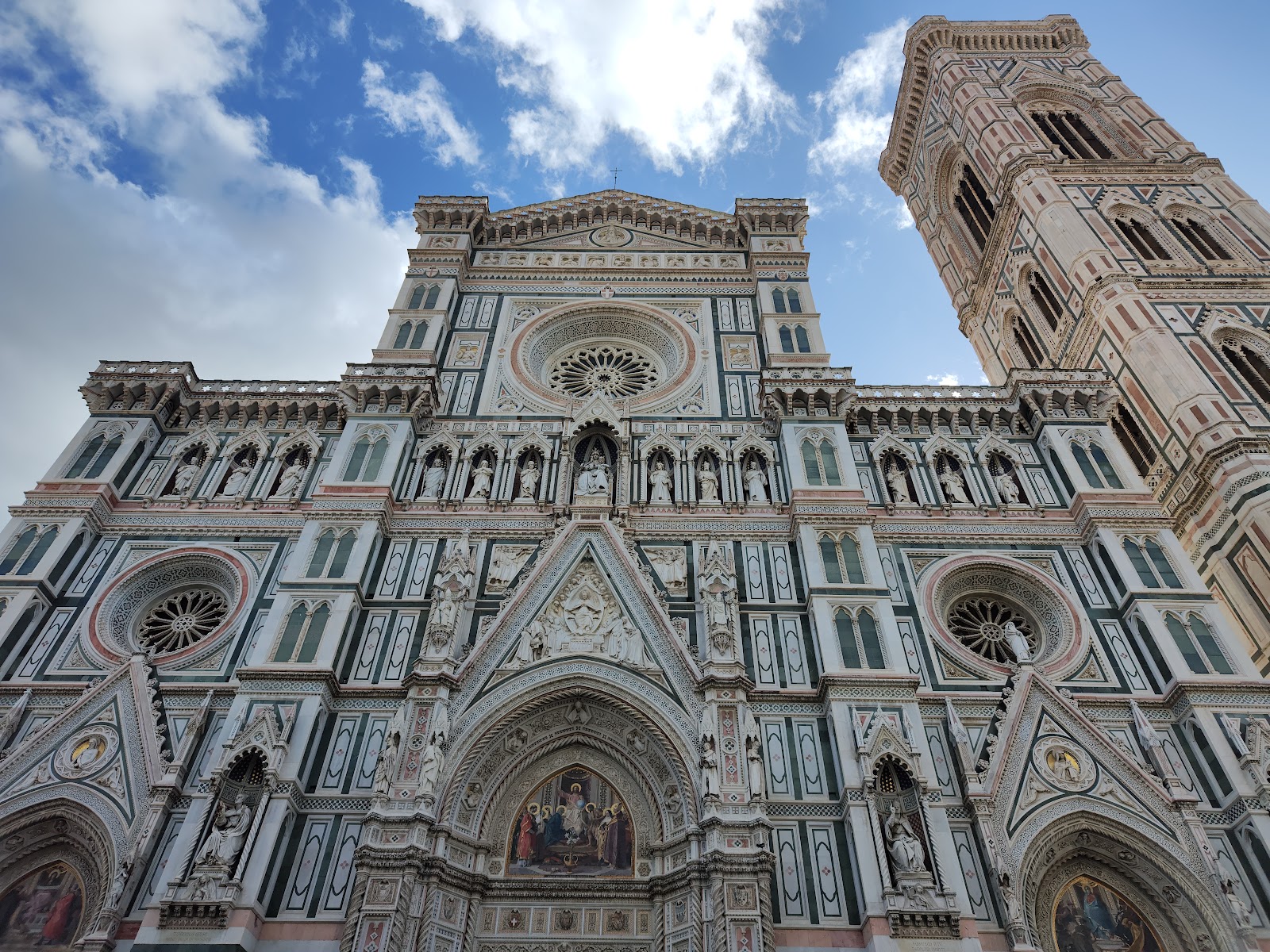
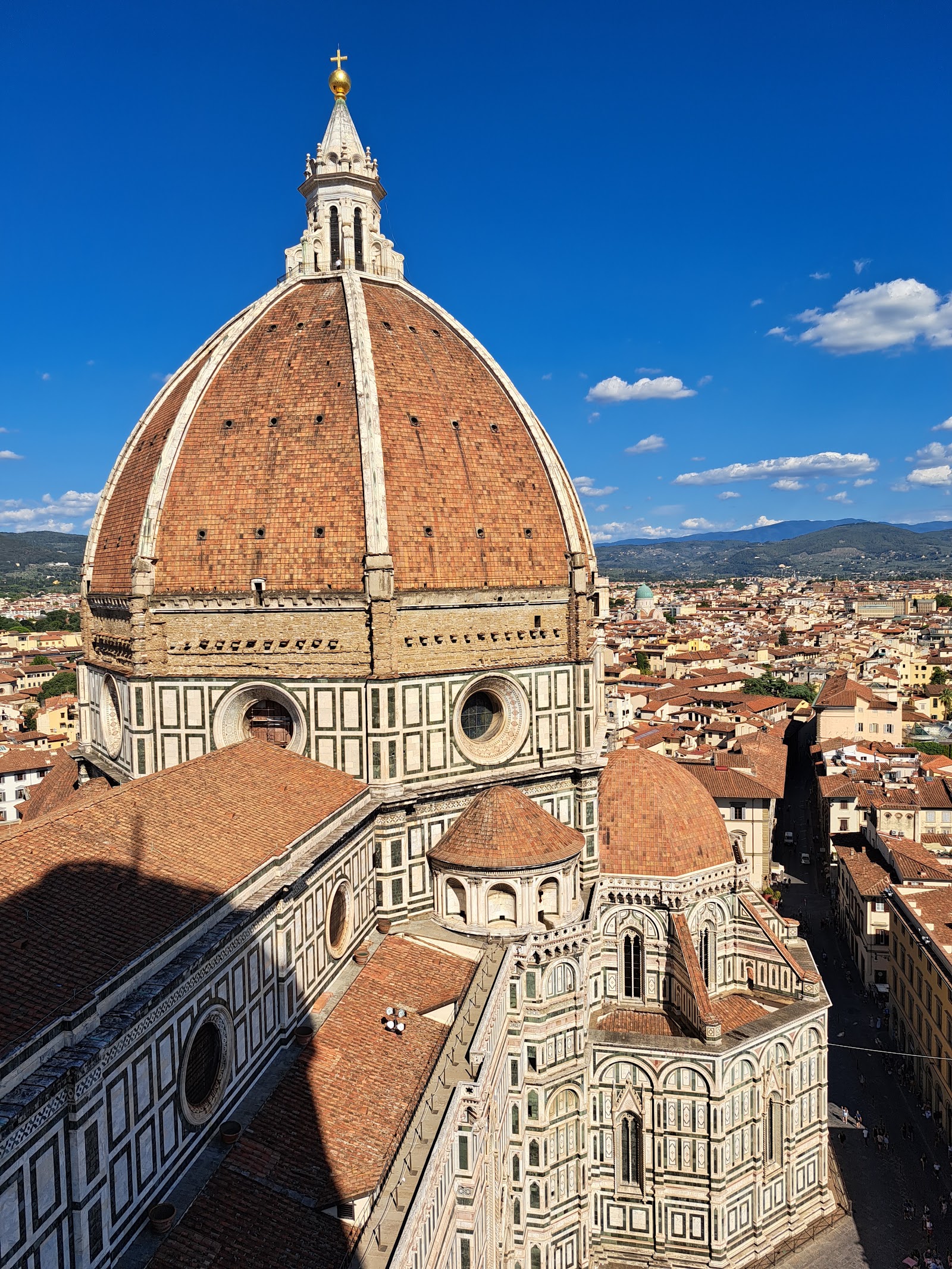
The dome arrives before everything else — you see it from across the city, from hilltops, from train windows — and yet nothing quite prepares you for standing underneath it. Filippo Brunelleschi finished the largest masonry dome ever built in 1436, and it has never been surpassed. The cathedral itself, Santa Maria del Fiore, took nearly a century and a half to complete, its marble skin — green from Prato, white from Carrara, red from Maremma — laid in the 1870s and 1880s in patterns that look almost embroidered from a distance.
Inside, the scale does something strange to sound and light. The fresco covering the dome's interior — the Last Judgment, painted by Giorgio Vasari and Federico Zuccari between 1572 and 1579 — looms overhead in a way that floor-level photographs never capture. Brunelleschi himself is buried in the crypt below, in the remains of the older church of Santa Reparata that the cathedral replaced.
💛 What travellers fall for
People who come back tend to split their visits: the cathedral itself first, free and unhurried, then a separately timed slot for the dome climb — 463 steps through the double-shell structure, with a vertiginous catwalk around the base of the fresco before the view opens at the top. The campanile, Giotto's 85-metre bell tower, gives a different angle on the dome and is often quieter.
The story behind Florence Cathedral (Duomo di Firenze)
The first stone went down on 8 September 1296, with Arnolfo di Cambio as architect. After his death in 1302 work slowed, then stalled. The Arte della Lana, the wool merchants' guild, took over patronage in 1331 and appointed Giotto as master builder in 1334 — he designed the campanile but died in January 1337. Andrea Pisano continued until the Black Death halted everything in 1348. Francesco Talenti resumed in 1349, finished the campanile, and enlarged the whole scheme.
The dome remained unsolved for decades. In 1418 the guild ran a competition; Filippo Brunelleschi, backed by Cosimo de' Medici, beat Lorenzo Ghiberti with a plan to build a double-shell structure without temporary wooden centering. Work began in August 1420 and the cathedral was consecrated by Pope Eugenio IV on 25 March 1436. The marble façade came much later, completed between 1876 and 1887 to a Neo-Gothic design by Emilio De Fabris.
Good to know
Cathedral entry is free, no ticket needed, but the dome requires a timed reservation — book ahead, especially in summer. Cathedral hours run Monday to Saturday 10:15am–3:45pm; Sundays are reserved for worship. The dome and campanile open earlier, from 8:15am on weekdays. Arrive at opening to beat the midday crowds.
Where is Florence Cathedral (Duomo di Firenze)?
More tickets & tours for Florence Cathedral (Duomo di Firenze)
Book directly at the provider
What travellers say about Florence Cathedral (Duomo di Firenze)
The Cathedral of Santa Maria del Fiore was one of my favorite places in Florence. The outside is absolutely stunning, and the colorful marble details look even better in person. I was amazed by how huge the dome is when standing right underneath it. The inside is much simpler than I expected, but it still feels impressive and peaceful. Climbing to the top was definitely worth it for the amazing views over the city. Overall, it’s a must-see spot that made my trip to Florence even more memorable. The atmosphere around the cathedral is lively and full of energy, with people gathering in the square throughout the day. I also enjoyed taking photos because every angle seemed picture-perfect. It’s one of those places that truly lives up to the hype. Ticket is required to visit the top of the dome and recommend to get it in advance.
(Visited December 2025) Although I haven’t had the chance to explore the interior, my experience from the outside of the church was truly awe-inspiring. The structure is absolutely breathtaking, and I can only imagine how much more incredible it would be to see it up close. Its majestic presence is undeniable, and I found myself wanting to take in every intricate detail of the exterior. The photos I captured don’t fully do it justice. Additionally, the lively atmosphere was enhanced by the numerous talented buskers performing outside, adding a delightful musical backdrop to the scene.
The Duomo in Florence absolutely lives up to its reputation. Seeing Brunelleschi’s dome in person is incredible — the scale, detail, and craftsmanship are hard to put into words. The exterior marble façade is stunning from every angle, and the interior has a powerful, historic atmosphere that makes you appreciate how much history is contained within the cathedral walls. Climbing to the top was one of the highlights of the trip; the views over Florence are unforgettable and worth every step. What makes the Duomo special is that it’s not just beautiful architecture — it feels like the heart of Florence. Whether you’re interested in art, history, engineering, or simply amazing views, this is a place that exceeds expectations. I’d strongly recommend booking tickets in advance, especially if you want to climb the dome, because it gets very busy. A must-see experience in Italy.
The Cathedral of Santa Maria del Fiore is an absolute masterpiece and one of the most breathtaking landmarks in Florence. Its magnificent dome, intricate marble façade, and incredible craftsmanship make it a true wonder of Renaissance architecture. Standing in front of it, you can't help but be amazed by its scale and beauty. The atmosphere around the cathedral is vibrant and unforgettable, while the interior reflects centuries of history, art, and faith. A visit to Florence would not be complete without experiencing this iconic cathedral. A must-visit for anyone who appreciates history, architecture, and the timeless beauty of Italy. 🇮🇹
The Santa Maria del Fiore in Florence is a breathtaking masterpiece! Brunelleschi’s grand dome is an architectural wonder, and the marble facade is stunning. Climbing to the top offers unmatched city views. A must-see, historic gem that perfectly captures the heart and soul of the Renaissance.
More of Florence
Discover where to stay, what to do and the best deals for your trip.
Explore Florence →More attractions in Florence
All of Florence →


Background adapted from Wikipedia (CC BY-SA) · map data © OpenStreetMap contributors · ratings & place photos via Google · other photos with per-image credit. Ticket links may earn us a commission at no extra cost to you.