
Palazzo Reale
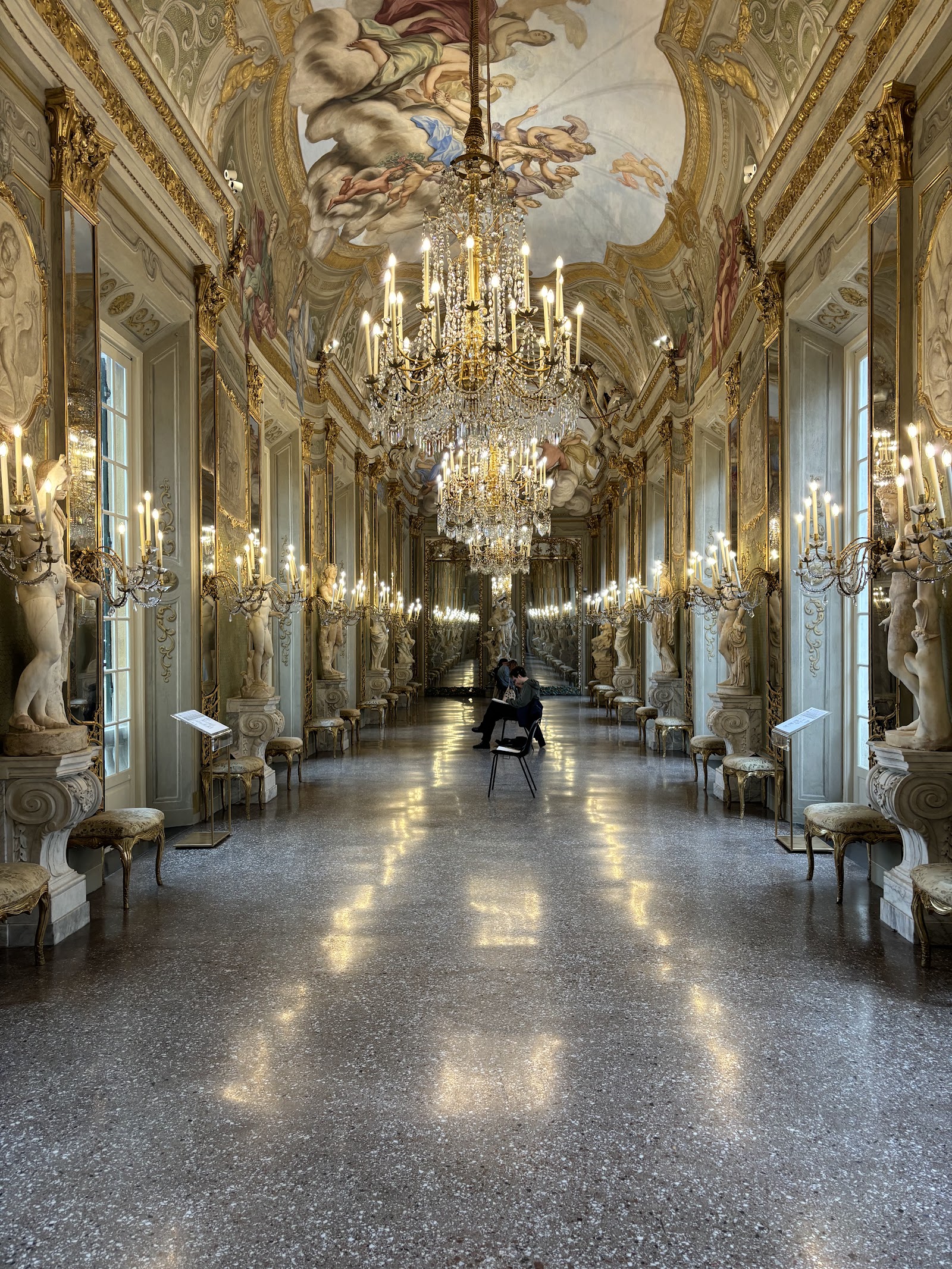
On Via Balbi 10, behind a facade that gives little away, the Palazzo Reale opens into a sequence of rooms that accumulated wealth, taste and ambition across three centuries. The Hall of Mirrors — designed by Domenico Parodi in the 1720s and 1730s with one eye on Versailles and another on Rome — is the kind of space that makes you stop mid-step.
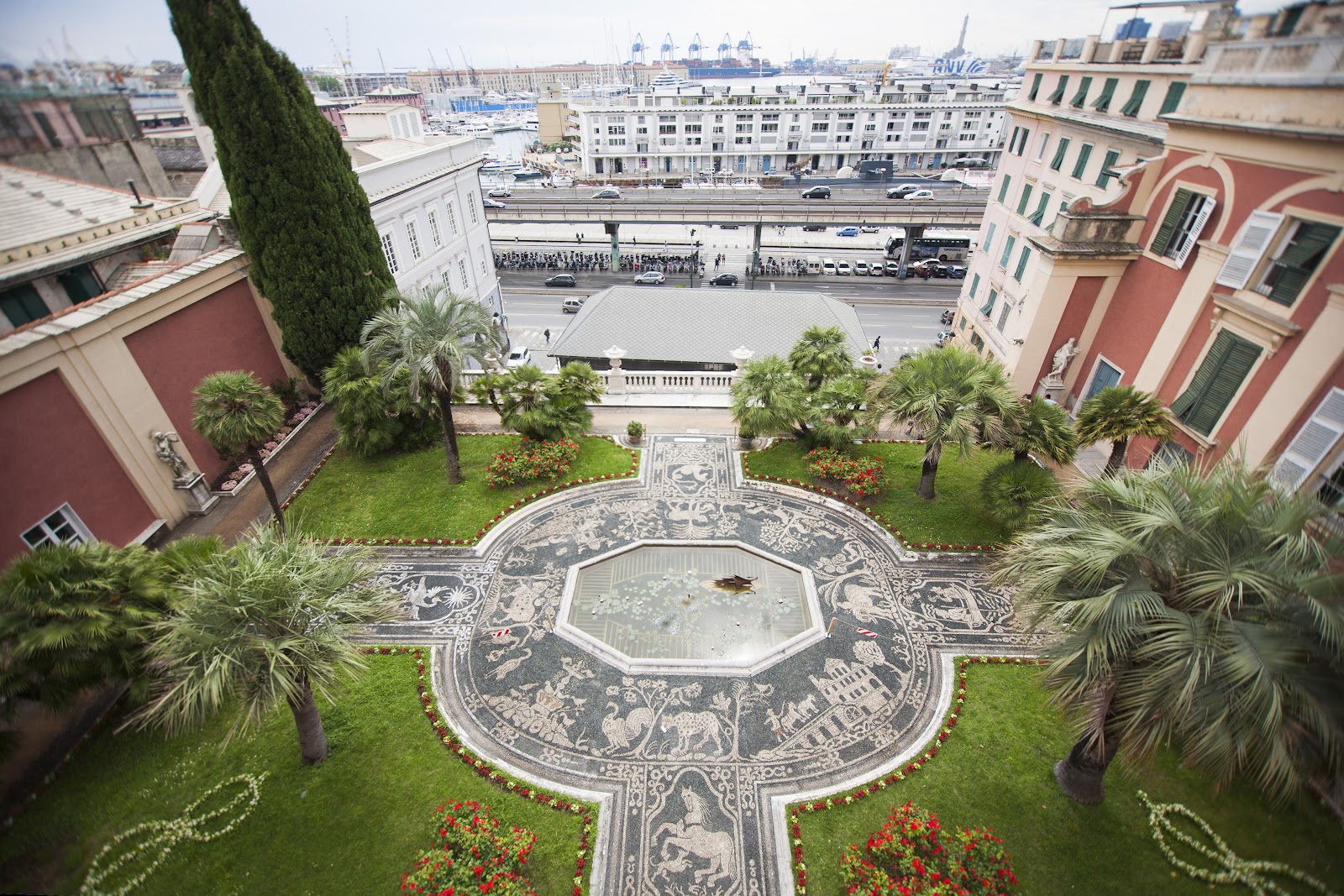
Then there is the hanging garden: a terrace suspended above Via Pré and the old port, its floor laid in black and white pebbles salvaged from the Turchine Monastery in 1739. The mosaic figures — a miller, a shepherd, a solar phoenix, a centaur — sit at the edges of an octagonal pool, the sea somewhere below.
💛 What travellers fall for
People who come back tend to linger in the hanging garden longer than they planned, and to spend time with the Van Dyck and Guercino canvases rather than moving briskly through the state rooms. Tuesday afternoons, when the palace opens at 1:30 p.m., are noticeably quieter than weekend mornings.
The story behind Palazzo Reale
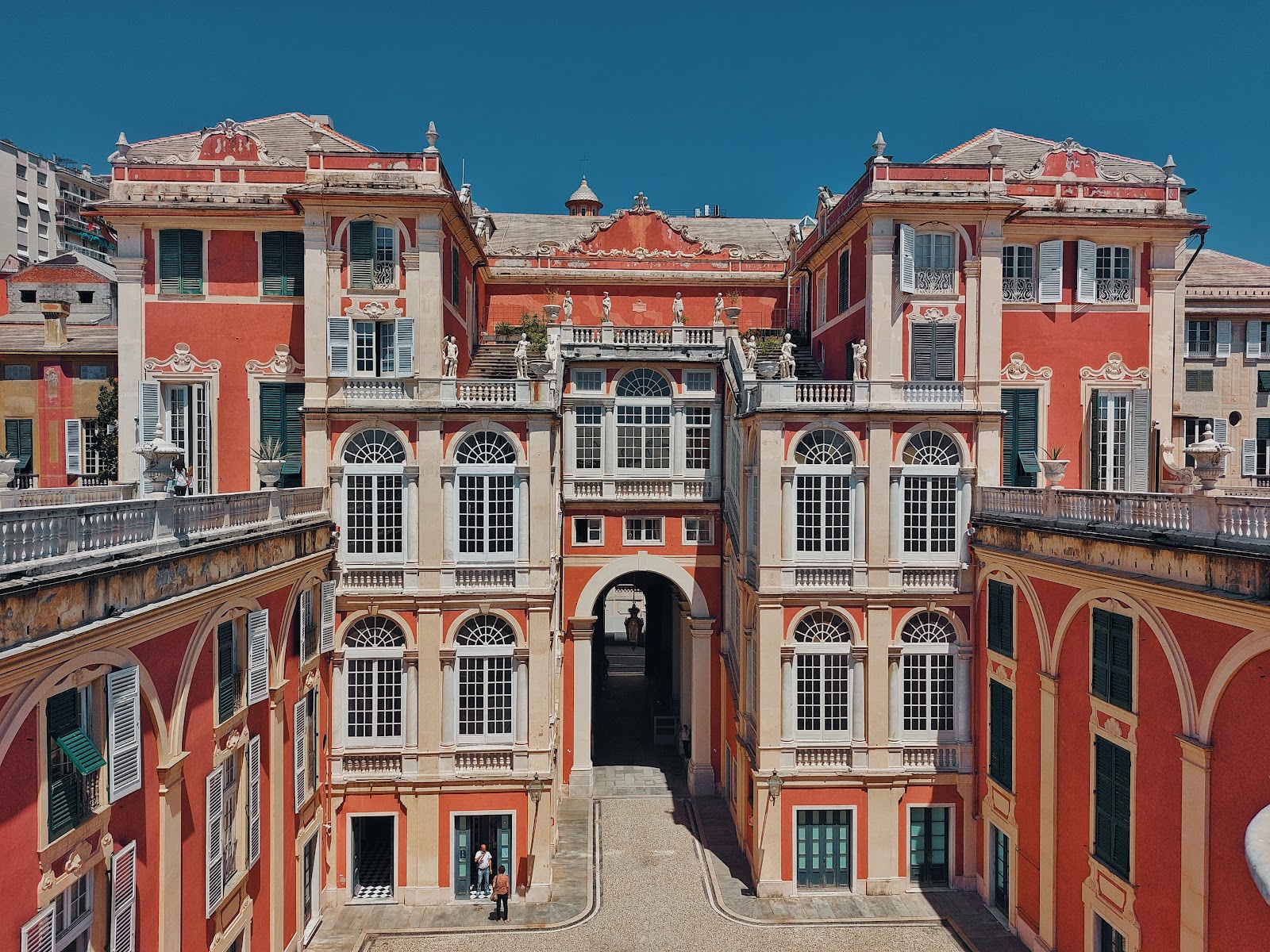
The Balbi family, Genoese financiers of considerable reach, began building here in 1618. Stefano Balbi formally presented plans for a renewed campaign on 4 February 1643; architects Pier Francesco Cantone and Michele Moncino carried the work through to 1655. In 1677, Eugenio Durazzo acquired the palace and commissioned Carlo Fontana to enlarge it, pulling it further toward the grandeur the Durazzo name demanded.
In 1823 the Royal House of Savoy purchased it, and the palace became a Savoyard residence — Joseph II of Austria had passed through in 1784, Napoleon in 1805, each visit leaving the building with a slightly more storied air. Since 1919 it has been state property, its rooms and art collection open to the public.
Good to know
From Piazza Principe station it is a five-minute walk along Via Balbi. Tickets cost €11 and are valid for Palazzo Spinola too. Under-18s enter free, as does everyone on the first Sunday of the month. Budget at least two hours. Note that the Grand Noble Floor is closed for lighting renovation until April 2026.
Where is Palazzo Reale?
More tickets & tours for Palazzo Reale
Book directly at the provider
What travellers say about Palazzo Reale
Beautiful historical palace in Genoa with elegant rooms, impressive architecture, and a lovely view from the terrace. The place gives a real sense of the city’s rich history and royal atmosphere. Definitely worth visiting if you enjoy art, history, and classic Italian palaces.
I really enjoyed visiting the Royal Palace in Genoa. The atmosphere is amazing—it truly feels like stepping back in time when you walk through the beautifully decorated rooms. I was especially impressed by the details and the garden overlooking the port. It’s an elegant and peaceful place, definitely worth a visit if you’re in the city. Too bad only first floor was opened to visit. 🥰
Large palace of which the construction began in the 17th century by clever financier Stefano Balbi. When the Durazzo family bought the palace around 1678 they enlarged and beautified it. Early 18th century large stairwells and a terrace was added making it one of the biggest buildings in Genoa. In 1824 it became the Royal Residence for King Vittorrio Emanuelle I who put a royal stamp on the building. The 2nd floor with impressive decorated rooms is open to visitors. You can see the original frescoes, stuccoes, paintings, sculptures, furniture and ornaments that belonged to the noble and royal families who lived in the palace. At the back is a terrace from which you can see the harbour.
Absolutely worth it. Never seen such amazing sculptures and the design is extraordinarily beautiful. The paintings are amazing as is the tapestry. The sculpture room stuck with me though, and it was by far one of the most beautiful rooms I ever saw such a beautiful room with all the white and gold designs. Go there if you're in Genova, and I promise you won't regret it. Go and admire the art and history of the pallatzo
“Rude security guard damages palace reputation & visitor experience” I am writing this comment to express my deep disappointment regarding a recent encounter with a female security staff member at the Palazzo Reale di Genova. While appreciating the stunning beauty and historical significance of the Palace, my visit was severely marred by the unnecessarily rude and confrontational manner of one of your guards. The staff member in question was a middle-aged woman with short brown hair and black-rimmed glasses. I was merely taking a few personal photos/selfies to commemorate my visit—a standard, harmless activity for any tourist. This guard approached me and aggressively questioned my actions, asking: "Why do you need to take so many photos of yourself?" She then escalated the situation by bringing up unrelated and unsettling stories about previous visitors being prosecuted for photography inside the palace. I have traveled extensively and visited dozens of palaces and historical sites across over different European countries, including renowned venues like the Palace of Versailles. This is the first time in all my travels that I have encountered such an unwarranted and aggressive reaction from staff regarding simple, non-intrusive personal photography. This behavior is completely unacceptable and creates a hostile environment for paying guests. Tourists visit historical sites to appreciate them, and taking a few photos is a fundamental part of the modern museum experience. It is truly no wonder that the palace seemed relatively empty of visitors during my time there. If this is the standard of visitor interaction, it actively discourages people from entering and enjoying this magnificent national treasure. I urge the management of the Palazzo Reale to immediately address the customer service standards of its security personnel, particularly the guard in question, to ensure all guests are treated with the respect and courtesy they deserve.
More of Genoa
Discover where to stay, what to do and the best deals for your trip.
Explore Genoa →More attractions in Genoa
All of Genoa →
Background adapted from Wikipedia (CC BY-SA) · map data © OpenStreetMap contributors · ratings & place photos via Google · other photos with per-image credit. Ticket links may earn us a commission at no extra cost to you.