
Palazzo Pretorio
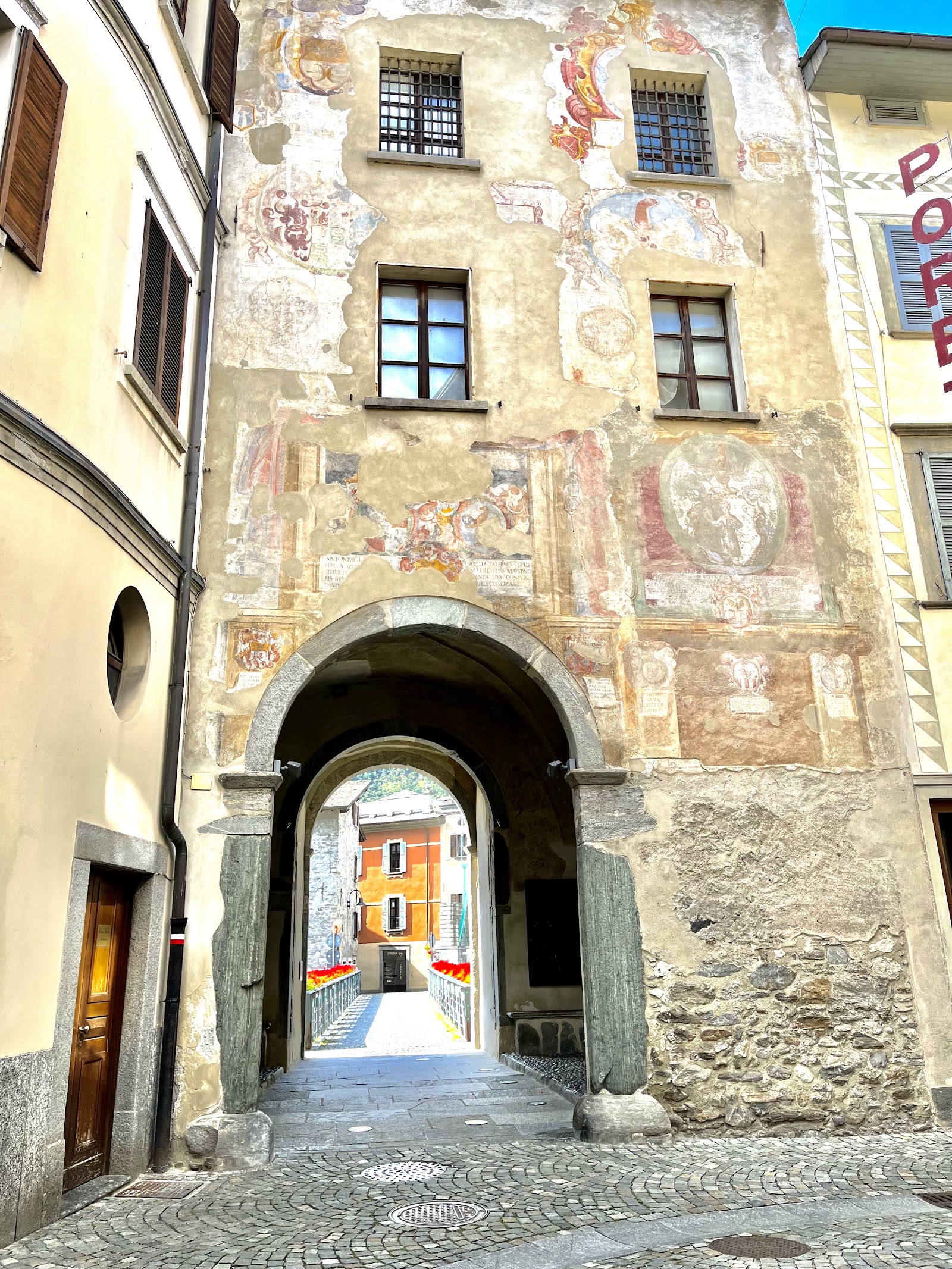
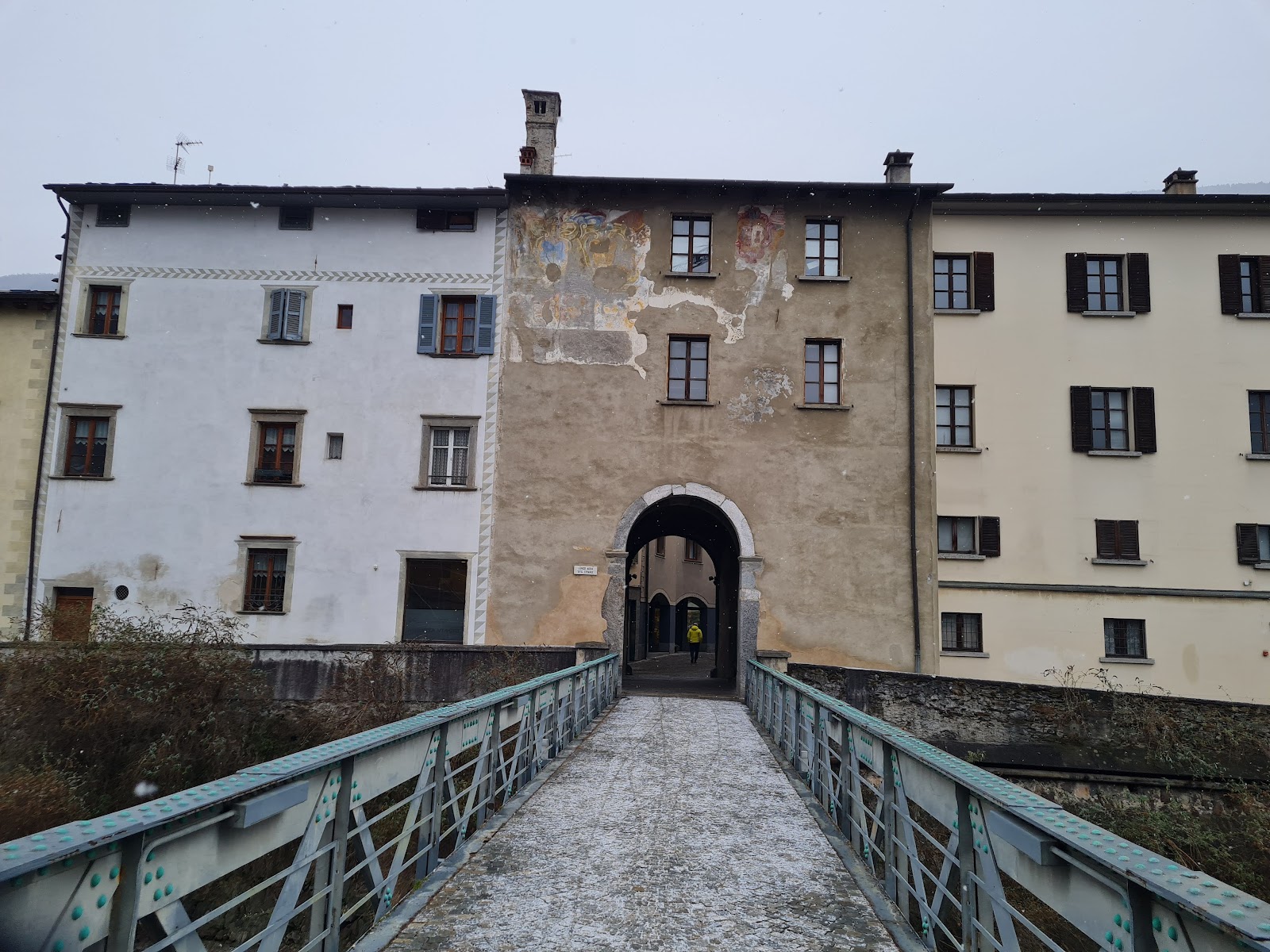
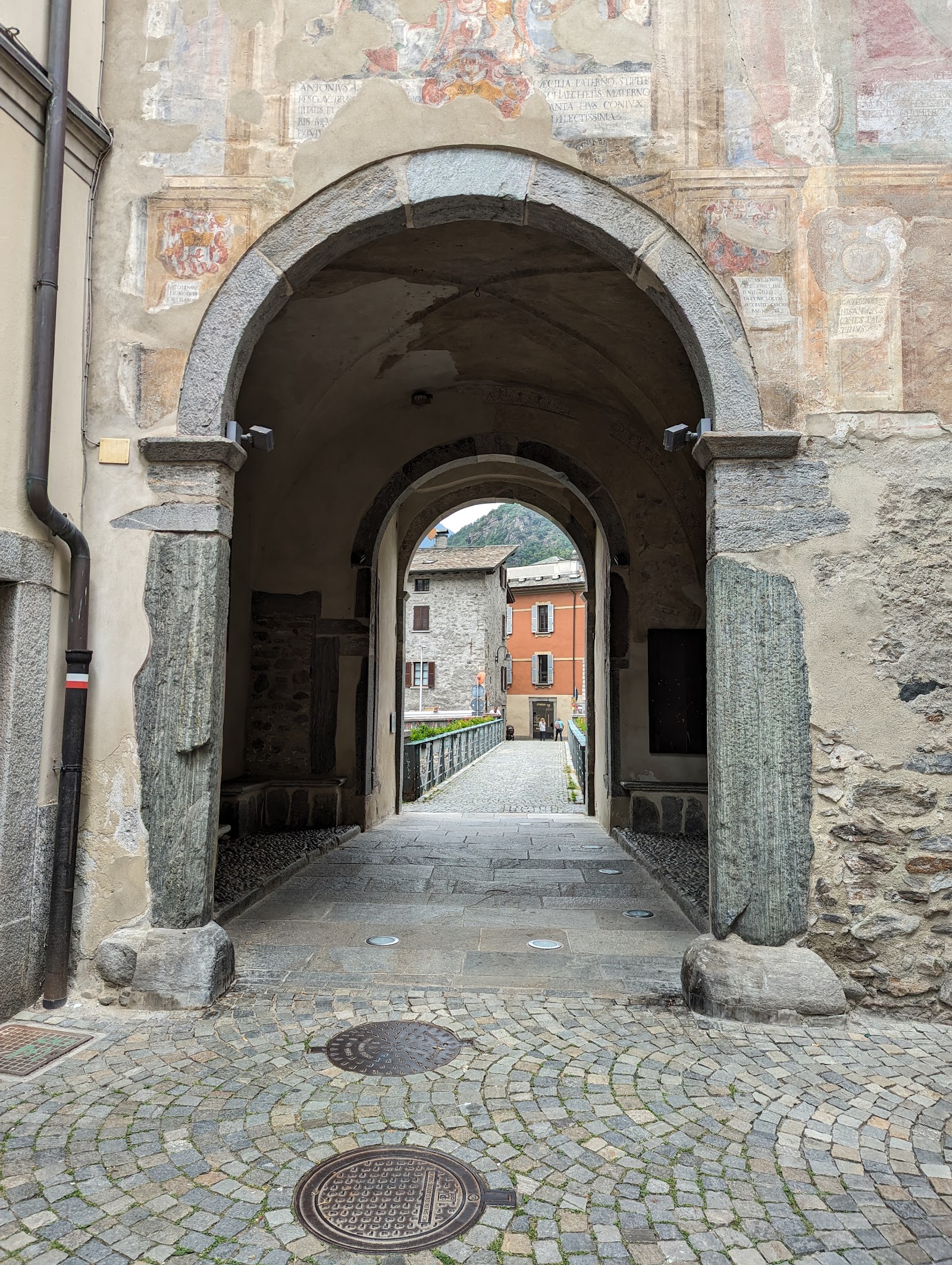
The main portal of Palazzo Pretorio is dated 1553, its stone cut in diamond-point rustication that still catches the afternoon light across Piazza Campello. Step through it and the city's traffic falls away into an internal courtyard where double loggias run on two levels and graffito motifs decorate the walls in patterns drawn from the valley's own 16th-century architecture.
This U-shaped building has been many things — a Pellegrini family residence, the seat of Grigione governors who painted their coats of arms into the entrance hall as a matter of custom, a Napoleonic tribunal, and now Sondrio's municipal offices. The layers haven't been smoothed over so much as accumulated.
💛 What travellers fall for
Those who return tend to time a visit for an open-doors event, when the Stüa Rigamonti becomes accessible — a room entirely lined and ceilinged in carved and inlaid wood, one of only three public stüas in Sondrio. The Info Point inside the portico is a practical first stop for anyone planning the rest of the historic centre.
The story behind Palazzo Pretorio
The Pellegrini family built the palazzo across the 15th and 16th centuries as a private residence. In 1552 the Comunità di Valle purchased it, and the following year the portal was set in place — the date is still legible in the stone. The Grigione government then acquired it in the second half of the 16th century, expanding it into the seat of the Governor, Judge, and Chancellor. Each governor added his coat of arms to the entrance hall and justice chamber, a practice that ran from 1563 into the early 18th century.
The building was partially demolished between 1815 and 1820 to widen Corso Regio, then substantially restored from 1915 to 1917. Engineer Antonio Giussani of Como conceived the historicist project; painter Giovanni Vanini executed the façade decorations, borrowing ornamental motifs from local 16th-century architecture. The seven Visconti-Sforza crests and the municipal coats of arms now displayed on the façade date from that restoration.
Good to know
The exterior and courtyard are freely accessible; the interior requires a guided tour, a special event, or a direct request via cultura@comune.sondrio.it or 0342 526255. Sondrio train station is about ten minutes on foot. The piazza is compact — an hour outside is plenty; budget two for a guided interior visit.
Where is Palazzo Pretorio?
More tickets & tours for Palazzo Pretorio
Book directly at the provider
What travellers say about Palazzo Pretorio
Love this small little town. From the river, the mountain views, the old buildings, and the friendly people, everything has been wonderful. Having a great time strolling around here and taking in the charm of the area. The atmosphere is relaxing, the scenery is beautiful, and there is always something interesting to see around every corner. Overall, a lovely place to visit and explore. Highly recommended.
a great part of town to walk and explore. you'll never know what you might find.
Palazzo Pretorio [16th-17th centuries] Former seat of the ducal and later Grisons podestàs. Noteworthy are the solemn portal and the frescoes in the entrance hall, which attest to the presence of Grisons magistrates, immortalized in their coats of arms with the allegorical figure of Justice.
Very beautiful building. Worth seeing.
More of Sondrio
Discover where to stay, what to do and the best deals for your trip.
Explore Sondrio →More attractions in Sondrio
All of Sondrio →
Background adapted from Wikipedia (CC BY-SA) · map data © OpenStreetMap contributors · ratings & place photos via Google · other photos with per-image credit. Ticket links may earn us a commission at no extra cost to you.