
Palazzo della Giudecca
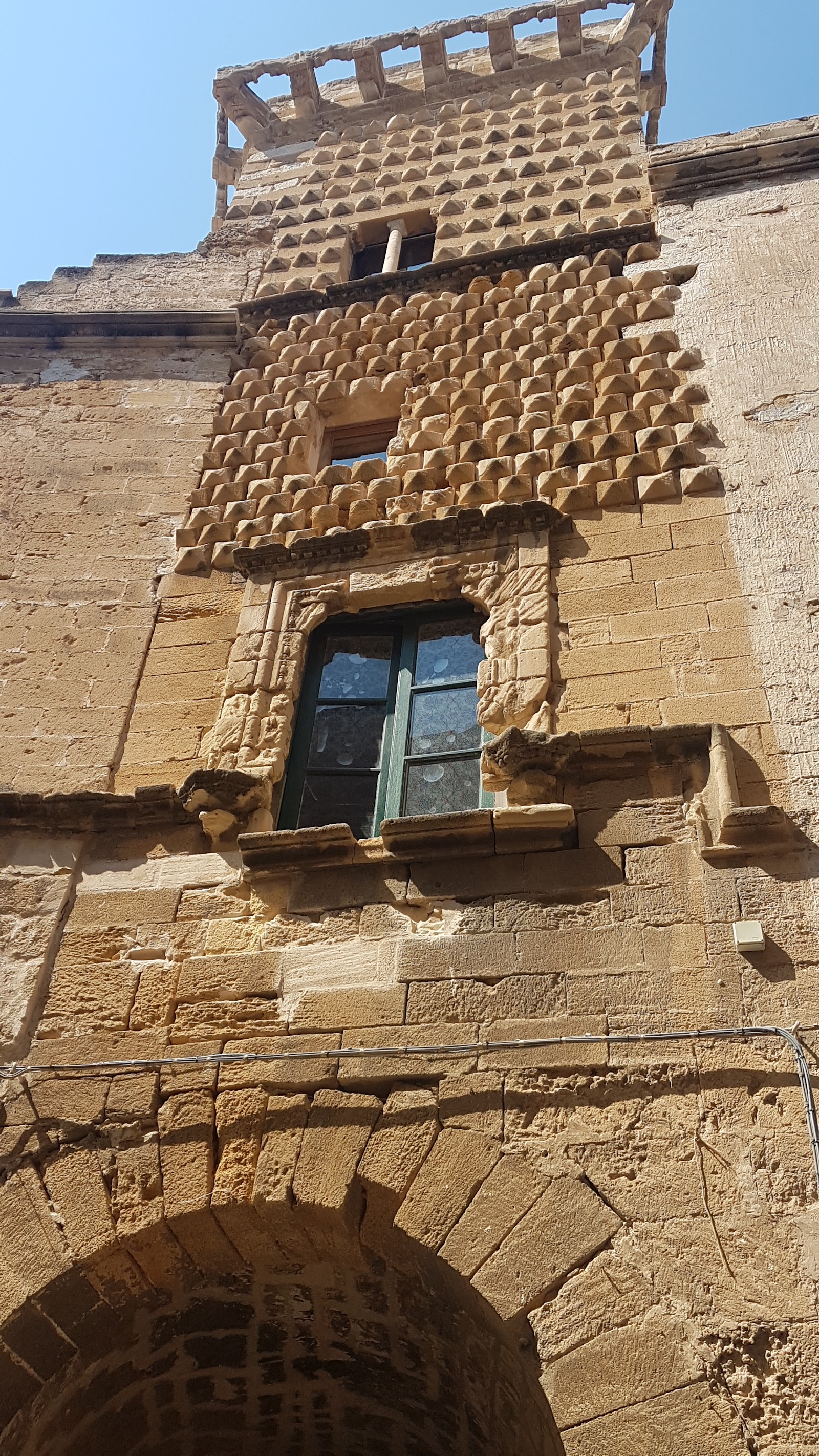
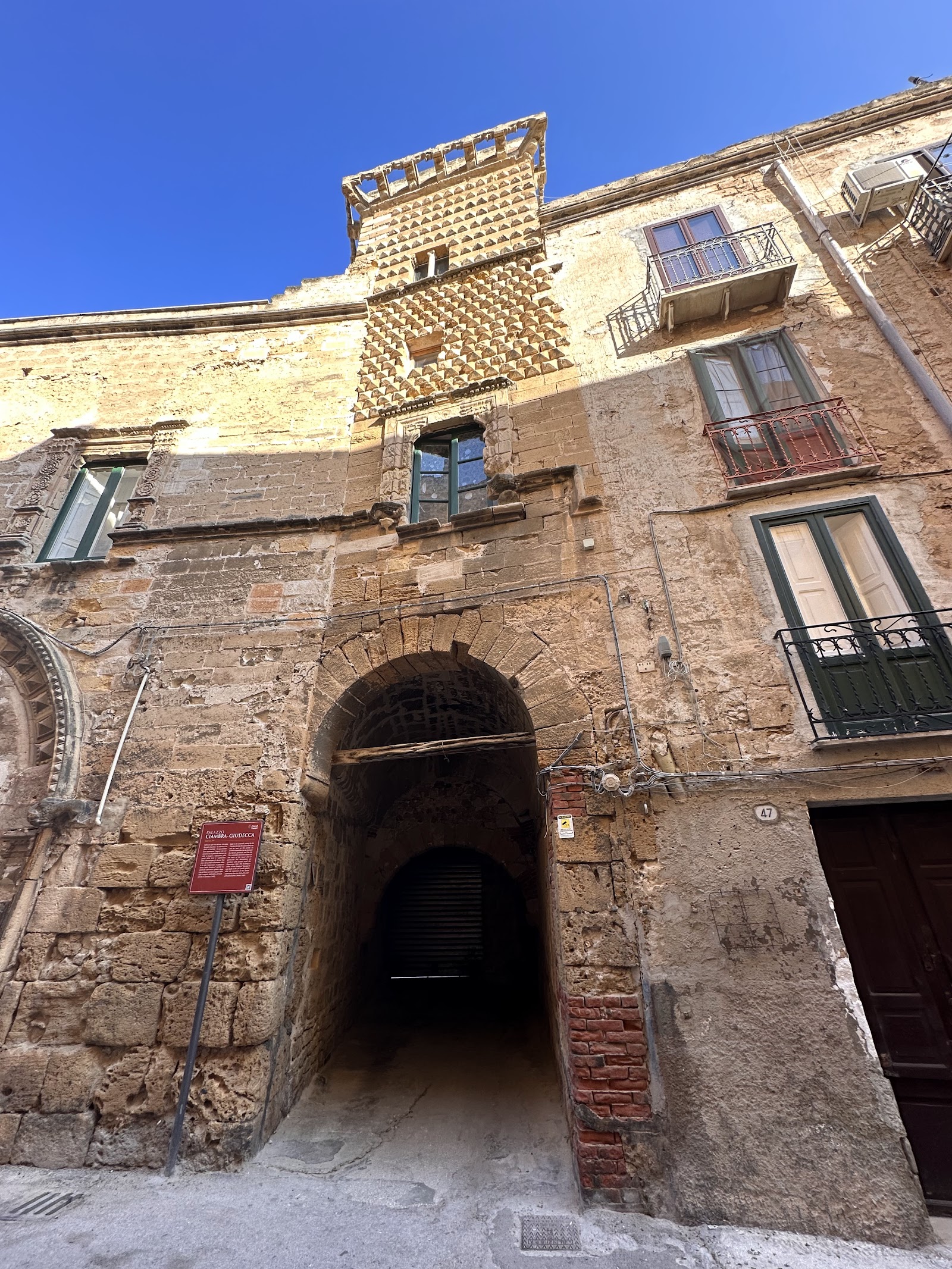
On a narrow street in Trapani's old Giudecca quarter, the Palazzo della Giudecca stops you with its walls. The stone is cut in a diamond-point pattern — a technique borrowed from Spanish court architecture — and above the arched portal, a carved deer stands at the foot of a tree: the coat of arms of the Ciambra family, who built this place in the early sixteenth century.
The palazzo sits where a synagogue once stood, founded in 1363 and demolished after the 1492 edict that expelled Jews from Sicily. That layering — Jewish quarter, Renaissance palace, fortified tower later pressed into city defences — is still legible in the stonework if you stand still long enough.
💛 What travellers fall for
People who come back tend to time their visit for late afternoon, when the low western light drags shadows across the diamond-cut ashlar and the Plateresque window details sharpen. The street is tight and the buildings on either side are in varying states of decay, which only makes the Ciambra façade read more clearly against them.
The story behind Palazzo della Giudecca
Before this palazzo existed, the site held a synagogue founded in 1363, at the heart of Trapani's medieval Jewish community. When Ferdinand and Isabella's 1492 edict expelled Jews from Sicily, the quarter emptied. The Ciambra family — Vincenzo and Diego Ciambra are the documented names — built their palace here in the early sixteenth century, drawing on Gothic, Sicilian Plateresque and Spanish influences that were circulating through western Sicily at the time.
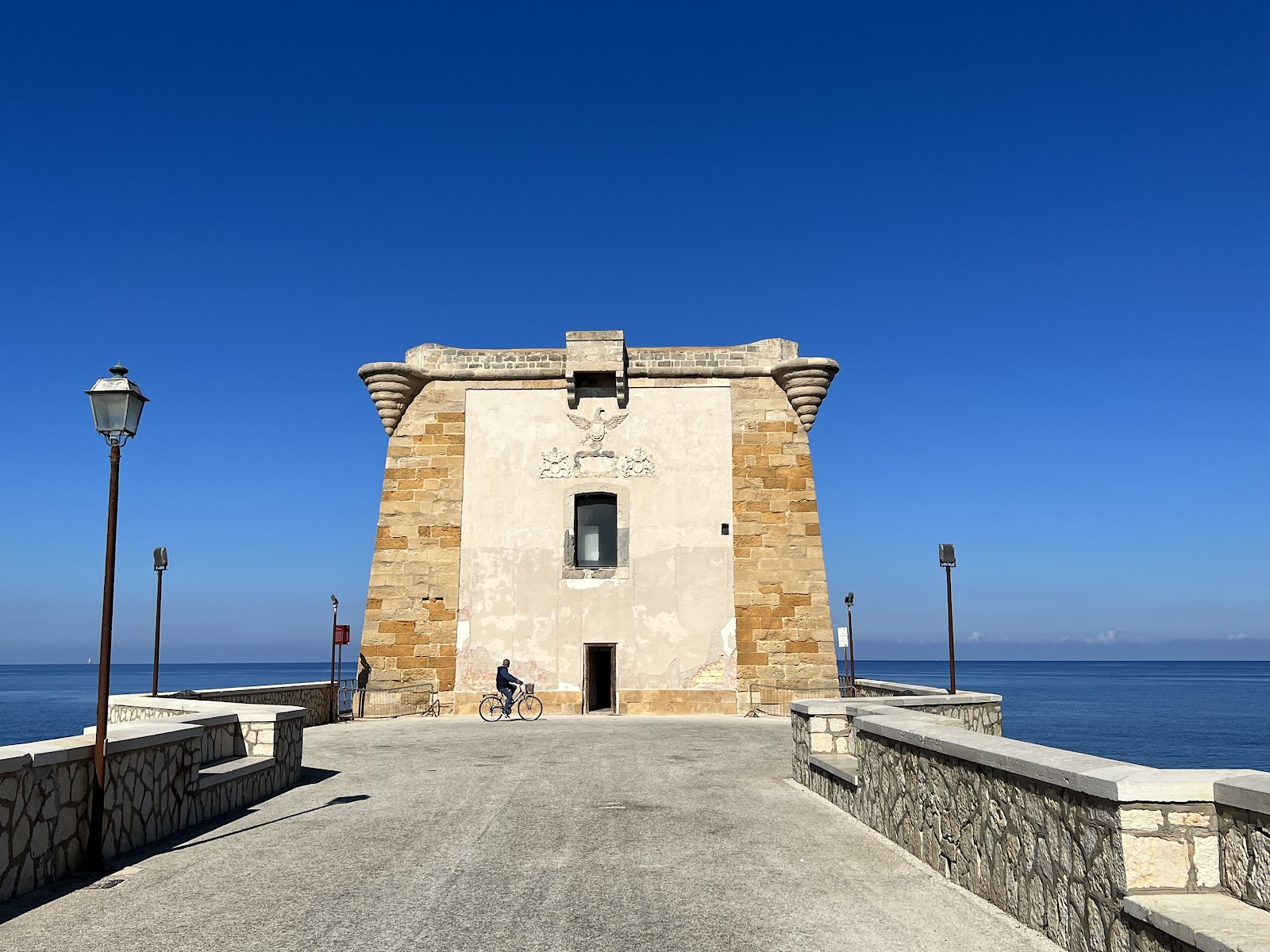
The tower was later absorbed into Trapani's eastern defensive perimeter, becoming one of five urban towers in the city's fortification system. Engineer Decio Marrone carried out restoration works in 1923–24, and in 1929 the building was entered in Italy's national register of historic monuments. It remains privately owned, which has complicated subsequent conservation efforts.
Good to know
The palazzo is a private residence — interior access is not available. Exterior viewing from Via Giudecca takes around ten to fifteen minutes. The nearest bus stops on the AST network are a two-minute walk away. Spring (mid-April to mid-May) and early autumn offer the most comfortable conditions.
Where is Palazzo della Giudecca?
More tickets & tours for Palazzo della Giudecca
Book directly at the provider
What travellers say about Palazzo della Giudecca
The Giudecca Palace hides a fantastic history of its past from the Jews to the Ciambra family. Today a private residence. Its facade contains charm and mystery
A little taste of the Jews communities in Trapani. If u like to take a stroll it is ok.
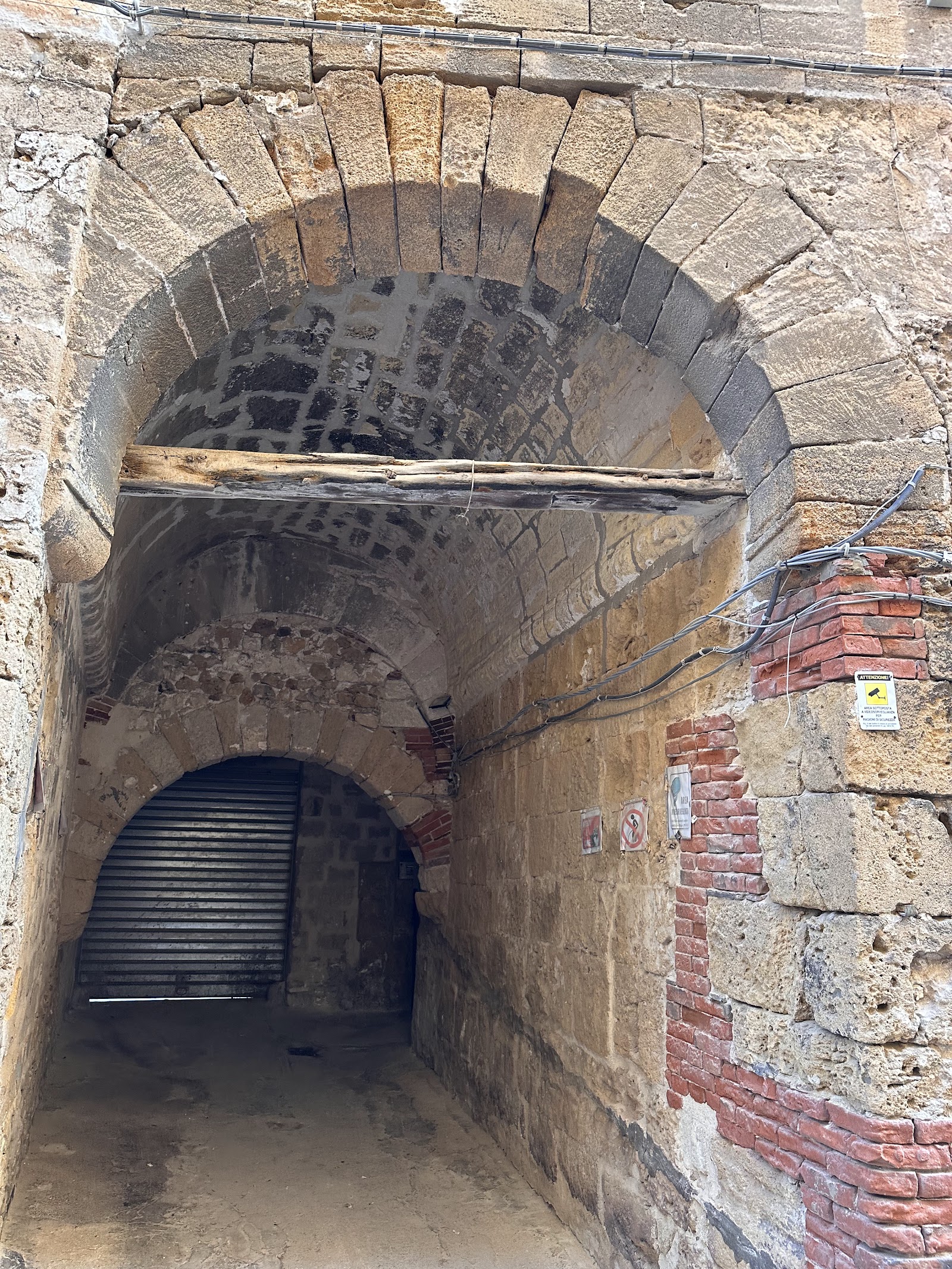
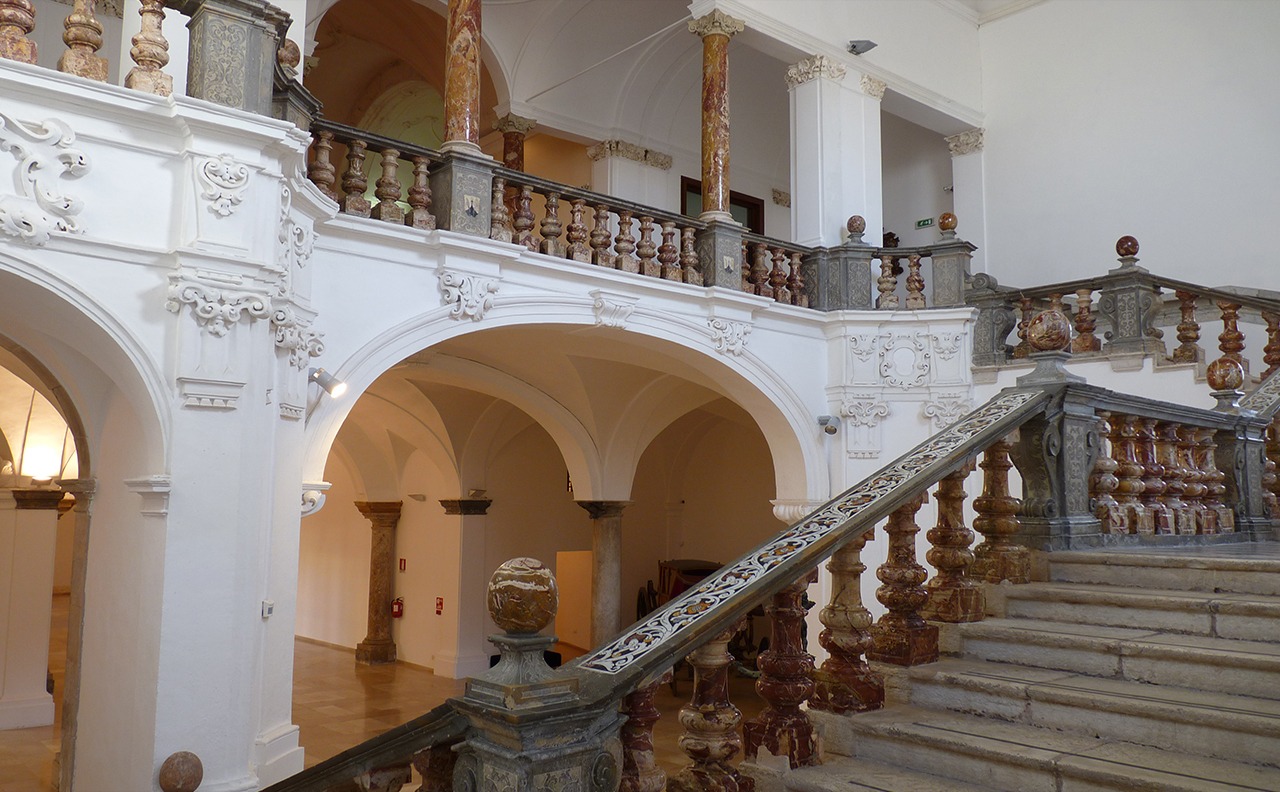
Only visible at certain times of the year, the façade remains the only visible part, apart from the staircase. The rest of the building has been completely ruined and is currently used as a residence by the current owners. Don't expect much beyond its fascinating history, but otherwise, don't spend a cent visiting it, as there's absolutely nothing to see beyond these few photos you can already see. Take a stroll underneath and you'll see it all. As for the history, many Trapani enthusiasts will be able to tell you much more.
Buena ubicación, departamento completo, pero con escalera no ancha.
The windows are very beautiful... it should be restored!
More of Trapani
Discover where to stay, what to do and the best deals for your trip.
Explore Trapani →More attractions in Trapani
All of Trapani →

Background adapted from Wikipedia (CC BY-SA) · map data © OpenStreetMap contributors · ratings & place photos via Google · other photos with per-image credit. Ticket links may earn us a commission at no extra cost to you.