
Palazzo Comunale di Rieti
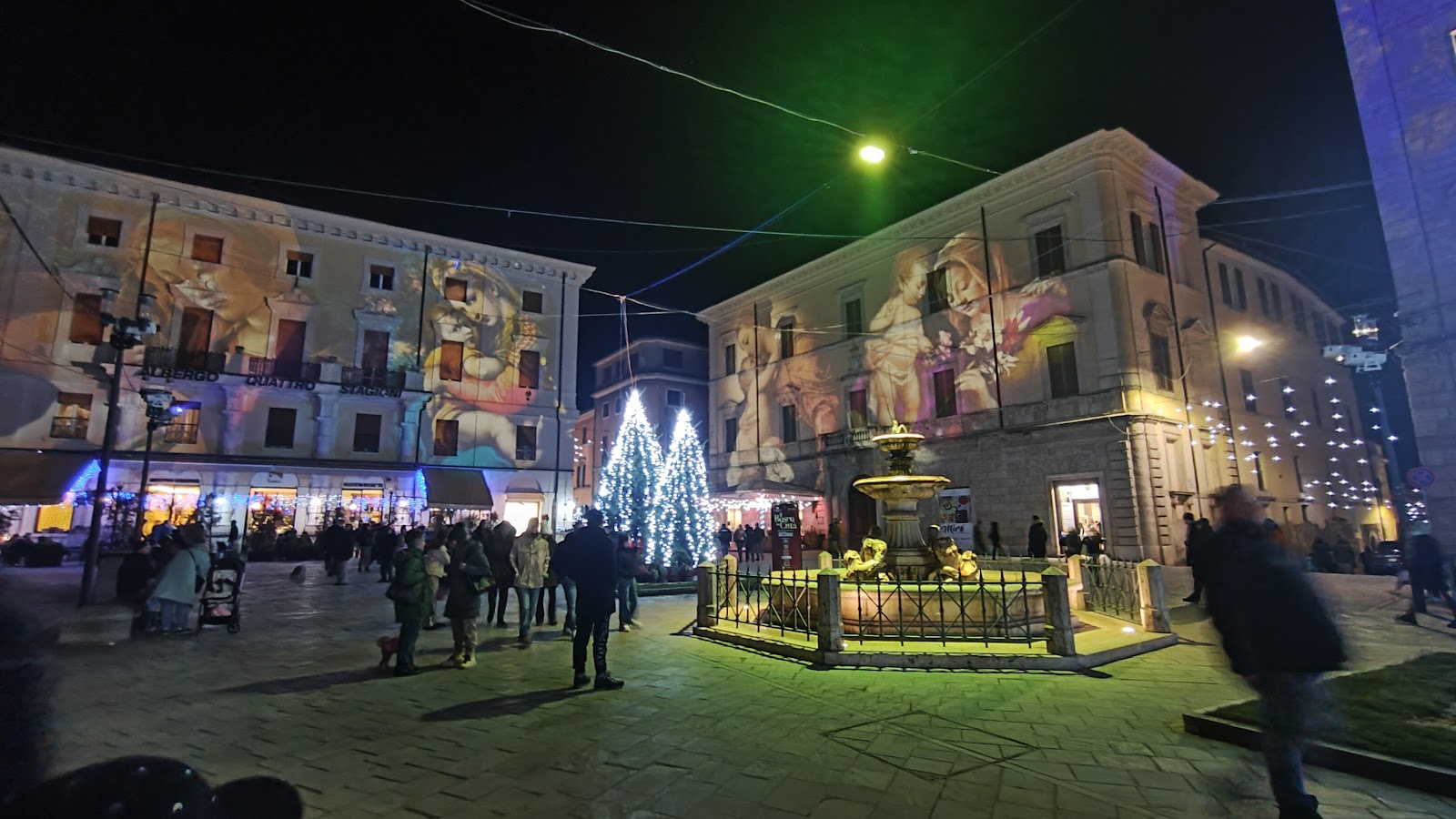
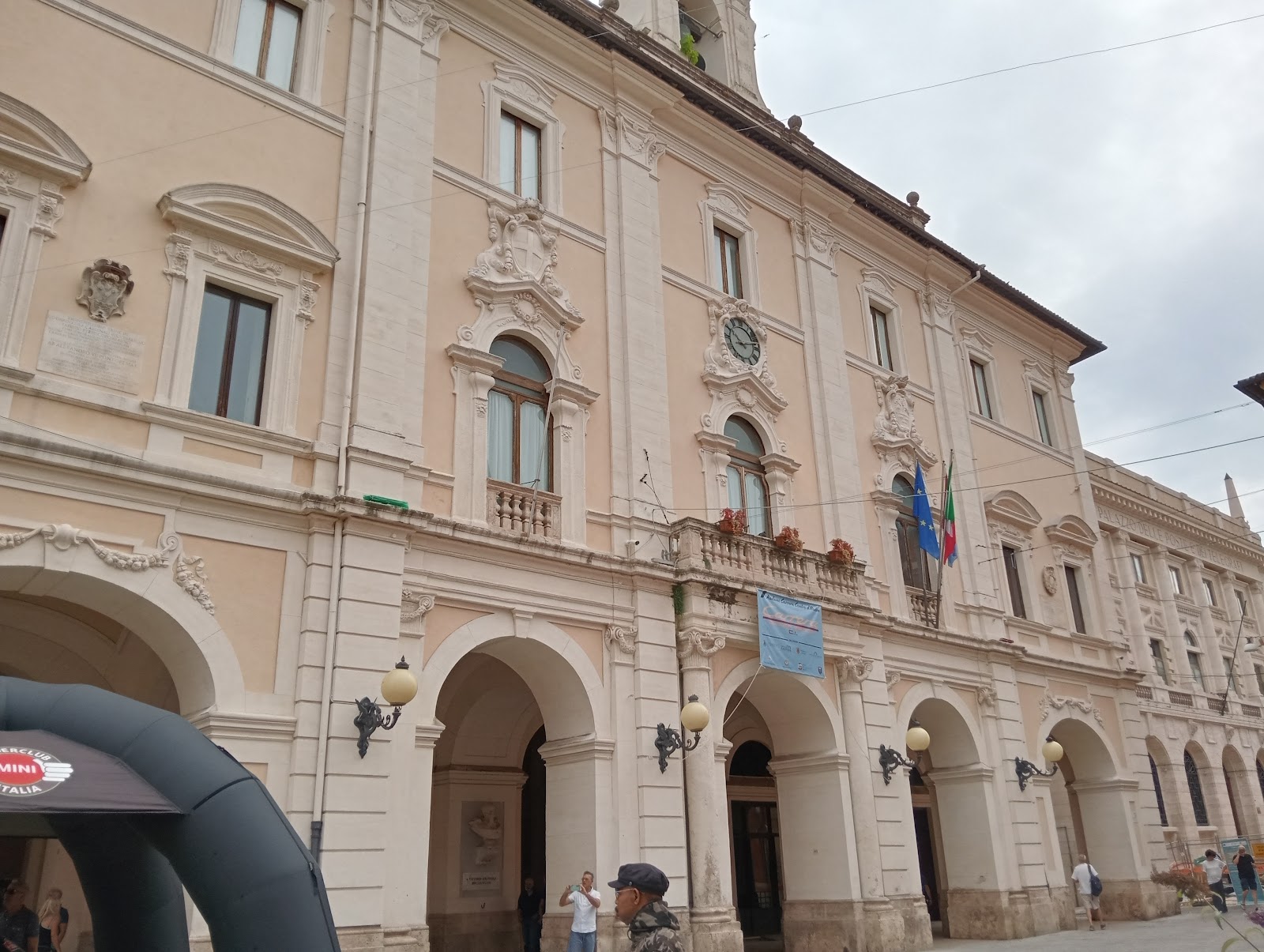
Stand under the ground-floor portico of Rieti's Palazzo Comunale and you'll notice, tucked against one wall, a small fountain whose basin is an ancient stone capital — reused, matter-of-fact, the way Italian towns tend to repurpose their own past. The palace looks out over Piazza Vittorio Emanuele II from a facade that is itself a layered argument: late Baroque from Filippo Brioni's 1748–1752 rebuild, then Cesare Bazzani's early-20th-century additions, the whole thing stitched together across centuries of civic ambition.
The portico walls are lined with plaques and monuments to Rieti's history, including paired 1883 busts of Garibaldi and Vittorio Emanuele II by Paolo Bartolini and Tito Giannini. Upstairs, the Sala Consiliare is frescoed by Antonino Calcagnadoro in an Art Nouveau register that feels genuinely surprising in a medieval hill town.
💛 What travellers fall for
People who linger here tend to find their way up to the second floor, where the Museo Civico's historic-artistic section holds works by Antoniazzo Romano and Luca di Tommè that most visitors to Lazio never see. The tourist office sits right in the portico — worth a stop before you cross the square.
The story behind Palazzo Comunale di Rieti
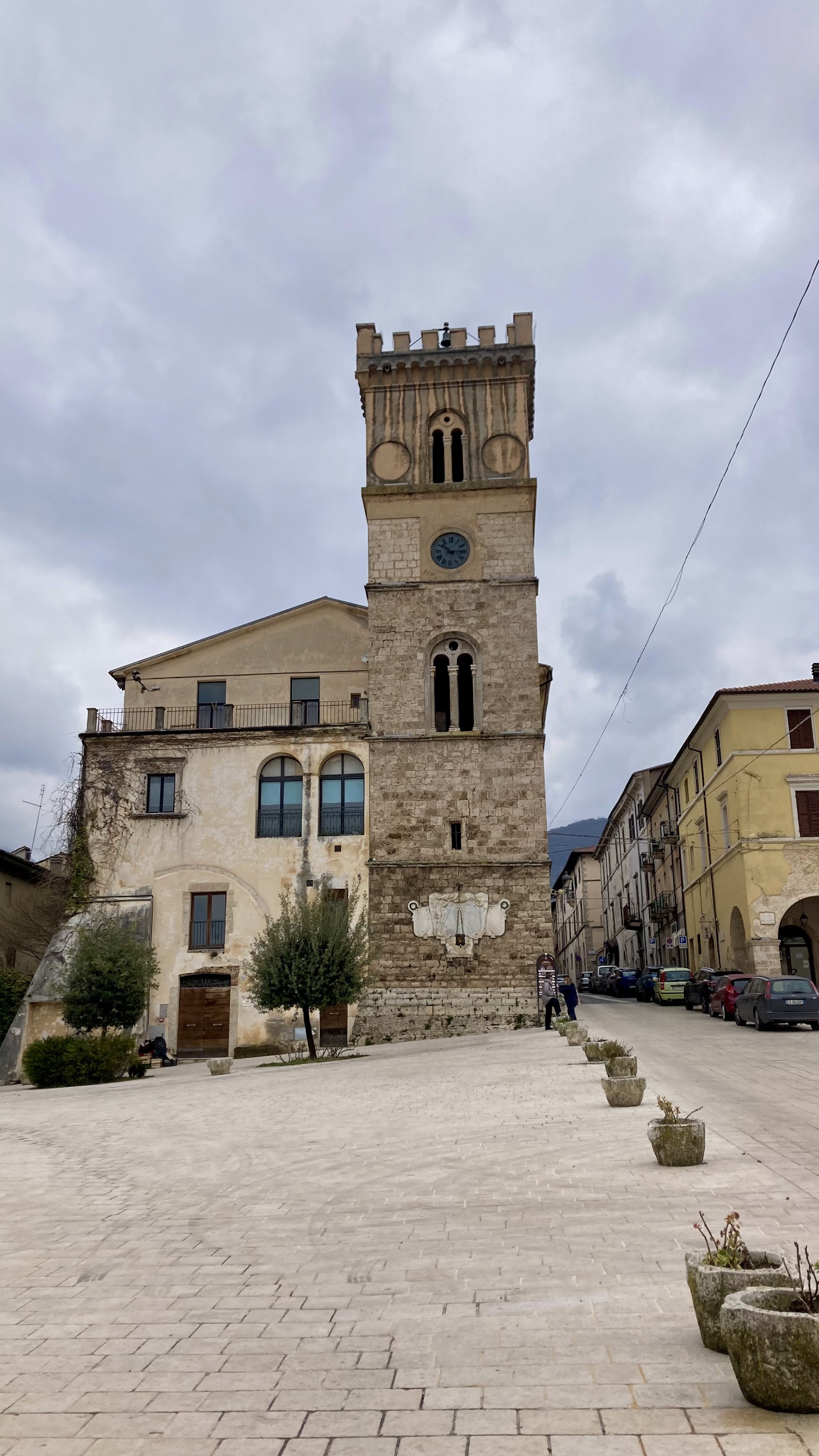
The building began in the second half of the 13th century as the seat of Rieti's free commune — the Palazzo dei Priori. In 1563, Jacopo Barozzi da Vignola redesigned the section facing Via Pescheria. The current facade came from Filippo Brioni's reconstruction of 1748–1752, with the campanile added by Giuseppe Subleyras and frescoes by Vincenzo Manenti shortly after.
An 1898 earthquake badly damaged the structure and brought down the campanile bell. Architect Cesare Bazzani led the rebuilding from 1909, with interior Art Nouveau decoration by Antonino Calcagnadoro. The western arcade opened in 1930, the eastern in 1953. The rationalist Torre Civica — travertine-clad, five stories, 32 metres — was added by Giuseppe Battistrada in 1940. A 2014 restoration installed new lighting and fitted the civic tower with a seismic damper.
Good to know
The palace is central to Rieti's old town and walkable from everything. Museum hours and ticket prices aren't reliably posted online — check at the portico-level tourist office on arrival. Two direct trains run from Rome on weekdays, but the line closes late July through August; COTRAL buses cover the route and run on time.
Where is Palazzo Comunale di Rieti?
More tickets & tours for Palazzo Comunale di Rieti
Book directly at the provider
What travellers say about Palazzo Comunale di Rieti
It dates back to the 13th century. The Town Hall houses the Town Hall and the Civic Museum's Historical-Artistic Section. The current building incorporates the old 13th-century Palazzo dei Priori, as can be seen from the walls on the eastern side, and is the result of successive expansions and consolidations up until the 20th century. The building dates back to the 13th century, but has been radically modified in the following centuries; in the 16th century, it was restored by Vignola.
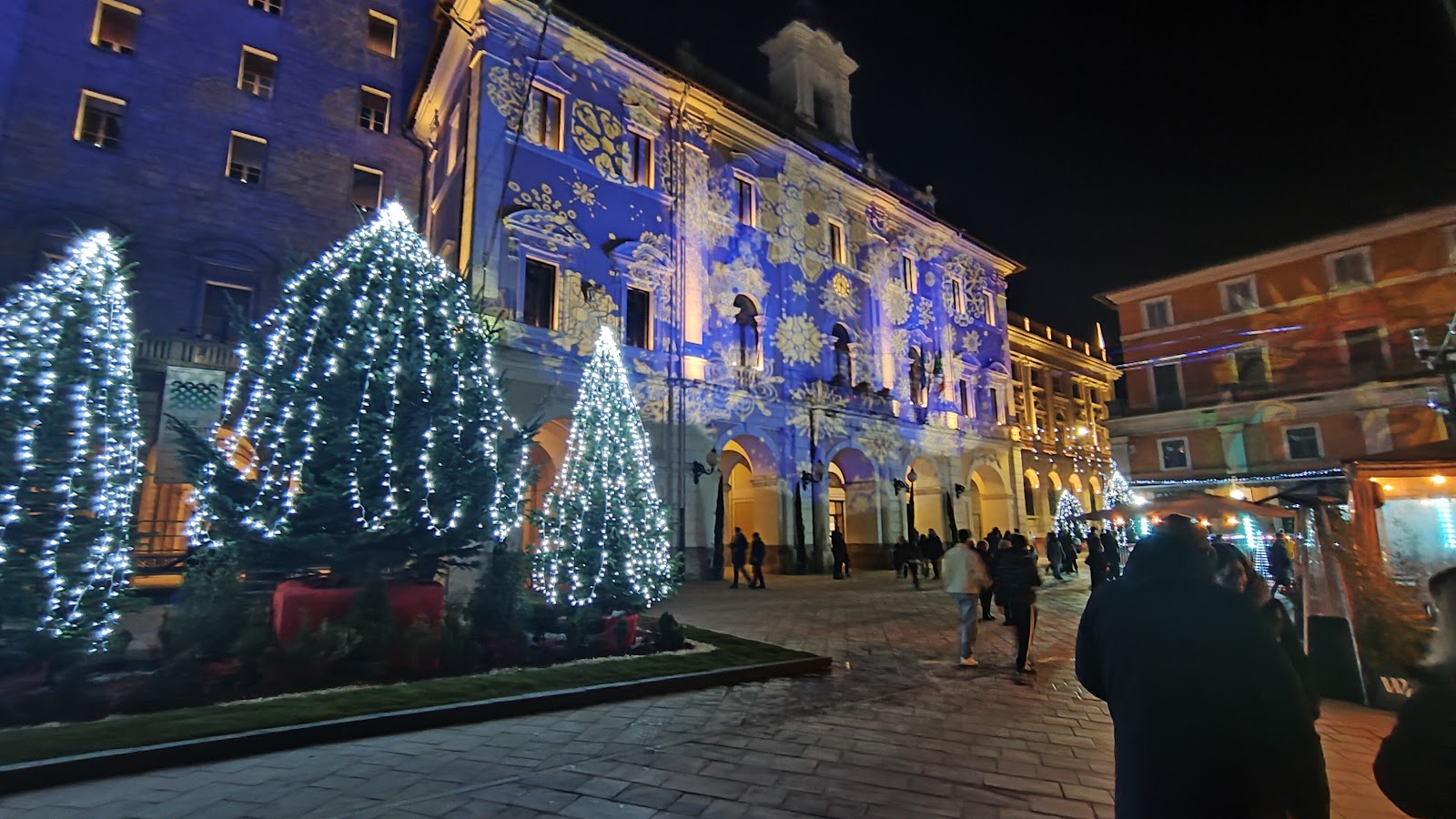
We visited the city center in the evening with the Christmas lights. It was truly fantastic.
More of Rieti
Discover where to stay, what to do and the best deals for your trip.
Explore Rieti →More attractions in Rieti
All of Rieti →
Background adapted from Wikipedia (CC BY-SA) · map data © OpenStreetMap contributors · ratings & place photos via Google · other photos with per-image credit. Ticket links may earn us a commission at no extra cost to you.