
Palazzo Bertini
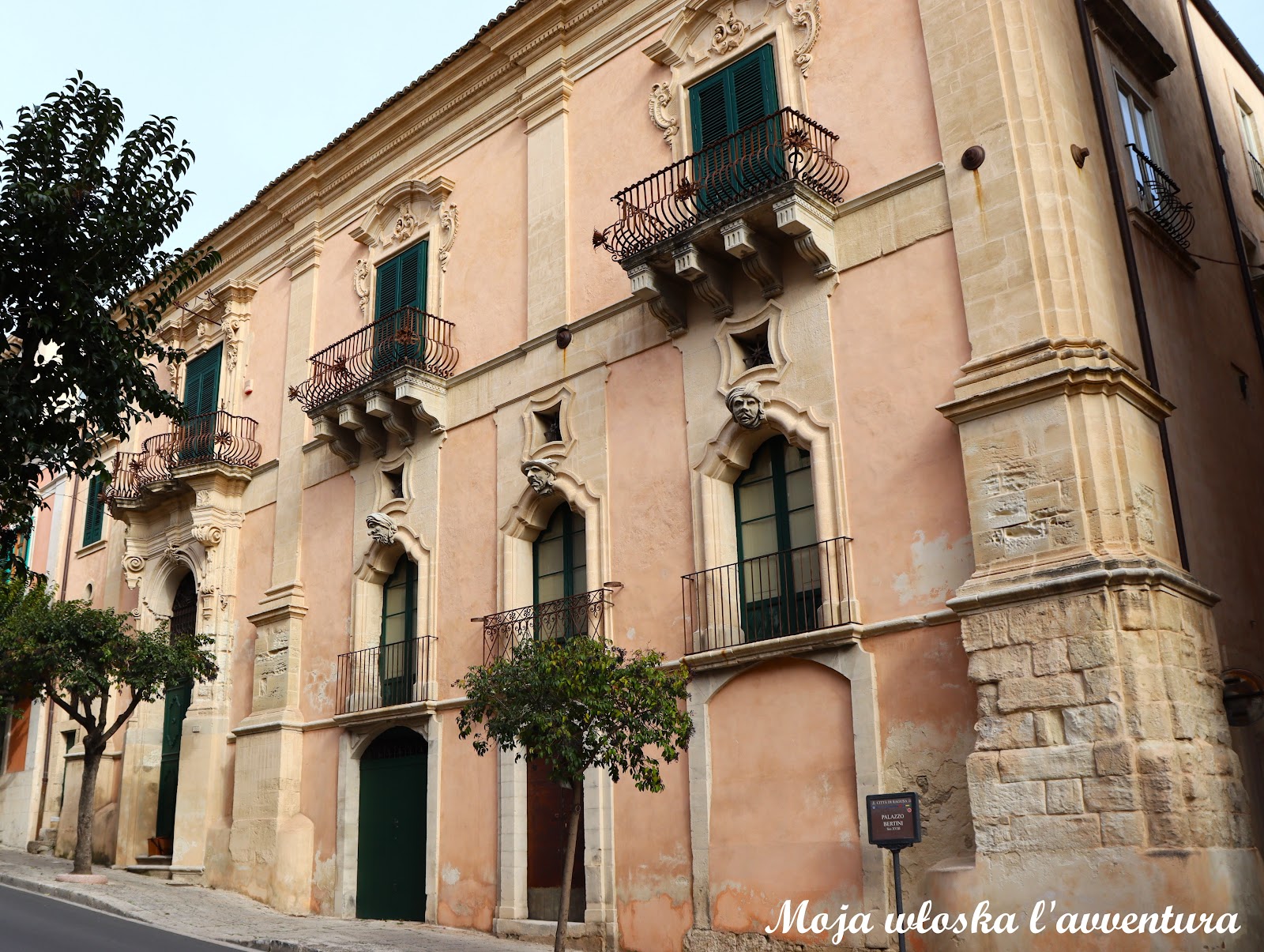
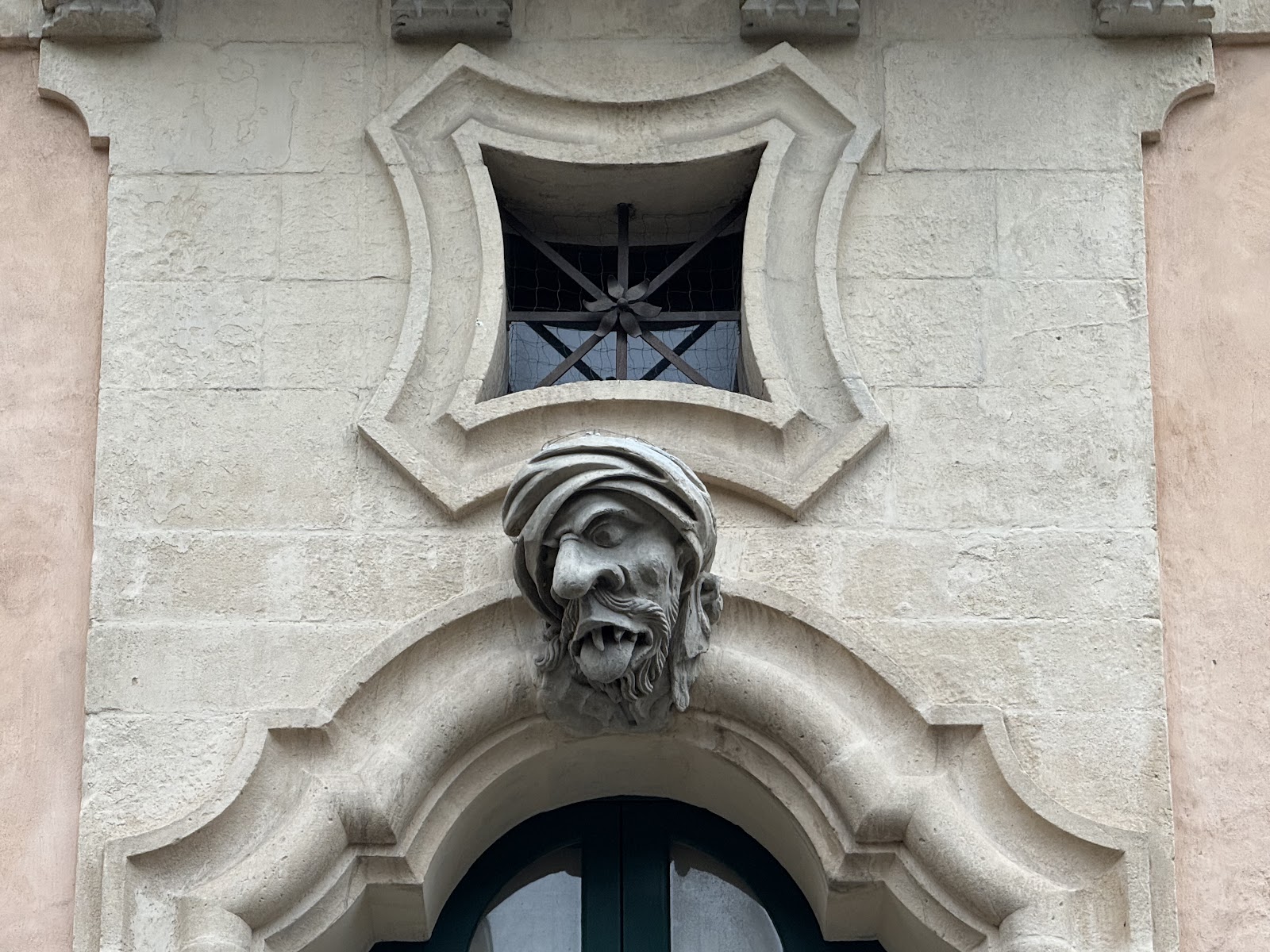
Three stone faces stare out from the facade of Palazzo Bertini on Corso Italia — a merchant mid-smile, a nobleman grave and straight-ahead, a poor man with his tongue stuck out. Local tradition holds that the sequence is a joke at the traveller's expense: the further you walk from Ragusa Ibla toward the newer upper town, the less dignity you're accorded.
The masks, carved in pietra pece and set into the keystones of the mezzanine windows, are among the most recognised details in Ragusa. The palace beneath them is part of the UNESCO serial site that covers eighteen late Baroque monuments across the Val di Noto — though you can take in the whole of its elaborate ironwork balcony and full-round central portal without ever stepping inside.
💛 What travellers fall for
People who stop here tend to circle back to the masks more than once, working out the left-right sequence and the social logic behind it. Stand on the opposite pavement and look at all three together — the story only lands when you see them in order, west to east, as if you're walking the old road from Ibla.
The story behind Palazzo Bertini
Don Salvatore Floridia commissioned the palazzo at the end of the 18th century, placing it along the 'Maestra' road — the main axis of the newly rebuilt upper town that had risen after the 1693 earthquake reshaped this part of Sicily. In the second half of the 19th century the Bertini family acquired it and gave it the name it still carries.
The most consequential change came in 1847, when the street level of Corso Italia was lowered significantly. What had been ground-floor entrances became the mezzanine balconies you see today, and the three mascheroni — originally at eye level — rose to their current position, which is part of why they read so well from across the street.
Good to know
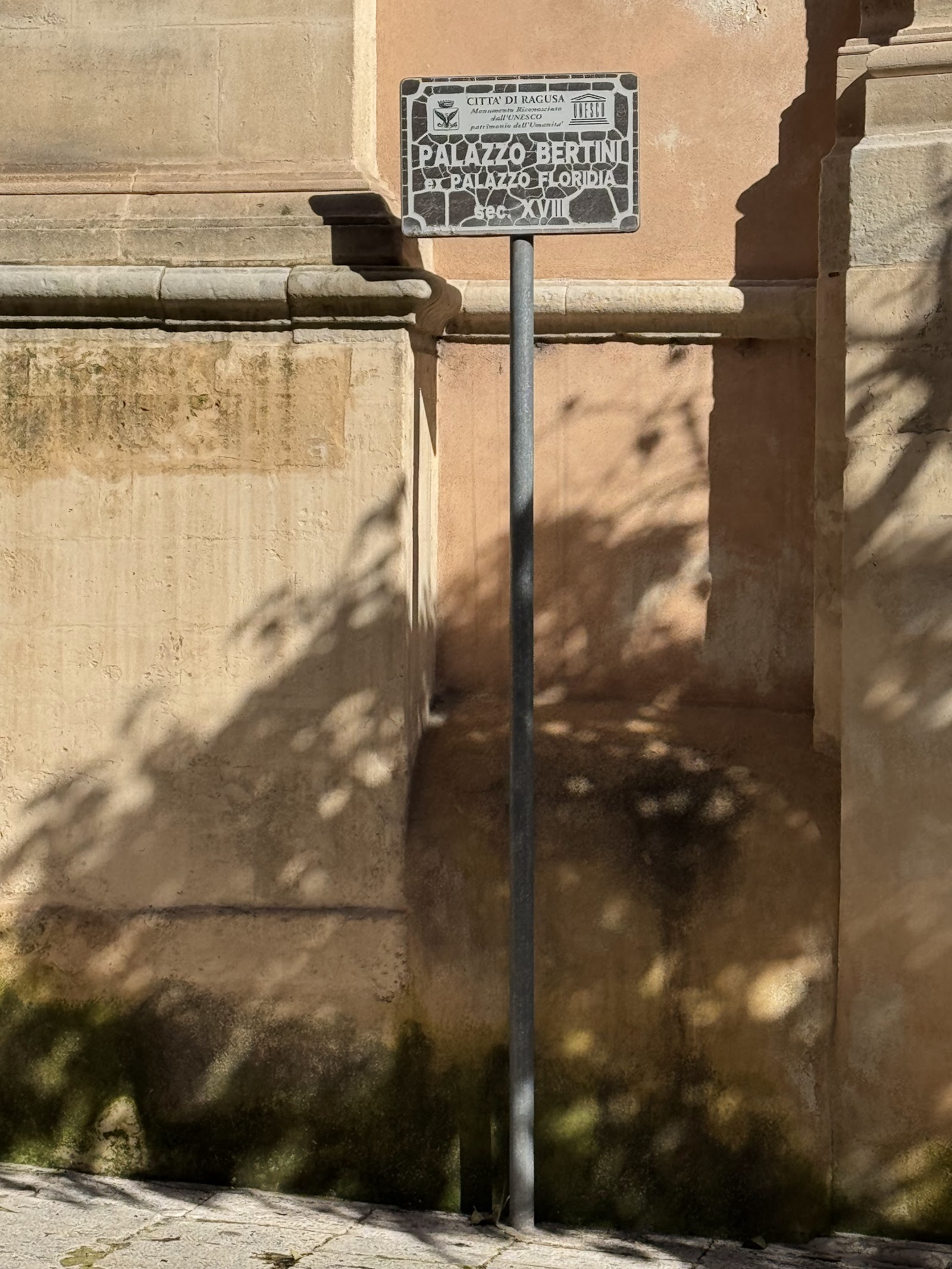
The palazzo sits on Corso Italia, just past the intersection with Via S. Vito — easy to find on foot from anywhere in Ragusa Superiore. Interior access is not reliably available to visitors, so plan around the exterior. The facade reads best in morning light, before the street traffic picks up.
Where is Palazzo Bertini?
More tickets & tours for Palazzo Bertini
Book directly at the provider
What travellers say about Palazzo Bertini
Palazzo Bertini is one of Ragusa's most recognizable civic buildings, famous for the three gargoyles decorating its façade, one of the most original expressions of the Hyblaean Baroque. Built in the 18th century, the palace strikes a balance between architectural elegance and expressive power: the unique sculpted faces immediately capture the attention and convey the creative and symbolic taste of the era. It's a building that's a delight to admire even from the outside, lingering on its details and proportions. 👉 A recommended stop during a stroll through Ragusa's historic center. 📸 Very photogenic, especially with lateral lighting that highlights the gargoyles' reliefs. An iconic and easily recognizable palace, adding character and personality to the city's architectural heritage. For more picturesque views... follow us!
Immediately behind Piazza Matteotti is the 18th-century Palazzo Bertini. The most eye-catching features of the façade are the three gargoyles above the first-floor balcony windows. The first depicts a carefree, crooked-toothed beggar. The second depicts a proud nobleman, a symbol of power above the law. The last depicts a merchant, a symbol of splendor and wealth. The building currently houses a hotel.
May 18, 2025: Walking from the upper part of Ragusa to the lower part, we came across the Palazzo Bertini. This building is known, among other things, for the three heads above the three windows on the first floor.
An 18th-century mansion, with prominent figures of merchants above the three balconies. Very interesting...
The three merchant masks adorn the house: The Poor Man The Nobleman The Rich Man... Don't they all look happy? 🙈😜
More of Ragusa
Discover where to stay, what to do and the best deals for your trip.
Explore Ragusa →More attractions in Ragusa
All of Ragusa →
Background adapted from Wikipedia (CC BY-SA) · map data © OpenStreetMap contributors · ratings & place photos via Google · other photos with per-image credit. Ticket links may earn us a commission at no extra cost to you.