
Museo Etrusco Guarnacci
On the third floor of Palazzo Desideri Tangassi, a small bronze figure stands about 57 centimetres tall and casts a shadow far larger than itself. The Ombra della Sera — Shadow of the Evening — is a votive statue from the 3rd century BC, its body stretched into that long, attenuated form a human silhouette takes at dusk. It is the kind of object that stops you mid-stride.
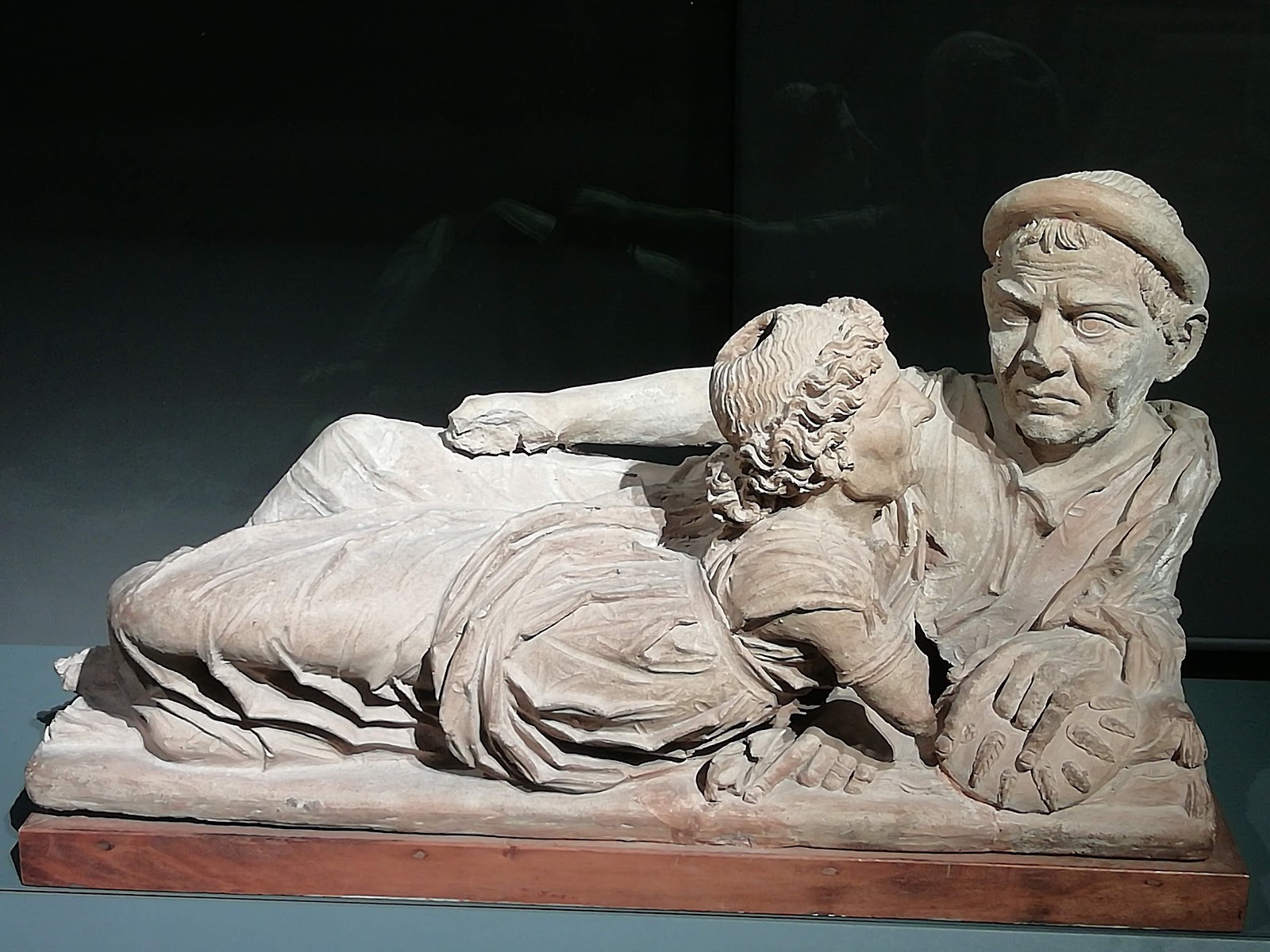
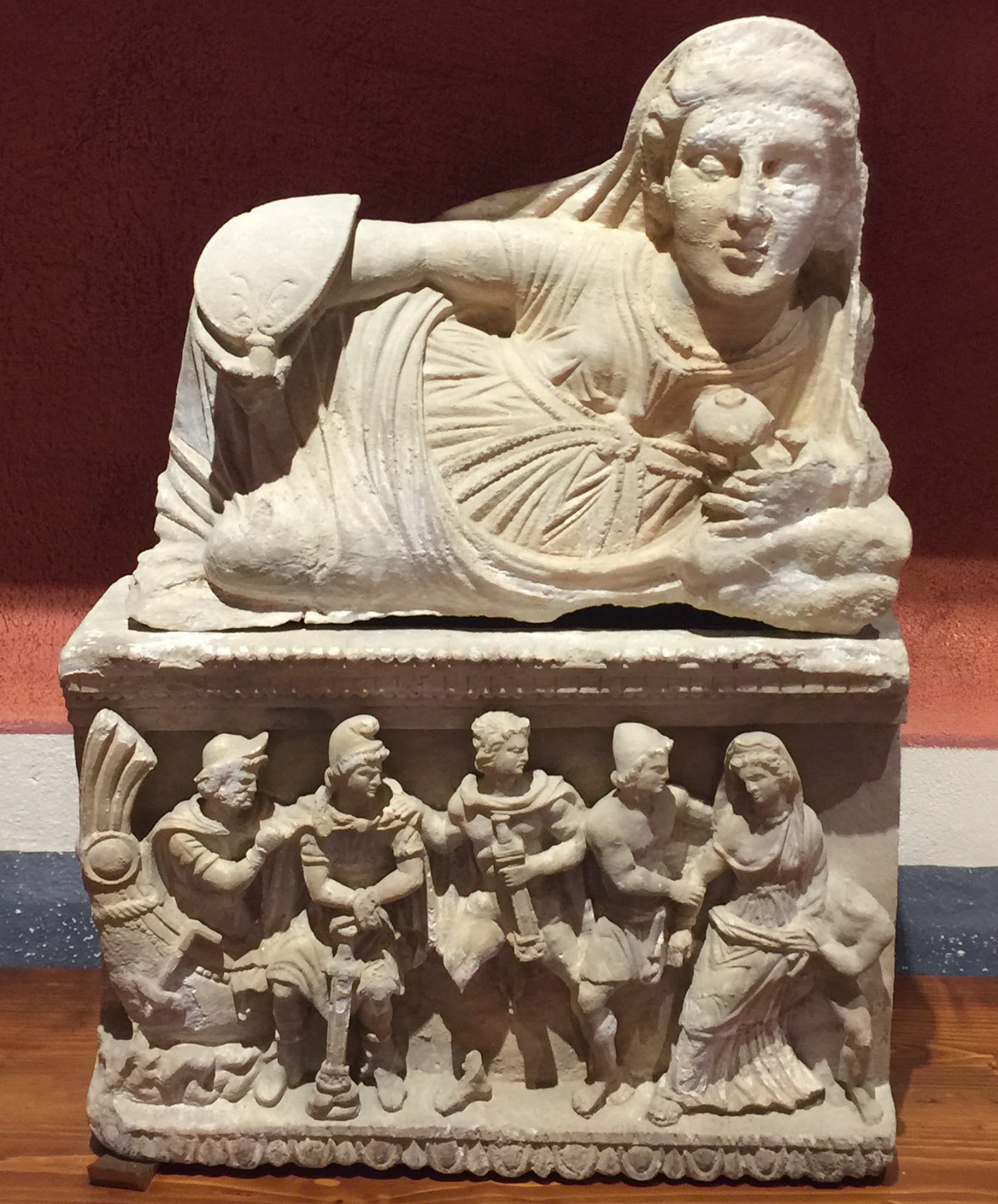
The Guarnacci holds roughly 600 Etruscan funerary urns, making it the largest collection of its kind anywhere. They line the lower floors in the dense, slightly overwhelming style of 19th-century display — terracotta, stone, alabaster, stacked and labelled — while the upper floors open into more considered modern arrangements. Somewhere between those two registers, the museum finds its particular character.
💛 What travellers fall for
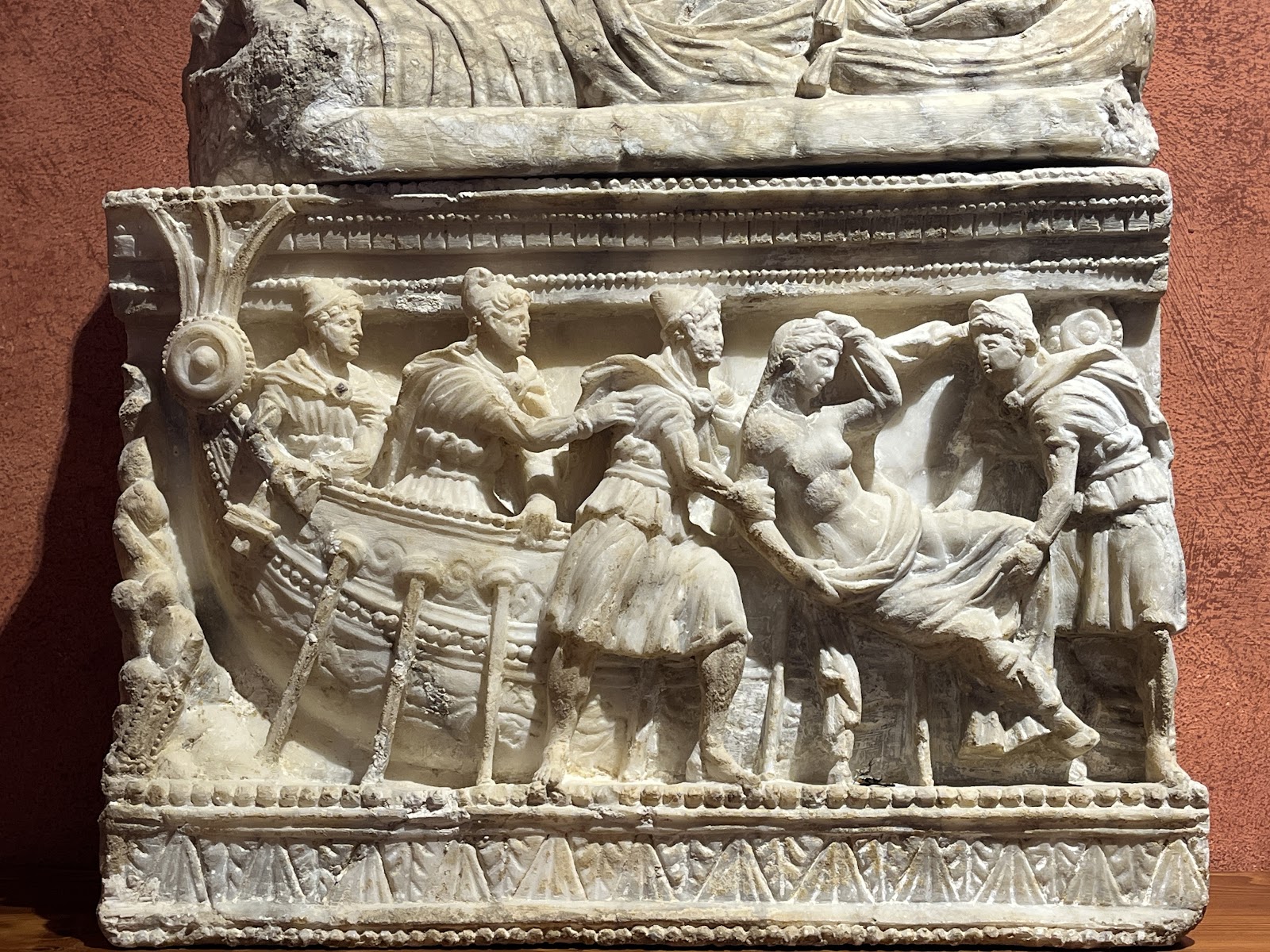
People who come back tend to linger on the lower floors longer than they expect, reading the carved relief scenes on the urns rather than moving quickly toward the famous pieces. The glass panel in the floor revealing an in-situ excavation from the 1990s is easy to walk over without noticing — worth pausing at. The rooftop terrace on the top floor earns a few minutes before you leave.
The story behind Museo Etrusco Guarnacci
The Guarnacci began, technically, in 1732 with a donation of objects from Pietro Franceschini that seeded what was then called a Civic Museum. The institution took its defining shape three decades later when Mario Guarnacci — abbot, aristocrat, and antiquarian — donated his personal collection to the citizens of Volterra in 1761. That collection included more than 600 funerary urns and a library of over 50,000 volumes. It was an act of civic generosity unusual for its era, and it made the Guarnacci one of the earliest public museums in Italy.
The collection moved to its current home, Palazzo Desideri Tangassi on Via Don Giovanni Minzoni, in 1877, where it has remained. The urns themselves date from the 4th through 1st centuries BC, produced locally in terracotta, stone, and alabaster — the alabaster pieces considered the most significant.
Good to know
A cumulative ticket covers the Guarnacci alongside the Roman Theatre, the Civic Art Gallery, and several other Volterra sites — good value if you plan a full day in the city. Allow at least 90 minutes. Elevators serve all floors, though the building's age means some areas require care for those with mobility constraints.
Where is Museo Etrusco Guarnacci?
More tickets & tours for Museo Etrusco Guarnacci
Book directly at the provider
What travellers say about Museo Etrusco Guarnacci
A lovely and vast collection of Etruscan funery urns and pieces of art & everyday life. Explanations could be a bit more extensive. I have studied archaeology and visited many Etruscan sites and thus had a good understanding of the items displayed. Not all explanations were available in any other language but Italian. I particularly enjoyed seeing the replica of the tomb or Portone which I had visited yesterday.
Great museum and well worth the €10 entrance fee. Who knew there was so much to see and learn about cinerary urns!
Very unique, curated so not to overwhelm. We all really enjoyed this visit. Start at the top and work down.
We went there on the Notte Bianca (7/19/2025) when all the museum in the city is free after 21:00. We were the one of the first into the museum when it opened at 21:00 and we’re the only ones on the second floor where the famous sculptures are. Really cool experience to be able to explore a museum at night with so little people and being able to see the artifacts up close without being rushed by other tourists. Really recommend going on a Notte Bianca.
Since I knew next to nothing about this pre-Roman civilization and was intrigued, the museum was the main attraction I wanted to see in Volterra. However, we almost passed it by as it looked so unimposing on the outside and there didn't seem to be anywhere to park nearby. In fact, there is some parking just 50 yards down the road, with a scenic view. Inside, the museum is very modern and well organized. The displays are beautiful and have more interpretive material than we had seen in some other museums. I highly recommend visiting.
More of Volterra
Discover where to stay, what to do and the best deals for your trip.
Explore Volterra →More attractions in Volterra
All of Volterra →
Background adapted from Wikipedia (CC BY-SA) · map data © OpenStreetMap contributors · ratings & place photos via Google · other photos with per-image credit. Ticket links may earn us a commission at no extra cost to you.