
Acropoli di Volterra
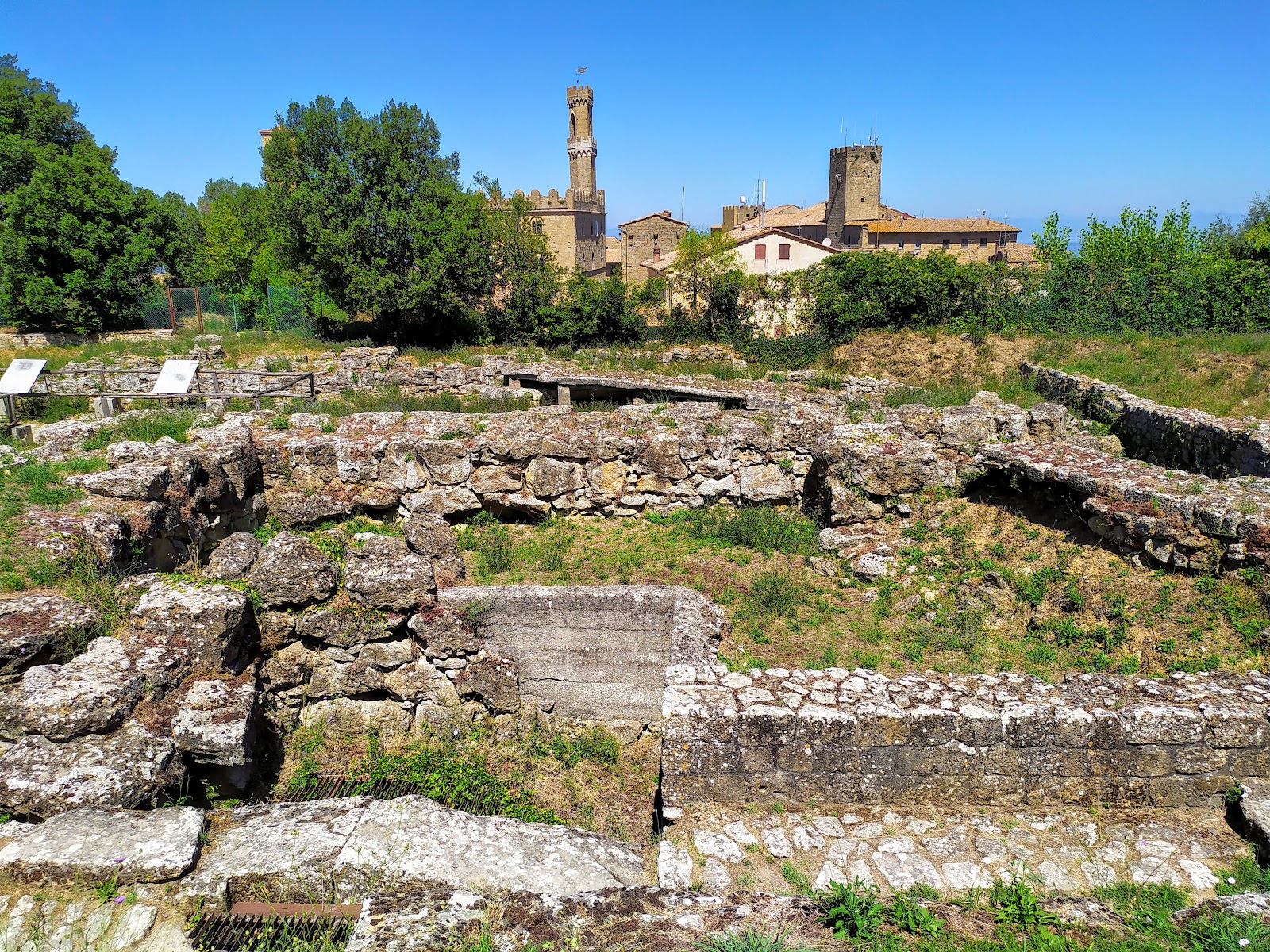
The Etruscans put their temples here for a reason: from the highest plateau in Volterra, you can read the whole sky. Birds in flight, flashes of lightning — this is where the city's priests came to interpret what was coming. The stone foundations you walk among today are the basements of two Hellenistic temples, Temple A and Temple B, built between the 3rd and 2nd centuries BC on ground that had already been sacred for four hundred years.
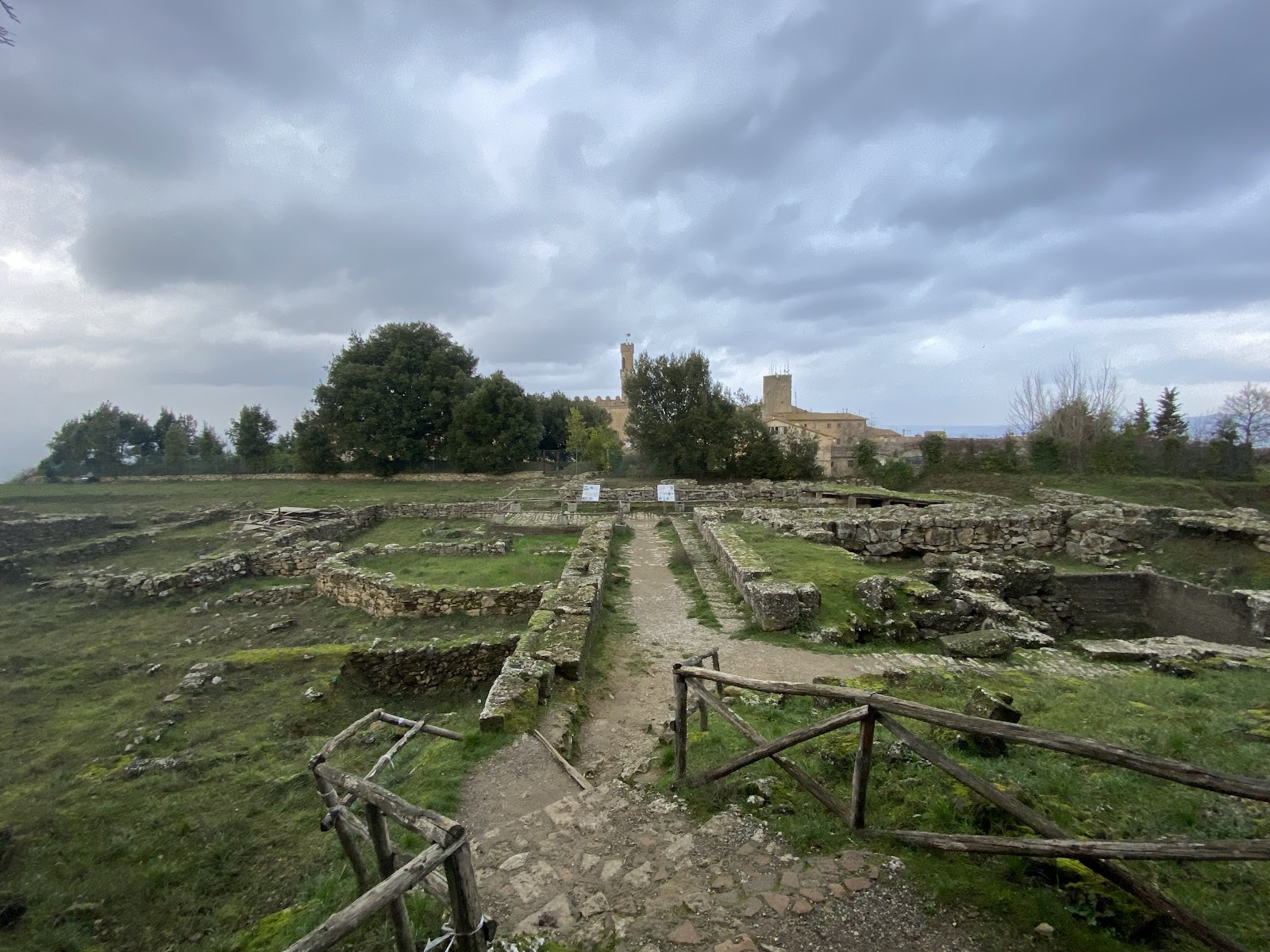
What survives is spare — substructures, rainwater tanks, a Roman cistern from the Augustan Age — but the elevation does the rest. The site sits inside Parco Fiumi, Volterra's main green space, close to the Medicean fortress.

💛 What travellers fall for
People who come back tend to time it for late afternoon, when the light flattens across the plateau and the fortress wall turns the colour of old terracotta. The Roman Cistern, included in your entry ticket, is easy to overlook — worth the few extra steps, and it has its own minor film history: Luchino Visconti shot scenes here in 1965.
The story behind Acropoli di Volterra
Volterra's acropolis has functioned as a place of communal worship since the city's earliest decades — the sanctuary was founded in the first years of the 7th century BC. The Etruscans built in wood and clay, and none of that has survived; what you see are the masonry foundations and service structures of a later Hellenistic rebuilding, including two temples with distinct plans and a cistern system for collecting rainwater.
Systematic excavation began with Doro Levi in 1926, continued under Mauro Cristofani between 1967 and 1972, and resumed in 1987 under Marisa Bonamici. That ongoing work recovered, among other things, a fragment of a 2nd-century BC fresco — geometric bands in green, red, black, yellow, white and purple — now considered exceptional for Etruria and held at the Guarnacci museum.
Good to know
Entry is €5 and covers the Roman Cistern too; a combined ticket (€7, May–September) adds the Etruscan Museum, Roman Theatre and Palazzo dei Priori. The site opens daily from mid-March to early November, 10:30–17:30; winter hours are weekends only, 10:00–16:00. Allow an hour, more if you wander Parco Fiumi.
July and August are sunny and warm, with July averaging 350 hours of sunshine and August highs around 30°C — pleasant on the plateau if you go in the morning. May, September and October sit in the 20–26°C range and are easier for an outdoor site. Winter visits are weekend-only, and January highs reach only around 11°C, so bring a layer.
Where is Acropoli di Volterra?
More tickets & tours for Acropoli di Volterra
Book directly at the provider
What travellers say about Acropoli di Volterra
Very overgrown ruins that are mostly fenced off now, so you don't really get to see more of it if you pay than just looking through the fence - can't go underground any more, and half the path is fenced off. Luckily we had the Volterra card which covered this, rather than paying 10€. Impressive to look at and think about what was there over 2,000 years ago, but could be much better if looked after
At the acropolis it would have been nice to read the explanations, they were sunfaded. The cistern was well hidden. Will be nice once they finish in 10? Or so years, they were just about to start. If you've never seen an Etruscan acropolis it's interesting.
It’s a small spiral staircase down into the cisterns, impressive achievement to build these. There is not too much to see, it’s a large underground water tank (with just some water in at the time we visited). 15 min and you have seen it all.
Etruscan acropolis is fenced area where you can see bases of ancient buildings. There is also old Roman, 7m high underground water tank where you can descend.
Nice to see if you have a Volterra Card. It is a bit pricey otherwise.
More of Volterra
Discover where to stay, what to do and the best deals for your trip.
Explore Volterra →More attractions in Volterra
All of Volterra →
Background adapted from Wikipedia (CC BY-SA) · map data © OpenStreetMap contributors · ratings & place photos via Google · other photos with per-image credit. Ticket links may earn us a commission at no extra cost to you.