
Museo Campano di Capua (within Caserta province)
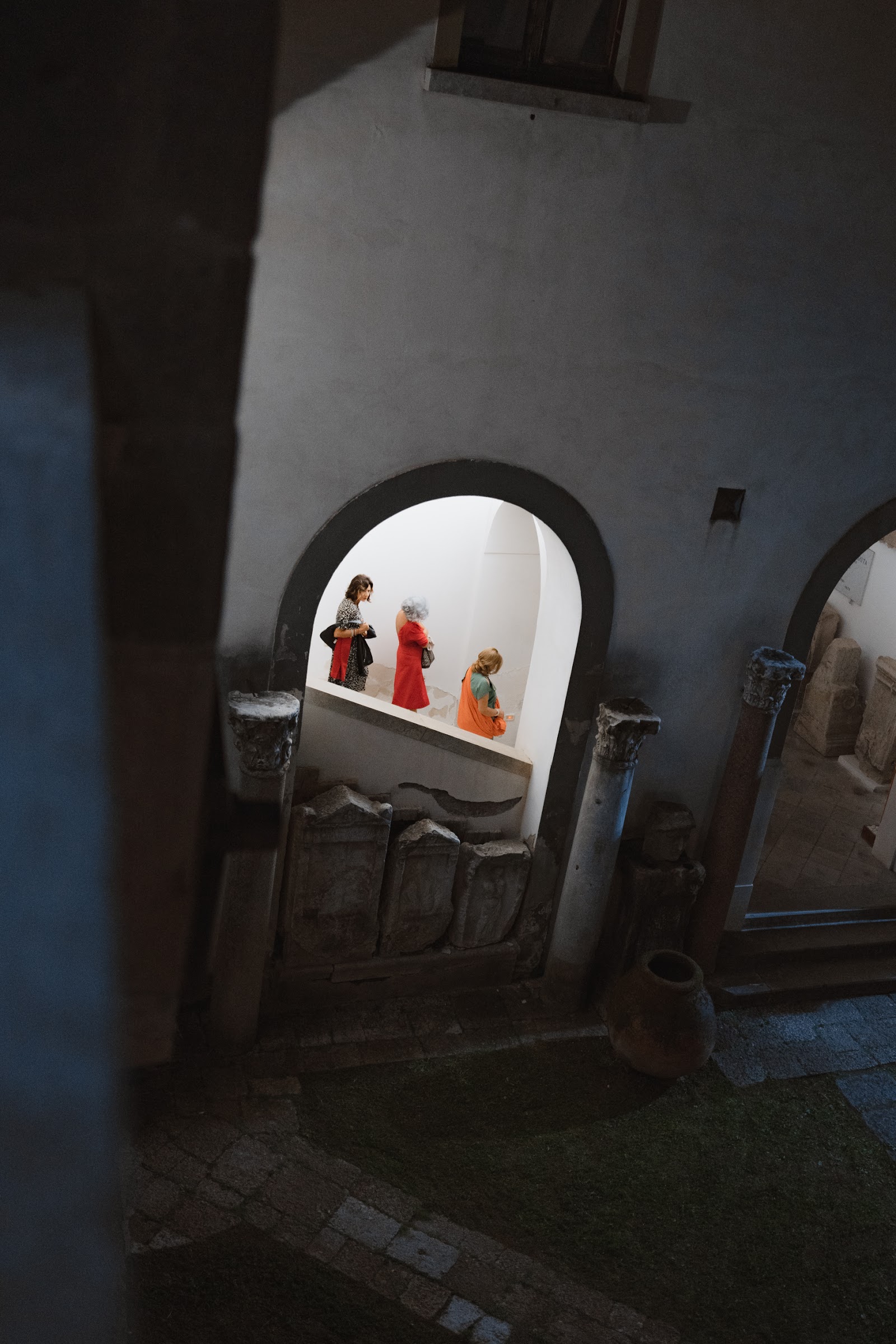
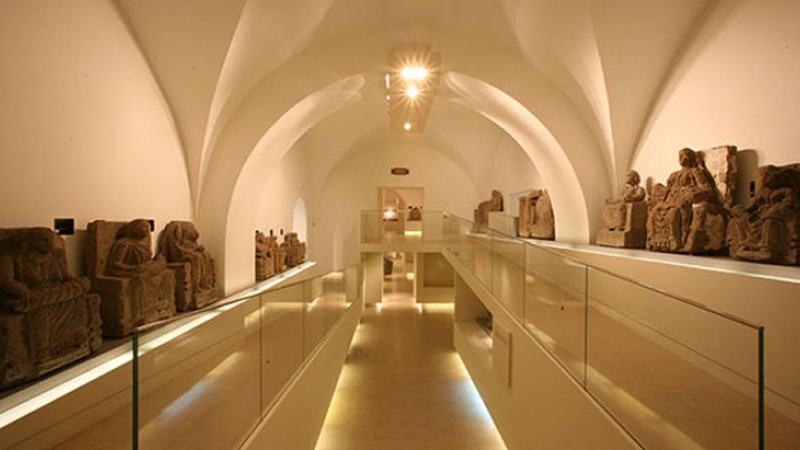
The first thing you notice, before any artefact, is the portal: a Catalan-Durazzo arch carved with the coats of arms of the Antignano and d'Alagno families, worn smooth by six centuries of Capuan air. Behind it, Palazzo Antignano opens into three courtyards and 32 rooms that hold one of southern Italy's most serious archaeological collections — including a gathering of ritual stone matres matutae, mother-goddess figures from ancient Capua, that stop you cold.
The museum sits on Via Roma, which traces the line of the old Appian Way. A few minutes' walk brings you to the remains of Frederick II's bridge towers, and the city square where a plaque marks the spot of the Placito Capuano — the 960 AD document considered the first written record of the Italian vernacular language.
💛 What travellers fall for
People who return tend to head straight for the lapidarium — the second largest in Campania after Naples — and linger there longer than planned. The library, with 70,000 volumes, rewards anyone who asks to see the manuscript holdings. Go on a Tuesday or Wednesday afternoon, when the rooms are quietest and the light through the courtyard is at its best.
The story behind Museo Campano di Capua (within Caserta province)
Canon Gabriele Iannelli — archaeologist, intellectual, and correspondent of the German historian Theodor Mommsen — founded the museum following a Royal Decree of August 1869, and it opened in 1874. The building he chose, Palazzo Antignano, had been taking shape since at least the Longobard period; a 1453 register records Alfonso I of Aragon confirming Francesco Antignano's licence to expand it, giving the facade its distinctive Catalan civil character. Vestiges of an even earlier Longobard church, San Lorenzo ad Crucem, survive within the walls.
In 1933, archaeologist Amedeo Maiuri — who called Iannelli 'the most significant figure of Italic civilization in Campania' — reorganised the collections. On 9 September 1943, Allied bombing destroyed much of Capua, but Director Luigi Garofano Venosta had already secured the entire collection. Reconstruction ran from 1945 to 1956, when the museum reopened with new exhibition rooms.

Good to know
From Caserta, a direct train reaches Capua in around 12 minutes, running roughly hourly. The museum is on Via Roma, 68. Tuesday through Friday offers the widest opening window (9:00–17:30); Saturday and Sunday hours are shorter. Buy tickets at least 30 minutes before closing. Call ahead to confirm current hours: +39 0823 1497100.
Where is Museo Campano di Capua (within Caserta province)?
More tickets & tours for Museo Campano di Capua (within Caserta province)
Book directly at the provider
What travellers say about Museo Campano di Capua (within Caserta province)
Entrance is further back up the street near Palazzo Antignano. Large museum, many items
Some years ago I visited your museum together with my dear friend Paolo Janni. We had an beautiful trip from Piedimonte Matese and my expectations became really satisfied. I do often think of this unforgettable visit in your highly interesting museum with all this various beautiful items. A perfect museum, not to big, not to small, in this beautiful old palace. Thank you.
This is a treasure of a place! We found it by accident and so glad we did. Room after room of beautifully presented ancient artefacts, and a huge collection of mother and baby statues (pre Christian) from the nearby area.
An amazing piece of history
Well laid out
More of Caserta
Discover where to stay, what to do and the best deals for your trip.
Explore Caserta →More attractions in Caserta
All of Caserta →

Background adapted from Wikipedia (CC BY-SA) · map data © OpenStreetMap contributors · ratings & place photos via Google · other photos with per-image credit. Ticket links may earn us a commission at no extra cost to you.